On August 2, 2024, the 2024 Cultural Heritage Protection Joint Workshop, a Peking University summer course jointly organized by the School of Archaeology and Museology at Peking University, the UNESCO Asia-Pacific World Heritage Training and Research Center (Beijing) (hereinafter referred to as WHITRAP-Beijing), and the Peking University Public Archaeology and Art Center, was successfully concluded in Gansu.
This workshop received strong support from the Gansu Provincial Department of Culture and Tourism and the “Graduate Innovation Program” of Peking University Graduate School.
Over the course of ten days, participants gained an in-depth understanding of the cultural resources and cultural and creative industries in seven districts across four cities: Ganzhou District of Zhangye City; Qin’an County and Maiji District of Tianshui City; Tongwei County and Lintao County of Dingxi City; and Wudu District and Cheng County of Longnan City.
Under the guidance of instructors, participants produced research reports of over ten thousand words with rich text and images, exploring from multiple dimensions—such as cultural resources, driving factors, benefit evaluation, and key issues—the contribution of heritage within the framework of cultural and creative industries to the development of local cultural tourism and cultural competitiveness. (Click here to review the field research record)

Image | 2024 Cultural Heritage Protection Joint Workshop
·Closing Ceremony·
On August 2, the final presentation session of the 2024 Cultural Heritage Protection Joint Workshop was held in the conference room on the 25th floor of the Gansu Provincial Department of Culture and Tourism. The session was hosted by Park Lina, Project Specialist at WHITRAP-Beijing.

Image | Closing ceremony现场
The experts attending the session included:
Zhang Shuyong, Director of the Finance Division of the Gansu Provincial Department of Culture and Tourism and World Bank project leader;
Du Xiaofan, Professor at the Department of Cultural Heritage and Museology of Fudan University and Chairholder of UNESCO Living Heritage and Community Development;
Gao Yafang, Dean of the School of Tourism at Lanzhou University of Arts and Science;
Kong Da, Associate Professor at Fudan University;
Liu Shaoyuan, Postdoctoral researcher at Fudan University.
Li Hangying, Cultural Project Assistant at the UNESCO East Asia Multi-sectoral Regional Office, and Zhang Jianwei, Tenured Associate Professor at Peking University and Executive Deputy Director of WHITRAP-Beijing, attended online.
Also present as instructors were: Li Guanghan (Assistant Director of WHITRAP-Beijing), Sun Jing (Associate Professor at Quanzhou Normal University), Wang Siyu (Assistant Professor at Peking University and Director of the Public Archaeology and Art Center), Wang Shaohan (Lecturer at Shanghai University), and Park Lina (Project Specialist at WHITRAP-Beijing).
Before the formal presentations, Li Guanghan first reviewed and summarized the workshop. The workshop was based on an interdisciplinary approach, with 25 teachers and students from 13 universities worldwide participating offline, producing rich thematic research outcomes.

Image | Li Guanghan giving summary
·Research Presentations·
1. Zhangye Group
Presenters: Jiang Chunlin, Zhu Yuxin, Wang Jiaojiao, Liu Fangyu
Lead Instructors: Li Guanghan, Sun Jing
Academic Assistant: Ma Lerong
Group Members: Jiang Chunlin, Zhu Yuxin, Wang Jiaojiao, Liu Fangyu, Yu Dian’er, Yuan Ziqing

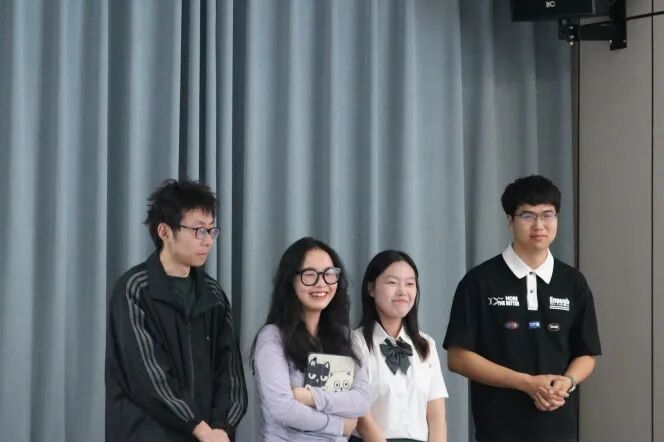
Image | Zhangye group presentation
The Zhangye group investigated 17 cultural resource sites in Ganzhou District, covering tangible and intangible cultural heritage, public cultural institutions, and cultural enterprises, and highlighted the driving role of the Rainbow Danxia Scenic Area.
The report proposed development suggestions across four dimensions: resources, technology, talent, and benefits—activating advantageous resources, promoting digital technology applications, improving talent policies, and strengthening spatial planning and benefit evaluation.
2. Dingxi Group
Presenters: Teng Yan, Zhang Tianxi
Lead Instructor: Wang Siyu
Academic Assistant: Lu He
Group Members: Li Xiangcheng, Teng Yan, Zhang Tianxi


Image | Dingxi group presentation
The Dingxi group focused on material heritage such as the Majiayao site, intangible heritage such as Lintao paper-cutting, and cultural enterprises such as the Majiayao painted pottery town.
Through fieldwork and case analysis, the report examined key issues in protection and development and proposed strategies and future planning to promote sustainable utilization.
3. Longnan Group
Presenters: Bai Xinyu, Yang Yi
Lead Instructor: Park Lina
Group Members: Bai Xinyu, Li Jina, Yang Yi

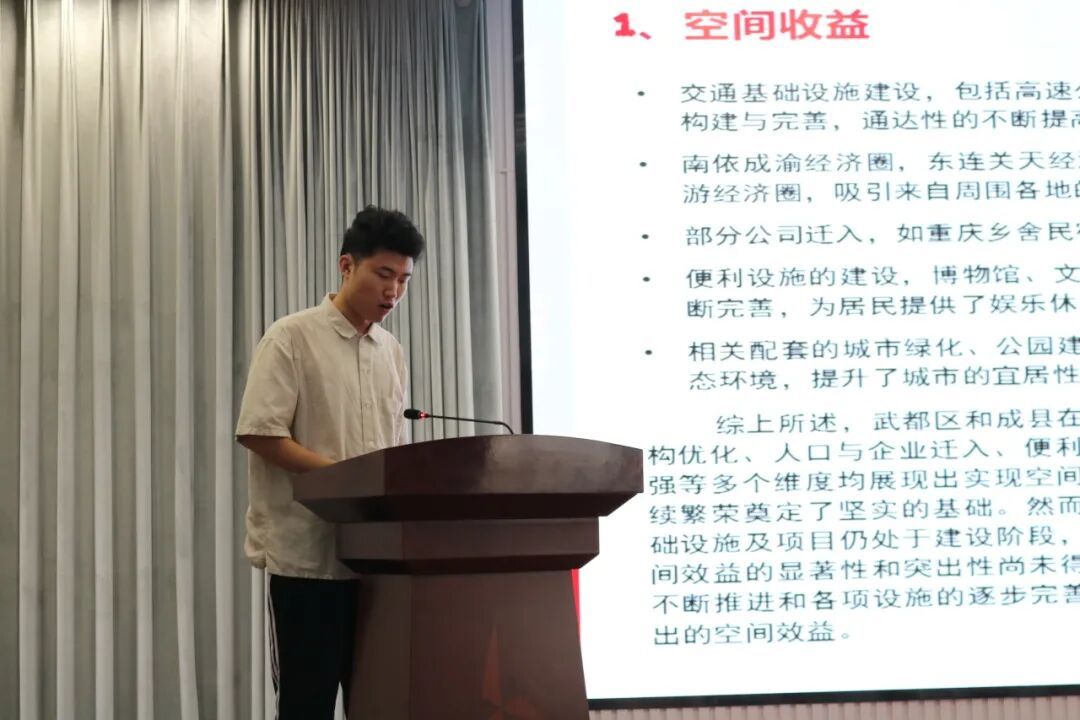
Image | Longnan group presentation
The Longnan group investigated 17 cultural resource sites across Wudu District and Cheng County. Due to the relatively late development of the cultural industry and recent flood conditions, the group focused on large cultural scenic area construction, village renewal, and infrastructure such as “four halls and one center.”
They also examined intangible heritage such as wood carving, Gaoshan opera, and dough sculpture.
4. Tianshui Group
Presenter: Zhao Yinuo
Lead Instructor: Wang Shaohan
Academic Assistant: Kang Anning
Group Members: He Yuwei, Wu Zhiyi, Zhao Yinuo, Chen Haoyang


Image | Tianshui group presentation
The group focused on heritage sites such as Tianshui Museum (including Fuxi Temple), Maijishan Grottoes, and Dadiwan site, as well as intangible heritage like bamboo weaving and carved lacquer.
They noted improvements in infrastructure, transportation, creative spaces, and talent training, which enhanced innovation and international cooperation.
Panel Review ·
Following the presentations, the attending experts and scholars provided comments on each group’s work.
Zhang Shuyong, Director of the Finance Division of the Gansu Provincial Department of Culture and Tourism and World Bank project lead, noted that all groups performed outstandingly in the Cultural Heritage Protection Joint Workshop. He highlighted their ability to conduct in-depth investigations into cultural resources and accurately identify key issues, offering valuable recommendations for local development and making meaningful contributions to both heritage protection and regional growth.
However, he pointed out that the current policy recommendations remain somewhat theoretical and need to be made more practical and actionable in order to effectively drive real-world implementation. He also advised that the Longnan group should pay greater attention to the calligraphy and painting industry in Cheng County, while the Tianshui group should place more emphasis on cultural resources such as Tianshui carved lacquer.

Image | Zhang Shuyong’s comments
Du Xiaofan, Professor at the Department of Cultural Heritage and Museology at Fudan University and UNESCO Chair in Living Heritage and Community Development, first affirmed the students’ work. She emphasized that research should begin with the intrinsic nature of cultural resources.
While adhering to the core principles of the CCC framework and the World Bank’s emphasis on economic outcomes, she suggested that each group further analyze local or sector-specific conditions, challenges, and opportunities. By integrating disciplinary expertise, conducting thorough research, and incorporating input from a wide range of stakeholders, she encouraged the development of innovative solutions that are both aligned with international standards and responsive to real-world needs.

Image | Du Xiaofan’s comments
Kong Da, Associate Professor at the Department of Cultural Heritage and Museology at Fudan University, noted that adapting the Western-developed CCC framework to the Chinese context is both complex and challenging. It requires a deep understanding of China’s national conditions while maintaining alignment with international standards.
He emphasized that this process depends on coordinated efforts among government bodies, domestic and international social forces, as well as individual institutions. In particular, he stressed the importance of institutional initiative, using Maijishan as an example to highlight the significance of “going outward” and broader engagement.

Image | Kong Da’s comments
Liu Shaoyuan, Postdoctoral researcher at the Department of Cultural Heritage and Museology at Fudan University, observed that the groups’ analyses of cultural resources were still not sufficiently comprehensive. He proposed three areas for improvement:
First, to return to the historical context in which cultural resources developed;
Second, to consider transformation pathways based on the distinct characteristics of different types of heritage;
Third, to strengthen attention to digitalization and place greater emphasis on advanced technologies.
Regarding the Maijishan Grottoes specifically, he highlighted two key priorities: the presentation and transmission of the site, and the issue of community benefits associated with the heritage site.

Image | Liu Shaoyuan’s comments
Gao Yafang, Dean of the School of Tourism at Lanzhou University of Arts and Science, expressed overall recognition of the groups’ work while pointing out directions for further reflection, particularly in managing six key relationships (not elaborated in detail).
She emphasized the relationship between methodology and practice, especially the localized understanding and application of the concept of “city” within the framework. She also raised the balance between “breaking” (identifying problems) and “building” (proposing solutions), stressing that research should not only diagnose issues but also offer concrete solutions. She further expressed hope that the findings from Gansu could be adapted and applied to other underdeveloped regions across China.

Image | Gao Yafang’s comments
Zhang Jianwei, Tenured Associate Professor at Peking University and Executive Deputy Director of the UNESCO Asia-Pacific World Heritage Training and Research Center (Beijing), and Li Hangying, Cultural Project Assistant at the UNESCO East Asia Multi-sectoral Regional Office, attended the closing session online.
Zhang Jianwei first commended the students for their hard work and extended his congratulations. He noted that the groups produced substantial research outcomes and engaged critically with the applicability of the CCC framework, encouraging them to adapt the framework to real-world conditions.
He also emphasized the importance of visual communication, noting that images and diagrams can present complex data and logical relationships more intuitively. Finally, citing Yi-Fu Tuan, he pointed out that in sustainable development, non-utilitarian values such as originality and inclusiveness are of significant importance.
Li Hangying highly praised the professionalism and dedication demonstrated by the groups. Through extensive data collection, in-depth interviews, and field investigations, the teams developed a comprehensive and nuanced understanding of both their research subjects and the CCC framework.
She noted that by actively exploring locally appropriate implementation pathways and integrating the framework into regional development practices, the groups not only facilitated the application of the CCC framework in Gansu but also provided valuable models and references for other regions.
Concluding Remarks
Zhang Shuyong delivered the closing remarks. He expressed gratitude for UNESCO’s long-term support for cultural and tourism development in Gansu and emphasized the importance of making the final workshop reports more targeted and actionable.
He encouraged participants to provide recommendations from a broader perspective and expressed hope that UNESCO’s platform could further promote international exchange and cooperation in cultural heritage protection in Gansu. He concluded by once again thanking all participants for their hard work.

Image | Zhang Shuyong’s concluding remarks
Successful Completion
Against the vast and magnificent landscape of Gansu, the workshop came to a successful close. Students and faculty from across regions gathered together, persevering through intense heat, sand, and occasional rain. They not only successfully carried out interdisciplinary research but also formed strong friendships along the way.
Here, we extend our sincere gratitude to all dedicated instructors, distinguished invited experts, diligent teaching assistants, and the local government departments, staff members, and interviewees across Gansu who provided strong support to the workshop.

Image | Group photo of participants, organizing team, and reviewers
Text: Ma Lerong, Lu He
Editors: Ma Lerong, Park Lina
Reviewers: Li Guanghan, Wang Siyu
Final Review: Shen Ruiwen, Zhang Jianwei