Recommendation
The Peking University Yannan Yuan Project received the 2023 UNESCO Asia-Pacific Awards for Cultural Heritage Conservation Honourable Mention. This article, based on community engagement in the conservation of Yannan Yuan, approaches from the perspective of campus cultural heritage,梳理 the academic thinking and practical methods during the project, and explores multi-party cooperation approaches for future heritage conservation and utilization.
Original link to the 2023 UNESCO Asia-Pacific Awards for Cultural Heritage Conservation list: https://www.unesco.org/en/articles/unesco-announces-winners-2023-asia-pacific-awards-cultural-heritage-conservation?hub="66925
Community Engagement in Campus Cultural Heritage Conservation
——A Case Study of the Peking University Yannan Yuan Landscape Protection Project
SONG Yilin¹, RUAN Kexin⟡, ZHANG Jianwei⟡, WANG Siyu⟡, TANG Lin³
(1. Institute of Cultural Heritage Protection, Peking University Planning and Design Institute (Beijing) Co., Ltd., Beijing 100087, China; 2. School of Archaeology and Museology, Peking University, Beijing 100871, China; 3. Department of Real Estate Management, Peking University, Beijing 100871,
China)
Abstract: Campus cultural heritage serves as a place that supports both the material life and spiritual culture of teachers and students. Preserving its living characteristics requires the continuity of community vitality, therefore the conservation and utilization of campus heritage should actively incorporate community engagement. The Peking University Yannan Yuan Landscape Protection project, leveraging the strong foundation for community engagement, diverse cultural groups, and numerous organizational structures characteristic of university campuses,策划 activities from three dimensions: opinions and suggestions, experiential practice, and dissemination and sharing, diversely integrating community engagement into heritage conservation practice. This approach not only benefits the preservation of heritage authenticity and living characteristics but also comprehensively reflects the development needs of teachers and students, deepens the community's awareness of heritage conservation, and more importantly, explores multi-party cooperation approaches for future heritage conservation and utilization.
Keywords: campus heritage; community engagement; campus renewal; Yannan Yuan
Classification code: G122 Document code: A
DOI:10.19490/j.cnki.issn2096-698X.2023.01.012-021
1 Research Background
1.1 Living Characteristics of Campus Cultural Heritage
Campus buildings and their landscapes are the physical manifestations of disciplinary characteristics and educational philosophies from different periods. They are spaces that carry the teaching and living memories of successive teachers and students, and are precious heritage of campus history and culture. The World Heritage List also reflects recognition of the value of campus cultural heritage, including the University and Historic Precinct of Alcalá de Henares (Spain), Ciudad Universitaria de Caracas (Venezuela), Central University City Campus of the Universidad Nacional Autónoma de México (Mexico), and Monticello and the University of Virginia in Charlottesville (USA). As of today, China's modern campus development has produced approximately 70 campus cultural heritage sites included in the list of Major Historical and Cultural Sites Protected at the National Level, as well as numerous portions registered as "Historic Buildings."
Some campus cultural heritage consists of school sites that have already disappeared or been relocated, now serving other social functions. However, more are still serving campus life, such as the Peking University Weiming Lake and Yan Yuan buildings, Tsinghua University early buildings, Shanghai Jiao Tong University early buildings, and Sichuan University early buildings. For the latter, LYU Bin[1], ZHANG Tianjie and others[2] proposed the need to holistically understand the "process" of campus spatial growth. YANG Xi[3] suggested combining "protection" and "renewal" actions. LI Liang and others[4] proposed enhancing usability and student群体的保护参与度. The above research reflects the need to understand the value of campus heritage from an organic and developmental perspective, with campus communities closely linked to heritage conservation. Such campus heritage that "maintains original functions" and "continuously influences the community" aligns with the "living heritage" concept proposed by ICCROM (International Centre for the Study of the Preservation and Restoration of Cultural Property) and its characteristic of "still being in use." The focus of conservation is the continuity of heritage, including not only the continuity of function and space but also the continuity of traditional care and community engagement[5]. Thus, community engagement is part of the living characteristics of campus heritage and plays an important role in continuing heritage value and protecting heritage authenticity.
1.2 Community Engagement in Heritage Practice
The term "gemeinschaft" (community) first entered the social sciences in Ferdinand Tönnies's work Gemeinschaft und Gesellschaft (Community and Society). Compared with "gesellschaft" (society), described as a "mechanical aggregate and artifact," community is a "real and organic life." The concept of community in the heritage field shares similarities with Tönnies and the Chicago School's community research, generally comprising two dimensions: geographical connection and spiritual connection—namely, "within the same geographical area" and "existing social relationship networks"—with both sometimes coexisting[6].
Community engagement in heritage practice generally refers to the participation of residents, non-governmental organizations, individuals, and groups in the heritage process, emphasizing the efforts participants make for the long-term collective interests and future development of the community. The proposal of community engagement is related to critical heritage studies, which advocates reflecting on the limitations of the Authorized Heritage Discourse (AHD) established by international organizations such as UNESCO and ICOMOS and by experts and scholars, re-understanding the essence of heritage, examining the power relations behind heritage, and promoting diverse and inclusive heritage research and practice[7]. At the same time, mainstream heritage conservation paradigms have gradually incorporated community engagement methods, such as the Burra Charter (1979) and the Washington Charter (1987)[8], making community engagement a necessary part of heritage practice. Enhancing community engagement throughout the heritage practice process helps increase community understanding and identification with heritage sites, promotes dialogue and negotiation between authoritative discourse and non-expert discourse, respects the cultural choices and development aspirations of the community, and makes heritage practice more democratic and sustainable.
Living campus heritage is closely related to the community: teachers and students, through ongoing human-land interactions such as protection, utilization, and renovation, develop a sense of participation in campus space; through shared campus daily life and cultural memories, they凝聚 a sense of identification with the campus community; while continuously understanding and experiencing campus heritage, they construct and更新 the connotations of heritage value. Therefore, campus heritage is a medium for the formation and expression of community cultural identity, and community engagement in campus heritage practice benefits the coordination of heritage conservation with campus development goals.
In summary, the importance of community engagement for the conservation and development of campus heritage has been widely recognized. However, how community engagement can effectively carry out activities according to campus characteristics, and how to coordinate multiple suggestions and implement them in conservation practice, remain unclear. This article is based on the community engagement carried out in the Peking University Yannan Yuan Landscape Protection Project①, analyzing and summarizing the process characteristics that promoted heritage conservation practice, providing a reference for exploring the conservation and utilization of campus cultural heritage.
2 Case Study Site: Yannan Yuan as Campus Historical Landscape and Community
Yannan Yuan is located in the central area of Peking University's Yan Yuan campus, bordering Weiming Lake Yan Yuan buildings to the north and student dormitory areas to the south. In the 1930s, American architect Henry Killam Murphy planned and designed buildings 50-66 at Yannan Yuan on the southern edge of the former Yenching University, which continue to be used as faculty housing to this day (Figure 1). Entering the 21st century, the number of residents in Yannan Yuan gradually decreased, with some buildings converted into scientific research and office spaces. With the southward expansion of the campus, Yannan Yuan, along with the surrounding Centennial Memorial Hall and Student Activity Center, has become the central cultural area of the Peking University campus.

Figure 1 Murphy's Planning Drawings (Source: Yale University Library)
Now nearly a century old, Yannan Yuan has witnessed the development history of Yenching University and Peking University, accumulated rich cultural heritage, formed unique ecological landscapes, and possesses extremely high historical and ecological value. In 2019, the "Yannan Yuan Historic Building Complex" was included in Beijing's first list of historic buildings. In 2021, the Peking University Campus Nature Conservation Area (including Yannan Yuan) was selected as a United Nations "Biodiversity 100+ Global Typical Case."
2.1 Spatial Landscape Integrating Humanities and Ecology
The 17 historic buildings of Yannan Yuan are distributed around the central green space. Chinese-style courtyards and Western-style buildings coexist, reflecting eclectic architectural style and a mix of Chinese and Western craftsmanship. In addition to the well-preserved site layout and historic buildings, the garden also contains the Huashen Temple Stone Stele, a Qing Dynasty relic, as well as manhole covers and tiger-skin walls from the Yenching University period, and the central flower bed added during the Peking University period, among other public facilities—historical elements from various periods complementing each other (Figure 2).

Figure 2 Current Distribution of Historical Elements (Source: Drawn by MENG Fanxin)
Natural greening is the backdrop of the Yannan Yuan landscape. The greening rate within the garden reaches 70%, while the building density is only 23%, presenting a lush and vibrant scene of plants and active wildlife full of rustic charm. The spatial experience of being surrounded by natural elements while walking through has profoundly influenced perception and memory. Through literary and artistic processing, this has formed cultural symbols such as "Three Pines Hall," "Zhou Family Garden," "Wisteria Flower Festival," and "Recalling Spring Lodge"[9], thus embedding ecological landscape into Yannan Yuan's humanistic heritage.
2.2 Cultural Community Built through Teacher-Student Interaction and Co-construction
As a faculty housing area, Yannan Yuan's spatial functions and scale design exhibit humanistic and intimate characteristics,迥 different from other large-scale public spaces, creating an atmosphere of leisure and suitability for rest. Nearly 50 renowned masters and giants have successively resided in the garden, including Bing Xin (1926)②, HOU Renzhi (1951), ZHOU Peiyuan (1952), FENG Youlan (1952), LIN Tao (1966), CHEN Dasun (1989), and LI Zhengdao (2000). It has承载 warm family affection, teacher-student关怀, and peer friendships beyond the classroom, where scholarly atmosphere and everyday life intertwine.
Yannan Yuan is also a community collectively built by teachers and students, fully embodying the spirit of public participation: since the planning of Yan Yuan, a "tripartite co-construction model" of university fundraising, architect planning, and collective participation by the Campus Scenery Committee was formed[10]; the architectural design of Yannan Yuan was not solely the architect's opinion but充分 absorbed the requests and preferences of incoming teachers; the cement roads condensed the labor成果 of students; today, the flora and fauna in Yannan Yuan are monitored and patrolled by teachers and students from the Peking University Center for Nature and Society and successive student members of the Peking University Green Life Association. Thus, although Yannan Yuan is not as famous as Weiming Lake, it is a spiritual home with which campus teachers and students strongly identify and feel a sense of participation.
2.3 Coexistence of Conservation and Renewal Needs
Today, Yannan Yuan is a living, developing cultural space where multiple cultural activities coexist, including residence, teaching, research, and administration. As campus population density increases, some of the disorderly and damaged infrastructure in Yannan Yuan can no longer meet usage needs. Its character is also transitioning from a residential dormitory area to a campus cultural heritage site and public academic-cultural center. How to respond to the development needs of Yannan Yuan and its teachers and students, orchestrating the dense人文 and ecological elements within the garden while continuing the collective spirit of teacher-student interaction and highlighting heritage value and campus culture, is the theme of the Yannan Yuan landscape protection.
3 From Expression to Participation:
Community Engagement Approaches in Yannan Yuan Conservation Practice
3.1 Diverse Populations of the Yannan Yuan Community
The首要 task of community engagement is to clarify the participating subjects, understand the diverse characteristics and interrelationships of the populations, and thus策划 engagement approaches adapted to community characteristics. In the context of community engagement in heritage practice, the Yannan Yuan community should include not only the residents within the garden but also the permanent teachers and students of Peking University's Yan Yuan campus. On one hand, since Yannan Yuan maintains its building functions, from a synchronic perspective it can be divided into direct users and indirect users. On the other hand, the campus community has both high流动性 and strong cultural identity and cohesion. Over time, teachers and students may transform into alumni, retired teachers, etc., but cultural cohesion maintains their emotional connection to the campus, requiring diachronic consideration. From the perspective of community engagement practice, current community members are the main participants,尽可能兼顾 past community groups (Table 1).

Table 1 Analysis of Population Characteristics of the Yannan Yuan Community
Different subgroups have different ways of experiencing Yannan Yuan, cultural understandings, and development aspirations. Different disciplinary backgrounds and organizational identities also lead to different positions. Therefore, in the campus community context, factors such as professional background, relevant社团 organizations, and grade level must also be considered.
Thus, the campus community population is diverse. Community engagement activities need to incorporate the participation of diverse populations, listen to different understandings and aspirations regarding heritage value,权衡 multiple opinions, and comprehensively consider them in heritage conservation practice.
3.2 Three Approaches: Opinions & Suggestions, Experiential Practice, Dissemination & Sharing
The community engagement carried out in Yannan Yuan conservation includes three dimensions: opinions & suggestions, experiential practice, and dissemination & sharing (Figure 3). First, through quantitative questionnaires and qualitative interviews,调研 obtain opinions and suggestions from teachers and students regarding planning schemes, enabling them to participate in heritage conservation through expression of opinions. Second, actively open experiential practice activities to enable teachers and students to participate in the practical process of heritage research and conservation. Third, through various channels,阐释 disseminate the historical, cultural, and ecological value of Yannan Yuan, enabling teachers and students to share heritage value.

Figure 3 Yannan Yuan Community Engagement Approaches and Specific Activities (Source: Drawn by RUAN Kexin)
Opinion research targeting teachers and students was conducted through a combination of large-scale questionnaire surveys and focus group interviews. The questionnaire survey was conducted in two rounds: the first round focused on investigating the overall impression and perception of Yannan Yuan among teachers and students and collecting preliminary opinions; the second round深入探讨 focused issues based on previous results, directly serving decision-making on specific matters. Simultaneously, focus group interviews facilitated in-depth communication with teachers and students. In the questionnaire surveys and focus group interviews, participants' identities, departments, and ages were recorded, and sample representativeness was tested. A total of 781 questionnaires were collected, and 6 focus group interviews were conducted. Additionally, specialized visits were made to departments入驻 Yannan Yuan and related student groups. The research provided a platform for multi-party expression of opinions and negotiation.
Regarding experiential practice, two components were opened: digital documentation of Yannan Yuan historic buildings and vegetation greening. The Historic Building Digital Documentation Workshop recruited 20 students from across the university. Led by professional teachers and engineers, it recorded information such as the distribution locations, current environmental conditions, and spatial information of the garden's buildings. Utilizing various technical means including outdoor 3D scanning, photogrammetry modeling, panoramic拍摄, and subsequent indoor data processing, digital acquisition and modeling filing were conducted for Building 65 of Yannan Yuan, aiming to give students the opportunity to understand and engage with cultural heritage digital documentation technology, enhance their understanding of Yannan Yuan's heritage value, and promote the formation of cultural heritage conservation concepts. The Vegetation Greening Workshop, co-organized with the Student Union of Peking University School of Life Sciences and the Peking University Student Green Life Association, solicited vegetation greening design proposals for Yannan Yuan from students concerned about its vegetation conditions and possessing certain professional design capabilities. Under the guidance of professional teachers, workshop members completed a greening design proposal for Yannan Yuan, which was adopted.
Dissemination and sharing were conducted through a combination of offline and online methods. Guided tours of the Yannan Yuan heritage site were organized, each recruiting 20 people. Under the guidance of docents, participants实地参观, gaining in-depth understanding of the stories of famous figures and ecological plants in Yannan Yuan, followed by座谈交流 after the activity. The guided tours were conducted in collaboration with relevant student organizations, deepening participating teachers' and students' understanding of Yannan Yuan's historical, cultural, and ecological value. In addition, three thematic lectures were organized with invited experts and scholars, and Professor HAN Maoli, a student of Professor HOU Renzhi who once resided in Yannan Yuan, was interviewed, with oral history materials compiled. Simultaneously, online platforms were widely used to disseminate organized成果 on the stories, plant characteristics, and oral histories of Yannan Yuan buildings, presenting a panoramic view of Yannan Yuan to more teachers and students on campus.
3.3 Interim Results of Community Engagement
According to the questionnaire survey and focus group interview results, teachers and students have a relatively high degree of identification with Yannan Yuan and have a deep perception of its historical, ecological, and cultural attributes, characterizing Yannan Yuan's style as "natural," "antique," "lively and vibrant," and "quiet." On this basis, teachers and students also participated through opinion expression in decision-making regarding Yannan Yuan's environmental improvement. Main opinions included four aspects.
(1) Coordinate environmental improvement and building conservation of Yannan Yuan based on the principle of "minimal intervention." The overall environment of Yannan Yuan is currently rather messy, with poor integrity and coordination among different parts, giving a sense of fragmentation. "There are some weeds and irregular trees, giving a somewhat mysterious yet desolate feeling"③, "The randomly placed trash bins and the central toilet feel somewhat out of place." Currently, the public facilities in Yannan Yuan are insufficient, affecting usability. "There are few streetlights, making it somewhat scary to walk at night," "Some fences obstruct walking; a couple could be removed to guide the path," "I'm not sure which paths we can take, worried that stepping in certain places might damage plants." In environmental improvement, the historic building fabric should be protected, preserving the original style and appearance of the buildings, avoiding "restoring old to new." "The buildings in Yannan Yuan represent the aesthetic orientations of the period when they were built and have become carriers recording the traces of history. I hope their internal structures and external appearances can be preserved."
(2) Pay attention to maintaining the ecological environment of Yannan Yuan, preserving representative plants. The plant community structure in Yannan Yuan should be preserved,预留 living space for stray animals,避免 excessive, overly heavy human intervention, and strengthen supervision of behaviors that damage flora and fauna ecology and littering. Plants with special significance or historical stories, such as the wisteria at the former residence of HONG Ye, could be restored in their original environment. Additionally,适当 increase science popularization regarding the ecological environment of Yannan Yuan. In the questionnaire survey, 87.26% of respondents indicated they would like to "understand the flora and fauna ecology of Yannan Yuan." The Peking University Green Life Association suggested, "Regarding plant science popularization, explanatory signs could be set up for various plants in Yannan Yuan, indicating plant species, habits, and suitable growing environments."
(3) Strengthen interpretation of the historical and cultural value of Yannan Yuan. The questionnaire survey showed that 73.53% of respondents agreed that "current publicity (for Yannan Yuan) is insufficient," and 88.56% wished to "understand the history and culture of Yannan Yuan." Historical materials related to Yannan Yuan could be organized to form a systematic and complete historical archive of Yannan Yuan for easy consultation. Explanatory signs and QR codes could be added at the entrances and exits of each building in Yannan Yuan, displaying information such as the building's construction, style, and former residents. Exhibition spaces could be established in Yannan Yuan to科普 its residential history. Additionally, "the doors of the former residences of renowned scholars could be opened," transforming former residences into exhibition halls to enhance interpretation.
(4) Optimize spatial utilization of Yannan Yuan. In response to the current inadequate signage system, the campus wayfinding system could be improved by installing directional signs and traffic route maps throughout the garden. There are many vacant courtyards in Yannan Yuan that should be utilized. "Many empty courtyards are now locked and unused; these buildings could be considered for use." Functional zones could also be delineated, such as office areas, leisure and recreation areas, residential areas, and ecological areas, ensuring that functional zones are both connected and relatively independent, avoiding mutual interference while maintaining harmonious unity.
In addition to opinions and suggestions, the experiential practice and dissemination & sharing components also broadly incorporated community engagement. The three Yannan Yuan cultural lectures held had over 160 participants. On online platforms, multiple organizations were联动 to simultaneously publish a series of 7 articles, with cumulative readership exceeding 20,000. One Yannan Yuan historic building digital documentation workshop event and two Yannan Yuan guided tour events were held, with a total of 58 participants. The three offline events deepened participants' understanding of Yannan Yuan's heritage value and enhanced the cultural heritage conservation awareness of teachers and students on campus. "I think through such work, introducing what we want to protect and how we protect it, more people can understand the existence of the heritage itself and our willingness to protect it." "It确实 satisfies my curiosity, knowing how it goes from being a building to being digitized and placed on a website. I think this purpose is achieved." "I am very glad to have such an opportunity to再次 engage with Yannan Yuan, to learn about some stories and different landscapes in Yannan Yuan." Some students also felt that the current activities were "not satisfying enough," hoping that后续 activities would provide deeper practical opportunities to experience various aspects of digital documentation.
4 Community Engagement-Guided Heritage Practice at Yannan Yuan
The scope of the Yannan Yuan heritage practice is a plot of approximately 3.2 hectares, with clear wall boundaries on all sides. From the perspective of heritage material form, there is a need for historic building conservation. Community engagement expressed higher requirements for cultural continuity, forming consensus suggestions on aspects such as inheriting history, protecting ecology, strengthening interpretation, and optimizing spatial utilization, as well as recognition of the community engagement activities already carried out and expectations for future activities. Regarding this, Section 4.1 explores establishing mechanisms for community engagement in heritage practice, and Section 4.2 describes how suggestions were specifically implemented in the Yannan Yuan heritage practice, thereby inspiring a virtuous cycle and deeper development of campus heritage conservation practice and community engagement activities, continuing the vitality of campus heritage.
4.1 Conservation Practice Influenced by Community Engagement
4.1.1 Establishing a Multi-Stakeholder Conservation and Utilization Working Mechanism
The Yannan Yuan landscape protection actively引入 teacher and student participation, leveraging the agency of社团 organizations to提出 a series of recommendations for landscape protection work. In the future, the direction of spatial utilization within the garden will also follow the principle of community engagement and teacher-student utilization, such as opening public visiting spaces, establishing activity bases for社团 organizations, and planning long-term community engagement activities. While broadly inviting teacher and student participation on campus, it also aroused enthusiastic attention from alumni. For example, Professor LI Dihua carefully studied the history of Yenching University students laying cement roads, interviewed alumni in their nineties, and vigorously appealed to continue the value of the historic roads. Through research, Professor LI Dihua found a construction team specializing in historic road surface restoration to repair a small number of road surfaces. More cement road surfaces were broken up, with the original aggregate integrated into new cement, and original cement color was added, both recycling old materials and凝固 the value of the historic road into the renewed road surface (Figure 4).

(a) During renewal

(b) After renewal
Figure 4 Renewal of the Cement Road Landscape (Source: Self-taken by authors)
In addition to the teacher-student群体, Yannan Yuan is part of daily campus management. Integrating its landscape protection and management, cultural display system design with the overall campus development philosophy and image building remains an important safeguard measure. Therefore, involving campus logistics management departments such as those responsible for organizational动力, infrastructure, and conference centers in discussing project implementation and subsequent maintenance work remains crucial.
Thus, the Yannan Yuan conservation practice has formed a multi-stakeholder conservation and utilization working mechanism with合力 from various campus parties and external attention and participation, continuously injecting vitality into Yannan Yuan.
4.1.2 Phased Implementation Process Aligned with the Campus Academic Calendar
The multi-party coordination in the Yannan Yuan heritage practice is reflected not only in the diverse community engagement approaches but also in the division of labor and scheduling during the implementation process. To align with the campus teaching schedule, the environmental improvement work at Yannan Yuan addressed point-specific issues during the semester, such as the removal of enclosure facilities and temporary structures. During vacation periods, area-based construction was concentrated, such as the renewal of utility facilities and road paving. Finally, based on seasonal phenology, planting strategies for vegetation restoration were dynamically adjusted. In the new semester, signage systems and public facilities were updated, and teachers and students were encouraged to继续 participate in monitoring and evaluating implementation results, making point-specific adjustments to the landscape based on suggestions. Through this scheduling, the impact of heritage conservation work on the normal teaching activities of teachers and students is尽可能 reduced, the opening hours of Yannan Yuan to the public are maximized, and the continuity of community heritage understanding and experience is ensured.
During this process, although large-scale implementation was concentrated during vacation periods, due to the living characteristics of Yannan Yuan, to ensure the正常 conduct of residence, office, and other activities within the garden, the construction process did not implement complete isolation. This led to片面理解 of the construction process and质疑 of the practice outcomes from some groups. Therefore, real-time negotiation and communication, illustration of implementation effects, and adjustment of方案 details were necessary. For example, based on specific suggestions from residents and teachers and students, the design of paths within Yannan Yuan was adjusted, guiding the community public to understand the development process of heritage practice (Figure 5).
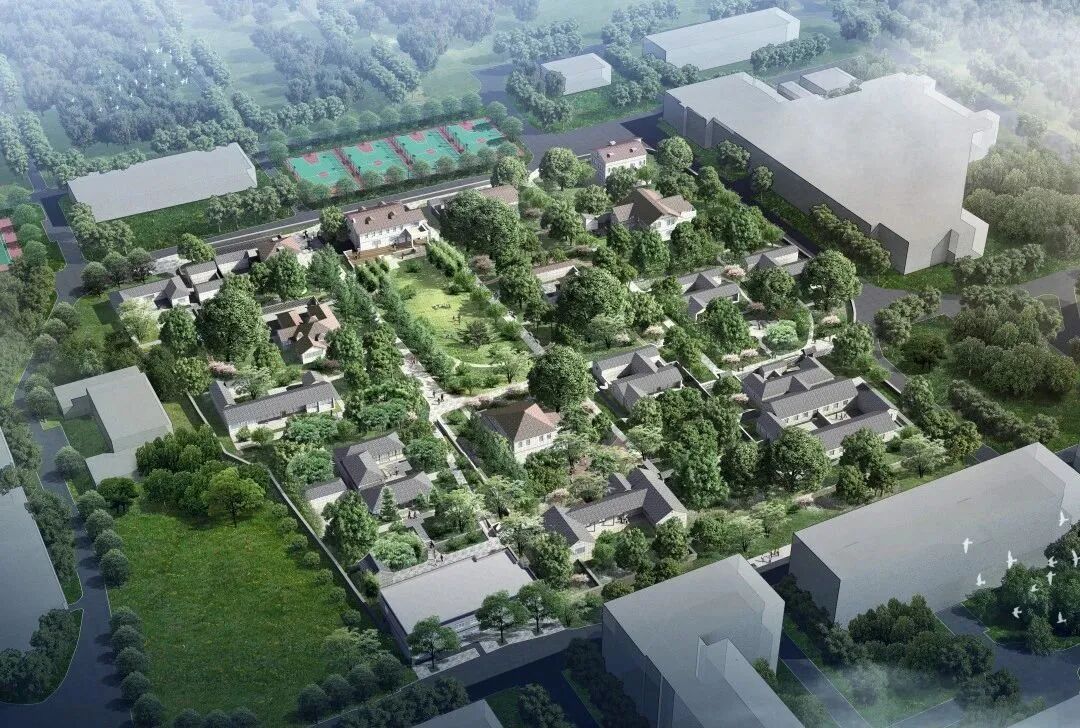
(a) Yannan Yuan Landscape Protection Rendering
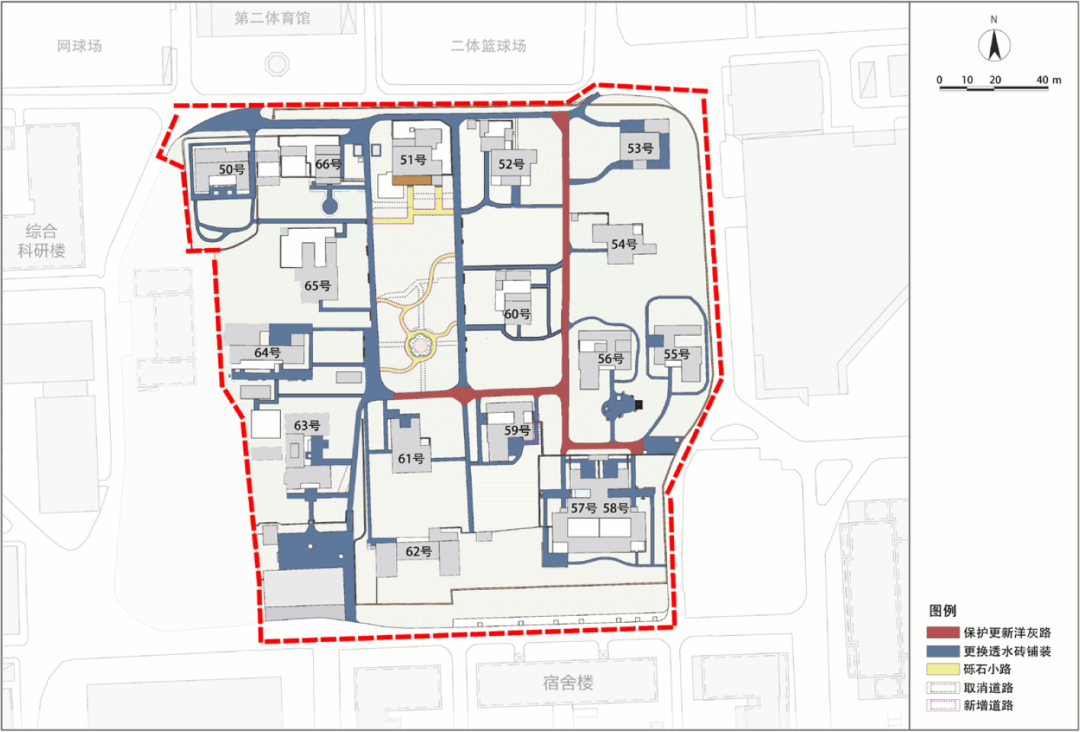
(b) Construction Plan
Figure 5 Yannan Yuan Landscape Protection Rendering and Final Construction Plan (Source: Drawn by MENG Fanxin)
4.2 Implementation of Community Engagement Suggestions in Conservation Practice
4.2.1 Minimal Intervention with Landscape Improvement as the Primary Focus
Based on the campus community's demand for "minimal intervention" at Yannan Yuan and the continuation of its original unique style of "natural," "antique," "lively and vibrant," and "quiet," the conservation practice employed minimal intervention with landscape improvement as the primary focus. This means respecting the historical layout and natural ecosystem of Yannan Yuan, focusing on梳理 and renewing dilapidated, unreasonable, and uncoordinated elements, such as整治 messy fence enclosures, sanitation facilities, and debris accumulation. The historic buildings within the garden are currently in good condition, requiring continued protection of their original style and appearance, coordinating the style of other buildings of poorer quality, removing illegally constructed temporary facilities, and relocating public restrooms that teachers and students generally believe affect the aesthetic character. Without adding other above-ground structures, a cultural display system based on Yannan Yuan elements will be designed and applied to the renewal of public facilities such as lights and benches within the garden, with the addition of directional signs and historical explanatory plaques, strengthening heritage interpretation while protecting the stylistic consistency of Yannan Yuan (Figure 6).
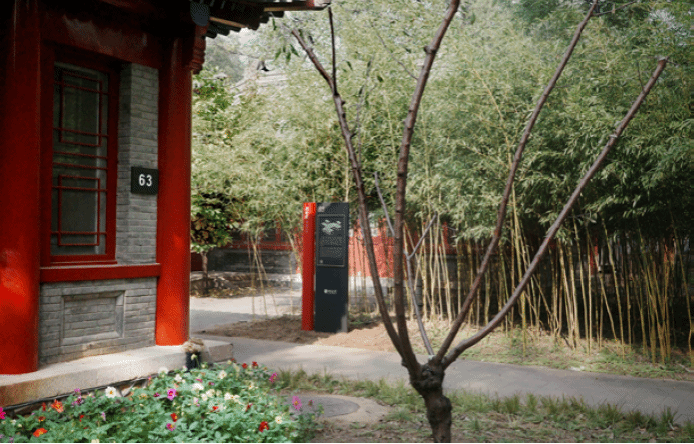
Figure 6 Signage System Comprehensively Considering Yannan Yuan Landscape and Peking University Elements (Source: Self-taken by authors)
4.2.2 Understanding Site Connotations from a Holistic Perspective
Planners often understand a site primarily through spatial and visual holism, making it difficult to comprehend its complete connotations from a temporal and holistic perspective. The different appearances of Yannan Yuan with the alternation of day and night and the cycle of seasons—the unique charms and困扰 problems within—can only be explored through the memories of the community that has长期 lived there. Therefore, community engagement收集 a large amount of experiential feedback from those who have lived through these experiences. Issues such as spring pollen allergies, summer mosquito breeding, insufficient nighttime lighting, and standing water on rainy days were reported, presenting the true face of Yannan Yuan from a more holistic perspective and making it possible to address specific and dynamic problems in Yannan Yuan.
4.2.3 Multi-Disciplinary Collaborative Working Mode
The community群体 particularly emphasized the protection of Yannan Yuan's ecology. To more professionally and comprehensively understand the ecological protection targets in the garden and develop scientific and effective conservation plans, the planning process invited teachers and students from the Peking University Green Life Association to guide the identification of protection target locations (Figure 7) and on-site signage installation (Figure 8), monitoring the impact of environmental improvement implementation on habitats. Inspired by the interdisciplinary合作 model for ecological protection, to more comprehensively and deeply understand other element information within Yannan Yuan and弥补 gaps in professional knowledge, the protection process also invited disciplines such as cultural relics, planning, and materials science to交流指导 targeted strategies for the protection and renewal of different elements within the garden. For example, the application of new materials for road paving and the segmented management of the sewage system are landscape improvement成果 guided and approved by professional personnel.

Figure 7 Plant Protection Planning Map (Source: Drawn by MENG Fanxin)

Figure 8 Protection Warning Sign (Source: Self-taken by authors)
5 Conclusion
Starting from the living characteristics of heritage and the continuity of community spirit, the Yannan Yuan landscape protection adopted a strategy of community engagement throughout the entire process. Specifically, a series of community engagement activities were conducted from three dimensions, guiding teachers and students to deepen their understanding of Yannan Yuan heritage conservation, encouraging them to actively offer suggestions, and forming, through negotiation among various opinions, a multi-party cooperation approach for the共同 protection and development of Yannan Yuan in the future, thereby protecting the living characteristics of the heritage and promoting campus development.
(1) Leveraging the foundation for community engagement in a university community. University teachers and students generally care about campus culture and public affairs and have the habit of participating in public discussion and expressing opinions. From their different knowledge backgrounds, they can提出 effective suggestions and leverage the advantages of their社团 organizational identities to participate in campus affairs through various approaches. This favorable community foundation enabled the smooth implementation of community engagement practice: sufficient sample sizes were collected, teachers and students actively signed up for activities, interviewees actively offered suggestions, and overseas alumni proactively sent letters—all reflecting the good community foundation of this project, enhancing the effectiveness of landscape protection.
(2) Proactively focusing on diverse populations. In community engagement, opinion research was conducted on both direct users (进驻 units) and indirect users (teachers and students on campus). The research on teachers and students tested the representativeness of respondents, covering students from all departments and levels across the university, as well as including faculty and staff. While focusing on the current campus community,尽可能 attention was also paid to the past campus community, such as contacting alumni concerned with the Yannan Yuan project through student associations, interviewing relatives and friends of former residents, and fully倾听 the diverse expressions of diverse populations.
(3) Establishing an institutional合作 working mechanism. Relying on existing relevant organizations on campus greatly enhanced the reach and dissemination power of activities, achieving better community engagement outcomes. In the tripartite cooperation among university administrative departments, academic institutions, and student社团 organizations: academic institutions, relying on their professional expertise, provided theoretical guidance for the project and ensured the reasonableness and effectiveness of the方案 through the planning, design, and specific organization of project schemes; student社团 organizations凝聚 relevant interest communities, representing the interests of related groups, and possess the ability to organize, mobilize, and disseminate,能夠 expand student participation and play an important role in community engagement practice—this is also a unique advantage of conducting community engagement in a university setting; university administrative departments, as official institutions, can ensure the legitimacy of the project,同時 mobilize more resources, making the integration of heritage education and heritage conservation closer. This working mechanism reflects the共同 cooperation of different institutions and groups on campus, enhancing the community engagement outcomes of heritage.
Community engagement practice in campus cultural heritage conservation is inseparable from the campus functions that heritage continues to serve. Diverse community engagement approaches策划 based on the characteristics of the campus community are conducive to protecting cultural diversity and the living characteristics of heritage. Thus, how community engagement practice in cultural heritage conservation can better integrate with the Chinese tradition, local development contexts, and the specific characteristics of different types of heritage is precisely about dynamically adjusting strategies based on research into local community organizational forms and group characteristics, implementing multiple approaches in parallel, to maximize effectiveness and promote the establishment of sustainable conservation and utilization approaches.

Notes
① The organizing unit of this project is the Department of Real Estate Management, Peking University, in collaboration with: Peking University Planning and Design Institute (Beijing), School of Archaeology and Museology, Peking University, Center for Public Archaeology and Art, Peking University, and World Heritage Institute of Training and Research for the Asia-Pacific Region (Beijing), UNESCO.
② The years in parentheses indicate the time when the renowned masters moved into Yannan Yuan.
③ Original quotes are from questionnaire survey results and interview records.
References
[1] LYU Bin. Principles and Planning Methods for the Continuous Growth of University Campus Space[J]. Urban Planning, 2002, 26(5): 24-28.
[2] ZHANG Tianjie, WANG Kailai. Analysis of the Conservation Process of Historic Campuses from the Perspective of Cultural Landscape: A Case Study of the University of Virginia's Academic Village, a World Heritage Site[J]. Chinese Landscape Architecture, 2018, 34(11): 32-37.
[3] YANG Xi. Research on the Conservation and Renewal of Traditional Campuses and Historic Buildings in Chinese Universities[D]. Guangzhou: South China University of Technology, 2011: 6-7.
[4] LI Liang, WANG Xin. Evaluation and Analysis of Student Groups' Attitudes toward Historic Campus Conservation[J]. Housing Science and Technology, 2017, 37(8): 57-62.
[5] ZHAO Xiaomei. Analysis of Living Heritage Theory and Conservation Methods[J]. China Cultural Heritage, 2016, 13(3): 68-74.
[6] ZHANG Chong. Review of Community Engagement in Heritage Practice[J]. Heritage and Conservation Research, 2019, 4(2): 34-40.
[7] YU Jiaping, ZHANG Chaozhi. Review of Research on Heritage and Discourse[J]. Natural and Cultural Heritage Research, 2020, 5(1): 18-26.
[8] SHI Xiaofeng, ZHANG Xiaotian, Beau Beza. Heritage Authenticity and Community Engagement in the Living Conservation of Traditional Villages[J]. Small Town Construction, 2022, 40(6): 86-90, 118.
[9] XIAO Dongfa, CHEN Guangzhong. The Masters of Yannan Yuan at Peking University[M]. Guilin: Guangxi Normal University Press, 2011: 82-84.
[10] TANG Keyang. From Abandoned Garden to Yan Yuan[M]. Beijing: SDX Joint Publishing Company, 2009: 79-92, 221-232.
Author Biographies: SONG Yilin (1996—), female, assistant curator, master's degree, main research directions: cultural heritage conservation, cultural heritage interpretation and presentation. E-mail: songyilin@pkupdi.com.
*Corresponding authors: ZHANG Jianwei (1982—), male, researcher, Ph.D., main research directions: building archaeology, architectural history and theory, cultural heritage conservation. E-mail: zhangjianwei@pku.edu.cn.
WANG Siyu (1991—), male, assistant professor, Ph.D., main research directions: critical heritage studies, new museology. E-mail: ivanwsy@163.com.
Community Engagement in
Campus Cultural Heritage Conservation ——A Case of the Peking
University Yannan Yuan Project
SONG Yilin1,RUAN Kexin2,ZHANG Jianwei2*,WANG Siyu2*,TANG Lin3
(1.Institute of Cultural Heritage Protection ,Peking University Planning and Desig n Institute(Beijing) Co.Ltd.,Beijing 100087,China;2.School of Archaeology and Museology,Peking University,Beijing 100871,China;3.Department of Real Estate Management,Peking University,Beijing 100871,China)

Abstract: Campus heritage serves the material and spiritual life of teachers and students, the continuity of its living characteristics depends on the presence of a dynamic community; therefore, the conservation and utilization of campus heritage should promote community engagement. The Peking University Yannan Yuan project relies on a strong base of community engagement, diverse cultural groups, and numerous organizations on campus. The project planning is based on opinions and suggestions, experience and practice, and dissemination and sharing, engaging community participation in heritage conservation practice in diverse ways. The approach is not only beneficial towards conserving the authenticity and vitality of heritage, but also reflects the demands of teachers and students more comprehensively, deepen the heritage conservation awareness in the community, and more importantly, explores future multi-partnership cooperation in heritage conservation and utilization.
Keywords: campus heritage;community engagement;campus renewal;Yannan Yuan
Editors: ZHAO Yahe, PIAO Lina
Reviewers: YANG Li, LI Guanghan, WANG Siyu
Final Reviewers: SHEN Ruiwen, ZHANG Jianwei