Editor’s Note
This issue of the “Runwu Heritage” public account introduces two research articles by Director Li Guanghan and Professor Du Xiaofan, published in Social Sciences Weekly, on community development and living heritage. Together with readers, the articles reflect on the relationship between “cultural heritage” and “community development” from the perspectives of rural heritage and living heritage, explore feasible paths for the protection and development of living heritage, and delve into the core issues of living heritage conservation.
Originally published in Social Sciences Weekly, August 31, 2023, Page 4.


Part One
Sustaining the Vitality of Living Heritage
Li Guanghan
Assistant Director, UNESCO Category II Centre for World Heritage Training and Research for the Asia-Pacific Region (Beijing)
Living heritage is a new concept that has emerged in the field of cultural heritage over the past twenty years. In 2003, the International Centre for the Study of the Preservation and Restoration of Cultural Property (ICCROM) was the first to emphasize the importance of the living dimension of heritage sites, recognizing their connection to contemporary life, especially the continued participation of core communities as long-term guardians and stakeholders of heritage sites. UNESCO has also incorporated the concept of living heritage into its understanding of intangible cultural heritage, believing that all intangible cultural heritage possesses a “living” nature, continuously recreated through intergenerational transmission and evolving in response to environmental changes. However, the concept of living heritage based on heritage sites extends beyond intangible cultural heritage alone. This concept was proposed precisely to avoid the problems created by binary distinctions such as tangible versus intangible heritage and movable versus immovable cultural relics. Instead, it emphasizes a people-centered conservation and management approach that can be applied to any heritage site where traditional functions continue and where tangible and intangible elements coexist. After the concept of cultural diversity emerged, living heritage became more clearly characterized by its relationship with communities and the continuity of traditions, emphasizing that living heritage is an ongoing process of evolution and that intergenerational transmission carried by people is its core principle.
The continuity of living heritage can be understood from four main aspects: continuity of function, continuity of community relationships, continuity of cultural expression, and continuity of maintenance. First and foremost, the most important aspect of this concept is the continuity of functional use. Certainly, all heritage may acquire some modern functions or uses, but what is emphasized here is the continuity of original functions closely tied to people’s identity as users, helping establish a close connection between people and heritage. If the original function can continue into the present, it must remain related to the place originally created for a particular community or group of users, such as temples and worshippers, clans and ancestral halls, traditional villages and long-term residents. These groups may be called the “core communities” or “core decision-makers” of heritage sites. The modern lives of core communities are influenced by changes in heritage sites, and vice versa. A heritage site that preserves traditional functions and core communities cannot remain unchanged forever. Over the course of history, it inevitably evolves according to environmental, demographic, and social changes, producing different tangible and intangible cultural expressions. Changes in tangible cultural expressions may include the renovation, extension, or even new construction of historic buildings, as well as changes in architectural or settlement patterns to adapt to environmental and population changes. Changes in intangible cultural heritage include shifts in activities, behaviors, rituals, and users. Core communities inevitably carry out corresponding long-term maintenance and management of heritage that remains in use, forming a knowledge system that includes traditional customs, skills, craftsmanship, and materials. In many cases, this maintenance and management knowledge system still functions today and may even provide livelihoods for communities.
In summary, living heritage possesses vitality because of the people living within it, and it is constantly changing. Therefore, the conservation of living heritage should focus on maintaining its continuity and dynamically managing change.

Women in Dali Village, Guizhou, concentrating on weaving
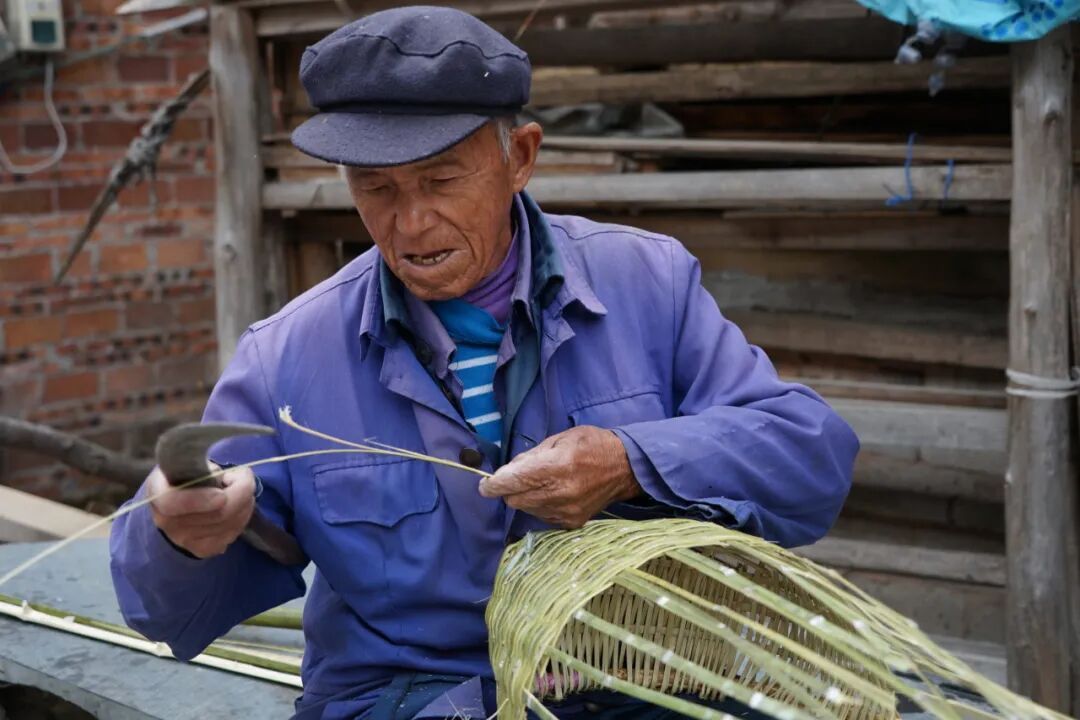
Villagers in Loushang Village, Guizhou, weaving baskets in their spare time
The international field of nature conservation has also gradually expanded from a singular focus on natural ecological science toward an integrated perspective combining nature and culture, paying attention to concepts such as biocultural diversity and socio-ecological resilience. Among these, local knowledge held by Indigenous peoples or long-established communities has become widely recognized as an important component of cultural diversity and an important contributor to sustainable development. It has attracted attention in biodiversity assessment and management, climate change assessment and response strategies, and disaster prevention research. Local knowledge refers to the various abstract and concrete understandings, skills, and philosophies developed through long-term interaction between a community and its natural environment, forming the basis for all aspects of daily life accumulated over generations. This knowledge system may include, but is not limited to, language, classification systems, methods of resource use, social activities, rituals, and spiritual beliefs. Holders of local knowledge generally share the following characteristics: first, they identify themselves and are recognized by the community as members; second, they belong to communities with historical continuity; third, they maintain close connections with their territory and surrounding natural environment; fourth, they possess distinctive languages, cultures, and beliefs; fifth, they maintain unique social groups and communities that sustain environmental and living systems.
Combined with the emphasis living heritage places on core heritage communities and continuity closely tied to them, whether regarding functional use, emotional, spiritual, or cultural identity and attachment, cultural expression, or maintenance and management knowledge, all ultimately point to the local knowledge held by core communities. A heritage perspective based on local knowledge can not only highlight indigenous conservation concepts within a comparative civilizational framework, but also respond to the concerns of heritage stakeholders — namely local core communities — as well as social and environmental issues related to heritage conservation. A heritage perspective based on local knowledge can achieve a mode of conservation that “sees people, objects, and life together.” In this process, by cultivating people’s sense of stewardship and shared responsibility toward both built and natural environments, communities can protect, manage, and appropriately utilize natural and cultural resources, thereby realizing orderly and equitable intergenerational transmission.
Part Two
Living Protection of Rural Heritage and Community Development
Du Xiaofan¹ Liu Shaoyuan⟡
The protection of rural heritage first originated in Europe, where long agricultural civilizations and early industrialization gave rise to two major approaches between the second half of the nineteenth century and the first half of the twentieth century: the protection of rural monuments and landscapes in Britain and France, and the ethnographic-style preservation represented by open-air museums in Scandinavia. From the postwar period through the 1960s, most countries focused their rural policies on agricultural and rural modernization while vigorously promoting urban development. It was not until the 1970s, when urbanization in developed countries reached a certain stage and the gap between urban and rural areas widened while rural societies increasingly declined, that countries began to recognize the urgency of community revitalization and rural heritage protection. As a result, rural heritage conservation gradually became a matter of international concern.
In international conservation documents, rural heritage initially appeared in the form of “rural monuments and landscape environments,” referring to rural classical architecture with relatively high historical value, such as rural churches and villas, as well as natural scenery with high aesthetic value. Later, specialized concepts specifically referring to rural heritage developed, mainly including categories such as “historic villages,” “vernacular architecture,” “rural landscapes,” and “agricultural heritage.” Overall, the trend has been toward increasingly comprehensive recognition and protection of the multiple values embodied in rural heritage, including both tangible and intangible elements and both natural and cultural carriers. Rural areas are no longer viewed merely as productive or economic resources, and rural heritage is no longer valued solely as historical testimony. It also possesses social and cultural value. Therefore, the goal of rural heritage conservation is no longer limited to physical restoration and renewal. Improving the quality of life in heritage communities and promoting sustainable local social and environmental development have also become intrinsic aspects of rural heritage conservation.
Compared with this, rural heritage conservation in China mainly emerged in the 1980s, with important beginnings in local explorations such as “ethnic characteristic villages + ecomuseums” in Guizhou Province in western China and vernacular architecture conservation in eastern China. Entering the twenty-first century, China carried out comprehensive identification of rural heritage, especially through the Traditional Villages Protection Project launched in 2012. By 2023, the number of Chinese traditional villages had reached 8,155, covering all 31 provincial-level administrative regions except Hong Kong, Macau, and Taiwan.
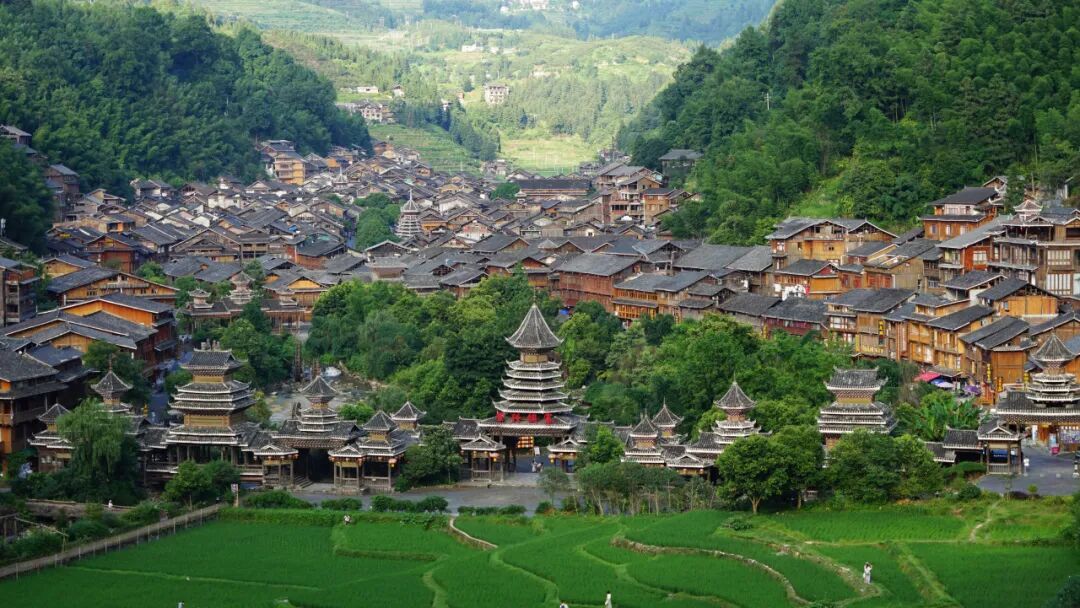
Zhaoxing Dong Village, Guizhou

Suojia Ecomuseum, Guizhou

Zhenshan Ecomuseum, Guizhou
Compared with developed countries, although China’s rural heritage conservation began relatively late, it has already established a complete rural heritage protection system. Based on its long agricultural civilization and vast territorial landscape, China’s rural heritage not only surpasses that of any single country in scale and variety, but also still retains strong living characteristics and value. China’s urbanization rate increased from 13.26% in 1953 to 63.89% in 2020, while the total rural population has remained around the same level of approximately 500 million people as in 1953, according to data from the Seventh National Population Census in 2020. This also means that a large number of villages have been preserved, including many living traditional villages with important heritage value. Rural areas will continue for a long time to serve as important living environments and repositories of traditional culture. At the same time, although China’s urbanization growth has slowed, it will continue for quite some time, and rural regions remain in the midst of transformation and restructuring. This also brings challenges to rural heritage conservation, especially in central and western regions where contradictions between conservation and development remain relatively pronounced.
Influenced by traditional heritage value paradigms, current understandings of rural heritage are mostly limited to material carriers such as individual buildings and architectural complexes, resulting in a relatively narrow perspective that fails to fully demonstrate the unique social and cultural values of rural heritage. Consequently, during conservation processes, approaches often involve relocating Indigenous residents and turning villages into “museums” or “tourist attractions,” excessively emphasizing so-called “original ecology” and “unified appearance” as conservation concepts and methods. Because of the living nature of rural heritage and the richness of its heritage elements, the principles and methods of rural heritage conservation should differ from those used for traditional monuments. The challenge lies not only in the protection and restoration of physical remains, but also in how to preserve cultural continuity, rebuild local identity, balance conservation and development, properly address the demands of related stakeholder groups, and sustainably benefit communities surrounding heritage sites and even broader populations, thereby enhancing the cultural influence of heritage on nearby village residents.
It should be said that without the people who have lived there for generations and the social relationships they maintain, if only the physical landscape dimension of the countryside is preserved, the living value characteristics of rural heritage would cease to exist, and intangible cultural heritage would also become difficult to transmit. In the long process of managing relationships between humans and nature, humans and society, and humans and themselves, traditional rural societies gradually formed relatively stable values and cultural memories. These became the source of survival wisdom and identity for the long-term continuity of traditional rural society. These values regulate human behavior through systems of discourse, normative beliefs, customary law, and social mechanisms, while becoming externalized in visible material forms through practice. The transmission of cultural memory provides emotional motivation and historical reference for human behavior, thereby sustaining the long-term development of rural society and rural civilization. Values and cultural memory thus become important value characteristics of rural heritage, the core of which lies in their reference to a kind of cultural heritage belonging to specific groups and specific places — namely, villages as the material and spiritual homes upon which residents depend for survival and development. From this perspective, rural heritage is also a kind of homeland heritage. In the process of conserving and transmitting rural heritage, if these values and cultural memories are completely lost and reconstruction relies solely on external actors and outside value systems, the homeland nature of rural heritage will inevitably become “alienated.”

Villagers who have lived in the countryside for generations
The countryside is both the birthplace of Chinese civilization and the material and spiritual homeland where the Chinese nation has thrived for generations. Ultimately, the achievements of rural heritage conservation should be returned to the people who continue to live on this land. This is a reality that cannot be changed no matter how high the level of urbanization becomes or how modernized our lives may be. Living conservation has strong practical significance for the majority of agricultural traditional villages and farmers in central and western China. Through heritage conservation, villagers can be organized and transformed into participants in public cultural activities, improving their quality of life and cultural literacy, strengthening community relationships, and enriching their spiritual lives. This demonstrates the practical value of heritage conservation. The current Rural Revitalization Strategy has created a new developmental context, resources, and space for rural heritage while establishing a “three-step” timetable extending through 2035 and 2050. The conservation and management of rural heritage is not merely a matter of professional conservation techniques, but is also closely connected with issues such as social governance, community development, and organizational construction, requiring long-term investment, division of labor, collaboration, and timely adjustment in practice.
[1] Du Xiaofan, Professor in the Department of Cultural Heritage and Museology at Fudan University; Director of the Center for Territory and Cultural Resources Research at Fudan University; UNESCO Chairholder for Living Heritage and Community Development.
[2] Liu Shaoyuan, Doctoral student in the Department of Cultural Heritage and Museology at Fudan University.