International Heritage News
01 ICOMOS Releases 2022 Annual Report
On May 29, the International Council on Monuments and Sites (ICOMOS) released its 2022 Annual Report. The report summarizes activities related to the 2022 International Day for Monuments and Sites, the second Culture-Nature Award, the 50th anniversary celebrations of the World Heritage Convention, and collaboration with the World Monuments Fund (WMF).
The report includes a summary of work over the past year on cultivating leadership in heritage conservation, as well as new developments in heritage protection.
Full report download link:
https://www.icomos.org/en/about-icomos/2016-11-17-13-14-08/annual-reports/123846-the-annual-report-2022-is-available
Source: www.icomos.org
02 UNESCO Publishes Consolidated Report on Implementation of the Recommendation on Historic Urban Landscapes

Recently, UNESCO published the consolidated report of the third consultation with member states on the implementation of the 2011 Recommendation on Historic Urban Landscapes (HUL). The report confirms the important role the 2011 Recommendation has played in managing heritage around cities and settlements, highlighting the importance and urgency of integrating heritage conservation with urban development planning and processes within the framework of the 2030 Agenda for Sustainable Development. Currently, cities around the world face threats from uncontrolled urbanization, irrational urban development planning, climate change, and other global challenges. The approach provided by the HUL Recommendation shows a path toward sustainability, inclusiveness, and resilience.
The report covers six themes at both national and city levels, responding to the key principles of the HUL Recommendation. First, the Recommendation goes beyond protecting specific landscape features in cities, advocating instead for a layered protection approach that includes the collective protection of streets, public spaces, residential areas, and natural landscapes (such as water bodies and gardens). At the same time, the Recommendation emphasizes the protection of local community customs, which are crucial for maintaining the identity of urban heritage within a broader context.
Appropriate and robust governance mechanisms and planning tools are essential to protect heritage in cities. The 2011 Recommendation is more relevant today than ever, as cities and urban heritage face numerous complex global challenges and urgently need to find a sustainable, inclusive, and climate‑resilient path forward. The data show that some member states have made progress in implementing the Recommendation, but broader and more effective implementation is urgently needed.
Source: Asian Academy for Heritage Management
03 Results of the European Cultural Heritage Action Project

Funded by the EU's Creative Europe programme, the European "Cultural Heritage in Action" project, from January 2020 to January 2023, enhanced cultural heritage management through participatory governance and strengthened the understanding of citizen participation and its contribution to the protection and utilization of heritage sites.
Over the three‑year period, hundreds of local policymakers, cultural heritage experts, and practitioners participated in the project and organized sectoral exchanges, producing the following results:
·A digital toolkit for cultural heritage experts
·60 local innovative good practice cases
·Thematic analyses of local practical knowledge
·Short videos on cultural heritage from various cities and regions
The project focused on the recovery and resilience of cultural heritage in a post‑pandemic world, emphasized the importance of cultural heritage in enhancing well‑being and social integration, enhanced the role of cultural heritage as a means of local sustainable development, and explored new functions for local and regional authorities in governance and funding.
Source: International Heritage Observation
04 Europe Releases Guidelines for Museum Education and Public Engagement

On May 25, the Network of European Museum Organisations (NEMO), together with the German Museum Association and other institutions, jointly released the "Guidelines for Museum Education and Public Engagement". Emphasizing that education and public engagement are key tasks for museums today, the Guidelines propose success factors related to audience orientation, collection focus, diverse methods, and communication. They also provide practical advice and reference cases for museums to carry out related activities.
Guidelines download link: https://www.ne-mo.org/fileadmin/Dateien/public/Publications/NEMO_Working_Group_LEM_Publication_Developing_Education.pdf
Source: www.ne-mo.org
05 ICCROM Holds Workshop on Damage and Risk Assessment After the Ecuador Earthquake

Recently, the ICCROM FAR (First Aid and Resilience) team held a damage and risk assessment workshop for the National Institute of Cultural Heritage of Ecuador. In light of the recent earthquake in Cuenca, Ecuador, and the country's high seismic risk index, ICCROM organized this workshop to discuss first aid approaches for cultural heritage and to introduce step‑by‑step methods for damage and risk assessment of movable, immovable, and intangible heritage.
The 33 workshop participants came from multidisciplinary backgrounds, including archaeology, architecture and engineering, urban geography, curation, cultural heritage risk management, museology, anthropology, art history, and sociology.
Source: www.iccrom.org
06 2023 Training Course for Young Heritage Professionals in Asia‑Pacific: "Conservation and Management of Wooden Built Heritage"

Since 2000, the UNESCO Asia‑Pacific Cultural Centre's Office for Cultural Heritage Protection Cooperation (ACCU‑Nara), together with the Agency for Cultural Affairs of Japan, ICCROM, the Tokyo National Research Institute for Cultural Properties, and the Nara National Research Institute for Cultural Properties, has initiated and implemented several capacity‑building and expansion programs aimed at young professionals in cultural heritage research, protection, and management in the Asia‑Pacific region.
The 24th ACCU Group Training Course is themed "Conservation and Management of Wooden Built Heritage". The course is aimed at young professionals who have already worked for several years in the conservation and management of wooden built heritage and wish to expand their knowledge and skills, share their experiences, and contribute to the sustainable conservation of wooden architecture in the Asia‑Pacific region.
Organizers:
·Agency for Cultural Affairs of Japan
·UNESCO Asia‑Pacific Cultural Centre (ACCU‑Nara), Office for Cultural Heritage Protection Cooperation
·ICCROM
·Tokyo and Nara National Research Institutes for Cultural Properties, Japan
Detailed information and registration: https://www.iccrom.org/courses/conservation-and-management-wooden-built-heritage-2023
Source: Asian Academy for Heritage Management
Domestic Heritage News
01 UNESCO Executive Board Adopts Resolution to Establish a Category 1 Institute in China
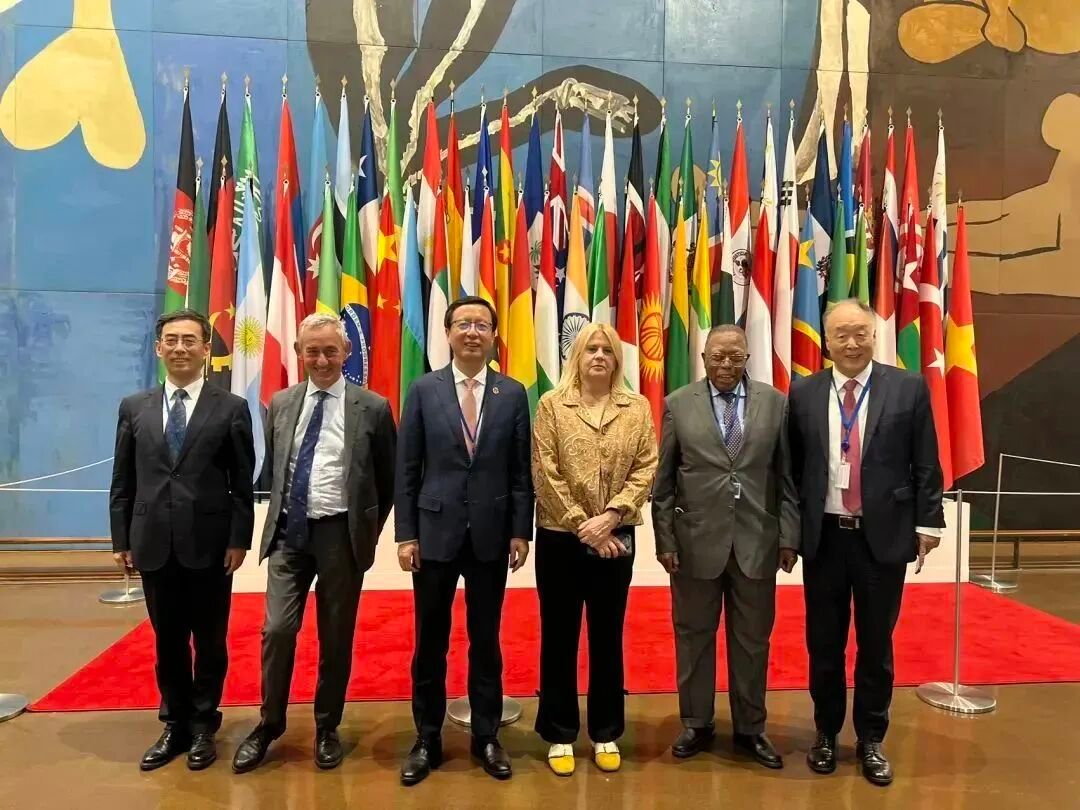
Recently, the 216th session of the UNESCO Executive Board, held in Paris, after full consultation, unanimously adopted on May 22 a resolution to establish a UNESCO Category 1 institute for STEM (Science, Technology, Engineering, Mathematics) education in Shanghai, China. This Category 1 institute will strengthen UNESCO's leadership in STEM education.
UNESCO Category 1 institutes are part of the Organization and can function as think tanks, standard‑setters, facilitators of international cooperation, information clearinghouses, and capacity‑builders within their areas of competence. According to the rules, the resolution adopted at this session of the Executive Board to establish a Category 1 institute in China will be submitted for final approval to the 42nd General Conference of UNESCO in November this year. If approved, this institute will become the first Category 1 institute established by UNESCO in China and the Organization's first global Category 1 institute outside Europe.
Source: UNESCO Chair on Industrial Heritage
02 Macau's Gong Dong (Kun Iam) Temple Documentary Heritage Inscribed on UNESCO Memory of the World Register

On May 24, UNESCO announced the inscription of "Macau's Gong Dong (Kun Iam) Temple Documentary Heritage (1645–1980)" on the Memory of the World Register. This collection includes more than 6,600 archives from the Ming dynasty to the mid‑20th century, including ancient books, palm‑leaf manuscripts, photographs, and drawings. The Gong Dong (Kun Iam) Temple preserved these documents and used them for cultural and educational activities for women in Macau and the surrounding region, making them important documentary heritage that contributed to social change and the advancement of women's status in Macau.
With the inscription of these 64 items, the total number on the Register reaches 494. Many of these documents urgently need digital preservation due to storage medium issues.
Source: www.unesco.org/en/memory-world
03 China Elected Vice‑President of the General Conference of States Parties to the UNESCO 1970 Convention
On May 30, 2023, at the 7th session of the General Conference of States Parties and the 11th session of the Subsidiary Committee of the UNESCO 1970 Convention on the Means of Prohibiting and Preventing the Illicit Import, Export and Transfer of Ownership of Cultural Property, held in Paris, France, China was elected Vice‑President of the General Conference of States Parties for the first time. China also successfully re‑elected as a member of the Subsidiary Committee and was elected Vice‑President of the Subsidiary Committee for this session.
The 1970 Convention is the most important international legal instrument in the fight against illicit trafficking of cultural property and the restitution and return of looted cultural objects. It currently has 143 States Parties.
China's successful election as Vice‑President of the General Conference of States Parties and as a member of the Subsidiary Committee is an important achievement resulting from its active participation in the work of the General Conference of States Parties in recent years, its fulfillment of its duties as a member of the Subsidiary Committee, and its international cooperation in combating illicit trafficking of cultural property and promoting the return of looted cultural objects. This will help China strengthen its voice in the 1970 Convention, effectively articulate the position of countries of origin, further enhance multilateral and bilateral cooperation in this field, deeply participate in the international governance of cultural heritage, and lead the construction of a new international order for the restitution and return of looted cultural objects.
Source: National Cultural Heritage Administration
04 2023 Cultural and Natural Heritage Day Main Event to be Held in Chengdu on June 10
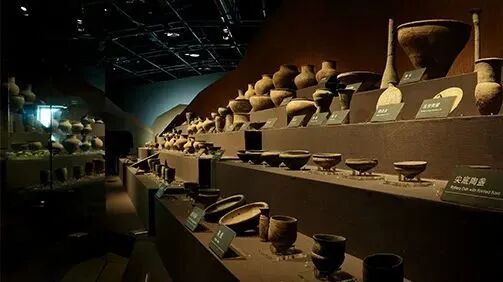
The theme of this year's Cultural and Natural Heritage Day is "Cultural Heritage Protection and Utilization and Cultural Confidence and Self‑strengthening". The main event will be held in Chengdu, Sichuan Province, on June 10. The event is organized by the National Cultural Heritage Administration and the People's Government of Sichuan Province, and co‑organized by the Department of Culture and Tourism of Sichuan Province, the Sichuan Provincial Administration of Cultural Heritage, the People's Government of Chengdu, and Sichuan University. Under the careful arrangement of the National Cultural Heritage Administration, the main event will focus on the theme and highlight exemplary cases through selection and promotion.
On Heritage Day, typical representatives from the cultural heritage sector will be invited to give keynote presentations. There will be a thematic forum on "Cultural Heritage Protection and Utilization and Cultural Confidence and Self‑strengthening" and the third Cultural Relics Science and Technology Innovation Forum. The first list of high‑quality development cases in cultural heritage, the list of excellent new media communication projects for Chinese cultural heritage, and the list of the fifth "Search for the Most Beautiful Guardians of Cultural Heritage Safety" will be announced. A pilot project for a thematic trail of Su Dongpo heritage will be launched. The exhibition "China in Writing: Chinese Civilization in Square Characters", jointly organized by the National Cultural Heritage Administration and the People's Government of Sichuan Province, will also open. Concurrently, a series of supporting activities will be held, including an online exhibition "Memories in Painting, Guardians of the Homeland – Chinese Cultural Heritage Art Exhibition" and a national youth cultural heritage knowledge performance competition.
Source: National Cultural Heritage Administration
05 Lecture on "World Cultural Heritage in China" Held at Quanzhou Cultural Heritage Research Institute

On May 19, Song Xinchao, Chairman of ICOMOS China, visited Quanzhou Normal University to launch the first lecture in the "Cultural Heritage and Ancient Civilizations" series organized by the Quanzhou Cultural Heritage Research Institute – "World Cultural Heritage in China". The lecture was attended by colleagues from Quanzhou's cultural heritage institutions and faculty and students of Quanzhou Normal University. The lecture was moderated by Sun Hua, Professor at Peking University's School of Archaeology and Museology and Director of the Quanzhou Cultural Heritage Research Institute.
During the lecture, Dr. Song Xinchao introduced the birth and development of World Heritage, assessed the role of World Heritage projects in the protection and utilization of cultural relics in China, elaborated on China's contributions to the global World Cultural Heritage enterprise, and looked ahead to the prospects for World Cultural Heritage in China. Dr. Song Xinchao noted that China will continue to strengthen international cooperation in the field of World Cultural Heritage and play a greater role in building a network of dialogue and cooperation among countries with different cultures and civilizations. The audience gained a more comprehensive understanding of the emergence and development of World Cultural Heritage in China and benefited greatly from Dr. Song Xinchao's lecture.
Source: Peking University Cultural Heritage Research
06 Peking University's School of Archaeology and Museology and Gansu Provincial Institute of Cultural Relics and Archaeology Reconstruct the World's Earliest Composite Tile Roof

With support from the "Archaeological China: Settlements and Society in the Hetao Region" project, the School of Archaeology and Museology at Peking University, in collaboration with the Gansu Provincial Institute of Cultural Relics and Archaeology, used more than 5,000 fragments of early Longshan culture (2400‑2200 BCE) ceramic tiles excavated from a single unit at the Qiaocun site in Lingtai County, Gansu Province. Using methods such as morphological measurement, quantitative analysis, 3D modeling, and computer simulation, and referring to the "Yingzao Fashi" (Treatise on Architectural Methods) and historical period archaeological discoveries, they reconstructed the earliest known composite tile roof technology in the world. They also demonstrated the technical level of early tile production, the use scenarios, and the environmental background and socio‑cultural significance of the invention and use of composite tiles on the Loess Plateau during the late Neolithic period, achieving a major breakthrough in tracing the origins of composite tiles.
The research results were published online on May 19, 2023, in the international journal Scientific Reports under the title "Reconstructing the earliest known composite‑tiled roofs from the Chinese Loess Plateau". One of the anonymous reviewers commented that "this is predictably an important research result that will have far‑reaching influence."
Source: Peking University News