International Heritage News
01
2023 International Day for Monuments and Sites: Technology Assists in Exploring World Heritage

On the occasion of the International Day for Monuments and Sites, UNESCO World Heritage Centre Director Lazare Assomo published an article welcoming people from all sectors of society to explore World Heritage through online exhibitions.
Lazare emphasized that World Heritage is not only a carrier of value, but also a prism of history and culture. One of UNESCO’s tasks is to strengthen the promotion of World Heritage through the responsible application of new technologies. This year, UNESCO once again cooperated with the Google Arts & Culture platform during the International Day for Monuments and Sites, allowing people around the world to appreciate World Heritage through increasingly rich virtual tours and online exhibitions.
Source of text and images: whc.unesco.org
02
Call for Papers for the 2023 Annual Conference of the ICOM Committee for the Collections and Activities of Museums of Cities

The 2023 annual conference of the International Council of Museums (ICOM) Committee for the Collections and Activities of Museums of Cities will be held in New York from October 16–19. The themed call for papers, “Changing Cities, Changing Museums,” has officially begun.
The call for papers aims to emphasize that city museums have always borne the responsibility of responding to change in their interpretation of history, while changes in the 21st century have brought many new challenges, especially DEAI (Diversity, Equity, Accessibility, and Inclusion) and its relationship with communities. Therefore, the call includes the following topics:
— Changing museum practices and their impact on city museums
— The ability and responsibility of city museums to adapt to community changes
— The ways city museums reflect regional, national, and global changes from the urban scale
— Strategies for presenting earlier changes to contemporary audiences
Source of text and images: International Heritage Observer
03
Italy Restarts Funding Project for Afghan Heritage Protection
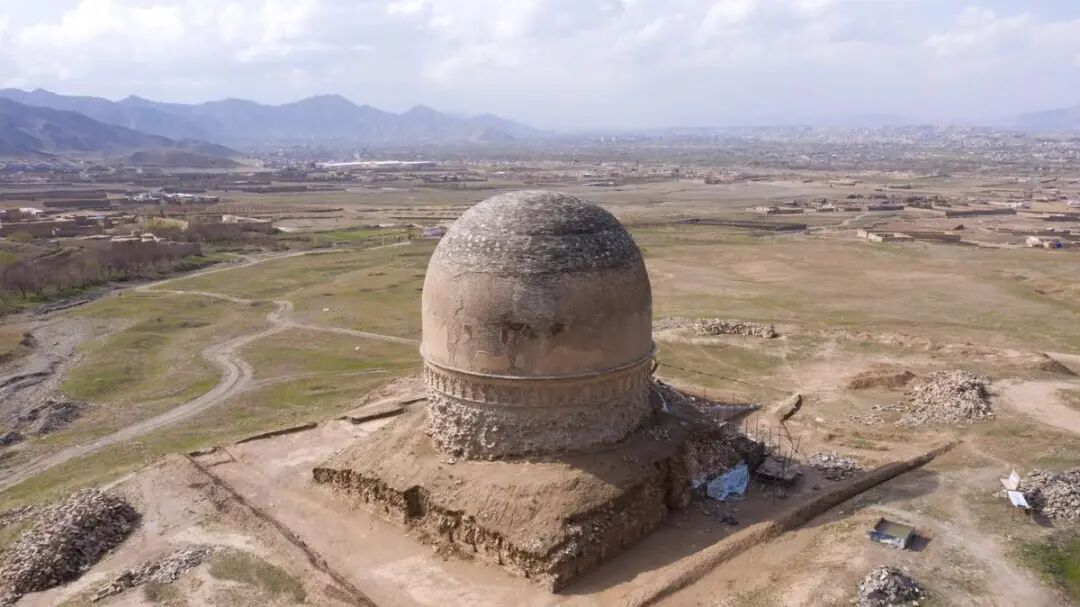
In April this year, Italy restarted its multi-million-dollar heritage protection funding project provided to UNESCO for Afghanistan.
Last November, cultural heritage experts from around the world attended a conference in Florence to discuss the protection of Afghan heritage. Because the current government has not yet received broad international recognition and faces multiple sanctions, the condition of the endangered World Heritage site “Cultural Landscape and Archaeological Remains of the Bamiyan Valley” has become a global concern.
Some experts believe that the significance of Bamiyan lies not only in its valuable heritage, but also in its symbolic meaning. For the Taliban, who claim they want to protect Bamiyan heritage, the project could bring economic stimulus through tourism development. The conference eventually prompted the Italian government to restart Afghan heritage protection funding at the end of February, making Italy one of the earliest countries to provide heritage protection funding to Taliban-controlled Afghanistan.
The project includes protection of the Bamiyan World Heritage site, infrastructure construction to strengthen site security, improvements to visitor experience, and preparation of conservation and management plans.
The project will also provide urgently needed humanitarian assistance by employing one hundred local workers.
This funding project will also provide local people with skills needed for future employment and livelihoods, bringing long-term sustainability to the World Heritage site. If properly protected and managed, World Heritage itself can become a source of employment for future generations.
Source of text and images: https://www.theartnewspaper.com/
04
U.S. International Day for Monuments and Sites Seminar: Heritage as a Driver of Climate Action

US/ICOMOS held an online seminar on April 27 titled: Heritage as a Driver of Climate Action. Centered around the International Day for Monuments and Sites theme “Heritage Changes,” the seminar explored heritage practices that improve climate resilience, the contribution of preserving indigenous knowledge to cultural landscape protection, and the growing demands on protecting historic places to mitigate climate impacts.
Source of text and images: icom-cc2023.org
05
ICCROM Online Seminar: Pursuing Wellbeing and Market-Driven Innovation

The International Centre for the Study of the Preservation and Restoration of Cultural Property (ICCROM) will hold an online seminar on May 18 titled “Pursuing Wellbeing and Market-Driven Innovation: Meeting Consumers’ Needs and Rights.” Based on examinations of marketing and business management fields, the event will explore how heritage organizations can reconstruct business models centered on consumer wellbeing.
The event points out that participatory business model innovation aims to improve organizational goals and methods of implementation in order to better serve consumers, increase visibility, and contribute to sustainability. As a way of reorganizing heritage operations, this market-driven innovation will help open paths toward greater social impact and wellbeing, while also enabling organizations to attract sponsorship more effectively.
Source of text and images: International Heritage Observer
Domestic Heritage News
01
Asian Cultural Heritage Protection Alliance Conference Held in Xi’an

From April 24 to 26, the “Asian Cultural Heritage Protection Alliance Conference,” jointly hosted by the Ministry of Culture and Tourism, the National Cultural Heritage Administration, and the Shaanxi Provincial People’s Government, was held in Xi’an. A total of 150 representatives from 22 Asian countries and 3 international organizations attended the conference, officially establishing the Asian Cultural Heritage Protection Alliance. The Alliance Council reached broad consensus and issued the “Xi’an Declaration of the Asian Cultural Heritage Protection Alliance.”
At the conference, Li Qun, Director of the National Cultural Heritage Administration, stated that China will continue strengthening the institutional development and capacity building of the Alliance Secretariat, and will support the sustainable development of the Alliance through the Asian Cultural Heritage Protection Fund. At present, the fund has raised 88 million RMB to support Asian cultural heritage protection projects jointly carried out by China and Alliance member countries.
Source of text and images: Xinhua News Agency
02
“Sanxingdui · Bronze Civilization of the Yangtze River Basin” Special Exhibition Opens at Anhui Museum
The exhibition “Drinking from the Same River — Sanxingdui · Bronze Civilization of the Yangtze River Basin,” jointly launched by more than twenty Chinese cultural institutions, opened at the Anhui Museum on the 20th, displaying more than 140 sets of precious cultural relics dating from the Shang Dynasty to the Warring States period.
According to reports, during the Shang and Zhou periods, after fully absorbing bronze casting technologies from the Central Plains, the ancestors of the Yangtze River basin developed innovative bronze civilizations with strong regional characteristics based on local natural environments and cultural traditions.
The bronze head with gold mask from Sanxingdui, the Sword of King Guang of Wu from the Anhui Museum collection, and the Qin Gong bronze bell from the Baoji Bronze Ware Museum collection… This exhibition covers distinctive bronze cultural systems such as Ba-Shu culture, Jing-Chu culture, and Wu-Yue culture. The exhibits include bronze ware, gold artifacts, ivory artifacts, jade and stone artifacts, and primitive porcelain.
Ji Yong, Deputy Director of Anhui Museum, stated that the exhibition aims to promote the integration and research of high-quality cultural relic resources in the Yangtze River basin, further promote Yangtze civilization, display Yangtze culture, and tell Yangtze stories. At the same time, it seeks to promote exchanges and cooperation among museums in the Yangtze River basin and regional museums.
Source of text and images: culture.gmw.cn
03
2023 China Baijiu World Heritage Application Forum Held in Nanchang, Jiangxi

On April 28, the Second National Industrial Heritage Summit and the “Guobao Lidu” 2023 China Baijiu World Heritage Application Forum were held in Nanchang, Jiangxi. Seven “cultural relic-level” baijiu enterprises from China’s famous baijiu lineup — Luzhou Laojiao, Moutai, Wuliangye, Gujing Gong, Fenjiu, Yanghe, and Lidu — jointly launched an application to enter the “World Cultural Heritage Tentative List.” Government leaders, baijiu experts, enterprise representatives, scholars, and specialists attending the forum put forward positive suggestions regarding the protection and utilization of China’s tangible and intangible baijiu heritage and how to accelerate the global recognition of Chinese baijiu, jointly promoting the success of the “Seven Sons of Chinese Baijiu” heritage application.
It is reported that the forum was jointly hosted by the Industrial Culture Development Center of the Ministry of Industry and Information Technology, the China Cultural Relics Exchange Center, the Jiangxi Provincial Department of Industry and Information Technology, and the Nanchang Municipal People’s Government, and organized by the Nanchang Bureau of Industry and Information Technology, Jiangxi Lidu Liquor Co., Ltd., and Zhongchuang Cultural Heritage Technology Development (Beijing) Co., Ltd. After the forum, related matters regarding the joint heritage application of the “Seven Sons of Chinese Baijiu” will advance rapidly. A closed-door working meeting on the baijiu heritage application was also held afterward to discuss the work in detail.
Source of text and images: www.thepaper.cn
04
Asian Cultural Heritage Youth Forum Successfully Concludes

On April 27, the Asian Cultural Heritage Youth Forum, jointly hosted by the Asian Cultural Heritage Protection Fund of the China Foundation for Cultural Heritage Conservation and Sun Yat-sen University, and organized by the UNESCO Chair on Sustainable Tourism in World Heritage Sites and the School of Tourism Management at Sun Yat-sen University, successfully concluded.
This forum was organized by the Asian Protection Fund of the China Foundation for Cultural Heritage Conservation, which entrusted the UNESCO Chair on Sustainable Tourism in World Heritage Sites to launch a call for creative proposals from youth across Asia on how cultural heritage can respond to climate change, encouraging Asian youth to discover and seek traditional knowledge around them that can promote heritage protection.
Centered on strengthening exchanges of cultural heritage protection experience, promoting mutual learning among Asian civilizations, and cultivating friendship and responsibility for heritage protection among Asian youth, the forum included multiple sessions such as creative proposal presentations and expert commentary, youth representative discussions, thematic training on cultural heritage protection and utilization, and discussions on cooperation in cultivating talent for Asian cultural heritage protection.
Source of text and images: UNESCO Chair on Sustainable Tourism in World Heritage Sites
05
“Little Red Flower Dream · Thousand Faces Protection Plan” Public Welfare Event Successfully Held in Anyue
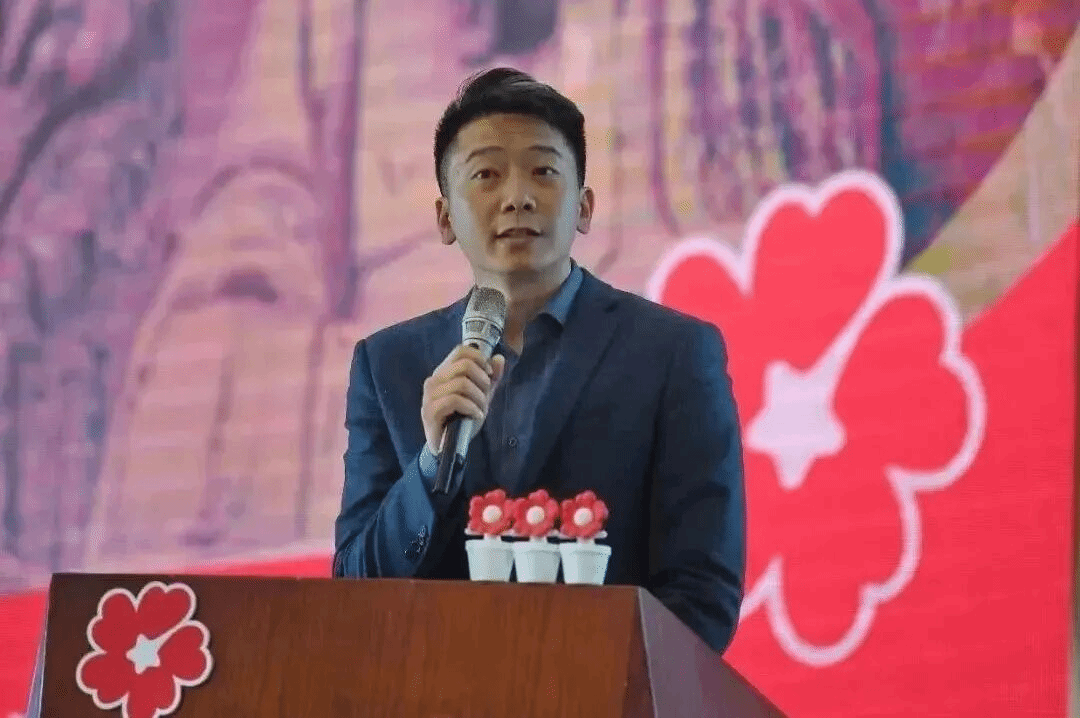
On April 27, 2023, the large-scale public welfare assistance event “Little Red Flower Dream · Thousand Faces Protection Plan,” planned by the UNESCO World Heritage Institute of Training and Research for the Asia and the Pacific Beijing Centre (WHITRAP-BEIJING), jointly guided by the Sichuan Provincial Cultural Heritage Administration and WHITRAP-BEIJING, and jointly hosted by the Sichuan Traditional Cultural Heritage Protection Association, Tencent Foundation, and the Anyue Grottoes Research Institute, was successfully held.
The event aimed to gather public welfare力量 to jointly focus on the protection and development of the Anyue Grottoes. The event invited 100 grotto guardians from various Anyue grotto cultural protection sites. The Anyue Grottoes Research Institute also selected 10 outstanding grotto guardians and held an award ceremony on-site.
In his speech, WHITRAP-BEIJING Executive Deputy Director and researcher Zhang Jianwei introduced the origin and implementation理念 of the public welfare event, pointing out:
“General Secretary Xi Jinping highly values the protection and utilization of grotto temples. Chinese grotto temples embody China’s historical and cultural values and the spiritual pursuits of the Chinese nation. They reflect a comprehensive and authentic ancient China and modern China, and they are also important examples of exchanges and mutual learning among civilizations. The WHITRAP-BEIJING center pays close attention to the development of communities related to heritage sites and appreciates the attention paid by the sponsors and organizers to the group of cultural heritage protection workers.”
Source of text and images: WHITRAP-BEIJING