On April 22, 2023, the Beijing Center of the International Centre on Space Technologies for Natural and Cultural Heritage under the Auspices of UNESCO (WHITRAP-Beijing) successfully held the Midterm Exchange Meeting for the Public Participation in Grand Canal (Beijing Section) Heritage Monitoring at the Beijing Center office.
In order to promote public participation in World Cultural Heritage monitoring and assist preventive conservation and research work for cultural relics, WHITRAP-Beijing and Beijing Weiming Wenbo Cultural Technology Co., Ltd. jointly launched the Public Participation in Grand Canal (Beijing Section) Heritage Monitoring initiative in October 2022.
About six months after the launch of the project, the midterm exchange meeting was organized to review the annual monitoring work of the Grand Canal (Beijing Section) and invite volunteer representatives, guests, and members of the expert observation group to participate.
Guests attending the event included Professor Lian Zhiying from the School of Information Resource Management at Renmin University of China; An Zhiming, Deputy Director of the Capital Core Functional Area Department at the Beijing Institute of Surveying and Mapping and Senior Professor-Level Engineer; and Zhang Yiran, Senior Engineer of the same department.
Members of the expert observation group who were invited included Gao Xiaolong, Researcher and Curator at the Capital Museum; Liu Baoshan, Deputy Chief Planner at the Peking University Institute for Territorial Spatial Planning and Design; and Wang Danyi, Engineer of the Heritage Preventive Protection Department at the Beijing Archaeological Research Institute.
The event was hosted by Park Lina, Project Specialist at WHITRAP-Beijing. Volunteer representatives Liu Yuyang, Liu Mingqian, Zhao Zinan, Lu Tianyu, Wang Manyu, and Zhou Zhizhen were also invited to participate.

Group photo of the midterm exchange meeting


Field inspection activities for the Public Participation in Grand Canal (Beijing Section) Heritage Monitoring initiative
At the beginning of the meeting, WHITRAP-Beijing Project Specialist Park Lina welcomed all volunteers and guests on behalf of WHITRAP-Beijing and expressed gratitude for the volunteers’ hard work and selfless dedication over the past six months.
She emphasized that public participation in Grand Canal heritage monitoring depends fundamentally on the “public,” and that volunteers are the soul of the team. Over the past six months, volunteers overcame the challenges of the COVID-19 pandemic and harsh winter weather to complete monthly monitoring tasks without interruption. Some enthusiastic volunteers even increased the frequency of inspections beyond the required tasks, frequently reporting issues related to water surfaces and surrounding environments in the WeChat discussion group.
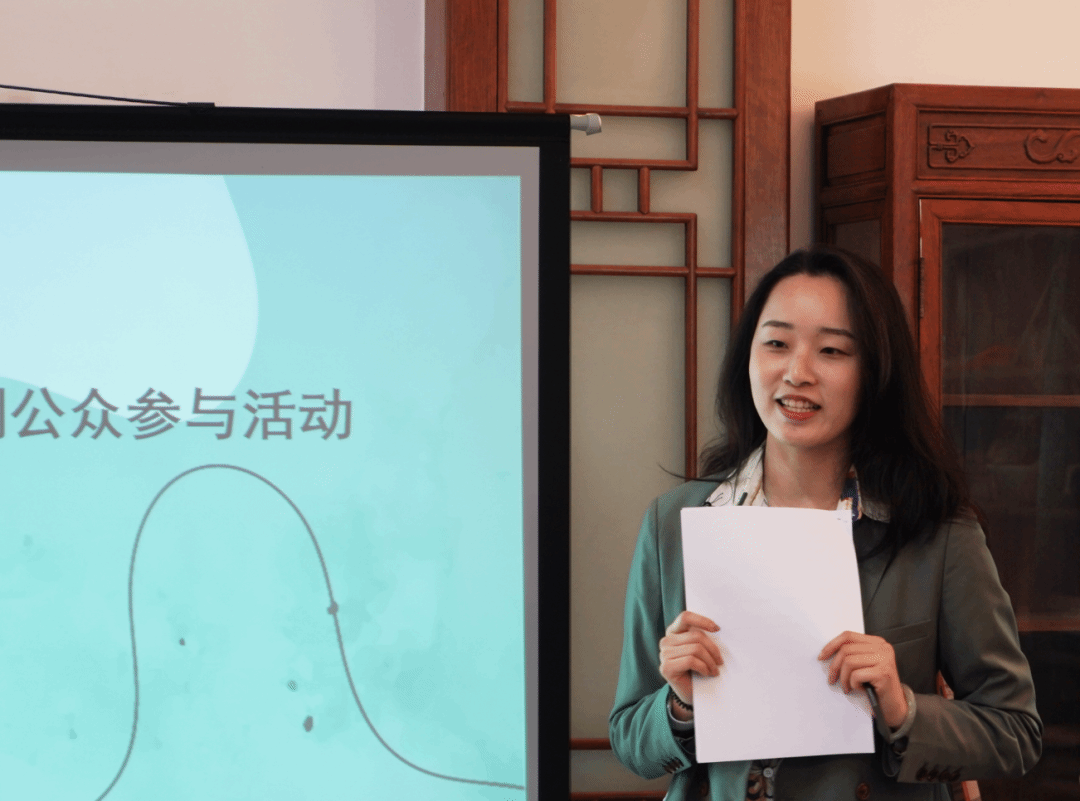
WHITRAP-Beijing Project Specialist Park Lina hosting the event
Zhang Jianshuo, Chief Engineer of Beijing Weiming Wenbo Cultural Technology Co., Ltd., introduced the background of the Public Participation in Grand Canal (Beijing Section) Heritage Monitoring initiative and summarized the preliminary achievements of the Grand Canal inspection and volunteer monitoring work over the past six months. He pointed out that volunteers discovered and reported many valuable issues during inspections, making important contributions to the monitoring of the Grand Canal.

Speech by Zhang Jianshuo, Chief Engineer of Beijing Weiming Wenbo Cultural Technology Co., Ltd.
The volunteer representatives then engaged in lively discussions. Each volunteer shared their experiences and observations from inspection work and offered suggestions for the future development of the Grand Canal (Beijing Section) heritage monitoring initiative based on their personal experiences.
Liu Yuyang pointed out that the Grand Canal is almost everywhere around us, but unfortunately this linear heritage site is often protected as isolated point-based heritage sites, resulting in significant differences in management and protection between locations. He suggested organizing work from a broader and more integrated perspective.
Liu Mingqian shared methods for collecting materials for cultural map production.
Zhao Zinan believed that the dynamic updating of cultural routes is crucial for promoting cultural tourism development.
Wang Manyu shared opinions and sought feedback based on both personal research projects related to the Grand Canal and observations gained during inspections.
When discussing ways to popularize canal culture, many volunteers agreed that games are an effective method because they quickly immerse people in the setting and experience. Zhou Zhizhen, the youngest volunteer participating in the monitoring initiative and a high school student, also shared the younger generation’s perspective on the topic.

Volunteer Liu Yuyang speaking

Volunteer Zhou Zhizhen speaking
Volunteer Liu Mingqian speaking
Professor Lian Zhiying from Renmin University shared the “Beijing Memory” project and emphasized that the project aims to reconstruct and reproduce the historical memory of the Beijing section of the Grand Canal through digital methods and technologies.
Zhang Yiran, Senior Engineer at the Beijing Institute of Surveying and Mapping, along with Deputy Director and Senior Professor-Level Engineer An Zhiming, introduced the relationship between cultural heritage monitoring and digital preservation applications for the Grand Canal (Beijing Section), as well as the current development of the monitoring platform.
Capital Museum Researcher and Curator Gao Xiaolong discussed his impressions of the Grand Canal from the perspective of cultural heritage and shared his experiences investigating the canal from a cultural viewpoint.
Liu Baoshan, Deputy Chief Planner at the Peking University Institute for Territorial Spatial Planning and Design, pointed out that cultural heritage protection helps strengthen emotional connections between people and heritage.

Professor Lian Zhiying from Renmin University speaking

Zhang Yiran, Senior Engineer at the Beijing Institute of Surveying and Mapping
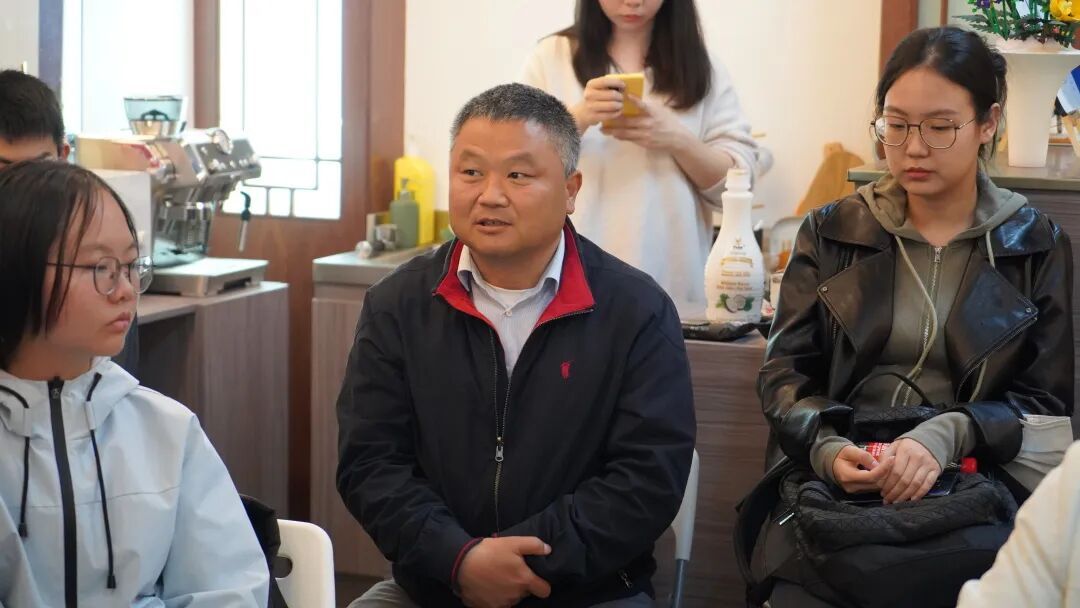
Speech by An Zhiming, Deputy Director and Senior Professor-Level Engineer at the Beijing Institute of Surveying and Mapping

Speech by Gao Xiaolong, Researcher and Curator at the Capital Museum

Speech by Liu Baoshan, Deputy Chief Planner at the Peking University Institute for Territorial Spatial Planning and Design
This midterm exchange meeting gathered experiences and suggestions from various participants, providing more possibilities for the future protection of the Grand Canal (Beijing Section). Over the past six months, volunteers deepened their understanding of the Grand Canal and developed strong emotional connections with it.
Establishing emotional bonds is the first step toward public participation in cultural heritage protection. WHITRAP-Beijing hopes that public participation in Grand Canal heritage monitoring will help more people understand the World Heritage sites around them and encourage broader participation in heritage conservation efforts.
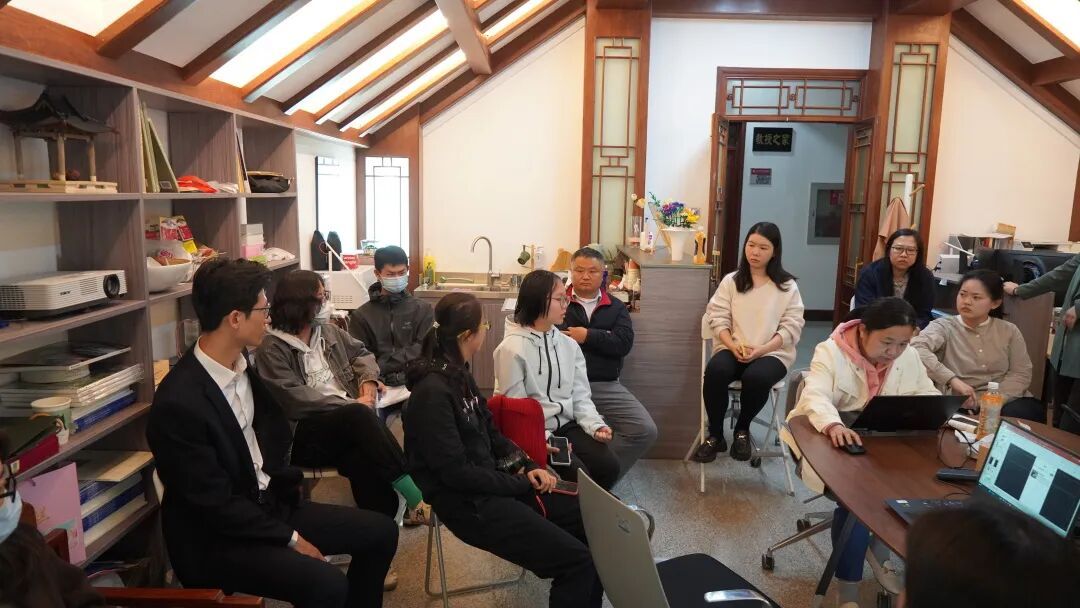
Enthusiastic discussions at the event site