
On the evening of December 13, the World Heritage Institute of Training and Research for the Asia and the Pacific Region under the auspices of UNESCO (WHITRAP) and the International Center for UNESCO ASPnet (ICUA) jointly held the 2022 "Global Heritage Education Innovation Case Award" International Sharing Session, announcing the winners of the 2022 "Global World Heritage Education Innovation Case Award." Among them, Peking University's "Community Participation and Education in the Conservation and Environmental Improvement of Yannan Garden" project stood out from nearly 100 cases worldwide and won the "Star of the Future" award.
The "Global World Heritage Education Innovation Case" has been solicited since 2021. With the theme of technological innovation and model innovation, it selects several outstanding heritage education cases with exemplary and innovative significance from around the world each year. The aim is to build an international interactive exchange platform focusing on the innovation of world heritage education models, providing guidelines and reference points for global practitioners of world heritage education innovation, and better leading and promoting the development of world heritage education in the future.

At the conference, Assistant Professor Wang Siyu from the School of Archaeology and Museology at Peking University, also Director of the Public Archaeology and Art Center at Peking University, presented the case. Yannan Garden is located in the central cultural area of Peking University's Haidian main campus. Built in the 1920s, the garden preserves century-old Chinese courtyards and Western-style villas, witnessing the history of Yenching University and Peking University. In 2022, Peking University implemented the Yannan Garden Conservation and Environmental Improvement Project, carrying out ecological protection, landscape improvement, exhibition of former residences of renowned scholars, and transmission of campus cultural heritage in the historic area of Yannan Garden. In this process, adhering to the concept of "community participation," the project team designed and carried out a series of community participation and education activities aimed at strengthening community participation and governance at the heritage site and realizing the sharing of heritage values within the campus community.
The "Community Participation and Education in the Conservation and Environmental Improvement of Yannan Garden" project ran from March 2022 to July 2022. The community participation and education activities mainly focused on three dimensions: opinion surveys, participatory experiences, and public outreach. The main participants included the Public Archaeology and Art Center of Peking University, the Real Estate Management Department of Peking University, the PKU Institute of Territorial Spatial Planning and Design, the School of Archaeology and Museology of Peking University, WHITRAP Beijing, the Student Union of Peking University, the Student Green Life Association of Peking University, the Stray Cat Care Association of Peking University, and the Yannan Garden Cultural Heritage Protection Association of Peking University. The target beneficiaries were faculty and students of Peking University.


Experiencing digital work

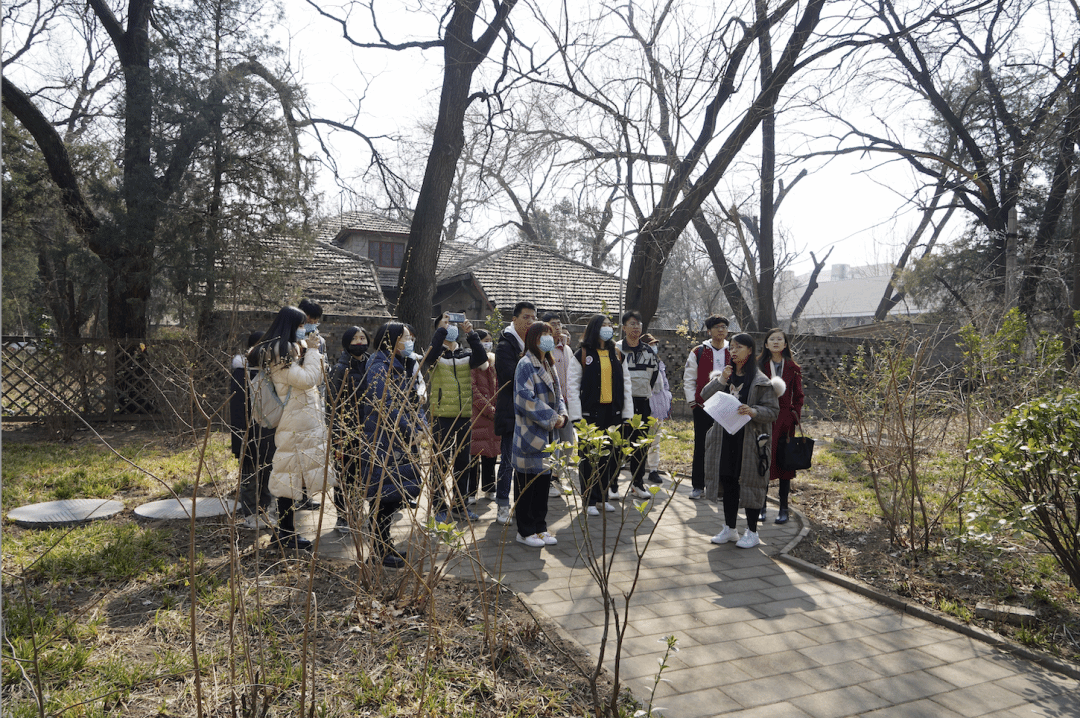
Listening to explanations and visiting Yannan Garden

Active suggestions during the symposium

Project outcomes included: 781 questionnaires collected, 6 focus group interviews conducted, and research on relevant key groups (including users of Yannan Garden and related student clubs). The research results, through influencing planning documents, will ultimately affect the actual renovation of Yannan Garden; more than 100 faculty and students directly participated in the conservation and planning of Yannan Garden, deepening their understanding and awareness of heritage conservation; guided tours, online publicity, and thematic lectures received widespread attention on campus, enhancing the campus community's understanding and awareness of the historical and ecological values of Yannan Garden, and producing guided tour materials that can be used for subsequent activities.
Former World Heritage Centre program officer Marie-Noël Tournoux and Professor Zhang Zhaozhi, UNESCO Chair on Sustainable Tourism in UNESCO Designated Sites, commented on the project. Ms. Tournoux noted that historically significant universities often have gardens, ponds, and other architectural features they take pride in, and the type of cultural heritage involved in the Yannan Garden project is very unique in China. The key group on campus is students; involving students who are both beneficiaries of cultural heritage and drivers of its protection highlights the overlapping identities of beneficiaries and actors. Professor Zhang Zhaozhi affirmed the project's organizational capacity and sustainability. He also pointed out that public heritage education projects need both idealistic goals and top-level design, as well as leadership with execution and driving force, to be better implemented.


Project Review
Review | Raising a Toast Together – Public Participation in the Yannan Garden Conservation and Environmental Improvement Project
Review | Follow Our Steps into "The Yannan Garden You Don't Know"