Originally published in Study on Natural and Cultural Heritage, Issue No. 5, 2022
Editor’s Note
On November 16, 1972, the 17th session of the UNESCO General Conference in Paris adopted the Convention Concerning the Protection of the World Cultural and Natural Heritage. With 194 States Parties and 1,154 cultural and natural properties inscribed on the World Heritage List, the Convention has made significant contributions to protecting global cultural diversity and biodiversity and promoting sustainable human development. Today, on the 50th anniversary of the World Heritage Convention, we publish this article by Dr. Feng Jing, Director of the Culture Unit at UNESCO Bangkok, to commemorate this special occasion.

50 Years of World Heritage: Recent Trends and Challenges – Summary of the Fourth Lecture of the “UN-HAP Asia-Pacific University Heritage Network” Lecture Series
FENG Jing
(UNESCO Bangkok, Bangkok 10110, Thailand)
On the afternoon of January 6, 2022, the fourth lecture of the “UN-HAP Asia-Pacific University Heritage Network” series, organized by the World Heritage Institute of Training and Research for the Asia and the Pacific Region under the auspices of UNESCO (WHITRAP Beijing), was successfully held online. The lecture was delivered by Dr. Feng Jing, Director of the Culture Unit at UNESCO Bangkok, titled “50 Years of World Heritage: Recent Trends and Challenges.” The session was moderated by Dr. Li Guanghan, Assistant Director of WHITRAP Beijing.
Since 1989, Dr. Feng Jing has been involved in nearly all of China’s international cooperation on world heritage, representing China at numerous World Heritage Committee sessions and making outstanding contributions to the nomination, protection, and management of China’s cultural and natural heritage (Figure 1).

Figure 1: Dr. Feng Jing (Source: provided by Feng Jing)
In 1997, he joined the UNESCO World Heritage Centre, engaging in international cooperation on world cultural and natural heritage and serving as coordinator of the Silk Roads nomination project. With over 30 years of professional experience, he possesses both theoretical expertise in world heritage protection and management and practical experience in global governance within the UN system.
On the occasion of the 50th anniversary of the World Heritage Convention, WHITRAP Beijing specially invited Dr. Feng Jing to discuss the latest trends and developments in the world heritage field.
1. Sustainable Development and UNESCO’s Cultural Programmes
The UN 2030 Agenda for Sustainable Development explicitly calls for “further efforts to protect and safeguard the world’s cultural and natural heritage.” As the only international cultural cooperation agency within the UN system, UNESCO identified the protection of cultural heritage as one of its core mandate areas from its inception, guided by the principles of sustainable development and cultural diversity. Led by six cultural conventions with international legal force①, UNESCO’s advocacy for cultural creativity, heritage protection, and transmission has had a remarkable impact on global cultural exchange, poverty alleviation, socio-economic development, and environmental protection in contemporary society (Figure 2).
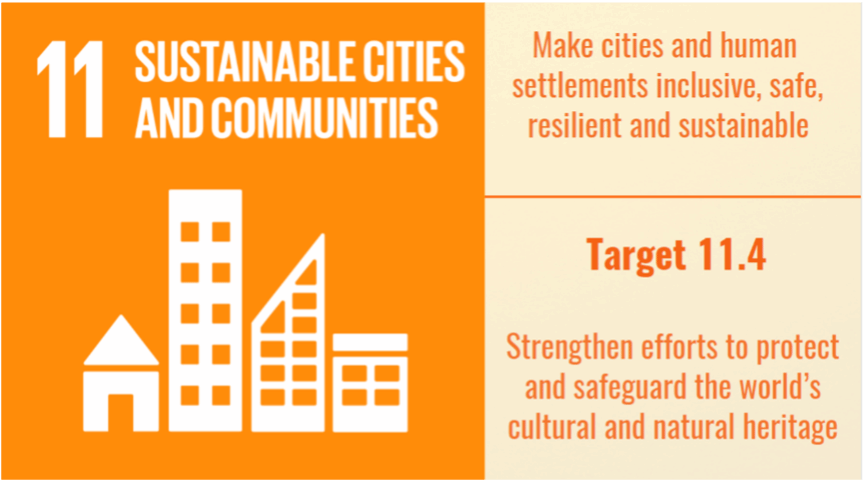
Figure 2: Sustainable Development Goal 11.4 (Source: https://sdgs.un.org/goals/goal11)
Among these six conventions, world heritage is UNESCO’s flagship programme. From its inception in 1972, the core concept of the World Heritage Convention has been sustainability – both promoting cultural diversity and pursuing the sustainable protection of inscribed world heritage. After 50 years of development, the Convention has attracted nearly all UN member states to participate in the international cultural heritage conservation movement. Governments, institutions, and people worldwide have become unprecedentedly aware of world heritage nomination and protection; “seeking inscription” has become a global phenomenon. This fully demonstrates the value, impact, and achievements of the world heritage flagship programme.
In summary, the World Heritage Convention has, on the cultural front, promoted human awareness of cultural diversity and practices for its protection and transmission; on the environmental front, it has fostered recognition of how environmental change affects humanity and advanced the sustainable protection of the Earth – both geological and ecological – as humanity’s living environment.
2. China and World Heritage
The development of China’s cultural heritage cause is closely linked to international cooperation in the world heritage field. 2021 marked the 50th anniversary of the restoration of China’s lawful seat in the UN. This return was an important opportunity for China to engage in multilateral cooperation and improve its external environment, and through it China has also made significant contributions to the development of UNESCO’s world heritage programme. Since joining the Convention in December 1985, China has accumulated rich experience in cultural and natural heritage protection and has developed considerable heritage conservation capacity. The 44th session of the World Heritage Committee, held online in Fuzhou, China, in the summer of 2021, attracted global attention (Figure 3).

Figure 3: Logo of the 44th World Heritage Committee session (Source: https://www.44whcfuzhou2021.cn/cn.shtml)
Culture is a core element of national soft power and an important indicator of national prosperity, rejuvenation, and people’s well‑being. Cultural heritage is the foundation of culture, embodying the spiritual values, ways of thinking, and imagination of the Chinese nation, and demonstrating its vitality and creativity. While contributing to the great rejuvenation of the Chinese nation, the protection and development of world heritage can also make new contributions to world peace and development.
3. The Global Strategy for World Heritage
At the 18th session of the World Heritage Committee in Phuket, Thailand, in 1994, the Committee launched a Global Strategy for a Representative, Balanced and Credible World Heritage List. This was a response to the significant imbalance in the types and geographical representation of the World Heritage List 22 years after the Convention’s adoption. The aim was to ensure that the List fully reflects the world’s cultural and natural diversity – not only improving regional representation and reducing imbalance, but also expanding the concept of cultural and natural heritage beyond the originally defined categories of monuments, groups of buildings, and sites, thereby achieving greater typological balance and providing a better framework for implementing the Convention.
During the implementation of the Global Strategy, the World Heritage Committee held a series of discussions on nomination quotas. In 2000, the “Cairns Decision” was adopted in Cairns, Australia – one nomination per country per year. At the 28th session in Suzhou in 2004, following efforts by China, India, and others, it was changed to two nominations per country per year, with at least one being a natural heritage property. This became known as the “Kazan‑Suzhou Decision” – one country, two nominations per year.
After the 1994 Global Strategy, the advisory bodies to the World Heritage Committee conducted a series of studies to help States Parties fill gaps on the World Heritage List. For example, ICOMOS produced “The World Heritage List: Filling the Gaps – An Action Plan for the Future” in 2005. IUCN conducted a study in 2004 on filling gaps in natural heritage (Review of the World Heritage Network: Biogeography, Habitats and Biodiversity). In 2013, IUCN carried out thematic studies on natural heritage and biodiversity. All these thematic studies and international expert meetings aimed to help States Parties target their nominations and address blind spots in world heritage – tangible examples of the Global Strategy framework in action.
In 2010, the World Heritage Committee introduced a new concept: “upstream process” (or upstream assistance). This was intended to enable States Parties to receive help and advice from the advisory bodies or the World Heritage Centre. Since 2014, the Committee has established ad hoc working groups to explore, from a methodological perspective, how to address heritage gaps, including improving the representativity and balance of the World Heritage List. The outcomes of these discussions (procedures, formats, tentative lists, upstream process, nomination quotas, etc.) are reflected in the revised version of the Operational Guidelines for the Implementation of the World Heritage Convention, published in July 2021.
Within the framework of the Global Strategy, the concept of world heritage has also expanded. For example, the “cultural landscape” concept, introduced in 1992, covers three categories: (i) clearly defined landscape designed and created intentionally by man (e.g., Sintra, Portugal; Kew Gardens, UK); (ii) organically evolved landscapes, including relict (or fossil) landscapes and continuing landscapes (e.g., the rice terraces of the Philippines, Honghe Hani Rice Terraces in Yunnan, and the Huashan Rock Art Cultural Landscape in Guangxi, China); and (iii) associative cultural landscapes (e.g., Lushan and Wutai Mountain in China). Currently, there are 121 cultural landscape world heritage properties globally, of which 26 are in the Asia‑Pacific region. China now has five cultural landscape properties: Lushan National Park (inscribed in 1996 as the first), Wutai Mountain (2009), West Lake Cultural Landscape of Hangzhou (2011), Honghe Hani Rice Terraces (2013), and Zuojiang Huashan Rock Art Cultural Landscape (2016). Integrating the cultural landscape concept with China’s realities has been a long journey, but how to implement the protection and management of such living heritage within China’s legal and administrative systems remains a challenge.
Another concept is “multi‑internationally designated areas” (MIDAs). For example, Lushan is both a UNESCO cultural heritage site, a national geopark, and a Man and the Biosphere reserve, among other designations. How can these be coordinated? At the international level, UNESCO and its advisory bodies are conducting research on this issue. Examples include Jiuzhaigou in China and Jeju Island in Korea. The protection and management of such multi‑designated sites, and how to coordinate monitoring reports under multiple designations, are also questions worth exploring.
Regarding the concept of cultural routes, ICOMOS has conducted extensive research. In 2008, the ICOMOS 16th General Assembly adopted the ICOMOS Charter on Cultural Routes, which covers different types – canals, railways, and meeting points of civilizations such as the Silk Roads. In the field of heritage routes, the concept of large‑scale serial transnational heritage has also been promoted through the Global Strategy and incorporated into the nomination process. Two concrete examples are the Silk Roads serial transnational nomination promoted in the Asia‑Pacific region and the Qhapaq Ñan – Andean Road System in Latin America; both were successfully inscribed on the World Heritage List in June 2014 (Figure 4).

Figure 4: The Silk Roads (Source: https://pixabay.com)
Other emerging heritage concepts – such as sacred mountains, serial sites, tropical coastal, marine and small island ecosystems, 20th‑century modern architectural heritage, and industrial heritage – are gradually being incorporated into the nomination framework as the Global Strategy is implemented. However, 28 years after the Global Strategy’s launch (1994‑2022), the situation of geographical imbalance and incomplete regional representation has not changed significantly. The reasons for this require further reflection.
4. Trends in World Heritage Committee Decision‑Making Over the Last Decade
The World Heritage Committee’s decisions regarding heritage nominations generally fall into four categories: (i) inscribe the property on the World Heritage List; (ii) refer the nomination back to the State Party for additional information; (iii) defer consideration of the nomination; (iv) not inscribe the property because it does not meet the criteria. The Committee’s assessment process follows the procedures set out in the Operational Guidelines, aiming for an objective and scientific evaluation. For cultural heritage, the evaluation is carried out by ICOMOS; for natural heritage, by IUCN; both are coordinated through the World Heritage Centre. The evaluation conclusions on which the Committee bases its decisions are supposed to be scientific and objective. Over the past decade, certain trends have emerged in the Committee’s decision‑making process.
4.1 Dialogue between the World Heritage Centre, Advisory Bodies, and States Parties
Since 2012, former UNESCO Director‑General Irina Bokova sought to enhance dialogue between the World Heritage Centre, advisory bodies, and States Parties to make the implementation of the Convention more effective. However, dialogue is time‑consuming and resource‑intensive. With each country nominating two properties per year, the Committee reviews about 45 nominations annually, plus about 160 conservation status reports. The Centre and advisory bodies lack sufficient human and financial resources to conduct dialogue on all cases, so they focus on a selection of high‑profile or critical cases – for example, the conservation status report on Australia’s Great Barrier Reef, or that on Kathmandu Valley in Nepal.
4.2 Civil Society Participation
Another trend is the involvement of civil society, including non‑governmental organizations. During a side event at the 2017 World Heritage Committee session in Krakow (“For a Structured Dialogue with Civil Society on World Heritage Matters”), participants discussed establishing a structured dialogue with civil society. Regarding the conservation status of inscribed properties and insufficient public participation in the nomination process, the public seeks channels to express their views to UNESCO or the World Heritage Centre. This creates a need for ongoing dialogue with civil society and NGOs in world heritage protection and management.
The World Heritage Committee actively encourages States Parties to make efforts in this regard. Within the Convention’s framework, civil society is also reflected in the Operational Guidelines – for example, paragraph 174 states: “If the Secretariat receives information from a source other than the State Party concerned that a property inscribed on the World Heritage List has suffered serious damage or that the necessary corrective measures have not been taken within the time period proposed, the Secretariat shall consult with the State Party concerned to verify the source and content of the information and request an explanation from the State Party.” Thus, both the legal framework and operational practice reflect the trend of civil society and NGO participation.
4.3 Importance of Communities in World Heritage Protection and Management
One of the five strategic objectives of world heritage is “community.” In the Pacific region, for example, many heritage sites are not managed by governments but by traditional “landowners.” For governments to achieve protection and management of these sites, they must obtain the recognition of the landowners, making community participation very important. Community involvement is increasingly popular, but the definition of “community” is very broad. Exactly which stakeholders constitute a community is a question worth studying in the future.
There is also a definitional issue regarding “indigenous peoples.” There are relevant declarations at the international level, effectively introducing human rights concepts into world heritage protection. In 2018, UNESCO adopted the UNESCO Policy on Engaging with Indigenous Peoples. To implement this policy, recognition of indigenous peoples’ rights within the World Heritage framework is still emerging; a dedicated side event was even held during the 42nd World Heritage Committee session.
5. Future Trends
5.1 World Heritage and Sustainable Development
The 2030 Agenda for Sustainable Development, with its 17 Sustainable Development Goals (SDGs) and 169 targets, constitutes a major policy framework outlining a vision for a better future. By involving multiple levels of stakeholders – from governments, local communities, civil society, the private sector, and higher education institutions to individual citizens – in world heritage protection, we can more strongly promote sustainable development. This fundamentally focuses on world heritage’s contribution to and leadership in sustainable development. These trends also highlight the importance of Category II institutions in world heritage protection. The World Heritage Convention and the 2030 Agenda are closely related; besides SDG 11, other major goals also resonate with world heritage protection.
5.2 Integration of Tangible and Intangible Heritage, Interaction with Other Cultural Conventions
Another trend is establishing a balanced, reasonable inclusiveness between tangible and intangible heritage. For example, Lijiang Old Town is a tangible heritage property, and the associated Dongba culture is intangible heritage. How do they interact? Suzhou Classical Gardens are tangible heritage, and Kunqu opera is intangible heritage. Is there a connection? The “Rice Terraces of the Philippine Cordilleras” is associated with the “Hudhud Chants of the Ifugao” inscribed on UNESCO’s Representative List of the Intangible Cultural Heritage of Humanity. The “Arab Quarter of Marrakech” (Medina of Marrakesh) in Morocco is associated with the “Cultural Space of Jemaa el‑Fna Square.” How can protection efforts interact in the future? From tangible heritage protection to intangible heritage recognition, UNESCO already has the 2003 Convention for the Safeguarding of the Intangible Cultural Heritage, which provides clear definitions.
Beyond tangible‑intangible links, the interaction between world heritage and other conventions is also worth attention. For instance, how can the cultural creativity and industries advocated by the 2005 Convention on the Protection and Promotion of the Diversity of Cultural Expressions complement world heritage protection? How can we achieve a holistic approach to heritage protection? While striving for a balanced, representative, and credible World Heritage List, should we consider that cultural and biological diversity take different forms under different historical, geographical, and natural conditions?
5.3 The Link Between Nature and Culture
The World Heritage Convention is unique among UNESCO’s cultural conventions in its commitment to protecting cultural and natural heritage within a single framework. Early versions of the Operational Guidelines explained that natural and cultural elements are often intertwined and inseparable in human development. The promotion of the cultural landscape concept in 1992 established the protection of interactions between culture and nature. Traditional, sustainable land‑use practices support biodiversity, and the spiritual connection between people and their specific natural environment is an integral part of their cultural identity. Protecting the cultural and biological diversity expressed in world heritage can improve understanding of the links and interactions between nature and culture. By identifying and inscribing mixed heritage, cultural landscapes, heritage routes, etc., world heritage protection transcends the boundary between culture and nature, evolving toward a field that reflects the rich interactions between humans and their environment.
5.4 Focus on Urban Heritage Protection
The World Heritage Cities Programme is one of six thematic programmes officially approved by the World Heritage Committee in 2001. The programme has two components: (i) developing theoretical frameworks for urban heritage protection; (ii) providing training and technical assistance to States Parties to promote new methods and plans. In fact, over 70% of cultural world heritage properties are located in cities. In recent decades, urban heritage has faced increasing threats – from rapid urbanization to climate change and global conflicts. The main factors affecting urban heritage are inadequate management plans, rapid tourism development, and insufficient legal frameworks. These threats affect not only the physical structure of historic cities but also their spiritual character.
Since 2005, under UNESCO’s coordination, the Historic Urban Landscape (HUL) initiative was launched – a policy process to review and update existing international instruments on cultural heritage protection, seeking a solution applicable to all cities with heritage value. In 2011, the Recommendation on the Historic Urban Landscape was adopted by UNESCO’s 36th General Conference, becoming a “soft law” that member states are invited to implement on a voluntary basis. UNESCO invites member states to integrate new approaches to urban heritage protection and management into the institutional and legal mechanisms that govern human societies, protecting cultural and natural heritage in urban settings. It also encourages member states to adopt the HUL approach and to integrate culture and heritage into urban development strategies and policies, taking into account the values and traditions of different cultural contexts that adopt such a holistic approach. Managing change in urban heritage is meaningful but also challenging, as it requires both protecting heritage values and improving the quality of life for people living in and around these urban areas. Implementation of the HUL Recommendation has promoted the development of new policies for urban heritage protection and advocated a development concept centered on culture and heritage.
5.5 Cooperation Between World Heritage and Other Biodiversity‑Related Conventions
The World Heritage Convention is one of eight biodiversity‑related conventions agreed by the international community. In addition to the other cultural conventions mentioned earlier, the World Heritage Convention also maintains close links and cooperation with other biodiversity‑related conventions, including the Convention on Biological Diversity (CBD), the Ramsar Convention on Wetlands, and the Convention on Migratory Species (CMS).
5.6 World Heritage and Climate Change
In the global context of climate change, the World Heritage Committee adopted a policy document in 2007 to establish a close link between world heritage protection and the Paris Agreement. Since 2015, the Committee has emphasized the importance of States Parties implementing the ambitious goals of the Paris Agreement to mitigate climate change risks, and of protecting heritage with climate significance (including marine heritage) to address global challenges facing humanity.
6. New Challenges and Opportunities
6.1 Nomination and Delisting of Properties in Danger
One of the current challenges facing the World Heritage Convention and Committee is the inscription of properties that do not yet fully meet the criteria. During discussions at the Committee sessions from 2018 to 2021, several cases stood out: in 2018, of 19 properties inscribed, two were inscribed against the advisory bodies’ recommendation not to inscribe – a rare occurrence. The objectivity and scientific nature of Committee decisions depend on the recommendations of the advisory bodies as professional non‑governmental organizations. However, when Committee decisions increasingly diverge from the advisory bodies’ conclusions, this challenges the consistency and credibility of the Convention.
Moreover, if properties deemed by the advisory bodies and the Secretariat as not yet meeting the criteria are inscribed, they must then go through conservation status review. But with inadequate management plans and unclear boundaries, they enter the monitoring process, and the insufficient aspects require additional documentation – which again strains the human and financial resources of the Centre and advisory bodies. This is another challenge to the Committee’s decision‑making process.
A concrete example: Kathmandu Valley in Nepal suffered severe earthquakes in April and May 2015. Ordinarily, if a property’s conservation status is threatened, it should be inscribed on the List of World Heritage in Danger to mobilize international assistance for better protection. However, the Nepalese government was unwilling. More than six years later, the property’s conservation status remains unsatisfactory. Thus, how to effectively use the List of World Heritage in Danger as an early warning mechanism, set aside political interference, promote continuous improvement in world heritage protection and management, and enhance the fairness and authority of the Convention – these are subjects for reflection on the 50th anniversary of the World Heritage Convention (Figure 5).

Figure 5: Ancient buildings in Kathmandu (Source: https://pixabay.com)
6.2 Reconstruction and Rebuilding
The restoration and reconstruction of heritage in post‑conflict regions must be determined according to the specific circumstances of each country and heritage site. Issues involve the relationship between people and heritage sites, poverty alleviation in conflict‑affected areas, and how to use heritage to promote local economic development and improve people’s livelihoods. Reconstruction in post‑earthquake Kathmandu has been ongoing because local residents need to live. The Bamiyan Buddhas in Afghanistan have not been reconstructed because the area, once a Buddhist centre along the Silk Roads, is now a Muslim community. There have been no breakthroughs in technical means, funding sources, or conservation philosophy, so discussions continue (Figure 6).

Figure 6: Bamiyan (Source: https://zh.unesco.org)
Internationally, post‑disaster or post‑conflict reconstruction and recovery is also a hot topic. Past instruments include the Dresden Declaration, the ICOMOS Krakow Charter, the Riga Charter, and the World Heritage Committee’s Guidelines for the Recovery and Reconstruction of World Heritage (Post‑Disaster/Post‑Conflict). From the World Bank, UN‑Habitat, the European Union, to UNESCO, many are engaged with this urgent issue. One important point: when discussing recovery and reconstruction, we should focus not only on restoring the physical fabric of cultural heritage but also on its intangible components, and more importantly, on people‑centered recovery. The reconstruction of cultural heritage is not a simple engineering concept; it should be placed within a comprehensive vision that encompasses economic, social, environmental, political, physical, and humanistic dimensions. Local communities and residents must be included in reconstruction plans; it should be people‑centered, helping cultural heritage achieve “community recovery” and sustainable development.
6.3 World Heritage Education, Capacity Building, and Leadership Programmes
The purpose of protecting world heritage is to pass it on, to allow it to fully play its role in promoting world peace and sustainable development in the present. Thus, world heritage capacity building and education are particularly important. In 2004, the 28th World Heritage Committee session in Suzhou adopted the Suzhou Declaration on Youth Education for World Heritage, articulating the vision that all young people around the world should receive world heritage education. For many years, China has carried out various forms of world heritage education for the public and for students at all levels, using on‑site interpretation, media publicity, classroom teaching, and textbooks to disseminate knowledge and concepts of world heritage protection. Emphasizing world heritage education has become a social consensus; public awareness of heritage values and recognition of protection theories has deepened and become deeply rooted, essentially becoming a conscious action across society.
6.4 UNESCO Category II Centres and Chairs
Category II centres are institutions that are not legally part of the UNESCO organization but are associated with it through formal arrangements approved by the General Conference. These centres extend the reach and effectiveness of UNESCO’s programmes and activities, serve as international or regional centres of expertise, provide relevant services and technical assistance, and foster regional and international cooperation, networking, and synergy.
At the 28th session of the World Heritage Committee, China proposed the establishment of a training centre for world heritage protection and management in the Asia‑Pacific region, to provide a platform for exchange, cooperation, and capacity building. WHITRAP was thus established as a Category II centre. After more than a decade of development, it has become one of the most active UNESCO Category II centres related to world heritage.
6.5 UNESCO World Heritage Sustainable Tourism Programme
World heritage and tourism are closely linked. The World Heritage Sustainable Tourism Programme focuses on policy, guidance tools, capacity building, and heritage route planning, aiming to protect shared cultural and natural heritage of Outstanding Universal Value while achieving sustainable development through appropriate tourism management. By raising awareness, capacity, and balanced participation of all stakeholders, the programme promotes the management and development of the tourism sector, achieving conservation alongside sustainable development goals.
In 2019, UNESCO and the World Heritage Committee’s advisory bodies established a Working Group on Culture and Resilient Tourism. Through global debate and surveys of impacts on world heritage sites, the group developed a roadmap for resilient and regenerative tourism and heritage, as well as visitor management assessment tools, made publicly available to world heritage sites. UNESCO continues to cooperate with the World Tourism Organization (UNWTO) on cultural tourism recovery and the 2021 International Year of Creative Economy for Sustainable Development.
6.6 Challenges and Opportunities Under the COVID‑19 Pandemic
The unprecedented crisis caused by the COVID‑19 pandemic has had a major impact on world heritage sites worldwide. Monitoring, maintenance, and management of world heritage came to a halt; site closures threatened socio‑economic conditions, disrupted surrounding community life, and led to an increase in illegal activities.
The pandemic has forced us to rethink sustainable tourism development strategies. UNESCO and its advisory bodies are leading a global dialogue on key issues of heritage and tourism management during and after the pandemic, proposing strategic approaches to revitalize tourism using heritage values. Digital access to world heritage sites – live streaming, satellite imagery, virtual reality museums, AI‑generated art – is now transforming the cultural sector, playing a fundamental role in cultural policy and service improvement.
6.7 The Fuzhou Declaration and the 50th Anniversary of the World Heritage Convention
The 2021 Fuzhou Declaration called for increased support to developing countries, particularly Africa and Small Island Developing States (SIDS), and for strengthening world heritage education, capacity building, knowledge sharing, and the application of new technologies. The Fuzhou Declaration expresses the hope that the 50th anniversary of the World Heritage Convention will be an opportunity to review the past, look to the future, and leave to future generations an open, inclusive, adaptable, sustainable, resilient, clean and beautiful world. The Fuzhou Declaration fully reflects the concerns of States Parties and is of milestone significance.
7. Concluding Remarks
Whether we look from a larger, smaller, farther, or nearer perspective, re‑examining these world treasures – cultural and natural – we see that humanity is both so similar and so different. Crossing north and south, east and west, our goal remains the pursuit of a better future.
The World Heritage Convention has now been in existence for 50 years, with remarkable achievements. UNESCO regards it as the flagship programme in the cultural field, with high visibility and popularity. Yet the core of the Convention remains protection and management – for the sake of sustainable human development, to pass these treasures on to future generations, and to safeguard the spiritual home of humanity.
In 2022, “World Heritage as a source of resilience, humanity and innovation for the next generations” will be the key theme of the 50th anniversary celebrations of the Convention. The UNESCO World Heritage Centre will organize a wide range of important events worldwide, with key themes including climate change and heritage protection; a representative, balanced and credible World Heritage List; sustainable tourism; digital transformation; and the recovery of world heritage after the COVID‑19 pandemic.
The performance and achievements of world heritage protection can be enumerated in many ways, but ultimately the most important function should be: scientifically and completely preserving for the present, and even more so for future generations, the precious historical remains and natural treasures of humanity, protecting the harmonious natural and cultural environment, thereby making a great contribution to the sustainable use of cultural and natural resources and to the sustainable development of human society.
Compiled by: Xie Tianyi, Piao Lina
① The six conventions are: (1) Convention for the Protection of Cultural Property in the Event of Armed Conflict (The Hague Convention, 1954); (2) Convention on the Means of Prohibiting and Preventing the Illicit Import, Export and Transfer of Ownership of Cultural Property (1970); (3) Convention Concerning the Protection of the World Cultural and Natural Heritage (1972); (4) Convention on the Protection of the Underwater Cultural Heritage (2001); (5) Convention for the Safeguarding of the Intangible Cultural Heritage (2003); (6) Convention on the Protection and Promotion of the Diversity of Cultural Expressions (2005).
Author Profile
FENG Jing (1964–), male, Director of the Culture Unit, UNESCO Bangkok, Ph.D. Main research direction: world heritage protection and management. E‑mail: f.jing@unesco.org.