International Heritage News
01
UNESCO and National Geographic jointly host “World Heritage Convention” 50th Anniversary Photography Exhibition

On September 21, UNESCO and National Geographic jointly launched the “World Heritage Convention” 50th anniversary photography exhibition. The exhibition focuses on the future and youth, inviting audiences to enter a virtual journey that presents world heritage as a source of resilience, humanity, and innovation through photographs of sites such as the Taj Mahal, the Pyramids, Petra, Samarkand, and Istanbul. The exhibition was also released in French, German, and Portuguese versions. Photography exhibition details link: whc.unesco.org/en/news/2477
Source: www.unesco.org
02
War and World Heritage: UNESCO exhibition on Jewish heritage destroyed during the Nazi regime

On September 22, UNESCO held the exhibition “Paintings of Remembrance” by artist Alexander Dettmar at its Paris headquarters. The collection of 65 oil paintings documents synagogues destroyed under the Nazi regime, as well as synagogues destroyed in collaborating countries during the Holocaust. The exhibition is a tribute to Jewish cultural and religious heritage lost during persecution and genocide in Europe. UNESCO considers heritage a source of identity and cohesion and believes that protecting cultural heritage is essential to protecting life, as it lays the foundation for open, inclusive, and diverse societies. The exhibition, supported by the Permanent Delegation of Germany to UNESCO, was open to the public at UNESCO headquarters from September 22 to 29, 2022.
Source: www.unesco.org
03
Report: Global research and action agenda on culture, heritage and climate change

UNESCO and ICOMOS jointly released a report titled “Global Research and Action Agenda on Culture, Heritage and Climate Change.” The report consists of three parts: an overview of the international conference on culture, heritage and climate change, the identification of knowledge gaps and action tasks from the conference, and actions to promote collaborative and problem-oriented research on climate change, culture, and heritage. The case studies section introduces the role of local knowledge such as the “ditch keeper” of the Honghe Hani Rice Terraces in climate adaptation, as well as strategies for improving climate awareness in the Historic Centre of Macau.
Source: www.icomos.org
04
ICCROM launches lecture series on world earthen architectural heritage conservation

On September 24, ICCROM launched a lecture series on the protection of world earthen architectural heritage titled “Intergenerational Dialogue on Heritage, Communities and Sustainable Development.” The first lecture, “Sustainable Earthen Architecture in a Changing Environment,” was held on September 27. It explored the contribution of earthen architecture to sustainable development amid ongoing social, economic, and environmental change in communities, and emphasized the importance of human contributions to heritage for a sustainable future.
Source: www.iccrom.org; International Heritage Watch
05
2022 World Heritage Leadership Forum: Capacity building for the future of our shared heritage

On September 22, the 2022 World Heritage Leadership Forum was held in Norway. As part of the 50th anniversary activities of the World Heritage Convention, the forum focused on “Capacity building for the future of our shared World Heritage.” It summarized the achievements of the World Heritage Leadership program during its first phase (2016–2022) and explored how to scale its successful practices to strengthen the capacity of the next generation of heritage professionals after 50 years of the Convention.
Source: whc.unesco.org; International Heritage Watch
06
ICOMOS announces 2022 Culture–Nature Prize: Yanqing Public Heritage Monitoring Project wins
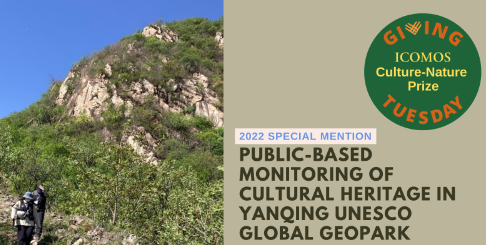
On September 30, ICOMOS announced that the Yanqing UNESCO Global Geopark received the 2022 Culture–Nature Prize for its community-based heritage monitoring project. The prize funds will be used to support volunteer efforts to document the condition of the Great Wall. A total of 31 submissions were received, most from the Asia-Pacific region. The winning projects were selected based on impact, community participation, and innovation. Through heritage site protection, management, and sustainable development integration, the Culture–Nature initiative aims to build resilience against challenges such as climate change, pollution, and rapid urbanization.
Source: International Heritage Watch
Domestic Heritage News
01
Fujian Minjiang Estuary Wetland included in the World Heritage Tentative List

According to the UNESCO World Heritage Centre website, the “Fujian Minjiang Estuary Wetland: Sea–Land Biogeographical Transition Zone” has officially been added to China’s World Heritage Tentative List. This is China’s second tentative World Heritage submission this year, following the “Hainan Tropical Rainforest and Traditional Li Settlements.” The Minjiang Estuary Wetland is located in the northeastern part of the Minjiang River estuary in Changle District, Fuzhou. It consists of multiple wetlands including Shanyutan, Bati Zhou, Daoqing Zhou, and Tanjiao Zhou, covering more than 200 square kilometers, with a core protected area of 21 square kilometers. According to Ray Guangchun, Chairman of the Scientific and Technical Committee of the Ramsar Convention, rare and endangered bird species are a major advantage of the wetland. A total of 313 bird species have been recorded, including 5 critically endangered species on the IUCN Red List, indicating extremely rich biodiversity.
Source: news.cctv.cn
02
National Cultural Heritage Administration holds progress meeting on major “Archaeology China” projects
On September 16, the National Cultural Heritage Administration held a progress meeting on major projects under “Archaeology China,” introducing archaeological discoveries including the Houchengzui stone city site in Hohhot, Inner Mongolia, the Bicun site in Xing County, Shanxi, the Erlitou site in Yanshi, Henan, and the Shang capital Shuyuan Street cemetery in Zhengzhou, Henan. These discoveries demonstrate the historical process of the formation of prehistoric civilization and early states in China. Among them, new findings at the Erlitou site further revealed a multi-grid spatial layout, and pottery and bone/antler processing workshops marked an important breakthrough in the study of Erlitou handicraft production.
Source: culture.gmw.cn
03
Approval of expert review for the establishment of Fanjingshan National Park

On September 20, seven reports prepared by the Forestry and Grassland Survey and Planning Institute under the National Forestry and Grassland Administration passed expert review. These included the comprehensive scientific survey report for the Fanjingshan National Park evaluation area, the social impact assessment report, the boundary and zoning study report, and the integrated sky–ground monitoring system construction plan. Experts unanimously agreed that the proposed national park covers representative ecosystems, key habitats of rare and endangered species, and valuable geological heritage sites. The reports are well-structured, data-rich, and comply with national park standards and policies, with strong scientific validity and feasibility, and were approved.
Source: National Forestry and Grassland Administration; World Heritage public account
04
Archaeological discoveries at the Nanzuo site: 5,000-year-old palace may be the origin of “Forbidden City-style” classical architecture

Recent archaeological excavations at the Nanzuo site in Qingyang have revealed new discoveries. Following last year’s finding of the earliest known large palace-style structure with central and axial symmetry in China, archaeologists have discovered sections of palace walls on the south, east, and west sides. If a northern wall is also confirmed in future excavations, the site would reveal a rectangular palace complex similar in layout to later imperial cities such as the Forbidden City. Researchers suggest that such a palace layout may represent the origin of “Forbidden City-style” classical Chinese architecture.
Source: World Heritage public account
05
Shaanxi History Museum to build Qin–Han branch

On September 22, Shaanxi Province held a provincial cultural heritage work conference, proposing the construction of a Qin–Han branch of the Shaanxi History Museum and the expansion project of the Xi’an Stele Forest Museum. The planned Qin–Han branch is expected to be located in the Daqin Civilization Park of Qinhan New City. The design integrates traditional culture with modern technology, using a layout inspired by the Big Dipper constellation and modular architectural structures. The spatial arrangement follows the concept of “the Wei River crossing the capital to represent the Milky Way, and bridges crossing southward to symbolize the Oxherd star.”
Source: cnr.cn
06
Education empowering the future: 2022 World Heritage Creativity & Innovation Conference to be held in Zhengzhou

As a key UNESCO 50th anniversary recommended event, the 2022 World Heritage Creativity & Innovation Conference will be held in Zhengzhou from November 2 to 4. The conference consists of two parts: “Seeking Knowledge,” an international exchange on innovative cases in global heritage education, and “Practice,” the World Heritage Creativity & Innovation Forum, focusing on the integration of technology, creativity, and heritage site innovation. The forum is jointly organized by the UNESCO World Heritage Training and Research Centre for the Asia and the Pacific Region (WHITRAP) and the Zhengzhou Culture, Radio, Television and Tourism Bureau.
Source: WHITRAP
07
“Evolution and Future of Archaeological Sites” series events marking the 50th anniversary of the World Heritage Convention successfully held

Starting September 12, the Liangzhu Lecture series 2022 event marking the 50th anniversary of the World Heritage Convention, titled “Evolution and Future of Archaeological Sites,” was successively held. The event was jointly organized by the Liangzhu Archaeological Site Management Committee, the UNESCO World Heritage Training and Research Centre for the Asia-Pacific Region (Beijing), and Peking University School of Archaeology and Museology. It was hosted by the Liangzhu Museum and Peking University Public Archaeology and Art Center, co-organized by the Peking University Cultural Heritage Protection Research Center, and supported by the Liangzhu Cultural Heritage Protection and Research Foundation.
The event included both online lectures and offline seminars over nearly one month, bringing together scholars from around the world in cultural heritage protection to discuss archaeological site conservation and development. Based on the practical experience of the Liangzhu site, different viewpoints were exchanged, providing inspiration for professionals engaged in cultural heritage protection and offering directions for future development of heritage conservation theory.
Source: WHITRAP-Beijing