The “Youth Heritage Alliance” is initiated by the UNESCO Asia‑Pacific World Heritage Training and Research Center (Beijing).
Along with the global expansion of the heritage conservation movement, today heritage studies are strongly interdisciplinary. We hope to take advantage of the current diversity, openness, and breakthrough opportunities to invite scholars from different disciplines to exchange ideas, so that young scholars can inherit their own disciplinary traditions while also being innovative and courageous in breaking new ground.


Theme
Experiences and Future of Community Archaeology
Conveners
Wang Tao, Wang Siyu
Introducers
Wang Yiran, Wang Han, Xi Mulian
Time & Venue
April 20, 2024 Nature and Cultural Heritage Research Editorial Office
Participants
[Offline]
Wang Tao, Wang Siyu, Wang Yiran, Wang Han, Xi Muliang,
Du Lindong, Li Ziyi, Hu Yue, Chen Yongchen, He Yuwei
[Online]
Yu Chun, Ge Wei, Wang Dongdong, Yan Haiming, Luo Pan,
Sun Jing, Fan Jialing, Dong Xinyu
Ordered according to speaking sequence
See the end of the article for brief introductions of the participants
▼
Abstract
The introducers shared reflections on the practice of community archaeology and public archaeology, as well as critical thoughts on classic cases. These triggered discussions on issues such as discipline construction, practical challenges, and scholar identity. The participants discussed topics including the practical model of community archaeology combined with commercial cooperation; tasks of community archaeology beyond the discipline of archaeology; the concepts of community archaeology and public archaeology; and empowerment of communities in community archaeology practice.
Keywords
community archaeology; public archaeology; practice; power; education
▲
Introduction
Wang Siyu:
Community archaeology is a topic worth further discussion, involving public archaeology, site protection, community participation, etc. The first issue of Nature and Cultural Heritage Research in 2024 invited Professor Wang Tao as the column initiator to organize a discussion on this topic. So let the students first introduce their own research.
Wang Yiran:
My paper in this issue of Nature and Cultural Heritage Research involves three aspects: public archaeology and education, public archaeology practice in local communities, and media and public archaeology.
Regarding the first point, why should public archaeology focus on educational activities for the public who do not aspire to become archaeologists? There is necessity: 1) to satisfy public curiosity; 2) to reach the broadest audience; 3) to eliminate misunderstandings about archaeology among the public and even professionals. Extending from the concept of public archaeology, it also involves three aspects of social education: settings (traditional educational places and public entertainment/leisure places), channels (actual or virtual), and objectives (understanding history and the present, public critique of archaeology). These three aspects relate to the concept of lifelong learning in today’s learning society. Lifelong education involves three levels: formal education, non‑formal education, and informal education. Formal education is the most common form carried out in schools; non‑formal education includes extracurricular classes, archaeological fieldwork internships, etc.; informal education includes documentaries, articles, publications, etc., which involve learning unconsciously in daily life. Apart from the social level, public archaeology educational practices also greatly assist the personal growth of people of all ages. First, public archaeology can create a low‑stakes learning environment, where the absence of examination‑oriented goals can stimulate participants’ self‑exploration and intrinsic motivation. Second, Gardner’s Theory of Multiple Intelligences points out that humans can develop eight different intelligences through education, among which spatial and intrapersonal intelligences are difficult to train under exam‑oriented education; public archaeology can fill this gap.
Second, public archaeology practice in local communities. In recent years, Chinese universities, local governments, and archaeological institutes have made many active explorations. Three representative cases are the “community archaeology” project at Pingliangtai Site in Huaiyang County, Henan Province, carried out by the School of Archaeology and Museology at Peking University; the public archaeology practice by faculty and students of the Archaeology major at Capital Normal University at Yewang Site in Zhongmu County, Zhengzhou City; and the establishment of a “Public Archaeology Laboratory” at Madaoping Site by the Department of History at Xiamen University and the Dianji Village Government.
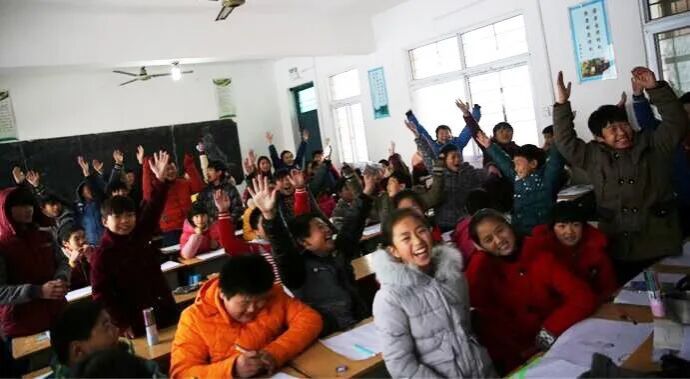
▲ 2016 “Community Archaeology” project carried out by the School of Archaeology and Museology, Peking University, at Pingliangtai Site
Source: Introduction and Table of Contents, Nature and Cultural Heritage Research Issue 1, 2024 (Nature and Cultural Heritage Research WeChat public account)

▲ 2020 Public archaeology practice by faculty and students of the Archaeology major, Capital Normal University, at Yewang Site
Source: Provided by Wang Yiran
In the West, community archaeology is a very important concept. It includes not only entity‑based field archaeological excavation, but also non‑geographic communities and even virtual communities constructed by the internet. Thus archaeological resources can be better transformed into other social resources such as education. In current domestic field archaeology practice, many areas with dense archaeological sites are often “depressions” for various social resources. How to develop archaeological and cultural relic resources, and how to revitalize and protect sites, may be helpful in addressing the current imbalance in education, culture, economy and other resources in China.
Third, media and public archaeology in a time of great change. The current situation of universal internet connection and constant presence has transformed everyone from audience to communicator. Consequently, the archaeological community has undergone a change “from scholars acting spontaneously to the discipline acting consciously,” meaning that in addition to traditional archaeology, it is also necessary to face the public. The development of integrated media helps the communication effect of public archaeology, promotes the transformation and re‑creation of public archaeology outcomes, and thus builds social consensus and value orientation.
Public archaeology involves multiple factors such as education and communication. For example, the community archaeology practice at Capital Normal University produced a long‑tail effect; in the second and third years thereafter, integrated media continued to publish content, which was very beneficial for spreading excellent traditional culture. Various forms of public archaeology activities have broad prospects, but some drawbacks also deserve attention, such as “teachers” without relevant qualifications promoting false “knowledge” under the banner of cultural education communicators, and “exploration” bloggers using “archaeology” as a pretext to explore sites or even cause damage. These issues require further attention, regulation, and guidance.
Wang Han:
I will mainly introduce the community archaeology practice of Capital Normal University at Chuyuan Site in Xingyang. The Chuyuan public archaeology team consisted of 22 people, all of them students on fieldwork from Capital Normal University, including undergraduate and graduate students. The project was based at the Chuyuan Site and designed a “Five Ones” plan: one community special exhibition, one archaeology on campus activity, one set of oral history interviews, one online cloud teaching session, and one set of short videos on daily archaeology.

▲ Community archaeology practice at Chuyuan Site, Xingyang, by Capital Normal University
Source: Provided by Wang Han
The special exhibition was divided into four sections: overview of the site and surrounding history and culture, work procedures, national policies, and portraits of the work crew. In this way, it helped community residents better understand and support archaeological work, and stimulated their interest in local history and culture.
For archaeology on campus, we went to the primary and secondary schools where the archaeological site was located and taught archaeology courses, covering ongoing work, basic archaeological knowledge, and surrounding history and culture. We also led students to visit the site data processing room. After the course, we surveyed the students to understand changes in their perceptions of archaeology, thus evaluating the effectiveness of our work.

▲ Archaeology on campus during the community archaeology practice at Chuyuan Site, Xingyang
Source: Provided by Wang Han
We conducted oral history interviews on local pottery‑making techniques, carried out ethnographic research, visited surrounding villages and towns, interviewed nearly ten potters, and collected information on pottery‑making processes and characteristics. Through interviews, we reconstructed traditional pottery‑making techniques.
This practice was carried out during the pandemic, so we also used live‑streaming for cloud teaching. After the live broadcast, we arranged a feedback survey to understand the effectiveness of online teaching. In addition, we filmed the practice process into short videos and posted them on various social media platforms. The videos included daily aspects of the practice work as well as interviews with community members. This approach effectively embodied the concept of non‑geographic community archaeology.
Regarding feedback, most villagers gained a deeper understanding of the meaning of archaeology and spontaneously began to protect and promote their own cultural heritage; grassroots officials gave greater support and understanding to archaeological work. Primary and secondary school teachers in the community expressed hope that more such practice activities could be held to enrich students’ learning modes and stimulate their exploratory spirit. Middle school students also gained a preliminary understanding and knowledge of archaeology.
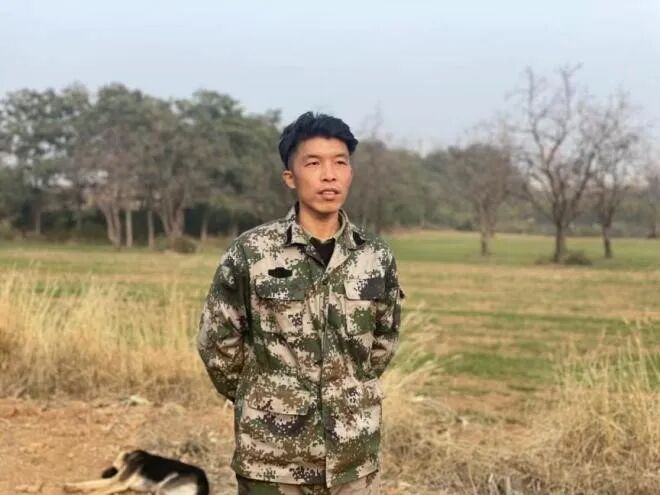
▲ Local youth Chu Dongxian at Chuyuan Site, Xingyang, who voluntarily participated in cultural heritage protection work and became a member of the public archaeology team
Source: Provided by Wang Han
Regarding this practice, I would like to discuss the following points: 1. Forms of practice. We emphasized the integration of archaeological discoveries with the local community, focused on extracting and utilizing Chuyuan’s cultural resources, enriched the practice content of public archaeology, and brought the public closer to archaeology. In the use of digital media, we adopted forms of daily work and personal interviews, which downplayed the professional nature of archaeological knowledge and increased opportunities for communication with the public. Live teaching was an innovation in educational methods, serving as an extension and supplement to school education. The Chuyuan public archaeology practice carried out diversified forms of activities, enriching the public’s understanding of archaeology. 2. Practice effects. The archaeological work at Chuyuan effectively changed the established perceptions of the local community, transforming the public from onlookers into active participants. There were also some issues with this practice; the public activities were subordinate to the archaeological excavation and have not yet formed a systematic model, requiring further exploration.
Xi Muliang:
What I want to talk about today is more about the process of self‑marginalization reflected in my own academic practice. Public archaeology and community archaeology are already marginal disciplines within the entire archaeological field. What exactly are public archaeology and community archaeology? Can these be considered disciplines? If so, do they have their own basic skills?
In my article in this issue of Nature and Cultural Heritage Research, I discuss some “strange and unusual” topics and cases. Moreover, as you may know from the “What’s Up” WeChat public account I participate in, I believe such discussions are even more marginal within the already marginal community archaeology.
I think public archaeology is a broad political topic, and its core is the issue of power. The two manifestations of power in public archaeology are rights and discourse: the former determines who acts, the latter determines how to act.
Let me give a few examples. First, self‑media live‑streaming archaeological fieldwork creates a phenomenon of the public observing archaeological work. Second, an associate researcher from the Fujian Provincial Institute of Archaeology posted a Weibo “calling out” the prescribed archaeological excavation period for the construction of Fuzhou Metro Pingshan Station. Third, the example of Chengdu Sports Center being transformed into Chengdu Donghuamen Archaeological Site Park. The first example shows a confrontational relationship between archaeologists and the public; the second shows a confrontational relationship between archaeologists and the government; the third shows archaeologists in a confrontational relationship between the public and official bodies, sometimes even in a “failing to please either side” situation.

▲ Chengdu Donghuamen Archaeological Site Park
Source: Visual China Group
I would like to borrow the relationship between “public” and “private” often mentioned by Professor Wang Siyu: in the Chinese context, the public is often strong and the private weak, which greatly affects community archaeology. I think we can all think of a fundamental question: which side do archaeologists belong to? The official side? The public side? But often they are caught in between, making the power relations in archaeological work very complex and subtle.
In the past few days I also saw a very interesting case. The physical anthropology team at Fudan University was invited by a department in Shanxi responsible for martyrs’ affairs to excavate an unnamed martyrs’ cemetery. The reason was that a member of the public told the government that his ancestor was a martyr, but he did not know where he was buried. Later, this work achieved certain results (the remains of martyrs were found), and the Fudan University public account also publicized this matter prominently. But if the public’s ancestor had not been a martyr, it is understandable that there would not have been such high‑profile official intervention and attention. Precisely because this was within the framework of grand narrative, the government and prestigious universities gave attention. This shows that community archaeology itself is situated within very complex power relations. Currently in China, community archaeology may only be achievable in very specific contexts.
In our first archaeology class we all emphasize that archaeology is a discipline that studies the public; unlike traditional history, which records great figures and great stories, archaeological excavation usually covers large areas and includes ordinary life. But in subsequent development, it is evident that archaeological work tends to seek after famous figures, large tombs, and palaces.
Therefore, for public archaeology, paying attention to rights issues is very important. Rights issues themselves are quite complex in China and have specific characteristics. A deep understanding of rights can help us re‑examine the field of archaeology and archaeology itself.
Discourse is another important issue. The scale of community archaeology involves specific, localized discourse. This is the fundamental reason why community archaeology and public archaeology face difficulties in China. Another issue is the discourse of commercial capital. A typical case is the “liquor archaeology” sites; the logic behind this is not that archaeology selected liquor, but that liquor selected archaeology. When liquor and archaeology are juxtaposed, people often think of the symbolic power represented by liquor.

▲ Chengdu Shuijingfang Distillery Site Museum
Source: Visual China Group
In today’s China, besides official interpretation, there is also an entry point for community participation in interpretation, namely misreading and even différance. For example, it is often said online that Xi’an’s subway cannot be built on time because there are too many ancient tombs. This involves a great deal of misreading, but this misreading also reflects the process by which Xi’an citizens in recent years have constructed their own identity—a modern city with archaeological cultural heritage spread underground, and the sense of pride this brings compared to other emerging modern cities across the country. If the Xi’an subway is a misreading or deviation from fact, then the successive archaeological discoveries in universities in recent years resemble Jacques Derrida’s famous concept of “différance,” the sense of symbolic play brought about by postmodern dislocation.
I firmly believe that public archaeology is a broad politics, and what most needs attention are rights and discourse. Public archaeology must be a participatory, action‑oriented discipline.
In recent years I have often used the term “archaeological imagination,” that is, how to open the boundaries of people’s imagination through new museology, critical heritage studies, and all postmodern scholarship, breaking through traditional concepts. But this is very difficult to achieve. I think academia is currently moving towards a very conservative state, approaching a mature, widely recognized value backbone, and is tirelessly solidifying it.
I would like to end with a question: why do we do public archaeology? What can public archaeology bring to scholars and to the academic community?
Discussion
Yu Chun:
I will first respond to the question Xi Muliang raised: why do we do public archaeology.
I want to reflect on my own journey to answer this. Initially, it was driven by my students, in order to fight against the “national treasure gangs” online, hoping to have a little professional discourse in the internet media environment. What was most incomprehensible was that professional discourse was completely drowned out in the online media. During this process, I also experienced the kind of confusion Xi Muliang mentioned, but what gave me the most support were my students, who kept my enthusiasm alive for a long time.
I once applied to my school for institutional support to carry out community archaeology and public archaeology, asking that community archaeology projects be concentrated in rural communities around the university, which offered greater operability compared to urban areas.
I don’t think Xi Muliang’s situation is a kind of marginalization; rather, I believe that when we think about issues, we need to adopt a macro perspective and step out of our own academic circles. Any public archaeology work is part of social activity and cannot be separated from the support and collaboration of other circles and institutions.
I think in the current environment, without the support of a business model, public archaeology is very difficult to carry out. Because there is no evaluation in academic institutions for popular science activities like public archaeology, archaeological institutes and university personnel cannot sustain this work. In terms of operational models, I would like to share that popular science books have now integrated a strong concept of natural history; archaeology, museums, and cultural heritage are no longer isolated disciplines, which also requires us at this stage to learn to use internet technology in popular science work. Therefore, in my own and my students’ community archaeology practice, I try to find high‑quality partners and platforms for them, but this is not a long‑term, sustainable, regular support mechanism.
Ge Wei:
Professor Yu mentioned that community archaeology and public archaeology lack a corresponding support mechanism, which is also an important reason why related work is difficult to sustain.
I want to respond to why we do community archaeology and public archaeology. From my personal experience, there are two considerations: idealistic and realistic. Regarding the idealistic, as K.C. Chang mentioned in his Rethinking Archaeology, archaeologists should not constantly complain that there is no enthusiastic audience interested in archaeology; rather, we should blame ourselves, because we have done far too little for the public. Moreover, there is indeed valuable knowledge in archaeology with historical lessons, so we should share more with the public. Regarding the realistic, through our practice we see many specific issues in community archaeology, all pointing to the need for archaeologists to engage in multi‑dimensional investigation. For example, during our fieldwork at Hulushan Site in Wuyishan in 2015, we learned that many local women had cervical cancer, including the woman working in our excavation unit. We know that this disease is preventable now. At that time, I thought about whether community archaeology practice could be combined with popular science work in other fields, such as medicine. Another example: during our fieldwork at Madaoping Site in Dianji Village, Pucheng County in 2011, we found that our archaeology team could not truly integrate into the village, nor could we meet the most practical needs of the villagers and village cadres. For instance, the village cadres wanted to show archaeological discoveries when superior leaders came for inspections, while villagers were generally concerned about issues like demolition compensation and rural revitalization—all far beyond the scope of archaeology.
Community archaeology and public archaeology are marginal within the archaeology discipline, but there is no need to move to the center; being at the margin can be very free. But the current dilemma is how to continue working at the margin.
Wang Siyu:
Professor Ge raised a point: is this public archaeology or community archaeology activity really just for archaeology? The idea of going beyond traditional archaeological boundaries suggests that we need to work in communities or professional fields with broader goals. This leads us to think further: why should archaeologists do these things that go beyond traditional archaeology? What is the motivation for archaeologists in this?
Wang Dongdong:
As I understand it, when concepts such as “archaeological heritage” and “public archaeology” are introduced from an international context into a domestic context, great caution is required. “Community archaeology” likewise did not originate in China; the concept itself carries its own specific background, connotations, and context of use. When such a concept is introduced to other countries, how to find a self‑consistent position and make it function in certain aspects—I think there is still much research space in academia.
In community archaeology, involving the community in archaeological excavation and subsequent protection and utilization has gradually been promoted through archaeological heritage management or large site protection. Many community archaeology projects in China are carried out by universities during field excavations, and many participating teachers have taken on this responsibility in their respective schools, gradually forming some standardized and patterned methods. Besides that, how to involve other public groups interested in archaeology, local history, or regional development in community archaeology is a question I have been thinking about.
More importantly, the core of community archaeology is empowerment. Some power must be handed over to the community. If the community does not have the capacity to wield power, we must help them build that capacity. At the same time, we must also consider to what extent community archaeology can contribute to the community, and how the national narrative system can incorporate the needs of local communities.
Successful community archaeology needs to focus on broader societal issues, such as the distribution of educational resources, local economic development, etc. In this process, archaeology is just a lever; truly solving regional development issues is fundamental.
Finally, I would also like to mention: if community archaeology or public archaeology were incorporated into the popular science system, would it gain greater support?
Another question: can community archaeology or public archaeology become a specialized discipline with its own training system? Or is it a basic competency for archaeology students?
Yan Haiming:
Today’s theme is community archaeology, but listening to the discussion it seems there is not much talk about community archaeology; more of it is about public archaeology.
My first confusion concerns methods and concepts. What is the relationship between community archaeology and public archaeology? I think when we talk about them, we have different understandings.
For me, they are just popular science—a way for archaeology to spread to the public. Why are there no terms like public sociology, public anthropology, public biology, or public physics? Because that is just popular science. So why do we particularly emphasize public archaeology and strive to construct such a discipline and working mechanism?
Regarding community archaeology, when we hire local workers to continue digging during archaeological work, does that count as community archaeology? Isn’t Chinese archaeology supported precisely by these communities? Or must we involve people who do not know archaeology, letting them learn about archaeology through archaeology, for it to count as community archaeology?
Second, about identity. When we talk about public archaeology, we are actually studying the relationship between people and identity, between culture and identity. But what is the identity of us who practice public archaeology? Today’s discussion is quite serious, but I think we should also make some critical remarks. Some are true archaeological scholars who want to pass on knowledge to more people; some come from journalism and have entered archaeology, wanting to combine the two disciplines; and some, like Xi Muliang, have become increasingly marginalized, but seem to enjoy this marginal status, moving further away from pure archaeology toward cultural criticism and anthropology. I don’t know what each person’s identity actually is.
Luo Pan:
I share Director Yan’s confusion: what exactly is the relationship between community archaeology and public archaeology? In addition, when dealing with museums and heritage presentations, we often encounter issues of different discourses. To what extent can the exhibition of certain concepts and values be made public?
Wang Tao:
I want to share my feelings from two perspectives: one is “public and private,” the other is “internal and external.”
From the “public” perspective, engaging in public archaeology, as K.C. Chang, Su Bingqi, and others agreed, is our responsibility. Archaeologists should give back to society; using taxpayers’ money means we owe an account.
From the “private” perspective, there are several aspects. First, personal interest—this is entirely driven by interest. Second, it is related to my work. I have long supervised students’ archaeological fieldwork, especially undergraduate fieldwork. Today’s quality education requires us to cultivate students’ interest in archaeology; we cannot let archaeology become boring. So every year I put some effort into designing activities that engage students emotionally, so that at least they do not dislike archaeology. Public archaeology allows students to do interesting things beyond tiring field excavation, leveraging their strengths, such as running public accounts or making short videos.
For graduate students, I offer courses related to public archaeology and recruit students in this direction, so they need to complete relevant degree theses, not just theorize. Regardless of how we perceive the concept, we continuously engage in practice grounded in fieldwork.
Now, regarding “internal and external.” From the internal standpoint of archaeology, we hope to give back to society. Stepping outside archaeological work, from an external standpoint, against the broader backdrop of public culture, public archaeology is part of public culture construction, interlinked with national policies such as rural revitalization and beautiful villages. On one hand, we strive to do well in archaeological fieldwork and research; at the same time, we hope to make modest contributions to society through our archaeological work.
The above remarks were revised on November 30, 2024
·End -
▼
Brief Introductions of Participants
Scroll up to view
Wang Tao
Professor, School of History, Capital Normal University
Wang Siyu
Assistant Professor, School of Archaeology and Museology, Peking University
Wang Yiran
PhD candidate, School of History, Capital Normal University; currently Lecturer, School of History and Culture, Luoyang Normal University
Wang Han
Master’s candidate, School of History, Capital Normal University
Xi Muliang
PhD candidate, School of Archaeology and Museology, Peking University
Du Lindong
PhD candidate, School of Architecture, Tsinghua University
Li Ziyi
Undergraduate student, School of Archaeology and Museology, Peking University
Hu Yue
Undergraduate student, School of Archaeology and Museology, Peking University
Chen Yongchen
Undergraduate student, School of Archaeology and Museology, Peking University
He Yuwei
Master’s candidate, School of Archaeology and Museology, Peking University
Yu Chun
Professor, School of Cultural Heritage, Northwest University
Ge Wei
Professor, School of History and Cultural Heritage, Xiamen University
Wang Dongdong
Associate Professor, Institute for Cultural Heritage and History of Science & Technology, University of Science and Technology Beijing
Sun Jing
Associate Professor, Quanzhou Institute of Chinese Cultural Heritage, Quanzhou Normal University
Fan Jialing
Lecturer, School of History, Capital Normal University
Luo Pan
Associate Research Fellow, Research Department, National Museum of Ethnic China
Yan Haiming
Research Fellow, China Academy of Cultural Heritage
Dong Xinyu
PhD candidate, School of Architecture, Tsinghua University