October 22‑24, 2025, the UNESCO Asia‑Pacific World Heritage Training and Research Center Beijing Branch (WHITR-AP Beijing) organized and hosted a visiting delegation led by Professor In‑Kwon Park’s research team from Seoul National University. The delegation visited on behalf of the UNESCO World Heritage Site Interpretation and Presentation Center (WHIPIC) and conducted a three‑day program of academic exchanges and heritage field visits centered on the theme of inclusive interpretation of World Heritage.
On the afternoon of October 22, the WHIPIC delegation and the Beijing Branch held an in‑depth discussion on the theme of “Assessing Inclusive Interpretation of World Heritage.” Dr. Li Guanghan, Executive Director of the Beijing Branch, received the guests.
During the discussion, Dr. Li Guanghan focused on introducing the practical experiences of Chinese World Heritage sites in inclusive management, heritage education, and community participation, sharing the Beijing Branch’s progress in promoting multi‑stakeholder engagement and sustainable management of heritage sites. Both sides agreed that this exchange deepened mutual understanding’s institutional priorities and research directions, laying a solid foundation for future exchanges and cooperation on topics such as “Assessing Inclusive Interpretation of World Heritage.”
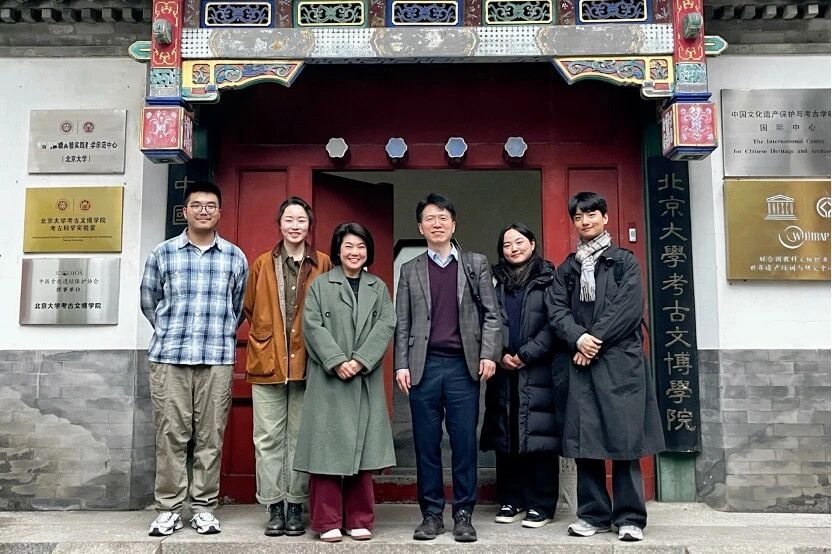
Group photo of the attendees
In addition to academic exchanges, the delegation conducted field visits to two World Heritage sites—the Beijing Central Axis and the Grand Canal (Beijing Section)—from October 23 to 24, accompanied throughout by the Beijing Branch team.
The delegation visited important heritage sites along the Central Axis, including the Temple of Heaven, Zhengyangmen, and the Bell and Drum Towers, gaining an understanding of the relationship between Beijing’s urban spatial structure and traditional ritual culture.

Group photo during the Central Axis field visit
The team also visited the Tongzhou Grand Canal heritage site, focusing on the protection of the heritage corridor and public participation mechanisms. The Beijing Branch had previously organized the “Grand Canal (Beijing Section) Cultural Mapping Crowdsourcing Project,” which covered seven administrative districts of Beijing and systematically inventoried cultural resources along the Grand Canal, providing an important research and practical foundation for this field visit (see: Review|Grand Canal (Beijing Section) Cultural Mapping Crowdsourcing Project Results Release Event Successfully Held).

Group photo during the Grand Canal field visit
Through this visit and exchange, both sides not only deepened their understanding of each other’s research work but also opened up new ideas and opportunities for future cooperation in the field of inclusive interpretation of World Heritage. Going forward, the Beijing Branch will continue to leverage its functions in training and research, deepen collaboration with WHIPIC and other UNESCO Category 2 centers and international partners, promote the effective implementation of the World Heritage Convention in the Asia‑Pacific region, and advance the protection and sustainable development of World Heritage.