Figure: Group photo of forum guests
In accordance with UNESCO’s initiatives, and in response to the “Asian Cultural Heritage Protection Action” first proposed by President Xi Jinping and the Global Civilization Initiative, efforts are being made to strengthen the scientific protection and rational use of cultural and natural heritage, promote interdisciplinary integration and talent cultivation in heritage protection and utilization, and advance the implementation of sustainable development concepts in cultural heritage protection across Asia. The UNESCO Asia-Pacific World Heritage Training and Research Centre (Beijing), the School of Archaeology and Museology at Peking University, the China Foundation for Cultural Heritage Conservation, and the Office of International Relations at Peking University jointly held the Second World Cultural and Natural Heritage Academic Forum from November 17 to 18, 2023. The theme of the forum was: “Contemporary Relationships Between Humans and Nature: Coexistence, Mutual Learning, and Sustainability.”
The opening ceremony of the forum was held in the lecture hall of the Second Gymnasium at Peking University. Liu Yuzhu, Chairman of the China Foundation for Cultural Heritage Conservation, Song Xinchao, Chairman of the Chinese Society of Cultural Relics, and Jiang Guohua, Deputy Secretary of the CPC Peking University Committee, attended and delivered speeches. More than 50 well-known experts and scholars engaged in heritage research and practice both domestically and internationally, as well as representatives of managers from World Cultural and Natural Heritage sites across China, attended the opening ceremony. The ceremony was hosted by Chen Jianli, Party Secretary of the School of Archaeology and Museology at Peking University.
The Secretary-General of the National Commission of the People’s Republic of China for UNESCO, Qin Changwei, delivered a video address congratulating the convening of the forum. He pointed out that World Heritage is both a cultural and natural treasure of all humanity and an important vehicle for promoting exchanges and mutual learning among civilizations. Secretary-General Qin proposed that, first, the concept of harmonious coexistence between humans and nature should be upheld, promoting the integration of heritage protection with ecological civilization construction; second, the impacts of climate change should be fully considered and new approaches to heritage protection explored; and third, heritage education and training should be vigorously promoted to continuously strengthen capacity building for World Heritage protection. He expressed his hope that the forum would contribute new solutions and insights for advancing World Heritage protection and sustainable development, and wished the forum great success.

Figure: Video address by Qin Changwei, Secretary-General of the National Commission of the People’s Republic of China for UNESCO
Jiang Guohua, Deputy Secretary of the CPC Peking University Committee, welcomed the attending guests to Yanyuan (Peking University). He introduced the UNESCO Asia-Pacific World Heritage Training and Research Centre, one of the forum’s organizers, as a non-profit institution dedicated to World Heritage research and training, and the first UNESCO Category II center in the field of heritage protection established in a developing country, with branches in Beijing, Shanghai, and Suzhou. The comprehensive disciplinary structure of Peking University provides strong support for the Beijing center, and this cross-departmental international platform for teaching and research plays an active role in World Heritage protection and related disciplinary development in the Asia-Pacific region. Jiang expressed his expectation that experts and scholars would share valuable insights at the forum and encouraged young scholars to actively participate in discussions, contributing to the training of doctoral and graduate students.
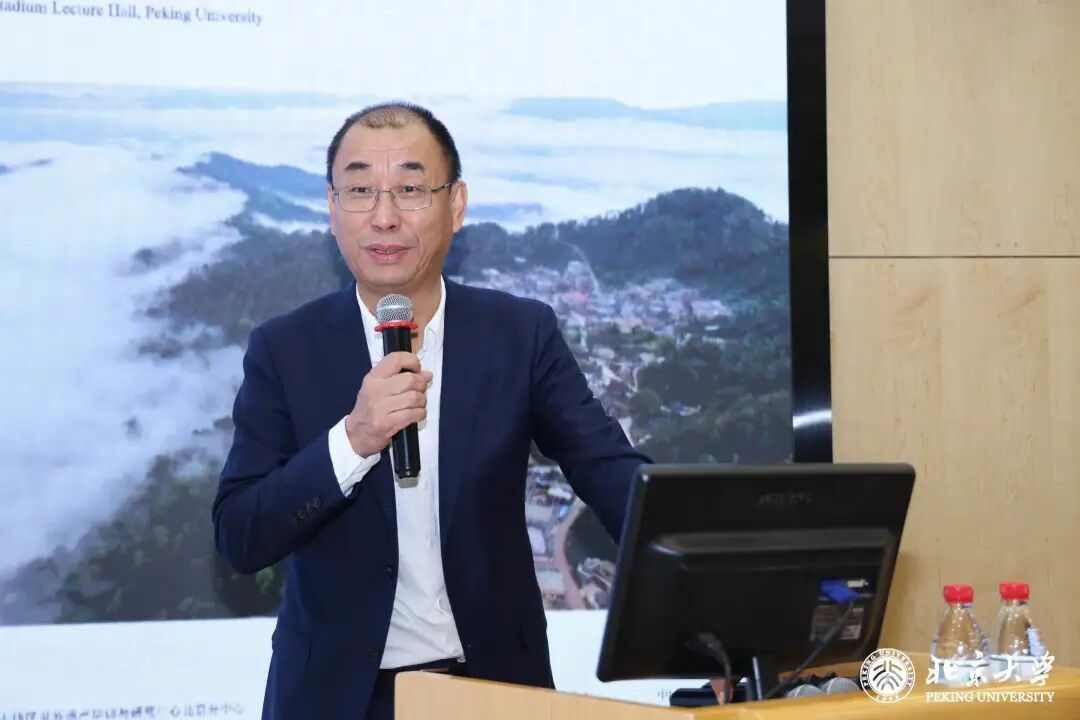
Figure: Speech by Jiang Guohua, Deputy Secretary of the CPC Peking University Committee
Song Xinchao, Chairman of the Chinese Society of Cultural Relics, expressed congratulations on the successful convening of the Second World Cultural and Natural Heritage Academic Forum. He reviewed the development history of the association and pointed out that the preservation and protection of natural and cultural heritage require multidisciplinary collaboration. He emphasized the need to actively build international teaching and research institutions and develop disciplines related to cultural and natural heritage. The World Cultural and Natural Heritage Forum transcends time and space, bringing together young scholars from different nations and diverse cultures, drawing on the interconnected resources of global civilizations, and playing a positive role in the protection and transmission of World Heritage.

Figure: Speech by Song Xinchao, Chairman of ICOMOS China
Liu Yuzhu, Chairman of the China Foundation for Cultural Heritage Conservation, extended warm congratulations on the opening of the forum and expressed gratitude to Peking University for its contributions to international exchanges in World Heritage. He noted that China’s active practices in international cooperation on World Heritage demonstrate the responsibility of a major country. The foundation actively promotes the participation of social forces in cultural heritage protection, and in collaboration with organizations such as the Tencent Foundation, Shun Tak Holdings, Taikang Insurance Group, Bank of China, and the Kweichow Moutai Foundation, has established the Asian Cultural Heritage Protection Fund. It has launched projects such as the “Asian Cultural Heritage Education Cooperation Network” and supported initiatives like the “China–Saudi Arabia Joint Archaeological Project at the Serin Port Site.” He stated that the next steps include publicly soliciting a logo for the Asian fund and launching the “Shared Vision” project to promote outstanding cases of sustainable development in Asian heritage. He sincerely invited UNESCO, the Chinese National Commission for UNESCO, Peking University, and scholars to provide guidance, support, and participation, working together to build a global cooperation network for social participation in sustainable World Heritage development and to contribute to mutual learning among civilizations.
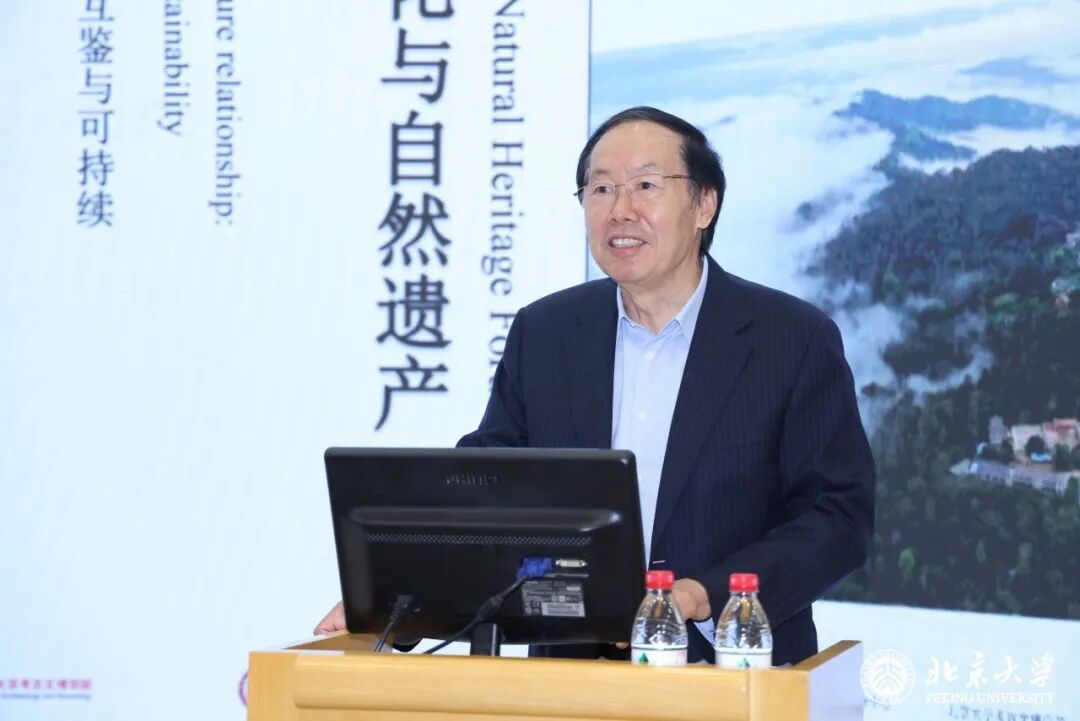
Figure: Speech by Liu Yuzhu, Chairman of the China Foundation for Cultural Heritage Conservation
On the occasion of the 50th anniversary of the Convention Concerning the Protection of the World Cultural and Natural Heritage in 2022, the first World Cultural and Natural Heritage Academic Forum was held online. The forum was initiated by the UNESCO Chair on Sustainable Tourism at World Heritage Sites and hosted by the School of Tourism Management at Sun Yat-sen University, with co-organization by relevant departments of Peking University, Tsinghua University, Fudan University, Southeast University, Tongji University, and Beijing Forestry University. The forum rotates among the initiating universities, and this year marks the first in-person international forum since its launch.

Figure: Chen Jianli, Party Secretary of the School of Archaeology and Museology at Peking University, hosting the opening ceremony
During the two-day forum, scholars from UNESCO, Pakistan, Belgium, Zambia, Colombia, the United Kingdom, as well as universities including Peking University, Tsinghua University, Fudan University, Southeast University, Tongji University, Sun Yat-sen University, and Beijing Forestry University, along with UNESCO Category II centers and chairs, conducted in-depth exchanges on six themes: “World Heritage Development Trends,” “Protection and Management of Archaeological Site Heritage,” “Human–Nature Relationships,” “Protection and Utilization of Village and Cultural Landscape Heritage,” “Protection and Utilization of Historic Built Environments,” and “Natural Heritage Protection and Community Development.” The forum also includes a youth forum and a heritage site managers’ forum, inviting young scholars and doctoral students engaged in heritage research, as well as managers from ten World Heritage sites such as the Palace Museum, Jingmai Mountain Ancient Tea Forest, and Jiuzhaigou, to present and discuss the latest research results and share experiences in heritage protection and management.
Edited by: Lü Jiaxin, Park Lina
Reviewed by: Li Guanghan, Wang Siyu
Final Review: Shen Ruiwen, Zhang Jianwei