Expert Introductions
(Ordered according to the forum schedule)
Session 3: The Relationship Between Humans and the Natural Environment
Moderator: Jiang Dayong

Jiang Dayong is a professor and doctoral supervisor at the School of Earth and Space Sciences, Peking University; a member of the National Expert Committee on Paleontological Fossils; corresponding member of the Triassic Subcommission of the International Commission on Stratigraphy; member of the Triassic Working Group of the Chinese National Commission on Stratigraphy; executive council member of the Chinese Society of Vertebrate Paleontology; and deputy director of the UNESCO Asia-Pacific World Heritage Training and Research Centre (Beijing). He currently serves as director of the Institute of Prehistoric Life and Environment at Peking University and executive deputy director of the Geological Museum of Peking University.
Discussant: Du Xiaofan

Director of the Center for Land and Cultural Resources Research at Fudan University; professor and doctoral supervisor in the Department of Cultural Heritage and Museology at Fudan University; chairholder of the UNESCO Chair on Living Heritage and Community Development; adjunct professor and doctoral supervisor at the College of Architecture and Urban Planning, Tongji University.
Speaker: Alexander J. Kent

Dr. Alexander J. Kent is the project lead of the Coastal Connections initiative at World Monuments Fund Britain. He is a globally influential geographer in cartography and geospatial science, an honorary reader in Cartography and Geographic Information Science at Canterbury Christ Church University, and vice president of the International Cartographic Association (ICA). He has extensive achievements in cartography, currently serves as editor of The Cartographic Journal, and teaches in the MSc in Digital Scholarship at the University of Oxford.
Presentation Title:
Coastal Connections: Sharing Best Practices Internationally
Speaker: Wang Xinyuan

Researcher and doctoral supervisor at the Aerospace Information Research Institute, Chinese Academy of Sciences; deputy director of the UNESCO International Centre on Space Technologies for Natural and Cultural Heritage (HIST); co-chair of the Digital Belt and Road World Heritage Working Group (DBAR-Heritage); executive council member of ICOMOS China; and member of the World Heritage Expert Committee of the National Forestry and Grassland Administration.
He conducts research on digital natural and cultural heritage and spatial archaeology, and is one of the proposers of the disciplinary framework of spatial archaeology. He has contributed to the discovery of more than ten archaeological sites through remote sensing. He has published over 180 papers and authored 6 academic books.
Presentation Title:
Understanding Integrated Protection of Cultural and Natural Heritage in the Context of Climate Change — A Case Study of the Tianshan Mountains
Speaker: Xiao Shizhen

Professor and PhD at the School of Geography and Environmental Sciences—Karst Research Institute, Guizhou Normal University; deputy secretary-general of the World Heritage Expert Committee of the National Forestry and Grassland Administration; consulting expert for the National Commission of the People’s Republic of China for UNESCO; deputy director of the World Heritage and Monitoring Evaluation Department at the National Engineering Research Center for Karst Rocky Desertification Control.
She has independently led more than 50 research projects, including National Natural Science Foundation projects and sub-projects of national key R&D programs, and has been engaged in World Natural Heritage research for 19 years. She has published more than 50 papers and holds 2 invention patents. She has received honors including the National May 1st Labor Medal, First-Class Merit Award from the Guizhou Provincial Government, “Most Beautiful Science and Technology Worker” in Guizhou, “March 8th Red Banner Holder,” and the Second Prize of Guizhou Provincial Science and Technology Progress Award.
Presentation Title:
Impact Assessment of Construction Projects in and Around World Natural Heritage Sites and China’s Practice
Speaker: Lü Zhi

Professor and doctoral supervisor at the School of Life Sciences, Peking University; founder and board member of the Shan Shui Conservation Center; advisory committee member of the UN Decade on Ecosystem Restoration (2021–2030); vice chair of UNEP and FAO initiatives; honorary member of the China Association for Women in Science and Technology; and national-level expert for nature reserve evaluation.
She founded the Center for Nature and Society at Peking University. Her research fields include zoology, ecology, conservation biology, and biodiversity conservation. The center focuses on both fundamental and action research related to nature conservation and sustainable human development, bridging research and practice to provide evidence-based solutions for harmonious coexistence between humans and nature. Professor Lü has long conducted ecological research on flagship species such as giant pandas and snow leopards in southwest China and the Qinghai-Tibet Plateau, as well as studies on interactions between natural ecosystems and socio-economic-cultural systems, community-based conservation, policy impacts, and conservation effectiveness. Her current research extends to biodiversity mainstreaming in urban and agricultural systems and sustainable development in regions such as Medog and the Yarlung Tsangpo.
Presentation Title:
Pandas and Snow Leopards: The Role of Flagship Species
Session 4: The Relationship Between Humans and the Natural Environment
Moderator: Li Dihua

Deputy director of the Institute of Landscape Architecture at Peking University; member and secretary-general of the Urban Ecology Committee of the Ecological Society of China; member of the Urban Ecological Construction Committee of the Urban Planning Society of China (July 2007–June 2010); council member of the Beijing Soil Society (2008–2011); secretary of the Academic Committee of the Beijing Landscape Architecture Society (since September 2002); editorial board member of Modern Landscape Architecture and associate editor of Landscape Architecture Frontiers.
Discussant: Du Xiaofan
Director of the Center for Land and Cultural Resources Research at Fudan University; professor and doctoral supervisor in the Department of Cultural Heritage and Museology at Fudan University; chairholder of the UNESCO Chair on Living Heritage and Community Development; adjunct professor and doctoral supervisor at the College of Architecture and Urban Planning, Tongji University.
Speaker: Chen Yaohua

Long engaged in research on the protection and utilization of natural and cultural heritage. He has led or participated in more than 60 major planning and research projects, including master plans for 15 national scenic areas such as Mount Tai, Mount Heng (Northern Sacred Mountain), and Dali in Yunnan, as well as World Heritage nomination and research projects including the Jingmai Mountain Ancient Tea Forest in Pu’er, Yunnan, and the Yellow-Bohai Sea Migratory Bird Habitat.
He is currently a doctoral supervisor, deputy party secretary of the College of Urban and Environmental Sciences at Peking University, director of the World Heritage Research Center at Peking University, and dean of the Peking University Institute of Territorial Spatial Planning and Design. He also serves as a member of the World Heritage Expert Committee of the National Forestry and Grassland Administration and as a council member of the Chinese Society of Landscape Architecture.
Presentation Title:
Protection of the Jingmai Mountain Ancient Tea Forest Cultural Landscape Based on Value Recognition
Speaker: Zhang Rouran
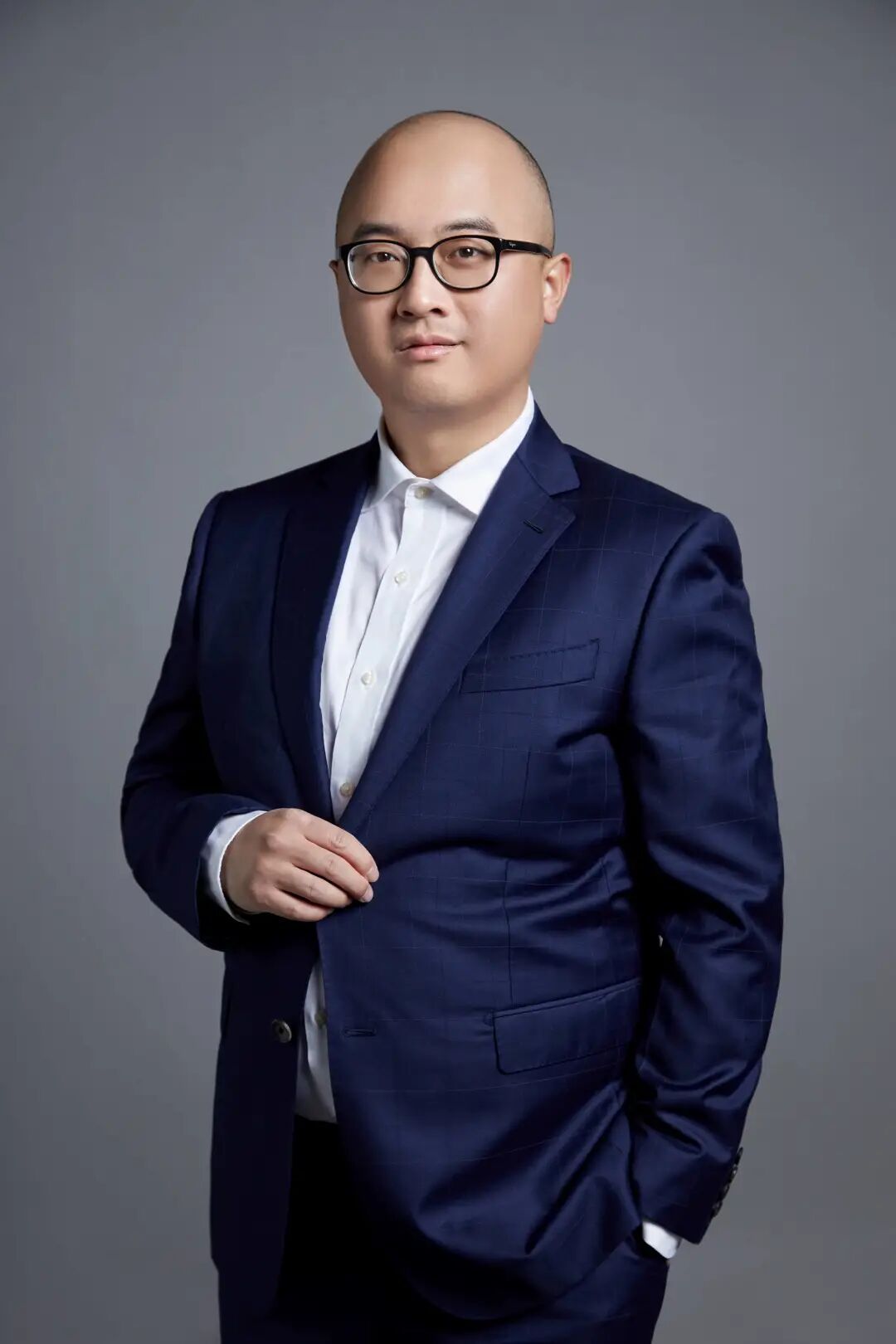
Associate professor at the School of Architecture and Urban Planning, Shenzhen University, and deputy head of the Department of Landscape Architecture; associate researcher at the McDonald Institute for Archaeological Research, University of Cambridge; currently vice chair of the ICOMOS International Scientific Committee on Cultural Tourism; expert member of the ICOMOS–IFLA International Scientific Committee on Cultural Landscapes; vice director of the Cultural Landscape Committee of ICOMOS China; vice director of the Youth Working Committee of the Chinese Society of Landscape Architecture; member of the China Association for Science and Technology’s UN consultative committee on sustainable cities, communities, and heritage conservation; editorial board member of SSCI journals International Journal of Heritage Studies and Landscape Research.
Presentation Title:
China’s World Heritage under the Integration of Culture and Nature
Edited by: Lü Jiaxin, Park Lina
Reviewed by: Li Guanghan, Wang Siyu
Final Review: Shen Ruiwen, Zhang Jianwei