International Heritage News
01
Ukraine Adds Two More Endangered World Heritage Sites

On the evening of September 15 (Beijing time), during the 45th Session of the World Heritage Committee held in Saudi Arabia, two Ukrainian World Heritage sites were added to the List of World Heritage in Danger. They are the Saint Sophia Cathedral and Related Monastic Buildings, Kyiv-Pechersk Lavra in Ukraine’s capital Kyiv, and the Historic Centre of Lviv in the important western Ukrainian city of Lviv.
The World Heritage Committee stated that these two World Heritage properties “no longer possess optimal conditions guaranteeing their Outstanding Universal Value (OUV), and are endangered due to threats caused by war.” Facing the risk of direct attacks, these two heritage sites located in urban areas are vulnerable to the effects of Russian bombardments on the cities of Kyiv and Lviv.
Source of text and images: Love World Heritage
02
UNESCO Almaty Organizes Discussion on Intangible Cultural Heritage and Sustainable Tourism

The workshop “Safeguarding Intangible Cultural Heritage and Sustainable Tourism” was held from September 11 to 13, 2023. The meeting was jointly organized by the UNESCO Almaty Office and the International Information and Networking Centre for Intangible Cultural Heritage in the Asia-Pacific Region under the auspices of UNESCO.
Tourism plays an important role in the global economy and affects cultural and natural heritage as well as the lives of local communities. The goal of the workshop was to introduce the latest findings in the fields of intangible cultural heritage and sustainable tourism, and to share practices that contribute to heritage protection and sustainable tourism.
The event aimed to strengthen and promote participants’ knowledge and skills so they can effectively develop and support regional, national, and international initiatives in the fields of intangible heritage and tourism.
Source of text and images: UNESCO
03
4th OWHC Asia-Pacific Regional Conference to Be Held Next Month

The 4th Asia-Pacific Regional Conference of the Organization of World Heritage Cities (OWHC-AP) will be held in Gyeongju from October 10 to 13. The theme is: “Empowering World Heritage Cities through Tangible and Intangible Heritage.” The conference will invite World Heritage cities in the Asia-Pacific region to share experiences of sustainable coexistence and development.
Source of text and images: International Heritage Observer
04
Training Program on Capacity Building for Intangible Cultural Heritage Safeguarding Held in Mongolia

From September 18 to 22, 2023, the “Training of Trainers Program on Capacity Building for Safeguarding Intangible Cultural Heritage in Mongolia (Phase I)” was successfully held in Ulaanbaatar. The program was jointly organized by the Asia-Pacific Centre, the Ministry of Culture of Mongolia, and the National Center for Cultural Heritage of Mongolia, with support from the UNESCO East Asia Multi-Sectoral Regional Office and the Mongolian National Commission for UNESCO.
This training serves as an important supplement to Mongolia’s “National Cultural Education Program.” It aims to promote the inclusion of intangible cultural heritage in Mongolia’s public cultural education system and further enhance awareness and safeguarding capacity for intangible heritage in Mongolia.
UNESCO trainers Alexandra Dienes and Saku Aslan were invited to conduct the training sessions.
Source of text and images: Asia-Pacific Centre
05
30x30: A Guide to Inclusive, Equitable, and Effective Implementation of Target 3

The International Union for Conservation of Nature World Commission on Protected Areas (IUCN WCPA), together with the World Wide Fund for Nature (WWF), the Global Environment Facility (GEF), and The Nature Conservancy (TNC), released “30x30: A Guide to Inclusive, Equitable, and Effective Implementation of Target 3.” The guide aims to support implementation of Target 3 of the Global Biodiversity Framework — the “30x30 Goal” — and to effectively and equitably protect at least 30% of the Earth by 2030.
In December 2022, parties to the Convention on Biological Diversity adopted the Global Biodiversity Framework (GBF), which includes Target 3, known as the “30x30” goal. The guide explains each element of the “30x30” target and also provides implementation planning guidance, conceptual explanations, stakeholder resources, and ideas for implementation monitoring.
Source of text and images: IUCN China
Domestic Heritage News
01
“Cultural Landscape of Old Tea Forests of Jingmai Mountain in Pu’er” Successfully Inscribed on the World Heritage List

At 3:33 PM local time on September 17, 2023, during the 45th Session of the World Heritage Committee held in Riyadh, China’s Cultural Landscape of Old Tea Forests of Jingmai Mountain in Pu’er was officially inscribed on the World Heritage List. The total number of World Heritage properties in China increased to 57.
The successful inscription made it the world’s first tea-themed World Cultural Heritage site and marked another important achievement in China’s implementation of President Xi Jinping’s important directives regarding World Cultural Heritage nominations and cultural inheritance and development.
UNESCO considered that the property meets World Heritage criteria iii and v, reflecting a unique ancient tea forest protection and management system formed through the combination of traditional tea ancestor beliefs, government administration, and grassroots autonomy. This system fully respects local climate conditions, topographical characteristics, and plant and animal populations, achieving both cultural and biodiversity conservation as well as sustainable use of natural resources.
The site also demonstrates the innovative traditions of local ethnic groups such as the Bulang and Dai peoples in making complementary use of mountain resources. The villages and traditional residences within the heritage property also reflect understanding and utilization of the ecological environment through their site selection, layouts, and architectural styles.
Source of text and images: National Cultural Heritage Administration of China
02
Side Event on “The Maritime Silk Road and the Future of World Heritage” Successfully Held During the 45th World Heritage Committee Session
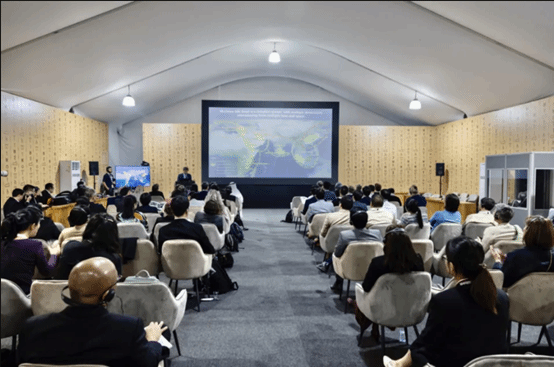
On September 16 local time in Riyadh, during the 45th Session of the World Heritage Committee, the side event “The Maritime Silk Road and the Future of World Heritage” was successfully held. The event was jointly organized by China’s National Cultural Heritage Administration and the International Council on Monuments and Sites (ICOMOS), and hosted by the Chinese Academy of Cultural Heritage, the Chinese Association for Conservation Technology of Cultural Heritage, and the Office of the Maritime Silk Road World Heritage Nomination Alliance.
Guan Qiang, Deputy Director of the National Cultural Heritage Administration, delivered an opening address and keynote speech. Marie-Laure Lavenir, Director General of ICOMOS, also delivered remarks. Representatives from ICOMOS, Indonesia, Malaysia, Sri Lanka, and the Macao Special Administrative Region gave thematic presentations.
Guan Qiang stated that the Maritime Silk Road was a route of trade and cultural exchange through which ancient peoples conducted cooperation and mutual exchange across the seas. Promoting a transnational joint World Heritage nomination for the Maritime Silk Road is an important measure for enhancing dialogue, exchange, and cooperation among nations while carrying forward the Silk Road spirit.
He introduced China’s recent progress in heritage protection, research, and World Heritage nomination work related to the Maritime Silk Road, presented new archaeological discoveries, and explained China’s research achievements regarding the concept, time span, spatial scope, heritage composition, and heritage value of the Maritime Silk Road.
He proposed that, with the support of the World Heritage Centre and guidance from ICOMOS, countries along the route should strengthen urban exchanges and cooperation, learn from the successful nomination experience of the Silk Roads heritage route, establish a coordination mechanism for the Maritime Silk Road transnational World Heritage nomination as soon as possible, and build a platform for international cooperation among countries along the route.
Source of text and images: National Cultural Heritage Administration of China
03
“First Lesson of the Semester” on Culture and Heritage Tourism Successfully Held at Kaiping Diaolou and Villages

To help students better understand key phenomena and issues related to cultural and heritage tourism production, consumption, and management, the undergraduate course “Culture and Heritage Tourism” offered by the School of Tourism Management at Sun Yat-sen University held its first lesson of the semester at a World Heritage site.
On September 17, 2023, the field teaching activity was successfully conducted in Kaiping.
The purpose of the teaching activity was to help students gain intuitive understanding of different heritage utilization models and the issues they face under varying conservation conditions, laying a foundation for later classroom instruction and course discussions.
Therefore, the field study included the Ying Village Diaolou, which has not been recognized as heritage and remains undeveloped in a natural state; Zili Village Diaolou Cluster, which has already been recognized as a World Heritage site and heavily utilized for tourism; Zu Zhai Village and Cangdong Village, which are outside the World Heritage protection zone and experimenting with different development models; and Chikan Overseas Chinese Ancient Town, where large-scale capital investment and development are underway.
Source of text and images: UNESCO Chair on Sustainable Tourism at Heritage Sites
04
Academic Symposium on Cultural Relics Protection Technology and Equipment Held in Chongqing
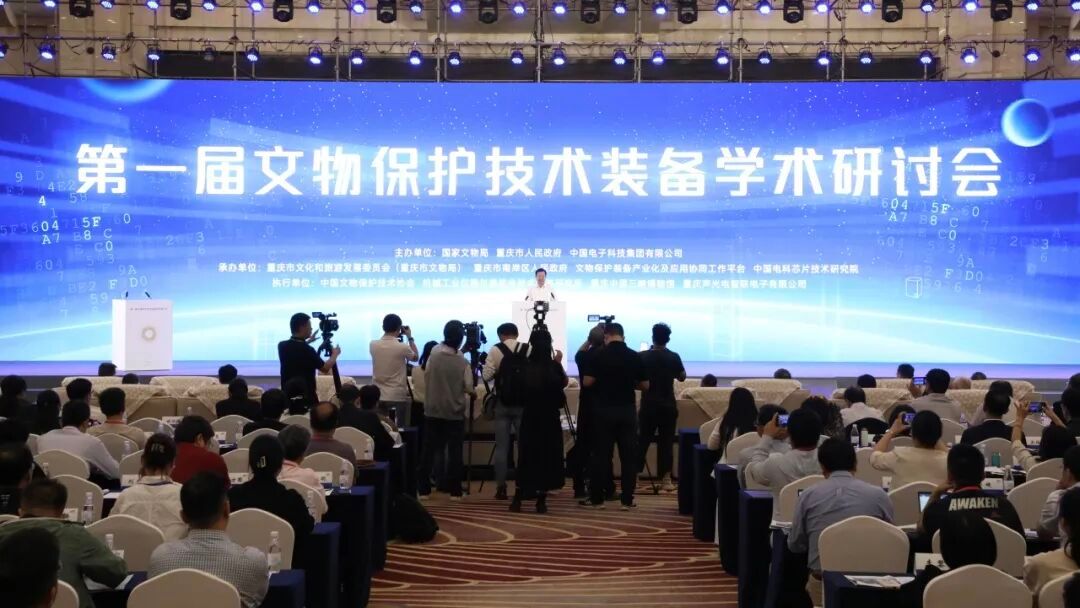
On September 27, the first “Academic Symposium on Cultural Relics Protection Technology and Equipment” was held in Chongqing. Li Qun, Vice Minister of Culture and Tourism and Director of the National Cultural Heritage Administration, attended the opening ceremony and delivered a speech. Jiang Duntao, Vice Mayor of Chongqing, and He Wenzhong, Deputy General Manager of China Electronics Technology Group Corporation, also delivered remarks. Lu Jin, Deputy Director of the National Cultural Heritage Administration, hosted the opening ceremony.
Li Qun pointed out that in the coming period, the development and application of China’s cultural relic protection equipment should deeply explore industry needs and promote breakthroughs in specialized equipment; accelerate the engineering and industrial application of scientific research achievements and continuously improve the cultural relic protection equipment system; gradually establish a standards system covering foundations, data, technology, products, management, security, applications, and services; promote integration between industry and demand so the cultural relic protection equipment sector shifts toward systematic services; and strengthen international exchanges and cooperation to help advanced Chinese cultural relic protection equipment “go global.”
During the symposium, three thematic forums — “Cultural Relics Risk Management,” “Cultural Relics Conservation and Restoration,” and “Smart Museums” — focused respectively on risk prevention and security management, conservation technologies for movable and immovable cultural relics, digital heritage technologies, and smart museum development, while sharing advanced equipment applications, solutions, and development models.
Source of text and images: National Cultural Heritage Administration of China
05
State Council Information Office Press Conference Focuses on White Paper “Building a Global Community of Shared Future”

This year marks the 10th anniversary of President Xi Jinping proposing the concept of building “a global community with a shared future for mankind.”
On September 26, China’s State Council Information Office released the white paper “Building a Global Community of Shared Future: China’s Proposals and Actions” and held a press conference to introduce and interpret the document.
Strengthening cultural exchange is regarded as an important path toward building a global community with a shared future. At the recently concluded 45th Session of the World Heritage Committee, China’s Cultural Landscape of Old Tea Forests of Jingmai Mountain in Pu’er was successfully inscribed on the World Heritage List.
“This is a new example of China actively participating in international cultural exchange and contributing Chinese wisdom,” said Li Qun, Vice Minister of Culture and Tourism and Director of the National Cultural Heritage Administration.
He added that Chinese civilization possesses outstanding continuity, innovation, unity, inclusiveness, and peacefulness. China will actively implement the Global Civilization Initiative, strengthen cultural exchange and cooperation, and contribute to world peace, cooperation, and the preservation and development of human wisdom and civilization.
Source of text and images: Xinhua News Agency
Compiled by: Lü Jiaxin
Edited by: Lü Jiaxin, Park Lina
Reviewed by: Li Guanghan, Wang Siyu
Final Review: Shen Ruiwen, Zhang Jianwei