International Heritage News
01
UNESCO Holds First Arab Region World Heritage Digital Workshop

Starting March 11, UNESCO held a week-long “Dive into Heritage” World Heritage digital documentation workshop in Oman for the Arab region.
The main purpose of the workshop was to improve participants’ knowledge and capabilities in using the latest digital technologies to document World Heritage sites. In addition to theoretical instruction on 3D surveying and mapping, photogrammetry, laser scanning, data collection, data processing, and 3D modeling, the workshop also included field training at the World Heritage site of Bahla Fort.
The “Dive into Heritage” project is supported by the Ministry of Culture of Saudi Arabia and aims to establish an innovative online platform displaying digital data on World Heritage and related intangible cultural heritage in the Arab region. The project also highlights the need to strengthen the capabilities of youth and regional experts in digital heritage documentation, digital workflows, and data processing.
As an important initiative using the latest technologies to present World Heritage, the project will continue through the end of 2024.
Text and image source: whc.unesco.org
02
[Lecture] American University of Rome Online Lecture Series: War and Cultural Heritage

The American University of Rome held an online lecture series titled “War and Cultural Heritage” on March 16, 23, and 30.
The lectures explored cultural heritage issues during the pre-conflict, conflict, and post-conflict stages of war. Unlike accidental wartime damage in history, many recent conflicts show that heritage has become a deliberate target of destruction and, because of its value to cultural identity, has become a weapon of cultural annihilation.
The lecture series analyzed these emerging threats and examined corresponding responses and strategies.
Lecture registration link:
https://enrol.aur.edu/war-and-cultural-heritage/
Text and image source: International Heritage Observation
03
UNESCO-WHIPIC Theoretical Research Report on “Definitions and Concepts of Heritage Interpretation and Presentation”

The UNESCO Category 2 Centre on World Heritage Interpretation and Presentation (WHIPIC) released a theoretical research report titled “Definitions and Concepts of Heritage Interpretation and Presentation.”
Through literature reviews, workshops, and international surveys, the report explored the definitions and concepts of “heritage interpretation,” “presentation,” and “inclusive heritage interpretation.”
The report noted that one issue concerning World Heritage is that the multi-layered histories and memories reflected in heritage values can be interpreted from multiple perspectives. On the other hand, heritage interpretation and presentation can help mediate conflicts among States Parties concerning heritage values.
WHIPIC launched this research project in June 2022 in hopes of establishing a theoretical foundation for heritage interpretation and presentation based on contemporary understandings, thereby promoting the development of relevant principles and guidelines.
The research emphasized from theoretical, policy, thematic, and regional perspectives that interpretation and presentation of World Heritage should not only communicate heritage values but also recognize the diverse values of stakeholders.
The report also discussed issues such as digital technology and ethics. Future work will build an interdisciplinary academic network based on this research.
Text and image source: unesco-whipic.org
04
Taliban Declares March 11 “Cultural Heritage Protection Day”
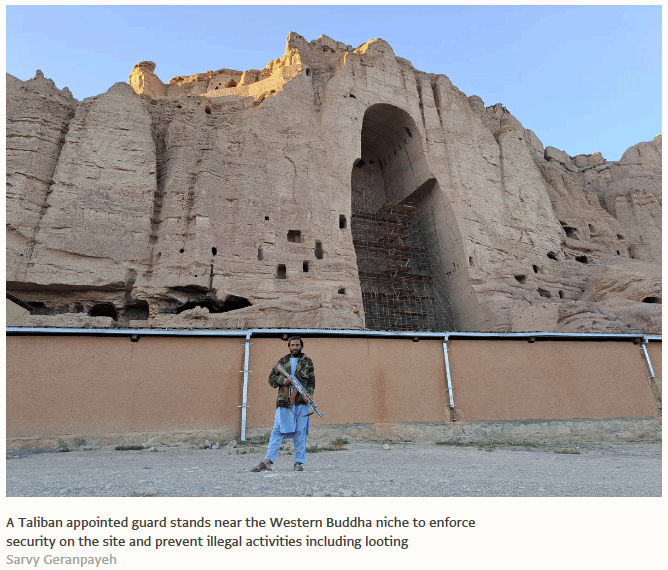
Twenty-two years ago on March 11, the Taliban destroyed the thousand-year-old Bamiyan Buddhas. UNESCO subsequently listed the World Heritage site as endangered and organized heritage experts to study the remaining ruins and develop conservation plans.
Recently, Afghanistan’s Ministry of Information and Culture announced that March 11 would be designated as “Cultural Heritage Protection Day” and plans to hold a major heritage-themed event at the National Museum of Afghanistan.
Deputy Minister Atiquallah Azizi stated that Afghanistan would support international organizations and cooperate with institutions possessing expertise in preserving Afghan historical sites.
“Paying attention to historical sites is in fact paying attention to the people. We fully support actions beneficial to the country’s cultural heritage,” he said.
Text and image source: International Heritage Observation
05
Council for British Archaeology’s 2023 Festival of Archaeology to Open in July

The Council for British Archaeology’s 2023 Festival of Archaeology will take place from July 15 to 30.
This year’s festival theme is “Archaeology and Creativity,” emphasizing that archaeology fundamentally involves creativity, exploration, and imagination.
Archaeologists use creative activities such as art, music, poetry, and drama to tell stories about excavated artifacts, people, and places. The process creates memory and meaning while offering inspiration.
During the festival, community groups, heritage organizations, universities, and commercial institutions will organize hundreds of online and offline activities across the country, using innovative technologies and archaeological tools to help people reflect on the world they live in.
Participation details:
www.archaeologyuk.org/festival.html?continueFlag=cc734774b142837d5cb04bc1df00296d
Text and image source: www.archaeologyuk.org
Domestic Heritage News
01
China’s Main Venue for International Museum Day 2023 to Be Held in Fuzhou

Recently, the National Cultural Heritage Administration approved Fuzhou as the host city for China’s main venue activities for the 2023 International Museum Day, with the opening ceremony to be held at the Fujian Museum.
The International Council of Museums (ICOM) announced the 2023 International Museum Day theme as: “Museums, Sustainability and Wellbeing.”
According to reports, the Fujian Museum plans to launch three exhibitions centered on this year’s theme, focusing on the Maritime Silk Road, Dehua white porcelain, and cultural exchanges between China and other countries.
Additional activities will include the final evaluation meeting for China’s Top Ten Museum Exhibitions and the release of the cultural publication “Exploring Fujian Through Museums: Listening to Stories of Cultural Relics.”
Text and image source: Xinhua News Agency
02
[Event] Proposal Collection for Asian Cultural Heritage Conservation and Utilization

In 2022, the Asian Cultural Heritage Conservation Fund and Sun Yat-sen University/UNESCO Chair on Sustainable Tourism in World Heritage Sites jointly launched the “Asian Cultural Heritage Education Cooperation Network” project.
The initiative aims to share experiences in cultural heritage conservation and utilization through educational cooperation among Asian countries and regions.
The National College Student Proposal Collection for Asian Cultural Heritage Conservation and Utilization is one of the sub-projects of this initiative. It encourages university students across China to contribute ideas to Asian cultural heritage conservation and utilization through field research and proposal writing.
This proposal collection focuses on the theme “Conservation and Utilization of Asian Cultural Heritage Under Climate Change.”
All proposals are required to identify issues facing Asian cultural heritage conservation and utilization in the context of climate change and propose innovative heritage conservation or utilization solutions, such as sustainable tourism, to address these problems.
Teams recommended for on-site presentation at the First Asian Cultural Heritage Conservation and Utilization Proposal Collection event will compete with teams from across Asia for outstanding proposal awards.
Proposal requirements and participation details:
https://mp.weixin.qq.com/s/kQSRVNW-2Ru7HqxhzPHBUg
Text and image source: UNESCO Chair on Sustainable Tourism in Heritage Sites
03
Beijing Research and Experimental Base for Protection of Wooden Ancient Architecture Established

On March 9, the “Beijing Research and Experimental Base for the Protection of Wooden Ancient Architecture” was officially inaugurated.
The base will utilize research resources from museums, cultural institutions, and universities throughout Beijing, focusing on the conservation of wooden ancient buildings while conducting cross-departmental and interdisciplinary scientific research projects.
In 2009, UNESCO inscribed “Traditional Chinese Wooden Arch Bridge Construction Techniques” on the Representative List of the Intangible Cultural Heritage of Humanity.
The establishment of the base is considered highly significant for improving research standards within the museum and heritage system, advancing research on wooden architecture, and strengthening cultural relic preservation in Beijing.
Text and image source: Guangming Daily
04
Large Southern Song Dynasty Kiln Site Complex Discovered in Suzhou, Jiangsu
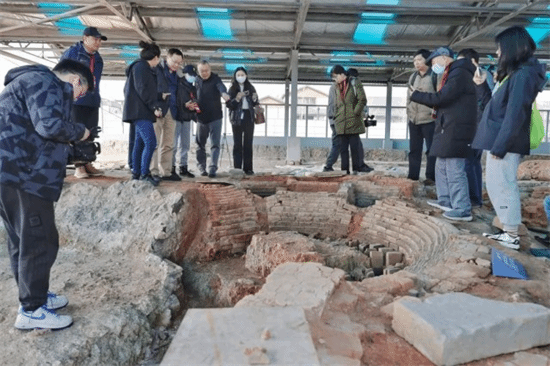
On March 2, the Suzhou Municipal Bureau of Culture, Radio, Television, and Tourism announced that archaeologists had discovered a large Southern Song Dynasty kiln site complex.
Experts preliminarily identified the site as the “Pingjiang Official Kiln” recorded in the Southern Song ritual text Zhongxing Lishu.
The kiln complex is located in the Yuanhetang area of Xiangcheng District, Suzhou. Excavations covering 2,918 square meters uncovered 99 remains, including kilns, clay drying areas, sedimentation pools, wall foundations, house foundations, roads, wells, ash pits, and kiln-head houses.
A total of 225 cultural relics were found, including golden bricks, pottery jars, and ceramic lamps.
Wang Guangyao, a research curator at the Palace Museum, stated that the discovery essentially confirmed clues regarding the “Pingjiang Official Kiln” and provided new materials and evidence for tracing the origins of Suzhou regional civilization. The findings also hold high archaeological and historical value for studying the development and circulation history of kilns throughout China.
Text and image source: Xinhua News Agency
05
Cities, Culture, and Creativity: First “Gansu Dialogue” Focuses on Gansu’s Cultural Development Potential

From March 14–15, 2023, the first “Gansu Dialogue” Mayors Forum was held in Lanzhou.
For the first time, the forum gathered more than 130 representatives, experts, and stakeholders from UNESCO, the World Bank, the Gansu Provincial Department of Culture and Tourism and its affiliated institutions, cities and counties involved in the World Bank-funded Gansu Silk Road Economic Belt Cultural Heritage Transmission and Innovation Project, universities, World Heritage sites in Gansu, major cultural tourism enterprises, and local communities.
The forum featured four themes: digital transformation of cultural and creative industries, cultural resources in urban innovation and rural revitalization, sustainable tourism, and sustainable heritage management.
Chen Weizhong, Director of the Gansu Provincial Department of Culture and Tourism; Shahar Hattori, UNESCO Representative to China; and Ahmed Eweda, International Coordinator for the World Bank’s Cultural Heritage and Sustainable Tourism Project, delivered opening speeches introducing the vision of using culture and creativity to promote sustainable urban development under the concept of “Cities, Culture, and Creativity.”
Yang Bixing, Head of Culture at UNESCO Beijing Office, discussed both the immense development potential and the many challenges facing cultural and creative industries.
Professor Zhang Jianwei, Vice Dean of the School of Archaeology and Museology at Peking University and Executive Deputy Director of WHITRAP-Beijing, participated in the forum and engaged in in-depth discussions with guests on new approaches and solutions for empowering urban development through culture.
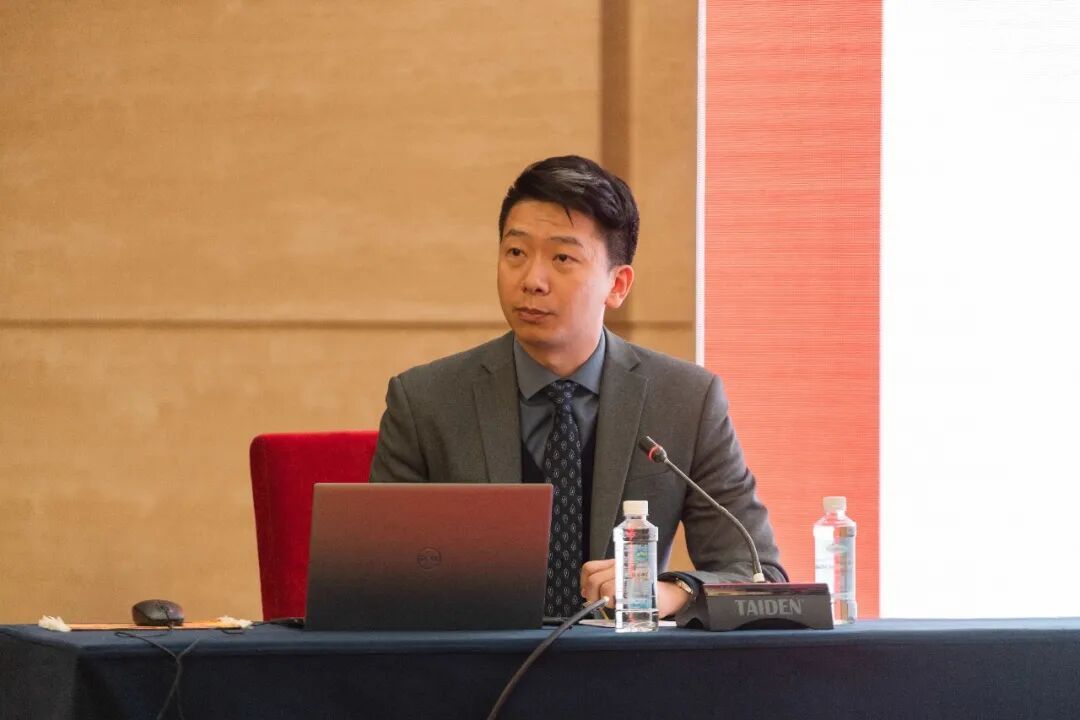
Additionally, during the “Cities, Culture, and Creativity” capacity-building training held on March 12–13, Professor Zhang Jianwei was invited to lecture. Through detailed explanations of culture-related concepts, standards, and international conventions, he further illustrated the role culture plays in sustainable development.
Professor Zhang also shared examples of public participation in World Heritage protection, hoping Gansu could draw inspiration for its own development.
Text and image source: UNESCO