International Heritage News
01
UNESCO Releases "World Heritage 'No-Go' Commitment Guide"

On December 8, on the occasion of the UN Biodiversity Conference (COP15), UNESCO released a new guide for the corporate sector: the World Heritage 'No-Go' Commitment Guide – A Global Standard for Corporate Sustainability, aimed at ensuring that business activities do not put world heritage at risk.
Lazare Eloundou Assomo, Director of the World Heritage Centre, noted that this guide builds on two decades of collaboration with the business community. By committing to avoid activities harmful to world heritage sites, companies bring genuine support to these sites.
Source: whc.unesco.org
02
Top 10 Archaeological Discoveries of 2022 Announced

Recently, the January/February 2023 issue of Archaeology magazine selected the top 10 archaeological discoveries of 2022. They include: the inner world of an Egyptian pharaoh's mummy; the discovery of Aztec wooden offerings in Mexico; the birth of the Venus figurines in Austria; the world’s oldest straws discovered in the North Caucasus; a Neolithic hunting shrine found in Jordan; the earliest Mayan calendar image discovered in Guatemala; a Wari Empire artisan’s tomb found in Peru; the origins of the city – the ancient city of Lagash in Iraq; the oldest Buddhist temple discovered in Pakistan; and the legendary shipwreck found in Antarctica.
Archaeology is a bimonthly public archaeology magazine published by the Archaeological Institute of America and has been continuously published for over 70 years. Since 2006, the magazine has selected the top 10 archaeological discoveries of the year each December, with significant global influence.
Source: Asian Archaeology
03
10,000 Families Living Near Angkor Wat Required to Relocate from Heritage Site

To avoid affecting the conservation status of the world heritage site, 10,000 families living near Angkor Wat are being asked to "voluntarily" move out of the archaeological park. They are being offered resettlement land 20 kilometers away, $250 in compensation, and 50 kilograms of rice. Officials say they have received two warnings about development issues around the heritage site in the past five years, hence the request for residents to relocate by 2023.
Cambodian Prime Minister Hun Sen previously stated that to preserve Angkor Wat’s world heritage status, residents should voluntarily move out. He said, "Angkor Wat could be removed from the World Heritage List due to surrounding development, because it would lose the terms and conditions required by the World Heritage Committee." The government warns that those who refuse to move will not receive compensation. Local residents say the resettlement area is wasteland, with no schools, hospitals, or job opportunities. This has created a stalemate between the Cambodian government’s heritage protection strategy and the future of the heritage site’s residents.
Source: www.theguardian.com/globaldevelopment/2022/nov/29/evictions-cambodia-angkor-wat-unesco-world-heritage-site
04
UNESCO Concerned About Carrying Capacity of Popular Heritage Sites

As of last month, the annual total of visitors to the Acropolis of Athens approached 30 million. UNESCO official Peter DeBrine commented, "The red light is on. Popular heritage sites must address the issue of carrying capacity. We have moved from overtourism to revenge tourism." He says a different path is needed: one that starts with the consumer and ends with tourism and heritage management, ensuring both a quality tourism experience and heritage protection. He recommends online ticket sales to control visitor numbers and higher ticket prices in summer to balance peak and off-peak seasons. He emphasizes that tourism is a lifeline for many communities and crucial to local economies, but overtourism is a real danger.
At the 50th anniversary celebrations of the World Heritage Convention held last month in Delphi, the issue of overtourism led heritage sites to consider adjusting their operating strategies, focusing on smaller numbers of visitors who spend more and have lower impact, rather than large tour groups. Meanwhile, research shows that tourists also want sustainable travel options. Recently, heritage sites in East Asia have begun implementing new UNESCO visitor management strategies and establishing a benchmark for sustainable tourism.
Source: International Heritage Watch
05
ICOM Announces 2023 International Museum Day Theme: Museums, Sustainability and Well‑being

On December 1, the International Council of Museums (ICOM) announced the theme for International Museum Day, to be held on May 18, 2023: "Museums, Sustainability and Well‑being." The theme aims to highlight that museums are key factors in promoting the well‑being and sustainable development of communities. Museums contribute to achieving sustainable development goals in many ways: from supporting climate action to fostering inclusivity, to combating social isolation and improving mental health. International Museum Day 2023 will focus on SDG 3 (Good Health and Well‑being), SDG 13 (Climate Action), and SDG 15 (Life on Land).
Source: icom.museum
Domestic Heritage News
01
IUCN Green List Released: 9 New Sites Added from China

The IUCN Green List is a global list of protected areas recognized by IUCN, launched in 2014. The Green List primarily assesses whether protected areas meet their conservation objectives. On December 13, IUCN released this year’s newly certified Green List sites, including 16 protected areas from countries such as France, Zimbabwe, and China.
Among the newly certified Green List sites, nine are in China, bringing China’s total to 15 – the highest in Asia to date. They include: Huping Mountain National Nature Reserve, Shennongjia National Park, Guangzhou Haizhu National Wetland Park, Qianjiangyuan National Park, Changbai Mountain Nature Reserve, Qizishan Nature Reserve in Hubei, Badagong Mountain Nature Reserve in Hunan, Daqing Hanma Nature Reserve in Inner Mongolia, and Huangguoshu Scenic Area.
Source: World Heritage
02
China World Heritage Tourism Promotion Alliance Annual Meeting Held
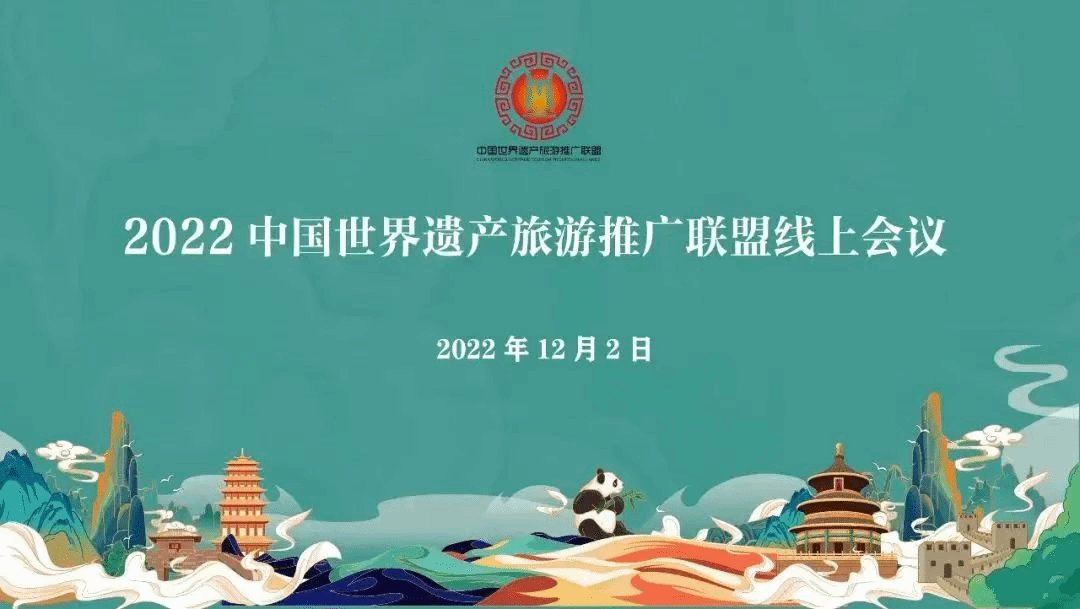
On December 2, the annual meeting of the China World Heritage Tourism Promotion Alliance was held online. The meeting released 10 "2022 China World Heritage Cross‑regional Thematic Travel Routes" and announced the "Expert Recommendation Award" and "Netizens’ Attention Award" for 2021 China World Heritage Tourism Cultural and Creative Products.
The China World Heritage Tourism Promotion Alliance, guided by the Ministry of Culture and Tourism, is a tourism promotion organization themed around promoting China’s world heritage resources, with member institutions being the management bodies of heritage sites. Since its establishment in 2015, the Alliance has grown from 32 to 190 member institutions. Going forward, Alliance members will further strengthen collaboration, deepen the integration of culture and tourism, and continuously enhance the influence of China’s world heritage tourism.
Source: World Heritage
03
Revisions Completed for the Nomination Dossier of the Beijing Central Axis

The Beijing Municipal Cultural Heritage Bureau recently announced the completion of key annual tasks in the cultural heritage sector. Regarding the Central Axis, the nomination dossier has been revised; the Regulations on the Protection of Beijing Central Axis Cultural Heritage took effect on October 1; and the Beijing Central Axis Protection Management Plan (2022‑2035) is currently being publicly reviewed. The restoration of Zhengyangmen Gate Tower and the Divine Granary at Xiannongtan (Altar of Agriculture) is progressing steadily, and the compensation plan for the relocation of residents at Qingcheng Palace within Xiannongtan has been readjusted.
The boundary of the Beijing Central Axis heritage zone and buffer zone has been defined: The Beijing Central Axis, running 7.8 kilometers, traverses the old city of Beijing. It starts at the Bell and Drum Towers in the north, runs south through Wanning Bridge, Jingshan Park, the Forbidden City, Duanmen, Tian’anmen, the Outer Jinshui Bridge, Tian’anmen Square and its building complex, Zhengyangmen, the Southern Section Road Relics of the Central Axis, and ends at Yongdingmen in the south. The Imperial Ancestral Temple and Altar of Land and Grain, the Temple of Heaven and Xiannongtan are symmetrically arranged east and west. The 15 constituent elements of the Central Axis fall into five categories: ancient royal palace and garden architecture, ancient ritual and sacrificial architecture, ancient urban management facilities, central road relics, and modern public buildings and spaces.
The heritage zone covers approximately 5.9 square kilometers, including the 15 constituent elements and the necessary connecting areas between them. The buffer zone covers approximately 45.4 square kilometers, including areas surrounding the heritage zone that are closely related to the formation and development of the Central Axis.
Source: Beijing Municipal Cultural Heritage Bureau
04
China World Heritage Tourism Promotion Alliance Annual Meeting Held
On December 2, the annual meeting of the China World Heritage Tourism Promotion Alliance was held online. The meeting released 10 "2022 China World Heritage Cross‑regional Thematic Travel Routes" and announced the "Expert Recommendation Award" and "Netizens’ Attention Award" for 2021 China World Heritage Tourism Cultural and Creative Products.
The China World Heritage Tourism Promotion Alliance, guided by the Ministry of Culture and Tourism, is a tourism promotion organization themed around promoting China’s world heritage resources, with member institutions being the management bodies of heritage sites. Since its establishment in 2015, the Alliance has grown from 32 to 190 member institutions. Going forward, Alliance members will further strengthen collaboration, deepen the integration of culture and tourism, and continuously enhance the influence of China’s world heritage tourism.
Source: World Heritage
05
2022 "Global World Heritage Education Innovation Case Award" International Sharing Session Held Online

On December 13, as a flagship event of UNESCO’s 50th anniversary celebration of the World Heritage Convention, the 2022 "Global World Heritage Education Innovation Case Award" International Sharing Session was held online. Nearly 50 representatives from international organizations, award winners, partners, and guest experts attended the online meeting, while 8,008 people (6,114 in Chinese, 1,894 in English) watched the live stream.
The session announced the winners of the 2022 "Global World Heritage Education Innovation Case Award." A total of 30 cases stood out from nearly 100 worldwide. Twenty award-winning cases shared their innovative models and international experiences, and 10 multidisciplinary international experts provided insightful comments.
As a key event of UNESCO’s 50th anniversary celebration of the World Heritage Convention, the award list and related activities will be simultaneously published globally on UNESCO’s official website. For the detailed list and live sharing, see – Award Announcement: 2022 "Global World Heritage Education Innovation Case Award" Winners.
Source: WHITRAP
06
First Academic Forum on World Cultural and Natural Heritage Held Online

To commemorate the 50th anniversary of the adoption of the Convention Concerning the Protection of the World Cultural and Natural Heritage, the First Academic Forum on World Cultural and Natural Heritage was held online from November 26 to 27. The forum discussed cross‑disciplinary talent cultivation against the backdrop of major changes unseen in a century, compounded by the COVID‑19 pandemic, climate change, environmental pollution, and over‑development.
The forum was co‑organized by the UNESCO Chair on Sustainable Tourism in UNESCO Designated Sites, the UNESCO Chair on Living Heritage and Sustainable Development, the UNESCO Chair on Cultural Resource Management, WHITRAP Shanghai and Beijing, the School of Architecture at Tsinghua University, the School of Archaeology and Museology at Peking University, the Department of Cultural Heritage and Museology at Fudan University, the School of Architecture at Southeast University, the College of Architecture and Urban Planning at Tongji University, the School of Landscape Architecture at Beijing Forestry University, and the School of Tourism Management at Sun Yat‑sen University. During the forum, experts and scholars from these institutions shared insights on topics including world heritage and world civilizations, the integration of cultural and natural heritage, the truthfulness of world heritage value assessment, and world heritage archaeology.
Source: UNESCO Chair on Sustainable Tourism in UNESCO Designated Sites