International Heritage News
01
UNESCO World Heritage No. 103: The Next 50 Years

On the occasion of the 50th anniversary of the World Heritage Convention, World Heritage No. 103 takes "The Next 50 Years" as its theme, reviewing the history of the Convention and the state of world heritage. In his foreword, Lazare Eloundou Assomo, Director of the UNESCO World Heritage Centre, emphasizes that 2022 is not only a year of celebration but also an opportunity to look ahead and address issues such as climate change, regional representation, and sustainable tourism, which humanity must face together. At the same time, African world heritage is one of UNESCO’s priorities and must in the future receive recognition commensurate with its importance in history, humanity, and nature.
Sources: UNESCO World Heritage Centre; International Heritage Watch
02
WHW 2022 World Heritage Watch Report

Recently, WHW released its 2022 World Heritage Watch Report. The report raises issues concerning the conservation and management of world heritage sites such as Victoria Falls, the Venice Lagoon, the Great Barrier Reef, Hoh Xil, Stonehenge, and the Bamiyan Valley. The report notes that the failure to hold the 45th session of the World Heritage Committee as scheduled is partly attributable to procedural problems. Following the 20th, 30th, and 40th anniversaries of the World Heritage Convention, the inability to hold large-scale commemorative events for the 50th anniversary has had a negative impact.
WHW emphasizes that over the years, civil society groups and academics have opposed the politicization of the World Heritage Committee. Some member states base their decisions not on facts but increasingly on political considerations. In this regard, civil society groups — key forces in the conservation of many world heritage sites — have reached a new level of influence and will play an even greater role.
Source: World Heritage
03
UNESCO Reactive Monitoring Report on the Great Barrier Reef: Recommends Listing as World Heritage in Danger

On November 28, the reactive monitoring report on the Great Barrier Reef was released, recommending that the world heritage site be moved to the List of World Heritage in Danger. The report states that over the past decades, the Great Barrier Reef has been affected by multiple factors, including climate change, coastal development, and deteriorating water quality. The rate and extent of degradation of its ecological processes are increasing, and the reef’s Outstanding Universal Value (OUV) is facing a serious threat.
In 2021, the World Heritage Committee expressed extreme concern over the state of the Great Barrier Reef ecosystem. At the end of March 2022, the UNESCO World Heritage Centre and IUCN conducted a reactive monitoring mission to the Great Barrier Reef. The monitoring report indicates that the OUV has already been severely affected by climate change, and the reef’s capacity to recover has also been compromised. Moreover, the plan for protecting the OUV lacks clear climate change response targets and implementation measures and has not been fully implemented.
Sources: www.theguardian.com; International Heritage Watch
04
Committee Chair Alexander Kuznetsov Resigns: Russia Gives Up Right to Host World Heritage Committee Session

On November 22, Kuznetsov wrote to the World Heritage Committee stating: "My mission as Permanent Delegate of the Russian Federation to UNESCO has come to an end. I will not be able to continue as Chair of the 45th session of the World Heritage Committee." This means that, contrary to its previous tough and uncompromising stance, Russia has abandoned its plan to host the World Heritage Committee session in the country.
According to the rules of procedure of the World Heritage Committee, when the Chair resigns, the replacement shall be the next country among the Vice-Chairs in alphabetical order. The current Vice-Chairs of the World Heritage Committee are Argentina, Italy, Saudi Arabia, South Africa, and Thailand. In alphabetical order, Saudi Arabia is the first country after Russia. It is expected that Saudi officials will announce within a few days whether they will assume the Chairmanship.
Source: Loving World Heritage
05
Italian Ministry of Culture Considers Raising Museum Ticket Prices
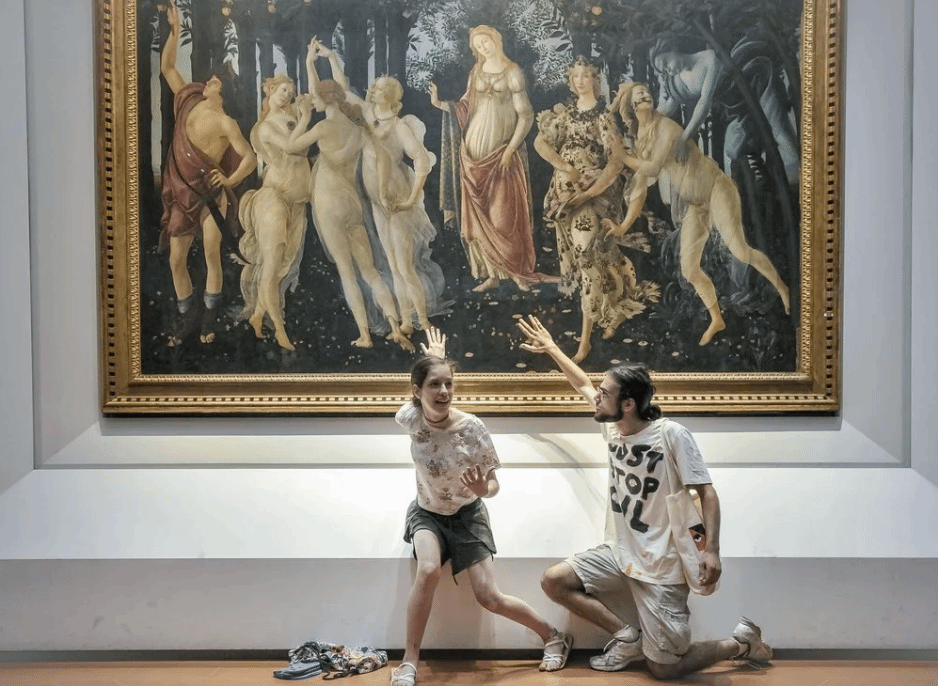
Faced with increasingly frequent acts of vandalism against famous paintings by climate change protesters, the Italian Ministry of Culture is considering raising museum ticket prices. Minister Gennaro Sangiuliano stated that the continued damage to artworks and cultural heritage necessitates stronger protection and immediate measures — starting with adding glass screens to protect famous paintings. The resulting costs to the state compel the administration to raise museum ticket prices.
The climate change protesters emphasize that the climate and ecological crisis is destroying Italy, and the future will only be worse — food shortages, soaring unemployment. To avert this fate, such non‑violent actions are necessary.
Source: International Heritage Watch
06
Restoration of Ta Keo Temple at Angkor Completed

On November 10, the handover ceremony for the restoration project of Ta Keo Temple at Angkor, implemented by China as part of its aid to Cambodia, took place. Ta Keo is Cambodia’s most famous thousand‑year‑old "unfinished project" — construction was halted midway due to complex historical reasons, and it remains unfinished to this day. Ta Keo, also known as "the Temple of the Crystal Tower," is a unique and highly significant site among the more than 600 temples and monuments of Angkor.
The Ta Keo Temple project is the second restoration project implemented by the Chinese government under the framework of UNESCO’s International Coordinating Committee for the Safeguarding and Development of the Historic Site of Angkor. The project included the conservation and restoration of the main temple body, stabilization and structural reinforcement of the five temple‑mountain towers, consolidation of walls on both sides of the stairways on the base platform, stabilization and drainage support for the libraries and long halls, stone conservation, archaeological research, and auxiliary facilities. The project began on November 27, 2010, and spanned 12 years.
Source: World Heritage
Domestic Heritage News
01
17th Session of the Intangible Cultural Heritage Committee: "Traditional Tea Processing Techniques and Associated Social Practices in China" Inscribed Successfully

From November 28 to December 3, the 17th session of the UNESCO Intergovernmental Committee for the Safeguarding of the Intangible Cultural Heritage was held in Morocco. On November 29, the committee announced the inscription of "Traditional tea processing techniques and associated social practices in China" on the Representative List of the Intangible Cultural Heritage of Humanity. With this addition, China now has 43 items inscribed on UNESCO’s intangible cultural heritage lists, continuing to rank first in the world.
Traditional tea processing techniques and associated social practices in China refer to the knowledge, skills, and practices concerning tea garden management, tea leaf picking, manual tea processing, and the drinking and sharing of tea. This heritage element has been passed down through generations, forming a systematic and complete knowledge system, extensive and deep‑rooted social practices, mature and sophisticated traditional techniques, and a rich variety of handmade products. Through the Silk Road, it has promoted exchanges and mutual learning among world civilizations and plays an important role in the sustainable development of human society.
Source: Loving World Heritage
02
Four Chinese Projects Win 2022 UNESCO Asia‑Pacific Heritage Awards

On November 25, the winners of the 2022 UNESCO Asia‑Pacific Heritage Awards were announced. A total of 13 projects from six countries received awards. Four projects from China were honored: Nantian Temple in Jinjiang, Fujian; Guizhou West Lane in Shanghai; M30 Integrated Facility for Electricity Supply and Waste Collection in Macau; and Xiaoxihu in Nanjing.
Source: World Heritage
03
HIST and ICOMOS Sign Memorandum of Cooperation
On November 21, the UNESCO International Centre on Space Technologies for Natural and Cultural Heritage (HIST) and the International Council on Monuments and Sites (ICOMOS) signed a memorandum of cooperation online on using space information technology to support the protection of world cultural heritage. HIST Director Guo Huadong and ICOMOS President Teresa Patrício attended and signed the memorandum.
Under the agreement, the two parties will form a long‑term strategic partnership and, over the next five years, will carry out comprehensive cooperation in areas such as world cultural heritage nomination, monitoring and assessment, research and consulting, capacity building, information sharing, and event organization, thereby promoting the protection of world cultural heritage globally.
Source: National Cultural Heritage Administration
04
No. 2 Ancient Ship of the Yangtze Estuary Successfully Enters Dock, Transitions to Archaeological and Conservation Phase

On November 25, the "Fenli," a specialized salvage vessel designed and built for the integral salvage and transport of the No. 2 ancient ship of the Yangtze Estuary, carrying the ancient ship, entered Dock No. 1 of the former Shanghai Shipyard smoothly. After nearly two hours of work, the caisson containing the ancient ship landed precisely onto pre‑cast saddles, marking the completion of the integral salvage phase of the archaeological and conservation project for the No. 2 ancient ship of the Yangtze Estuary.
The No. 2 ancient ship lies in the navigation channel of the Yangtze Estuary and is a relic of the ancient Maritime Silk Road trade. It was discovered in 2015 during a key underwater archaeological survey in Shanghai. Due to long‑term water flow erosion, the hull had gradually become exposed on the seabed, making in‑situ preservation difficult. Moreover, the turbid waters of the Yangtze Estuary do not allow for comprehensive systematic underwater archaeological excavation. To ensure the ship’s safety, the National Cultural Heritage Administration organized multiple expert meetings and, in 2021, decided to adopt the method of integral salvage and excavation for the archaeological study and protection of the No. 2 ancient ship.
Source: National Cultural Heritage Administration
05
Repairs Completed on 61 Damaged Sections of Pingyao Ancient City Wall
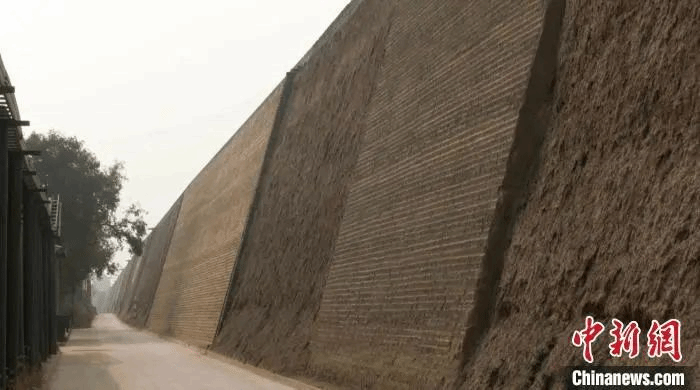
On November 4, at the foot of the Pingyao Ancient City Wall in Jinzhong, Shanxi, workers were dismantling scaffolding and cleaning up the restoration site. The repairs on 61 sections of the 2,800‑year‑old world heritage site, the Pingyao Ancient City Wall, which had been damaged by persistent rainfall, have been completed.
From October 2 to 7, 2021, many parts of Shanxi experienced heavy rainfall, causing partial collapses of the Pingyao City Wall. According to statistics, the wall suffered 15 large‑scale collapses of the parapet wall on the inner side and 46 large‑scale slips of rammed earth on the inner wall.
Shao Shuai, a traditional building technician from Pingyao County, explained that the restoration followed the "rammed earth with formwork" method recorded in the Song Dynasty treatise Yingzao Fashi (Treatise on Architectural Methods). The ramming earth mixture consisted of loess and quicklime in a 3:7 ratio, ensuring both strength and fidelity to the wall’s original appearance. To strengthen the protection of the ancient wall, Pingyao County has specially established the Pingyao City Wall Protection Service Center to carry out daily management and hazard inspection.
The Pingyao City Wall is one of the four best‑preserved ancient city walls in China, and the Pingyao Ancient City is known as "the best‑preserved ancient county town in China." In 1997, Pingyao Ancient City, including its city wall, was inscribed on the World Heritage List.
Source: China News Service