The "Youth Heritage Alliance" is initiated by the World Heritage Institute of Training and Research for the Asia and the Pacific Region under the auspices of UNESCO (WHITRAP Beijing).
As the heritage conservation movement unfolds globally, heritage studies today are highly interdisciplinary. With this diversity, openness, and breakthrough potential, we invite scholars from different disciplines to exchange and engage, encouraging young scholars to both inherit their disciplinary traditions and dare to innovate.
Theme
The "Exemplarity" of Heritage Cities
The Sustainable Development of World Heritage Ecological Culture
Introducers
Luo Pan, Li Guanghan
Date & Location
July 25–26, 2022 – Quanzhou
Participants
[Offline]
Luo Pan, Zhao Xiaomei, Li Guanghan, Sun Jing, Zhang Fan, Philipp Demgenski, Zhou Mengyuan, Li Jin, Zhang Lisheng, Wang Siyu, Fu Shulan, Duan Niudou, Piao Lina, Cai Ying, Zheng Xiaotian
[Online]
Xie Li, Yan Haiming, Sun Lina, Du Lindong
(Ordered by speaking sequence; see end of article for participant introductions)

Summary
The introducers raised issues regarding the tendency of discourse construction in Quanzhou’s heritage protection process, the neglect of everyday life, whether Quanzhou should be regarded as a "heritage city," and the interdisciplinary nature of heritage protection. Salon participants expressed diverse opinions and engaged in discussion and critique on whether the marginalization of local, folk, everyday life in the current heritage protection system warrants greater vigilance and criticism; the influence of official cultural heritage factors on local factors; the essence of anthropology and how it can intervene in cultural heritage protection; and the construction of heritage disciplines and interdisciplinary practice.
Keywords
Quanzhou; Everyday Life; Anthropology; Interdisciplinarity
Discussion Topics
·Cultural Heritage Protection and Everyday Life
·How Anthropology Can Intervene in Cultural Heritage Protection
·Discipline and Practice of Cultural Heritage Protection
Cultural Heritage Protection and Everyday Life
Luo Pan:
I have studied Quanzhou’s local culture since my undergraduate years, and Quanzhou later became my fieldwork site for both my master’s and doctoral research, covering areas such as folk religion, urban planning and cultural heritage, and urban spatial power. Before my master’s fieldwork, Professor Wang Mingming suggested I consider two questions: how to express the contemporary Quanzhou while continuing the previous historical anthropology framework, and what are the differences and continuities between contemporary everyday life in Quanzhou and other eras?
In my ongoing research, I have found that the identity of the "Maritime Silk Road" has greatly influenced the locality and everyday life. One manifestation is that local people’s imagination and interpretation of Quanzhou increasingly align with official discourse, and the content of interpretation relates to contemporary political factors. Undeniably, Quanzhou as the "Maritime Trading Center of the World in Song-Yuan China" – its heritage identity makes more people see its value. But I am somewhat concerned: how much attention is given to eras and cultures outside the Song-Yuan period? What about the other values of Quanzhou beyond its inscribed heritage? Could they be impacted?
So this morning I insisted on taking everyone to see places beyond the world heritage sites – like the Xiao Wangfu Temple and roadside shrines on West Street. Here I want to discuss: under the continuous construction of Song-Yuan as a keyword, how do we protect the value of Quanzhou’s contemporary everyday life? Or, what impact does becoming a heritage site have on my hometown, Quanzhou?
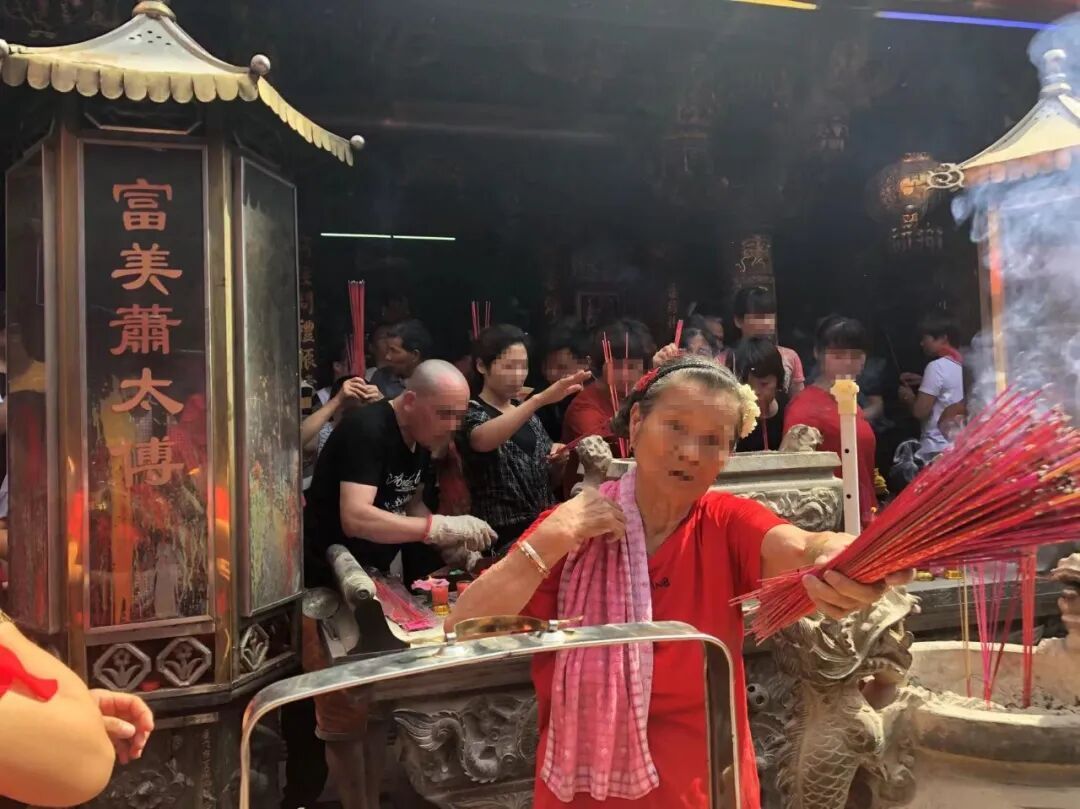

First: Quanjun Fumei Temple; Second: Birthday of Lord Xiao Tai (slide for more)
Source: Provided by Sun Jing
We never deny that culture is always changing. Yet in actual heritage research, we often find that folk traditions and folk beliefs are unsustainable, and local vitality is weakening – that is my anxiety. In this anxious process, I think I have come to understand why Professor Wang Mingming continuously sends his students to study Quanzhou. Long-term, continuous observation might reveal certain phenomena and the everyday state of life. Discussing this on the first anniversary of Quanzhou’s inscription as a world heritage site may seem premature, but I believe there is something worth reflecting on.
Zhao Xiaomei:
My research is somewhat distant from urban topics, but in engaging with heritage studies, a clear feeling is that different disciplines are strictly separated. For example, historical research on heritage seems to focus only on ancient history, neglecting contemporary life, while anthropology focuses more on the contemporary. Yet a key theme of heritage itself is how to transition from history to the present. Currently, the temporal and formal fragmentation in heritage research is severe.
Another point: as researchers, we focus on different heritage content than the general public. Museum exhibitions seem to be a good bridge to close the gap between scholars and the public. For example, the Quanzhou Maritime Museum specially organized an exhibition on Quanzhou as a world heritage site. Unfortunately, the exhibition is not very user‑friendly; even professionals find some parts difficult to understand.
Li Guanghan:
Regarding fragmentation, we must consider the backgrounds of scholars from different eras. For instance, some earlier Chinese heritage researchers were former government officials or public servants. Their academic work, arising from personal political experience, inevitably carries their own understandings and value judgments. Their understanding of heritage tends toward traditional material conservation concepts, differing from anthropologists’ focus on the connection between heritage and contemporary life. This creates the internal fragmentation Zhao Xiaomei mentioned. It is a matter of particular personal identities and generational contexts.
Furthermore, although more and more disciplines and groups seem to be participating in the cultural heritage field, I still think it is a narrow discipline. Professor Sun Hua has always emphasized that we are not doing "cultural heritage" research but "cultural heritage conservation" research – a practical discipline about how to protect. This necessarily targets physical objects, such as studying material properties, deterioration mechanisms, designing conservation plans – technical work. Heritage research and heritage conservation practice should belong to two different disciplinary categories. However, as the definition of heritage expands and participating groups diversify, the roles and division of labor among professionals from different fields within heritage work are becoming increasingly blurred, and the responsibilities and roles required are becoming more complex and diverse. In many cases, the knowledge required cannot be solved by any single discipline and even transcends the scope of traditional heritage conservation. Today, heritage work often requires both research and practice simultaneously. But do practitioners engaged in conservation practice have the capacity to care about and study issues such as everyday life as raised by Luo Pan? Most practitioners can probably only carry out protection and planning within the material realm. That is why we repeatedly emphasize the importance of interdisciplinarity. However, how heritage studies can develop toward non‑material research objects – in other words, how anthropology can intervene in heritage work – still needs exploration.
Sun Jing:
I think Luo Pan’s concerns are justified, not only for Quanzhou but also for other places. If researchers do not think critically about the authoritative heritage narratives, do not trace their historical origins and socio‑economic backgrounds, cultural heritage research will lose its scholarly rigor and the opportunity to examine the local cultural foundations of each heritage site. Local culture and community are the cornerstones of sustainable heritage development.
Li Guanghan:
Is cultural heritage truly the main factor causing the impact on cultural traditions and everyday life? I believe this is related to many aspects of modern life; heritage only amplifies the phenomenon. For example, in cities like Dunhuang, the desire to highlight the Tang theme may not necessarily be a discourse construction of heritage authorities like the Dunhuang Academy; city managers hoping to create a tourism IP may be a more important reason.
Luo Pan:
Twenty years ago, my undergraduate classmate conducted over a month of fieldwork at the Manichaean Caotang. A few months ago, I read a newer fieldwork report and found that local people’s accounts of Manichaeism had become more detailed and richer, but seemed like the result of reading many introductions. I think that when researchers popularize their interpretations of a place, such effects often occur. It is like the classic anthropologist’s joke: after asking locals many questions, the locals pull out a previous anthropologist’s book to show you the correct answer. I actually think the seriousness with which Quanzhou residents value their local culture is a serious version of this classic trope. Starting with Chen Wanli and others in the early 20th century, Quanzhou people began to value their own culture. Through the construction of the Quanzhou Maritime Museum and the concept of the Maritime Silk Road, locals have become more convinced that their city is a famous historical and cultural city, an awareness that continuously permeates everyday life.

Quanzhou Maritime Museum (Ancient Ship Hall inside Kaiyuan Temple)
Source: http://www.qzhjg.cn/html/hjgjj.html
Li Guanghan:
I will challenge this view. During my fieldwork in Anshun Tunpu, I found that after Tunpu culture became a disciplinary focus, multiple narratives emerged. But these narratives are not only about heritage; they include multiple disciplines. When Tunpu became a defined cultural research hotspot – even a so‑called "Tunpu Studies" – various disciplines entered to interpret it. Meanwhile, in local research, I found that some ordinary people are also proficient in the official academic discourse system. It has become difficult for us to access the views of those who do not identify with the Tunpu concept. I do not think this is merely the infiltration of a heritage concept but the infiltration of the Tunpu label, or the influence of orthodox discourse brought by academic research. Many similar phenomena do not arise solely from heritage concepts. It is just that cultural heritage has such a large impact on local economies and societies that it is magnified. Scholars also need to self‑reflect on the dissemination of local cultural labels.
Luo Pan:
But the most important issue is that these elements from other disciplines and folk cultural spheres are not included in the conceptual system of cultural heritage and world heritage. As a result, we do not see such elements in heritage interpretation.
Xie Li:
Personally, I feel that Quanzhou – in terms of living conservation, transmission of local beliefs, continuity of creativity, and urban individuality – is a rare, well‑preserved urban heritage or historic city case in China. It is complex, mixed, full of contradictions, but also alive and authentic. Heritage requires the expression of universal value, yet it must also reflect local spirit. World heritage provides only a narrative framework – indeed, a relatively rigorous, honest framework with tangible evidence. It is new knowledge not produced before participating in this international game. So it can enrich original understanding and cognition without necessarily being exclusive. Moreover, cultural heritage itself, even if elevated in some documents and propaganda contexts, remains relatively weak in influence in our current reality (progressivism still the global mainstream value, China still positioning itself as a developing country). Therefore, I do not share Luo Pan’s concern that official heritage discourse will overwhelm local discourse in Quanzhou. Concerns may come more from other aspects.
Zhang Fan:
During our visits these two days, we found that the site explanations in Quanzhou incorporate much official narrative, similar to my impression when I visited over a decade ago – the sense of fragmentation does not seem strong. I think anthropology has a cult of everyday life, of ordinary people. But ordinary people are also extraordinary people. Local residents and officials also have a pursuit of transcendence, wanting to place their narratives into larger narratives. So perhaps we should not persistently adhere to the cult of everyday life – that is a Western academic heritage. China is different; the division between state and society is not strong.
Yan Haiming:
Regarding Luo Pan’s topic, I will speak from two aspects.
First, heritage construction is not unique to the heritage field but a general cultural phenomenon. We need concrete concepts to assemble scattered information into relatively complete narratives, guiding life and cultural activities more purposefully. Professor Luo criticizes Quanzhou for focusing too much on the Song-Yuan period. However, concepts like the Silk Road and the Tea‑Horse Road were produced in similar ways. Moreover, when Quanzhou applied for world heritage status, it did not focus solely on Song-Yuan; it only amplified that period during the application process. We should view the construction of historical narratives through concepts more objectively and neutrally. This may indeed privilege one historical period, but I think we should not inject too much personal emotion.
Second, regarding forgetting. I believe forgetting is not a special phenomenon of heritage either. The essence of the world is continuous forgetting. Look at archaeological excavations – how do we decide at which stratum to stop? Look at restoring ancient buildings – how do we decide which era’s appearance to restore? All such decisions involve what is most beneficial, what reveals the greatest value. To recognize heritage value, refinement is necessary, and refinement inevitably involves forgetting. This is an unsolvable process.
Philipp Demgenski:
I would like to ask: since inscription, what has actually changed for local people?
Li Guanghan:
I think we can consider whether world heritage necessarily represents absolute official discourse. Is it possible, within this relatively absolute discursive power structure of world heritage, to pay attention to local factors and downplay official influence? Having been in this field for a long time with substantial practical experience, I am no longer overly troubled by official discourse. Instead, I think more about how to achieve different goals at both official and unofficial levels – more simply, top‑down and bottom‑up models.
Luo Pan:
When we know that heritage inscription involves discursive power and see that some valuable aspects of everyday life in our local contexts will be affected, as scholars in related fields, should we face this impact and raise awareness, or lie flat because it is a universal phenomenon, or only produce concepts or theories based on studying the phenomenon?
I think anthropologists, besides lying flat or focusing on academic theoretical production, might do something else. For example, in urban planning and heritage protection, we can point out that beyond the cultural system defined by heritage discourse, there are other cultures that do not meet "world heritage" standards but still have value. Perhaps that counts as a responsibility?
Zhou Mengyuan:
I think Luo Pan’s concern is necessary. This is my first time in Quanzhou. The first text message I received said, "Welcome to the Maritime Trade Center of the World in Song-Yuan China." For someone entering an unfamiliar city for the first time, that sentence is an unforgettable, unreproducible first impression. It slices Quanzhou temporally, telling outsiders to focus on the golden age of Song-Yuan.
But on my way here, I read Professor Wang Mingming’s work on Quanzhou. What fascinated me most was the Ming and Qing periods. Song-Yuan is distant, but Ming and Qing are close. The chapter on "Pavilions & Territories, Deity Birthdays, and Categorical Feuds" sketches the folk ecology of Quanzhou so vividly that it helped me understand the everyday yet random community violence repeatedly depicted by Fujian‑Taiwanese filmmakers. Professor Wang says this is a form of local community communication that literati consider barbaric. This memory has seeped into contemporary media and reached outsiders like me. Where material roots cannot be preserved, intangible art, literature, and film can become eternal vessels in which local life never fades. Of course, if the brick‑and‑stone mansions and the pavilion‑territory system can be preserved, they offer tangible space for the imagination, providing best annotations for each other.
Luo Pan mentioned Quanzhou’s "exemplarity." What kind of exemplarity? If from the perspective of official inscription methodology and heritage professional work, Quanzhou is certainly exemplary. Fu Jing’s paper on refining and organizing heritage value is a model, integrating scattered physical sites and including many living aspects.
But from the perspective of the contest between official discourse and folk vitality, is Quanzhou still exemplary? In Suzhou’s heritage protection, for example, I clearly feel that official and folk spheres have formed parallel worlds. With the rise of the Grand Canal heritage narrative, local government continuously organizes meetings, research projects, and grant applications on that theme, producing new angles. Yet at the citizen level, it remains the same thousand‑year‑old Pingjiang and Shili Shantang. No one cares whether the canal is part of a macro linear heritage or whether it leads to Beijing. Areas with vibrant local culture should be able to absorb, digest, or at least resist grand narratives. For Quanzhou, which anthropologists love, I think more time is needed to observe and interpret this level of exemplarity.
How Anthropology Can Intervene in Cultural Heritage Protection
Zhang Fan:
I recently read Yi‑Fu Tuan’s Romantic Geography, which introduces the concept of "home economics," criticizing how since the Enlightenment, society has focused on application and production, lacking a pursuit of transcendence and romanticism. Metaphysics has become the object of critique, limiting academic imagination and fostering short‑term utilitarianism. In this sense, I believe anthropology needs to maintain distance and reflection in practice, not becoming a spokesperson for any application, so it can better provide theoretical frameworks and concepts.
Li Jin:
First, responding to Li Guanghan: I agree with separating heritage conservation and heritage research. Regarding anthropology’s intervention in heritage studies, I think much of critical heritage theory actually comes from anthropology. But many may overlook a subtle point: compared to researching facts, anthropology is better at creating and critiquing concepts, especially through identifying differences. Taking Quanzhou as an example, heritage protectors may care more about the extent to which Quanzhou’s experience fits the criteria and framework of world cultural heritage, and use that fit to argue that Quanzhou should be inscribed. But as scholars, especially anthropologists, can we extract concepts from the people, gentry‑scholars, and academics – concepts that both meet the expectations of heritage experts and show them how Quanzhou’s concepts differ from existing world heritage concepts – thereby using the world heritage framework while expanding it?
Philipp Demgenski:
According to my research focus, I am considered an anthropologist studying heritage. But the problem is that as an anthropologist, we have no voice in the heritage field. Heritage "practitioners" say what you do is not heritage studies. Conversely, within anthropology, peers say studying cultural heritage is not really studying culture – it’s doing projects, doing "practice." Heritage‑studying anthropologists have no voice in either domain. The idea of "proposing concepts" may be somewhat idealistic. After all, anthropologists’ heritage research, on one hand, is not recognized for its academic value; on the other hand, it may truly lack the ability to solve practical problems.
Yan Haiming:
I recall at one event, Luo Pan said heritage protection needs anthropologists. But from my observation, heritage circles generally do not seek anthropologists as experts because anthropologists can’t make substantial contributions. Local governments turn to planners, architects, architectural historians for planning, and heritage restoration experts for specific projects. Anthropologists’ role often lies in "fabricating" high‑level concepts – interpreting how heritage relates to people, culture, sustainable development, etc.
Luo Pan:
Anthropologists face the problem of going public. Should we produce concepts and then close the door to dialogue with disciplinary elites, or let the public and other fields know what anthropology is and what it can do? At least let other professions – or those who decide which experts to invite – know a little. Perhaps then, when making conservation plans, they might consider urban and architectural cultural symbols and systems, not just tinkering with buildings themselves.
Zhang Fan:
My point is not to ignore everyday life, but not to focus solely on it. I agree with Li Jin that anthropology’s greatest strength is proposing concepts. The greatest significance of anthropological research on everyday life lies in extracting a comprehensive world‑level framework of thought after exploring local knowledge. But many studies are currently too constrained by local realities, unable to expand theoretically.
Local knowledge is not simply knowledge of one time and place; it is a way to open a world‑level framework of thought from a locality. It can challenge the conventional concepts of the social sciences since the Enlightenment, rather than guiding action under stacked, possibly erroneous concepts. Taking Quanzhou as an example, we can observe and even question the limitations of conventional concepts such as community, nation, world, and civilization through Quanzhou’s heritage‑ization process, rather than simply critiquing and acting within the existing state‑society conflict framework.
Zhang Lisheng:
For me, Quanzhou has always been both distant and close. Close because teachers like Wang Mingming and Luo Pan study Quanzhou. Distant because Quanzhou itself has deep historical accumulation; as a cosmopolitan place it has a complexity – a knowledge system of its own – which I approach with reverence.
Half of my teachers do cultural heritage research, half do anthropology. They often explore and define their own boundaries between the two. For anthropologically trained scholars, more attention is paid to the process of heritage practice – a global process that takes different forms in different societies. Cultural heritage as a global process intersects with anthropology’s empirical research. So besides creating concepts, an important role of anthropology in heritage might be to view the heritage development process holistically, akin to writing an ethnography of heritage.
Discipline and Practice of Cultural Heritage Protection
Wang Siyu:
When teaching heritage courses, a key logic is value ranking: when multiple historical layers coexist, we must protect what is most valuable. This is a highly scientistic, collectivist logic. Yet local knowledge is often considered "unscientific." So the neglect of everyday life that Luo Pan worries about can be understood as everyday life being ignored within the existing heritage value system.
So, is this value logic reasonable?
Moreover, even if we accept it as reasonable, are our specific protection, management, and presentation measures too "rough"? Even if we agree that Quanzhou’s greatest value lies in the Song-Yuan period, must we erase the values of other periods in practice? Looking at official heritage documents, they never encourage rough handling. Yet the outcomes often show exactly that.
So could there be a underlying logic: the rougher, the easier to implement. Thus, the crux of the problem may not be that heritage researchers ignore local knowledge or lack concern for everyday life, but that such an underlying logic in practice inevitably causes certain problems.
Sun Lina:
As colleagues have discussed, the criteria for evaluating cultural heritage value are undoubtedly constructed. When we propose questioning those criteria, we are not discussing how to avoid being constructed, but discussing the rationality or fairness of the current construction logic that holds authoritative discourse. I have to say that those who empathize more with current heritage evaluation criteria are likely to hold an authoritative, collectivist perspective. But is everyone in that position? If not, how do we make the voices of those not in that position heard?
As Luo Pan raised at the beginning about the contest between Song‑Yuan official culture and local culture – I think it is very worth reflecting on as professionals. As an architectural historian trained in critical historiography, I am aware of the centralization, elitism, and authority of historical writing. I empathize more with people and cultures lacking "elite" discursive power. In the process of being unwritten into history, their culture and its material carriers "are" disappeared. When this happens, I must question the irrationality and unfairness of the current construction logic. The logic of collectivism channels limited resources toward "official" and "central" domains. But if professional scholars do not raise questions from the outset, do not invest effort in protecting this diversity, the world will be constructed as ever flatter. Optimists might say that at different stages of social development, social resources will shift toward diversity. But by then the culture and its carriers will have already disappeared. What will be constructed then? Isn’t that precisely a question for heritage conservation as a discipline? Authenticity? Constructed authenticity?
I believe that the theoretical demand for a fairer construction logic, even the "deliberate strengthening" of diverse, local, minority cultural carriers in practice, cannot be avoided in contemporary heritage conservation theory and practice for any excuse.
Fu Shulan:
World heritage does not necessarily have to be established within the context of nation‑state building. For example, Yukio Nishimura, former Secretary‑General of ICOMOS and my mentor, once said his favorite world heritage site is Dujiangyan in Sichuan, China. The reason is that it symbolizes human wisdom in responding to nature, without deliberately promoting any era, dynasty, or nation.
Regarding different disciplines, even for the same object, there are different foci or disagreements. On the train to Quanzhou, I reread Professor Wang Mingming’s great work. The concept of "pavilion‑territory" interests me greatly – what is its concrete geographic spatial scope? Or does it have clear boundaries? This relates to my specialty: a core technique of modern urban planning is land‑use zoning. In heritage conservation planning, the core tool is also boundary‑setting with different construction control requirements (core protection zones, construction control zones, etc.). However, to my knowledge, while traditional cities had a sense of boundaries, boundaries might not always be precisely mappable. This makes me reflect within my discipline on whether planning tools need more flexibility. That is a difference in focus.
Another difference is in understanding. For instance, in the later part of his book, Professor Wang Mingming discusses the negative impact of the modern "wall‑demolition and road‑building" movement on Quanzhou. Because I have been researching modern municipal government and have touched on the "wall‑demolition and road‑building" issue, I have a somewhat different view. This movement primarily arose from the overall transformation of the modern transportation system from water‑based to railways and roads. The focus was on "building roads." The demolition of city walls happened to be the path of least resistance – no property disputes, no need to relocate graves – and conveniently formed ring roads. This was also common in Europe. It was a necessary adjustment for cities to respond to new era development, inevitable in the early modern context, though today it looks more like destruction. Of course, destruction is also one of the reasons that gave birth to the concept of heritage protection.

Quanzhou demolishing city walls to pave roads and build municipal houses
Source: Quanzhou City Administration Bureau, Wall‑Demolition Road‑Building Photography (1), Road Monthly, 1924(8)3:7.

Quanzhou demolishing the city wall at Zhujie Street
Source: Quanzhou City Administration Bureau, Wall‑Demolition Road‑Building Photography (2), Road Monthly, 1924(8)3:9.
Li Jin:
I do not quite agree with the analogy made earlier about value ranking – that some heritage values are inevitably unrecoverable, just as archaeology unavoidably erases some stratigraphic information to highlight others. We should realize we are not talking about strata but living people. Erasing some people’s voices or the cultures they represent means real‑world trauma. I also do not agree with Yan Haiming’s "lying flat" view that this contradiction cannot be resolved. I agree with one point from Sun Lina’s remarks: within disciplinary discourse construction, we naturally rank some things as less important. But I do not agree with letting the common people choose for themselves. I believe scholars have the responsibility – and to some extent better professional skills – to speak for ordinary people, to tell the public what is "correct." In anthropology, Fei Xiaotong has a concept called "cultural self‑awareness" (wenhua zijue). Scholars need to recognize the value of culture and then tell others. The essence of cultural self‑awareness is communication, connecting different perspectives and levels, enabling different disciplines to more fully understand the various values of a heritage site.
Duan Niudou:
This Fujian trip has been highly rewarding. It seems that the folk beliefs we see in southern Fujian today are, to some extent, the result of joint construction by many social groups including scholars, government, and residents. The folklore presented through heritage lists, academic works, etc., has already distanced itself from its original state. Moreover, folk beliefs inevitably arise from different times and spaces, with many differences in meaning and function, often full of forgetting, reconstruction, and competition rather than linear development. Yet in the era of heritage‑ization, some scholars may ignore this contradiction and complexity – a dual perspective of anthropology and heritage studies is needed. By the same logic, modern Quanzhou’s emphasis on Song‑Yuan culture, the Maritime Silk Road, and related historical narratives has certainly been selectively chosen, undergoing a process of being forgotten and then rediscovered. "Quanzhou’s heritage‑ization" is a topic well worth serious attention.
Therefore, I personally believe that in heritage conservation practice under the above social background, responsible officials and scholars should at least do three things: 1) possess a knowledge base and academic training; 2) value the social dimension of heritage work; 3) be able to empathize with ordinary people – that is, be what might be called "masters of initiative."
Li Guanghan:
I would like to respond to some of the discussion.
First, the disciplinary issue. I agree with Fu Shulan that different disciplines view the same issue differently. Even within the same discipline, for the same object, a concept placed in different spatiotemporal contexts may solve some problems while creating new ones. The biggest difference between heritage conservation and anthropology is that heritage theory evolves from practical experience. For example, early restoration theory came from art restoration, but when a single artwork becomes a building or place more complex in concept and use, its ethics are challenged, new problems arise, and the theory needs revision and updating. Heritage conservation as a discipline has developed gradually through practice. It is a problem‑oriented discipline, fundamentally different from anthropology’s concept‑driven approach.
Regarding Quanzhou, I have a question. Luo Pan’s introduction is "The ‘Exemplarity’ of Heritage Cities," treating Quanzhou as a heritage city. But Quanzhou is actually a serial heritage site – a concept composed of different sites and buildings. In my understanding, a heritage city has clear boundaries, like a settlement or ancient city – e.g., Pingyao, Lijiang. Quanzhou’s world heritage concept is a narrative formed by many scattered sites, some even outside the city (like Xiacaopu in Anxi). Compared with a city like Pingyao, where the entire city is one heritage site, the relationship between people’s daily lives and heritage is very different. I think it is precisely this scattered structure of Quanzhou that provides gaps allowing folk narratives to grow – either complementing or resisting the larger heritage narrative – a co‑existing force. That is interesting.
Our itinerary includes many places that are not world heritage sites, and places outside Quanzhou city. Visiting them is to understand "vitality in the gaps" and the relationship between that vitality and the overarching heritage concept that envelops them.
Today we have discussed much about different disciplines, but there are also other forces – official vs. folk, political, economic, past vs. future – contending in the heritage protection field. The resulting outcome, I think, is practically a compromise of various forces, with no absolute winner. Discussing development and life under this premise has practical significance.
Wang Siyu:
I agree with Li Guanghan’s compromise, but I would add that in China’s heritage nomination process, the compromise does not happen in a very reasonable state; it is even somewhat distorted. Local knowledge, for example, is not incorporated into the compromise process – it is discarded.
Zhang Lisheng:
Compromise is generally thought to occur between subjects. But a person often plays multiple social roles, and compromise also occurs within the subject – a very complex situation.
Zhang Fan:
Inspired by Fu Shulan’s "wall‑demolition and road‑building" comment: perhaps what is common sense in one discipline is incomprehensible in another. So besides proposing concepts, another task for anthropology might be to discover the "local knowledge" of different disciplines and translate it. In current heritage practice, the local knowledge of one discipline is sometimes taken as universal truth. We must be especially cautious of such cultural imperialism.
Li Jin:
I think we do not have to confine our analytical perspective to the contradiction between state and society, as critical heritage studies often does. We should extract socially recognized local concepts and show how Quanzhou’s concepts might contribute universal value to world heritage. The state might actually appreciate hearing about Chinese experience – or local Chinese experience – and how it could enrich or even challenge the world heritage system. This could satisfy both the state and local society.
The above remarks were revised and finalized on November 25, 2022.
Participant Profiles (Scroll up to read)
Luo Pan – Associate Research Fellow, China Ethnic Museum
Zhao Xiaomei – Associate Professor, Department of Cultural Heritage and Museology, Fudan University
Li Guanghan – Assistant Director, WHITRAP Beijing
Sun Jing – Associate Professor, China Quanzhou Cultural Heritage Institute, Quanzhou Normal University
Zhang Fan – Assistant Professor, Department of Sociology, Peking University
Philipp Demgenski – Hundred Talents Program Researcher, Institute of Anthropology, Department of Sociology, Zhejiang University
Zhou Mengyuan – Lecturer, School of Art, Soochow University; PhD candidate, Department of Cultural Heritage and Museology, Fudan University
Li Jin – Assistant Professor, School of Sociology and Anthropology, Xiamen University
Zhang Lisheng – Postdoctoral Fellow, Department of Sociology, Peking University
Wang Siyu – Assistant Professor, School of Archaeology and Museology, Peking University
Fu Shulan – Associate Professor, College of Civil Engineering and Architecture, Zhejiang University
Duan Niudou – Lecturer, Department of Cultural Heritage, School of Humanities, Central Academy of Fine Arts
Piao Lina – Project Officer, WHITRAP Beijing
Cai Ying – Research Assistant, Quanzhou Cultural Heritage Institute
Zheng Xiaotian – Student, Quanzhou Normal University
Xie Li – Associate Research Fellow, International Council on Monuments and Sites China (ICOMOS China)
Yan Haiming – Associate Research Fellow, Chinese Academy of Cultural Heritage
Sun Lina – Lecturer, School of Architecture and Urban Planning, Beijing University of Civil Engineering and Architecture
Du Lindong – PhD candidate, School of Architecture, Tsinghua University
Meeting Recording: Cai Ying, Zheng Xiaotian
Compiled by: Du Lindong
Edited by: Du Lindong, Piao Lina
Reviewed by: Li Guanghan, Wang Siyu
Final review: Shen Ruiwen, Zhang Jianwei
The copyright of this layout belongs to "Peking University Cultural Heritage Research."
All speech content is provided by the speakers themselves, and the copyright belongs to the speakers.
Please contact "Peking University Cultural Heritage Research" for permission if reposting.