Editorial Note
Starting on September 12, 2022, the Liangzhu Lecture series event “The Development and Future of Archaeological Sites,” part of the 2022 commemorative activities for the 50th anniversary of the World Heritage Convention, was successively launched.
The event was jointly organized by the Hangzhou Liangzhu Site Administrative Committee, the UNESCO World Heritage Training and Research Centre for the Asia and the Pacific Region (Beijing) (WHITRAP-Beijing), and the School of Archaeology and Museology at Peking University. It was hosted by the Liangzhu Museum (Liangzhu Research Institute) and the Peking University Public Archaeology and Art Center, co-organized by the Peking University Cultural Heritage Protection Research Center, and supported by the Liangzhu Cultural Heritage Protection Research Foundation.
The event consisted of both online lectures and offline salon discussions and lasted nearly one month. Experts from China and abroad were invited to discuss the protection, management, and development of archaeological sites, and to explore their future.
1. Offline Salon
From September 24 to 25, 2022, the offline salon of the “Development and Future of Archaeological Sites” series was successfully held in Liangzhu.
The salon was divided into three sections: keynote speeches, a youth forum, and salon dialogues. More than ten well-known experts and young scholars shared insights on topics including archaeological site conservation, archaeological site museum construction, and the future of archaeological site parks.
Opening Ceremony
On September 24, 2022, the opening ceremony of the offline salon was held at the Liangzhu International Research and Study Center in Liangzhu Ancient City Archaeological Site Park.
Shen Ruiwen, Dean of the School of Archaeology and Museology at Peking University and Director of WHITRAP-Beijing, and Wang Shu, Party Secretary and Director of the Liangzhu Site Administrative Committee, delivered speeches. Representatives of the organizers and relevant experts attended the event. The ceremony was hosted by Jiang Weidong, member of the Party Working Committee and Deputy Director of the Liangzhu Site Administrative Committee.

Wang Shu, Party Secretary and Director of the Liangzhu Site Administrative Committee, delivers a speech

Shen Ruiwen, Dean of the School of Archaeology and Museology at Peking University and Director of WHITRAP-Beijing, delivers a speech

Jiang Weidong, Deputy Director of the Liangzhu Site Administrative Committee, hosts the opening ceremony
Keynote Speeches
On September 24, the keynote session was held at the Liangzhu International Research and Study Center in Liangzhu Ancient City Archaeological Site Park.
Professor Sun Hua of the School of Archaeology and Museology at Peking University, Professor Yan Jianqiang of the School of Arts and Archaeology at Zhejiang University, and Jiang Weidong each delivered keynote speeches on the development and protection of archaeological sites. The session was chaired by Zhang Jianwei, Deputy Dean of the School of Archaeology and Museology at Peking University.

Zhang Jianwei chairs the keynote session
Professor Sun Hua provided a detailed analysis of the classification, definition, attributes, and functions of national archaeological site parks within China’s national park system framework. He examined challenges in protection and management during construction and summarized key characteristics of site parks, including their national, public, holistic, ruin-based, and dynamic nature. He also proposed recommendations for future development, operation, and planning principles.

Professor Sun Hua — “Several Issues in the Construction of Site Parks”
Professor Yan Jianqiang introduced the characteristics of archaeological site museums and archaeological sites, as well as theoretical and methodological approaches for interpreting and communicating their values. He discussed the “museumification” problem caused by excavation, where artifacts lose their original archaeological context, while site parks risk losing physical structures due to artifact relocation. Using the Liangzhu site as a case study, he explained principles for planning and design of site parks and museums, emphasizing integrated planning between in-situ remains and museum collections to achieve comprehensive interpretation.

Professor Yan Jianqiang — “Interpretation of Core Heritage Values: Division and Cooperation between Site Parks and Site Museums — A Case Study of Liangzhu”
Jiang Weidong provided a comprehensive introduction to the Liangzhu Ancient City Site, including four major stages of its protection and development history, and the challenges and priorities of each stage. He summarized Liangzhu’s approach to large-site protection and management. Through long-term archaeological research and academic accumulation, Liangzhu successfully achieved inscription on the World Heritage List, gaining recognition for its core value as evidence of early Chinese civilization. Its protection practices and innovative public engagement methods also represent a high level of achievement in archaeological World Heritage management today.

Jiang Weidong — “Protection and Exhibition of the Liangzhu Ancient City Site”
Youth Forum
In the afternoon of September 24, the youth forum was held at the Liangzhu International Research and Study Center in Liangzhu Ancient City Archaeological Site Park, chaired by Wang Siyu, researcher at the School of Archaeology and Museology at Peking University and Director of the Public Archaeology and Art Center.

Youth forum session
Based on previous presentations, Wang Siyu observed that each speaker approached archaeological site protection from different disciplinary perspectives, and that coordination among multiple stakeholders is a major challenge. She therefore raised the question: how can an ideal working model be established based on interdisciplinary cooperation?

Wang Siyu chairs the youth forum
Panelists responded from perspectives including museology, cultural heritage conservation, planning, and cultural relic protection. Yan Jianqiang argued that to address disciplinary fragmentation, it is necessary to develop a holistic view of heritage development by integrating five processes: discovery, evaluation, protection, research, dissemination, and interpretation. Only through such integration can heritage knowledge effectively connect with human thought and achieve activation of heritage.
Other participants emphasized the importance of building shared goals across disciplines, balancing the interests of multiple stakeholders, and implementing coordination through planning frameworks. They also stressed the need for cross-disciplinary mechanisms and diverse talent participation.
Liu Weihong reviewed the evolving goals and missions of archaeological site protection in contemporary society. In the new era, archaeological sites should be viewed as both archaeological and cultural strategic resources with unique intrinsic and derived values. Protection should move beyond the physical site itself and adopt a systematic perspective, ensuring that conservation serves national, social, and individual needs, thereby generating broader societal impact.

Associate Professor Liu Weihong, Northwest University
Guo Xue reviewed the development of archaeological site parks in China, including their types, distribution, characteristics, and policy evolution. He analyzed existing challenges and proposed recommendations such as upgrading positioning, strengthening branding, improving systems, and updating concepts.
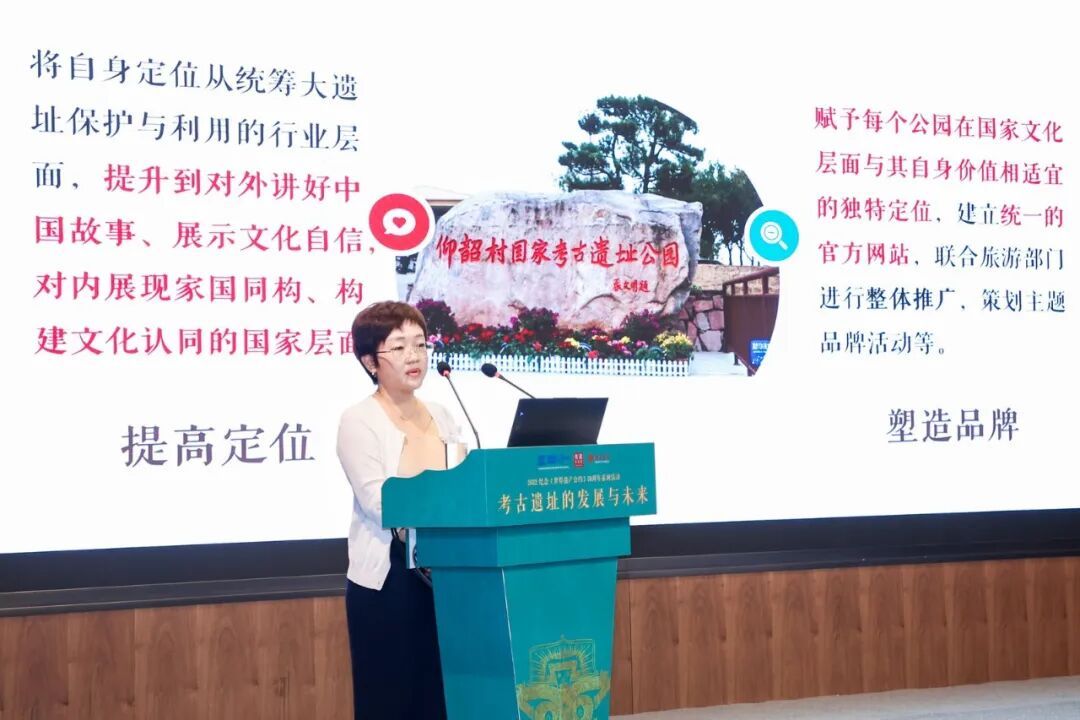
Guo Xue, Tsinghua Tongheng Planning & Design Institute
Gao Haiyan used the southern wall section of the Tiger Ridge area of Liangzhu Ancient City as an example to discuss challenges in protecting and presenting earthen archaeological sites in humid environments. He analyzed site conditions, construction techniques, scientific sampling data, and deterioration mechanisms, and proposed targeted conservation strategies for both open and closed environments.

Gao Haiyan, Liangzhu World Heritage Monitoring Center
Wang Dongdong introduced archaeological site cases in Japan, offering comparative perspectives for China. He analyzed three types of site utilization in Japan: archaeological site museums, archaeological site parks, and archaeological museums, discussing their functions, management systems, protection methods, and relationships. He noted trends toward digitalization, technological integration, and local narrative emphasis.

Associate Professor Wang Dongdong, University of Science and Technology Beijing
Zhou Su summarized the technological, social, spatial, constructional, and ritual characteristics of Liangzhu culture and discussed challenges in presenting earthen heritage. She shared innovative practices in cultural activation and branding to engage diverse communities and broaden public impact.
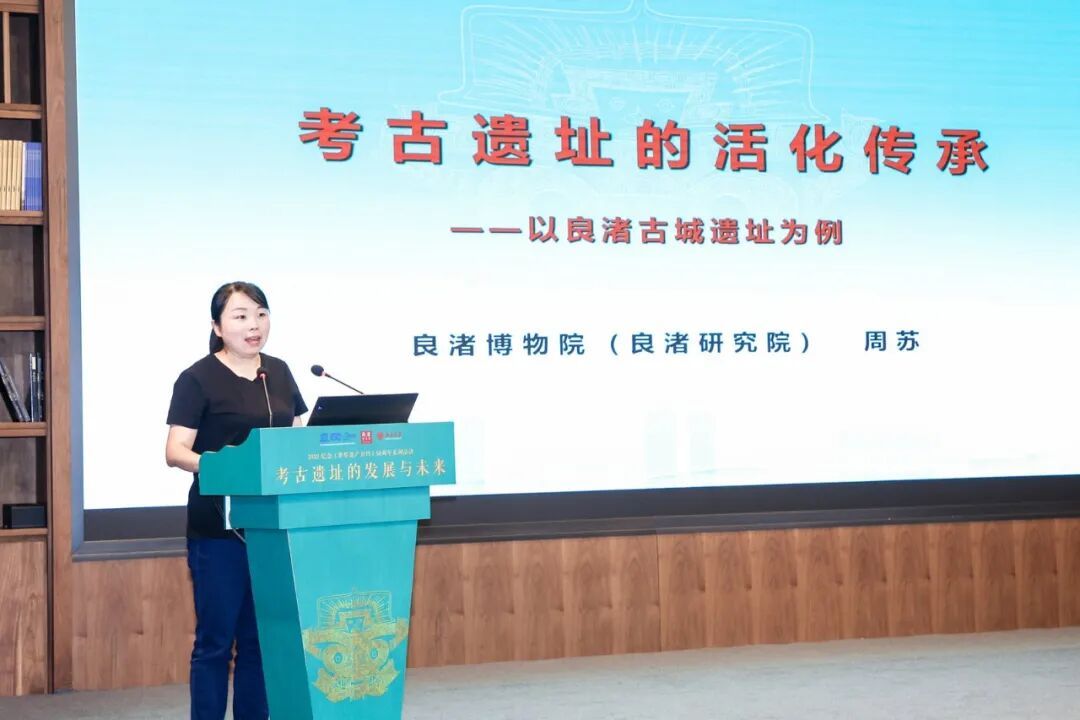
Zhou Su, Liangzhu Museum
Finally, Yan Jianqiang responded from a museological perspective to the question of interdisciplinary participation, arguing that the human tendency to collect underpins the legitimacy of museology. Museology is not only about museums but about “museality,” the human tendency to form relationships with objects. Understanding this relationship helps activate diverse participation.

Professor Yan Jianqiang concludes
Salon Dialogue
On the morning of September 25, experts and young scholars including Xu Tianjin (Director of Liangzhu Museum), Yan Jianqiang (Zhejiang University), Wang Ningyuan (Zhejiang Provincial Institute of Archaeology), Liu Weihong (Northwest University), Wang Dongdong (University of Science and Technology Beijing), Guo Xue (Tsinghua Tongheng Planning & Design Institute), and Wang Siyu (Peking University) participated in the salon dialogue.

Salon dialogue session
The session was moderated by Li Guanghan, Assistant Director of WHITRAP-Beijing. Xu Tianjin delivered the opening remarks and outlined four key discussion topics: the relationship between theory and practice in archaeological site parks, the relationship between site parks and museums, the functions of archaeological site parks, and the value of site parks and site museums.
Experts discussed topics including the interpretive role of museums, the impact of archaeological research on site presentation, the incorporation of product-oriented thinking into park operations, integration of nature education into landscape design, attention to frontline practitioners’ challenges, and coordination between archaeological sites and local communities.

Li Guanghan moderates the dialogue

Xu Tianjin delivers opening remarks
2. Online Lectures
From September 12 to September 21, four experts delivered online lectures on archaeological heritage protection via the Liangzhu Ancient City video platform.

On September 12 (19:00–21:00), Professor Jiang Bo of Shandong University, Director of the Center for Maritime Archaeology, delivered a lecture titled “Archaeological Heritage in World Heritage Sites,” chaired by Zhang Jianwei.
He introduced four World Heritage sites: the Acropolis of Athens, Pompeii, Yinxu (Anyang), and the Mausoleum of Qin Shi Huang. These represent Greek, Roman, and Chinese Shang-Zhou and Qin-Han civilizations. He emphasized differences in interpretation and reconstruction approaches for archaeological heritage compared to other World Heritage types.

On September 16 (19:00–21:00), Professor Tang Jigen of the Social Science Center at Southern University of Science and Technology delivered a lecture titled “Can We Escape History — Cultural Heritage and Contemporary China,” chaired by Wang Siyu.
He analyzed how history, language, customs, and culture shape the present and influence China’s global position, and discussed how cultural heritage should be protected, valued, and utilized.

On September 19 (19:00–21:00), Santiago Giraldo, Colombia Program Director of the Global Heritage Fund, delivered a lecture titled “Community Development in Archaeological Sites,” chaired and translated by Li Guanghan.
He presented community development programs implemented by GHF over the past decade around archaeological sites, emphasizing how heritage conservation strengthens local identity, pride, and connections to history. Using Teyuna–Ciudad Perdida Archaeological Park as a case, he showed how community development becomes an essential factor in conservation and post-conflict peacebuilding.

On September 21 (19:00–21:00), Francesco Bandarin, former Director of the UNESCO World Heritage Centre, delivered a lecture titled “Archaeology in the World Heritage Convention,” chaired and translated by Li Guanghan.
He discussed the relationship between archaeology and UNESCO cultural policy since the 1950s–60s. After the adoption of the 1972 World Heritage Convention, many archaeological sites were inscribed on the World Heritage List, bringing global attention to archaeology. In the early decades, emphasis was mainly on monumental classical civilizations in the Mediterranean, Asia, and the Americas, while prehistoric archaeology was largely absent except for rock art. Over time, especially with UNESCO’s Human Evolution Programme, this imbalance has shifted, marking important progress and future directions for UNESCO’s work.
This event brought together scholars from around the world to jointly discuss archaeological site protection and development. Through engagement with the practical experience of Liangzhu, diverse perspectives were exchanged, providing inspiration for heritage professionals and contributing to future theoretical development in heritage protection.