Summary of work
The 10-day workshop has ended, but the memory of 40 degrees and 100 degrees of passion continues.

Small Group Photo
During the field survey of nearly two weeks, the Mao-Gongling Group conducted field records, interviews with relevant people, neighbourhood visits and other work on the Fujian Ship Administration Building Complex and the Gongling Building Complex, respectively, and combed through the architectural preservation status, historical development and heritage claim narrative of the two buildings. Through analysis, the two buildings have collated a total of 22 recommended heritage sites, forming the historical narrative framework of Fujian ship administration underpinned by modern enlightenment, the defense industry, naval education, and the historical story framework of the Drumlin complex centred on architectural style, church development, and China-foreign exchange.
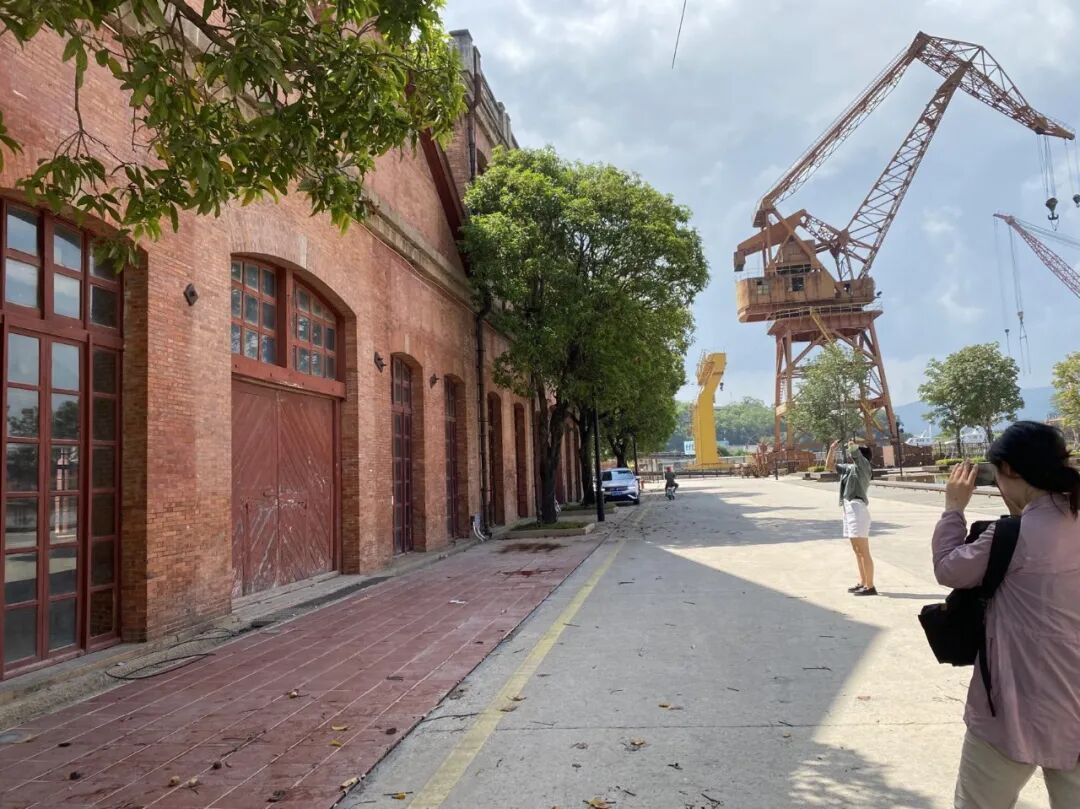
Figure | Fujian Shipping Administration Survey

Photo | Inside the engine plant, the drawing house
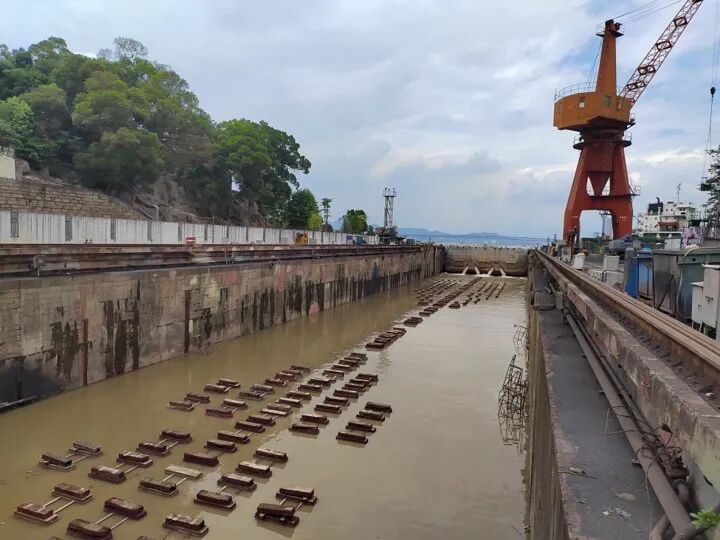
Photo | Marquise II Dock

Photo | Tour of Drumling

Photo | Zhuling Bamboo Forest Estate, former Burlingway Villa

Photo | All Nations Public Goods Society in Drumlin
Teacher's Message

Although Fuzhou's Fuzheng Shipyard and Guling are far away from Fuzhou's urban area, they are the true witnesses of Fuzhou's transition from traditional to modern, and are indispensable elements of urban cultural heritage。 This group mainly starts from the two dimensions of "people" and "events" to excavate the profound influence of Fujian Shipping Administration, a state-directed institution, on the intellectual culture and social strata of modern Fuzhou. Explore the formation of the indigenous people of Kuling in the context of the opening of Fuzhou. Through records of construction carriers in the two regions, interviews with primary duty bearers of protection and management, and indigenous people, the participants gradually clarified the positioning of the Mayue area, where the ship authority is located, in Fuzhou's historical narrative, and systematically combed through the development history and the existing buildings of Drumlin.The four students in this group come from different majors such as international relations, history, and architecture. During the research, they alternate their work, with two people in each group responsible for the Shipbuilding Industry and Guling, and then responsible for architectural drawing and historical narration. This effectively realizes the exchange and mutual assistance among disciplines. — — Mr. Guo Zijian

The 10-day workshop is based on the common intersection of cultural heritage protection, and multi-disciplinary "take and set" to learn from the strengths of others。 The "Mao-Guangling" group had two classmates with a background in architecture to demonstrate their responsibility as graphic makers, a classmate with a degree in international relations thought about the modernization of the navy with a focus on ship affairs, and classmates from Yanjing Academy should have a deeper understanding of the cultural exchanges between China and foreign countries presented by the internationally harmonious community of Guangling at that time.We hope that the students will feel the charm of the discipline of cultural heritage in the collaborative work of this workshop, and will work together with this cause in the long career. -- Ms. Shang Chenwen
Fuzhou, as one of the earliest trading ports in China, opened a window for modern Chinese people to "open their eyes to the world." Over the past hundreds of years, Chinese and Western cultures have exchanged, collided and merged here, making Fuzhou an open and inclusive city. Here, we can not only observe the inhabited culture of the samurai class, but also touch the thick remains of China's modern naval industry, and feel the international community of harmonious coexistence between China and foreign countries. This workshop brought together students from different disciplines to study the Mao Tai and the Drumling buildings from the perspectives of various disciplines such as history, geography, architecture and sociology, and attempt to construct urban historical narratives.Although the workshop was relatively short, it was an important window for me to learn more about Fuzhou and to appreciate the grand history of Fuzhou in modern China. Assistant Professor Cao Jiyang
The trainees

Record.1/ Trainee - Japanese
During an eleven-day field study in Fuzhou, as an architecture student, I experienced the rich street spaces in San Fang Seven Lane and Shang Xia. In Zhuling, you can feel the historical atmosphere of the intermingling of Chinese and Western cultures, in Mao Zedong, you can sense the superhuman spatial scale of industrial buildings, and you can also feel the pride of the practitioners in their field. In addition, teachers and students from different disciplines learned how to differentiate fieldwork methods for architectural research, methods related to heritage preservation, methods of oral interviews in historical contexts, and methods of studying historical neighborhoods from a sociological perspective.
Record.2 / Student - Lu He

It was a journey up and down the sea.
As I sped along the mountain path of Drumlin, I asked myself, if I were an ordinary visitor, what would be the most memorable part of this journey? The architecture of Drumling is hard to remember. In fact, someone has already made a choice for our memory. The process of applying for a memorial is probably the process of refining all these screenings and presenting them to the general public.
Similarly, facing the ship administration complex, I was puzzled that we wanted to activate dock 1, which was already secured, without being able to secure dock 2, which remains in use today. The result of the application for a memorial shall not be a definitive judgment; Legacy is not the place of all things.
Between the mountains and the sea, the sky is wide.

Record.3/ Trainee - Li Qiang
During the 10 days of this workshop , teachers and students from different majors brought me a lot of new perspectives and knowledge experiences, At first, we will find that the students of history will always think of the characters and stories behind the architecture, while the students of architecture will be more focused on the current situation and the state of the building itself. When we are together, brainstorming will be more interesting.
In addition, in just a few days in Fuzhou, I learned how to listen to the story of a city. When I first arrived in Fuzhou I didn't think the city impressed me at first glance. However, during my research, I was deeply attracted to the city when I walked through the historic buildings of Shang Xiamen, San Fang Seven Lane, Yantai Mountain, Drumling, and Fujian Shipbuilding. Fuzhou is one of the cities best able to understand China's recent history. She has witnessed the prosperity of the Central Empire and the arrogance of the heavenly kingdom. She has also witnessed Western guns of the Iron Age, and the loneliness of the lion of the East who woke up to look up at the world and was struck hard. In any city I have ever visited, I have never seen such a complete snapshot of modern China.
The experiences and insights that the workshop gave me will be treasured in my heart.

Re cord.4/ Cadet - Sarah Brooker
In my previous studies, Fuzhou frequently appeared for its connections to trade, the treaty port era, missionary work, and others, but this was my first chance to explore the city’s history and heritage in depth. The workshop brought together students and teachers from several disciplines, bringing out all the different kinds of value and multiple approaches to the same subject, allowing Fuzhou’s story to shine through. Working on the Kuliang site was a particularly rewarding challenge, gathering local and global information and resources, piecing together how Kuliang connects with other areas of Fuzhou and the world, and finding Kuliang ’s place in Fuzhou’s story. Because this was my first time working on heritage and doing field research on this scale, new ways of thinking and seeing were opened up and connected to my previous studies on global history and art history. After this workshop I have a much deeper understanding of Fuzhou’s heritage, value, and history, and I look forward to taking my new skills on to my next research project.
Copy: Mao-Guangling Research Group
Typography: Mayue - Guoling Group Li Qiang
Audited by Li Guanghan, Wang Siyu
Final trial: Shen Ruiwen, Zhang Jianwei
Contact Us
Website: https://whitrap-beijing.org/
Tel: (010) 62769996
Email address: LinaPark@whitrap-beijing.org
Address: Block B, Archaeological Building, No.5 Summer Palace Road, Haidian District, Beijing