The "Youth Heritage Alliance" is initiated by the World Heritage Institute of Training and Research for the Asia and the Pacific Region under the auspices of UNESCO (WHITRAP Beijing).
As the heritage conservation movement expands globally, today's heritage discipline is increasingly interdisciplinary. Taking advantage of this diversity, openness, and breakthrough potential, we invite scholars from different mother disciplines to exchange and collide, allowing young academics to inherit their disciplinary traditions while also innovating and bravely breaking through.

Theme
Telling Chinese Stories of Cultural Heritage: Official, Local, and Client
Presenter
Yan Haiming
Time & Place
May 14, 2022 | Online
Participants
Yan Haiming, Li Guanghan, Wang Siyu, Fu Shulan, Sun Jing, Zhang Jianwei, Zhou Mengyuan, Sun Lina, Wang Shaohan, Li Xi, Zhao Peng, Fan Jialing, Song Yilin, Zhang Guanqi, Duan Ruijun, Duan Niudou, Xie Li, Zhang Lisheng, Luo Pan, Du Lindong, Park Lina
Ordered by speaking sequence; see end of text for participant biographies
▼
Abstract
The presenter used his own experiences with different heritage practice cases to analyze the relationships and characteristics of various participants and stakeholders in current Chinese cultural heritage practice. He argued that heritage practitioners are always situated within intricate power networks and chains. Heritage practitioners and professionalism in China have not yet gained truly authoritative discourse; instead, they play roles within specific meaning-scenarios in this process. Subsequent discussants shared their own practical experiences, engaging in discussions on topics such as critical heritage studies, the relationship between power, practice, and academia, and problems in heritage practice.
Keywords
Heritage, Practice, Power, Meaning-Scenario
Discussion Themes
Critical Heritage Studies
Power, Practice, and Academia
Heritage Conservation Practice
▲
Critical Heritage Studies
Yan Haiming:
The title of today's salon points to the fact that everyone working in heritage often has to play different roles, and these roles are not mutually exclusive. It's not that you are the official and I am the client. To be honest, most of us play the role of the consultant (Yifang). We young scholars have some strength, but it is extremely limited. What I want to share today is a reflection on this limitation, or even a sense of powerlessness, in our daily work of constantly switching roles—a reflection on the issues in heritage academia and heritage practice, using myself as a method.
I will mainly share three aspects, which are three keywords from our practical process.
First, "official RPG." Those who play games know it means role-playing. When we enter heritage conservation work, or the trivial daily tasks, we are all role-playing. Sometimes we play seemingly glamorous roles—for example, during local fieldwork, locals might treat us as "officials from Beijing," thinking we have great power to help solve their children's schooling or employment issues. Other times—more often—we play the role of secretary, or in Beijing dialect, a "cuibar 催吧儿" (errand boy). It seems you are executing every task, but you have no final say in anything, yet you seem to have a little voice. This state is more common than the first. This is not necessarily bad; playing the errand boy to do meaningful things is still good. So how to understand this process? All so-called heritage roles unfold within specific chains of power. The position of each role is relative, and the role played is to some extent forcibly imposed on oneself, while simultaneously one is caught in the interweaving of multiple power chains.
Second, "local knowledge." We often now reject so-called authorized heritage discourse (AHD) and call for the excavation of local knowledge, giving voice to local perspectives. But as a frontline heritage practitioner, I increasingly believe that we must still hold onto some professional standards and not completely dissolve them. Authoritative discourse and local knowledge are not a binary opposition of complete antagonism, replacement, or mutual substitution. Behind authority is not necessarily true authority; there are also issues of game-playing with clients and questions of ownership of power. For example, when preparing a World Heritage nomination dossier or planning an exhibition, we often encounter a lot of local knowledge—knowledge that has been passed down for a long time and carries deep emotional weight for local people. But we find that countless pieces of evidence prove it is wrong, yet it is very difficult to correct it. How to respect local knowledge while also respecting truth is a very challenging issue. When Laurajane Smith critiqued authorized heritage discourse, she was actually reflecting from her own perspective as an archaeologist on the so-called authorized discourse in Australia's treatment of Indigenous peoples. This is different in China—at least in the heritage field, much of our local knowledge is very powerful, even forceful. Of course, I at least have no solution to this problem, because no matter how much controversy and dispute, in the end, we must come to a single voice. Whose voice? The voice of truth, or the voice of the client? This leaves us with many imperfect, regrettable outcomes.
Third, "authorized NPC." In the first RPG, you are still the protagonist; here, you become an unfeeling repeater. Take Liverpool's delisting from World Heritage last year as an example. Before delisting, Liverpool conducted Heritage Impact Assessments (HIAs). Two assessment reports were produced. The first was done by a relatively official and objective body, the British Heritage Commission, concluding that the new Liverpool Waters project would have a direct negative impact on its Outstanding Universal Value (OUV). The second HIA was commissioned by Liverpool Waters, the developer company, and reached the opposite conclusion—not only no negative effect, but benefits for the people, urban construction, and sustainable development. In this process, there were two groups of NPCs: you say what you are paid to say.

▲ Liverpool – Maritime Mercantile City (Delisted 2021)
Source: https://whc.unesco.org/en/list/1150
Thinking back to ourselves, are we not also such NPCs? In the power chain, heritage workers are authorized by authority. Although they have some autonomy, it is limited autonomy, often constrained by clients or superiors. In current heritage research, the official-local binary analytical framework is often used. But in daily practice, real working individuals are often caught up in bizarre power networks and chains; it is impossible to truly and completely step outside and have autonomy. There is no eternal authority, only eternal power chains and interest demands, and an individual's position within the power chain is dynamically fluid.
A brief theoretical reflection on power and actors. Today, discussions of power often have two dimensions. One is Weberian "positional power": giving orders to subordinates. The second, in recent decades from Arendt to Foucault, tends toward "discursive power": power is not a one-way command relationship but is embedded in a complex network of discourse. Within this network, people are equal and each exerts their agency to participate in constructing the power network. What I want to introduce and emphasize is a third: Isaac Reed's "performative power." In the power chain, there are several roles, including leaders, actors, and others. The relationship between leaders and actors is not simply one of giving orders; they have complex emotional needs. Therefore, the world is interwoven with countless power chains, and each person is located in different chains, playing different roles.
I believe this theoretical framework can, to some extent, explain daily work and life in the heritage field. Each of our actions is based not only on a certain command but on finding a feasible way to act between the command and our picture of the world. Different meaning-scenarios are also full of conflicts. Whether official, local, or client, when meaning-scenarios conflict, action is not about bridging the conflict but about re-emphasizing the conflict within one's own power chain through performative action. In fact, we are more often trying to maintain the integrity of our own meaning-scenario. Of course, in the process of being drawn into such a social power network, heritage workers may possess something that others in other fields do not: shared values and a bottom line of meaning—passion.
Finally, a brief word on Critical Heritage Studies (CHS). I think there is something problematic with how CHS is currently critiquing or being applied in China. It criticizes that so-called official and expert voices are too dominant, arguing that more ordinary people, more public, and more local empowerment should be given, allowing local knowledge to play a role. But actually, I think China's problem is precisely that our heritage profession is not strong enough. We play the role of "pseudo-authority"; the pseudo-authority is just an NPC. Heritage is a sacred thing. We need to continuously, through our own efforts, transmit and enhance the sacredness of this field—a meaning, an ultimate meaning. Even if we are NPCs, even if it's RPG, we must make this game more meaningful.
Li Guanghan:
Cultural heritage is actually a very niche topic in society. How we avoid indulging in self-gratification while still playing a role in a situation of discursive weakness is an interesting question.
Wang Siyu:
My doctoral research was influenced by the CHS paradigm. At the time, I found that many scholars in this paradigm were keen on discussing power issues. But I thought the existing discussions were somewhat crude, mostly focusing on the binary relationship between official and non-official, above and below. In reality, the understanding of power's connotations and its underlying subjects remained insufficient.
Aside from the issues Director Yan just mentioned, I believe this analytical framework still has value for application in China. Some scholars who criticize CHS argue that in the Chinese context, the discourse created by the intellectual class has not truly played an authoritative role and is still repeatedly squeezed in reality; therefore, there is no problem of authorized heritage discourse in China. However, I think that compared to the "insufficient authority" of intellectuals, local communities are even less authoritative. In the Chinese context, local communities essentially lack a channel for voicing their concerns. Therefore, using CHS as an opportunity to explore possibilities for the development of local communities remains valuable. Also, Director Yan's introduction today raises an important academic topic: in the Chinese context, what role do seemingly elite intellectuals actually play in heritage conservation?
Fu Shulan:
The theme of today's introduction is "Telling Chinese Stories of Cultural Heritage." Stories have two possibilities: one is what actually happened, the other is the story as written down. What Director Yan shared today is more about the stories that happened. When researching the history of urban planning, we often find that what is written down can be completely different from what actually happened.
Additionally, Director Yan mentioned avoiding simplistic "binary relationships" in heritage research. Speaking of "binary," I think of structural anthropology's analysis of myths, which often captures binary oppositions. Perhaps what actually happens is not necessarily that simple, but since this also involves stories and binary relationships, I'd like to hear Director Yan's view.
Yan Haiming:
My understanding is this: the binary structure Professor Fu mentioned is a form of interpretation and explanation, while the binary I mentioned is an analytical framework. Ancient myths around the world may all have black-white or good-evil oppositions—that is an explanation of phenomena. What I mean by transcending binaries is, when analyzing problems, stepping outside an analytical framework that situates issues within a so-called official-local, historical-modern binary. Such binary frameworks oversimplify and stereotype the world.
As for the written story versus the actual story, I think the written story is a construction, inevitably different from actual history. My sharing today leans toward understanding the written story as a process of knowledge production.
Power, Practice, and Academia
Sun Jing:
A classic discussion in sociology is Weber's discussion of the relationship between academia and politics. If scholarship is a vocation, one must devote oneself to the value system of truth, which naturally creates a distance from politics. Of course, this might be an "ideal type."
Wang Siyu:
I recently chatted with an anthropologist friend who believes that academia must maintain distance from practice in order to see practical problems clearly.
Yan Haiming:
My current work identity is somewhat complex. As a researcher at the Chinese Academy of Cultural Heritage, I engage in both research and practice projects. As the head of the ICOMOS China Secretariat, I must also face the guidance and demands of various leaders. With multiple identities, I constantly switch roles within the power network of the cultural heritage sector. Observing this constant role-switching and performance sociologically is interesting.
I personally do not fully agree with completely separating academia and practice, especially in fields like sociology and anthropology. I believe only by entering into practice can one better understand and appreciate many things.
Zhang Jianwei:
I think what Haiming meant might not be maintaining distance between academia and practice, but maintaining distance from power.
Zhou Mengyuan:
When writing my doctoral dissertation, I had a major confusion. I learned from practice and fieldwork that key decisions about heritage conservation often involve power struggles and dominance among real-world actors. Yet these contents are invisible in all written records of cultural heritage. Most academic articles published by scholars are basically "scientific research" focused on technical issues. The extreme disconnection between complex reality and written theory creates many difficulties for subsequent writers. My question is: Is power a necessary consideration in cultural heritage research? Should the power framework become a core issue in heritage discussions?
Yan Haiming:
I think how one views power depends on one's disciplinary perspective. Each of us has our own academic background. Cultural heritage is not a "discipline" but a "subject." Regarding whether power must be analyzed, at my PhD graduation ceremony, the department chair said: "The US economy is bad now (2012), many people may not find jobs after graduation. Sociology may not help you find a job, but sociology can help you understand why you can't find a job." So, at least from a sociology and anthropology background, we strive to understand this world, understand its modes of operation, understand each person, each group, and how they act within specific meaning-situations, and give meaning to actions. So for me personally, power is an academic dimension of observation.
Today we mentioned various roles in the power chain. These roles seek their own agency and meaning within the chain. While holding a certain kind of power, they are also themselves grasped by power. When we look at power, we are not necessarily trying to critique it or subvert it. What is important is understanding our position within power, understanding the meaning of our existence, and continuously reinterpreting and repositioning ourselves.
Li Guanghan:
I come from an architecture background. Architecture is originally a practical discipline, with theoretical frameworks arising from practice. From an architecture disciplinary perspective, completely separating academia and practice is logically untenable. After many years of working in practice, I returned to pursue a PhD, and my understanding of theories I studied earlier became completely different. But I agree that academia should maintain distance from power—a neutral, cautious attitude.
Wang Siyu:
I agree with Director Yan. Heritage is an interdisciplinary field. Whether power should become a core issue depends on one's theoretical foundations, analytical perspective, and dialogue partners. If discussing CHS issues, power is inevitably an unavoidable topic.
Sun Lina:
What I find powerful about Foucault's power relations is that this explanatory relationship is often "universally applicable." In recent years, I have not preferred to use it to think about the logic of how problems arise and develop. Overemphasizing power often obscures many other important factors, such as professionalism. Let me use a relevant point from my doctoral research to emphasize "professionalism." My dissertation discussed a common academic topic: why did early 20th-century Chinese architects and politicians demand the design of modern architecture with Chinese characteristics? This question contains several keywords: "China," "design," "modern architecture." Most researchers focus on the first keyword, analyzing it from political or nationalist perspectives, but neglect the professionalism of architects. This process also involves architects establishing their own identity, distinguishing themselves from traditional craftsmen, engineers, and artists. Using architectural drawings—the architect's professional tool—as my research method, my conclusion is simply that architects who just took root in China in the 1920s used architectural drawings to strengthen the concept of "design," becoming more "artistic" architects, constructing a professional identity for themselves in the face of the more "technical" architectural engineers who had already occupied the Chinese architectural market earlier.
Returning to our discussion topic. Everyone participating in our discussion is a professionally trained practitioner: sociologists, archaeologists, anthropologists, architectural historians, all participating together in the "subject" of cultural heritage conservation. I believe it is also very important to maintain professional reflexivity during the process of participation. Director Yan shared many practical cases operated in China. Participants inevitably shift among multiple roles; this is unavoidable to get practical work done. What I want to add is that because each person's professional positioning and perspective differ, the positions and tools they choose in the process of participation will also differ. I support, as much as possible, holding onto one's own professional stance, using one's professional tools and expressing one's professional position with reflexivity. Ideally, this would form a cycle of "professional reflexivity," gradually weakening the circular pattern of having to be "slick" and "political" driven by practical demands. Then scholars could work more happily. So I call on professional practitioners to actively and proactively participate in cultural heritage conservation work with reflexivity and autonomy regarding their professional identity and motivations.
Wang Shaohan:
My doctoral dissertation focuses on international cooperation between China and countries such as Kazakhstan and Kyrgyzstan, including both national and local levels. But during the research process, I often felt a sense of powerlessness. The relationships between discourse parties can be discussed, but actually making changes is very difficult.
Heritage Conservation Practice
Li Xi:
I have worked for nearly ten years on participating in and deliberating political affairs at the Central Committee of the China Association for Promoting Democracy. One of my biggest takeaways is that even for absolutely scientifically correct proposals, one must pay attention to the timing and methods of advising policymakers. In every field, including cultural heritage, when advancing matters, one must have user thinking, address the relationship with the public. One cannot lecture the public as an expert; instead, one should start from public needs, consciously guide and provide what they need, thereby advancing together. On the other hand, we must also learn how to deal with leaders.
Yan Haiming:
I agree with Professor Li. In any practice, one must have user thinking. Only by better understanding the demands of each individual or group with whom one interacts can one better realize one's own value.
Zhang Jianwei:
This semester we did the planning and design for the environmental improvement of Yannan Yuan (Yannan Garden) at Peking University. From the perspective of all participating stakeholders, everyone was relatively satisfied. This campus heritage practice gave me multiple identities: relative to the university's Real Estate Department, I was the consultant (Yifang); as a member of the university's Cultural Relics Protection Committee, I was an expert; when organizing public participation, my identity was somewhere between client and consultant; finally, when reporting to the University Council, I appeared as a teacher representative. This actually aligns well with Director Yan's concept of role-playing—sometimes acting, sometimes directing, to maximize the interests of all parties. Of course, we usually handle problems as experts and may not have so many identities, but the Yannan Yuan practice reminded me to think from multiple identity perspectives.

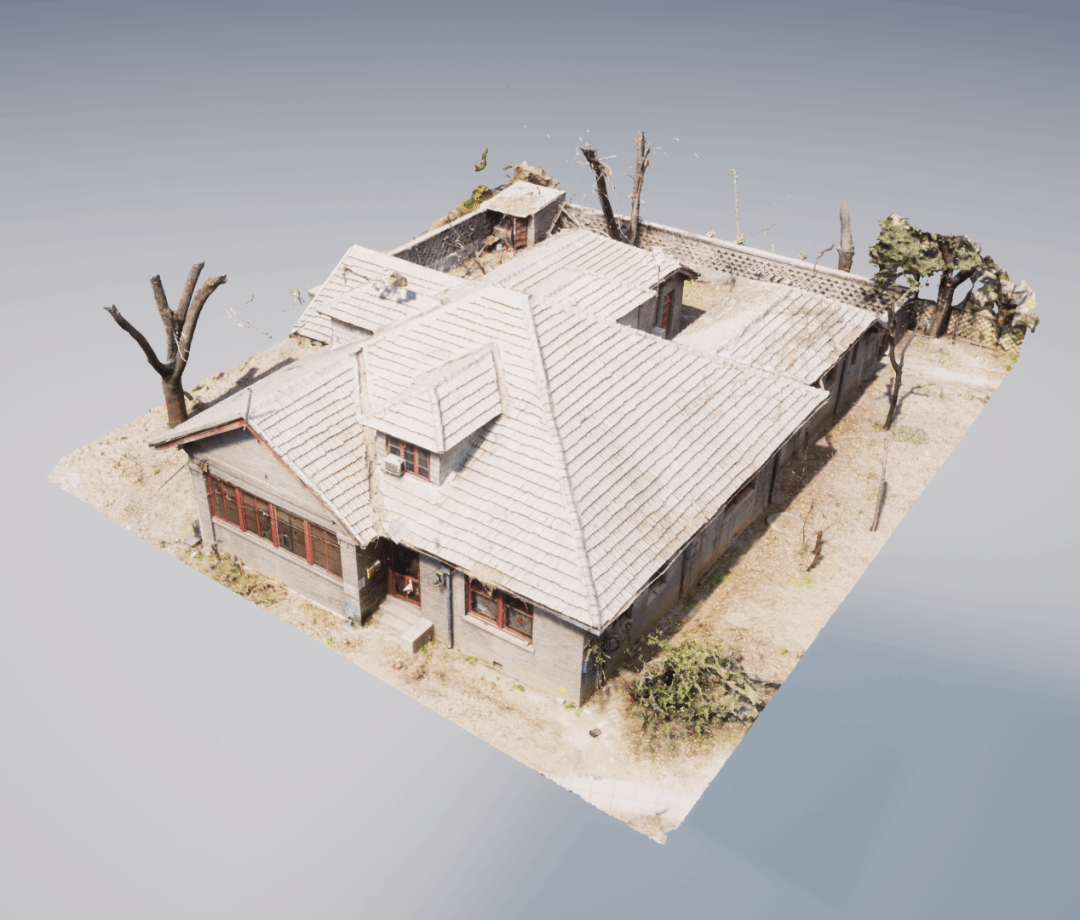
▲ Top: Yannan Yuan environmental improvement planning and design research interview; bottom: Digital documentation of buildings for
Yannan Yuan environmental improvement planning and design (Swipe left for more)
Source: https://mp.weixin.qq.com/s/2nU1EAXEe6_Yxp8fIbabJQ
Li Guanghan:
I also work in an NGO. NGOs often play the role of client, for example, funding designers or execution teams. But behind an NGO, there are many clients, such as donors (individuals, corporations, charitable foundations, etc.). We need to consider maximum appeal to the public, build our own brand appeals and brand mission, to gain support. This is an invisible client for us.
Zhao Peng:
I want to say three things.
First, how is authority achieved? The "person of competence" (Neng zhu zhi ren) in heritage conservation must consider the possibilities and realities of multidisciplinary participation, multi-perspective discussion, and balancing the interests of multiple parties. Take the forced demolition of Yu Xiusong's former residence as an example. Everyone knows its heritage value. A key reason the residence was demolished was that heritage practitioners failed to grasp the pain points of other stakeholders. The authority of heritage practitioners cannot be unilaterally based on love for heritage. If one cannot bring together different professionals to participate and think about what others care about, it is hard to make those in power recognize the true importance of a heritage site.
Second, pain points from livelihood. The livelihood issue here mainly refers to the economic attributes of heritage: whether, in the process of conservation and utilization, heritage can contribute socially and economically. For example, when the US does some heritage value assessments, it directly considers economic benefits. Under certain conditions, a virtuous cycle forms, naturally making it easier to attract investors.
Third, the guarantee mechanism is fundamental. Regardless of our level or role, we are all in a power chain or network. Some inherent problems of the structure make advancing certain matters very difficult, even producing reverse results. Only with a perfected mechanism can we ensure that laws are "necessarily" followed.
Fan Jialing:
When teaching students, I emphasize that even some basic concepts, laws, and regulations that have formed over a long time still have problems and are not perfect. They need to learn to think critically about these issues. When explaining heritage management models, I also guide them to recognize that in practice, central and local institutions may also encounter various problems in operation. At such times, heritage conservation laws, concepts, and theories are effective tools for professionals to coordinate and persuade various forces.
Song Yilin:
I had some reflections while participating in the Yannan Yuan conservation planning practice. It involved public participation and a process of empowering the public. Initially, it seemed like we were excavating more "clients." But in balancing opinions among different interests, we became the object that multiple parties wanted to communicate with and gain support from. Instead, the voice of the planners received more attention. That is, while empowering the public, we also empowered ourselves, showing a rather interesting process.
Zhang Guanqi:
I have also reflected on the balance between client and consultant. On the surface, the client is the funder and decision-maker, but is also constrained by the consultant's autonomous choice. Previously, I was engaged in the conservation management of a historic district in a second-tier city. Since the pandemic, the cultural tourism industry has been hit very hard. Incomes in the area dropped, merchants moved away, and new investment attraction became very difficult. Moreover, due to the decline in the site's popularity and foot traffic, the development of cultural tourism projects was very difficult; suppliers and partners all backed away. This clearly reflects that the client is also constrained by the consultant: without the consultant's cooperation, the client's investment is meaningless.
Fan Jialing:
Let me share an interesting story I learned while a graduate student in the UK. Our public archaeology course invited the director of the York Archaeological Trust to give a lecture. He told us how the Jorvik Viking Centre transformed from an archaeological site into the most popular tourist attraction at the time.
In the 1970s, archaeologists from the York Archaeological Trust were excavating at a site called Coppergate in York. They discovered a very well-preserved Viking-era settlement. To protect the site, they ultimately decided to design and build an on-site interpretive facility. Unlike the traditional model of exposing the site and putting up fences for people to view, they wanted to reconstruct the entire scene based on the archaeological findings. Visitors would ride special cars to "go back" to the Viking era and experience life in a Viking village. Such an ambitious display and utilization project required a lot of funding. But the UK's system is different from China's; even for such an important archaeological discovery, there was no financial support from the national or local government. The York Archaeological Trust applied for a bank loan, lobbying and explaining the site's significance and how the Viking Centre would become a great attraction. Capital is profit-seeking: why lend to such a project? What if it doesn't attract visitors in the future and the loan can't be repaid? In the end, there was an internal bank vote, and the project was approved. In 1984, after three years of design and construction, the Jorvik Viking Centre officially opened. It instantly became the most popular attraction; queues stretched to another block. Paying back the loan was, of course, no longer a problem.
When the bank decided to grant the loan, a bank employee told the York Archaeological Trust representative: "I voted for you because when I was in school, there was always an old lady who came to teach us about archaeology and let us touch specimens—she was your staff member." That vote carried a lot of weight. The York Archaeological Trust's director wanted to use this story to show that you may not think what you do has much impact, but it can touch some people, even just one or two. Eventually, one day, that might play a big role.


▲ Top: Jorvik Viking Centre (2017); bottom: Archaeological excavation (1978) (Swipe left for more)
Source: https://www.jorvikvikingcentre.co.uk/about/jorvik-story/
Duan Ruijun:
When I returned to Wuhan University last year to help teach an elective course on heritage conservation, I had a conversation with a teacher from the art school, who currently serves on the university's general education curriculum committee. He mentioned that the university is, to some extent, strengthening general education for students who were admitted with high scores and whose future careers are more likely to enter "power" institutions in their professional fields, and is also vigorously promoting adding humanities courses for science and engineering students.
Previously, when studying at UCL, I found that UK academia places great emphasis on the public dissemination of academic content, the diversity of course delivery and research methods, and on packaging research outputs for transmission to other audiences as much as possible.
Additionally, in the process of directly dealing with clients, administrative personnel (especially at the grassroots cultural heritage level) do have a significant professional knowledge gap compared to professional practitioners. The current trend of fresh graduates from various disciplines taking civil service exams is not necessarily a bad thing.[1]
Wang Shaohan:
The stories Director Yan shared today prompted many thoughts. Policy changes in recent years have shown signs of convergence between the cultural industry and cultural undertakings. Localities are gradually using cultural heritage as a resource to promote local development. At the same time, the all-media era has made public participation in cultural heritage conservation easier to achieve; no longer requires official empowerment. Moreover, the rapid dissemination of online media gives public opinion the opportunity to become an invisible force advancing heritage conservation.
The above remarks were revised on August 1, 2022
▼
Notes
[1] In May of this year, the "Implementation Measures for Free Targeted Cultivation of Comprehensive Cultural Heritage Talents" was jointly issued by the Shanxi Provincial Bureau of Cultural Relics and four other departments. Over the next five years, Shanxi Province will, through the college entrance examination, free-target cultivate 600 comprehensive cultural heritage talents for 117 counties (cities, districts) across the province, entrusted to Shanxi University. (See: Shanxi Free Cultivation of Comprehensive Cultural Heritage Talents to Help Grassroots Heritage Conservation 'Keep Roots', Bo Yangcong People, 2022-07-30)
▲
▼
Participant Biographies
Yan Haiming
Associate Research Fellow, Chinese Academy of Cultural Heritage
Li Guanghan
Assistant Director, World Heritage Institute of Training and Research for the Asia and the Pacific Region under the auspices of UNESCO (WHITRAP Beijing)
Wang Siyu
Assistant Professor, School of Archaeology and Museology, Peking University
Fu Shulan
Associate Professor, College of Civil Engineering and Architecture, Zhejiang University
Sun Jing
Associate Professor, Quanzhou Academy of Chinese Cultural Heritage, Quanzhou Normal University
Zhang Jianwei
Associate Professor, School of Archaeology and Museology, Peking University; Executive Deputy Director, WHITRAP Beijing
Zhou Mengyuan
Lecturer, School of Art, Soochow University; Doctoral Candidate, Department of Cultural Heritage and Museology, Fudan University
Sun Lina
Lecturer, School of Architecture and Urban Planning, Beijing University of Civil Engineering and Architecture; Young Scholar of Architectural History
Wang Shaohan
Postdoctoral Fellow, School of Arts (Institute of Cultural Industries), Peking University
Li Xi
Doctoral Candidate, School of Archaeology and Museology, Peking University
Zhao Peng
Senior Engineer, Department of Ancient Architecture, The Palace Museum
Fan Jialing
Lecturer, Department of Archaeology and Museology, School of History, Capital Normal University
Song Yilin
Assistant Planner, Institute of Cultural Heritage Conservation, Peking University Territorial Spatial Planning and Design Institute
Zhang Guanqi
Researcher, Research Center of China Foundation for Cultural Heritage Conservation
Duan Ruijun
Designer, Beijing Forbidden City Cultural Heritage Conservation Co., Ltd.; MA in Architectural History, Bartlett School of Architecture, University College London
Duan Niudou
Lecturer, School of Humanities, Central Academy of Fine Arts
Xie Li
Associate Research Fellow, International Council on Monuments and Sites (ICOMOS) China
Zhang Lisheng
Postdoctoral Fellow, Department of Sociology, Peking University
Luo Pan
Associate Research Fellow, Research Department, Chinese Museum of Ethnic Minorities
Du Lindong
Doctoral Candidate, School of Architecture, Tsinghua University
Park Lina
Project Officer, WHITRAP Beijing
▲
▼
Previous Reviews
Review | Youth Heritage Salon Vol. 1: Re-critique Based on Heritage Critique (Part 1)
Review | Youth Heritage Salon Vol. 1: Re-critique Based on Heritage Critique (Part 2)
Review | Youth Heritage Salon Vol. 2: Towards Desecularized Heritage (Part 1)
Review | Youth Heritage Salon Vol. 2: Towards Desecularized Heritage (Part 2)
Review | Youth Heritage Salon Vol. 3: Echoes of Heritage
Review | Youth Heritage Alliance Salon Summary Vol. 4 (Introduction): Value Conservation, Utilization, and Transmission of Linear Heritage
Review | Youth Heritage Alliance Salon Summary Vol. 4 (Discussion): Value Conservation, Utilization, and Transmission of Linear Heritage
Review | Youth Heritage Alliance Salon Summary Vol. 5: The Difference Between "Use" and "View": The Particularity of Architectural Heritage Conservation
News | Youth Heritage Alliance Vol. 7: Telling Chinese Stories of Cultural Heritage: Official, Local, and Client
News | Youth Heritage Alliance Vol. 8: Dialogue Between Local and Global: Starting from Quanzhou's Mountains and Seas
▲