International Heritage News
01
ICCROM Calls for Case Studies on Cultural Heritage for Inclusive Growth in Southeast Asia
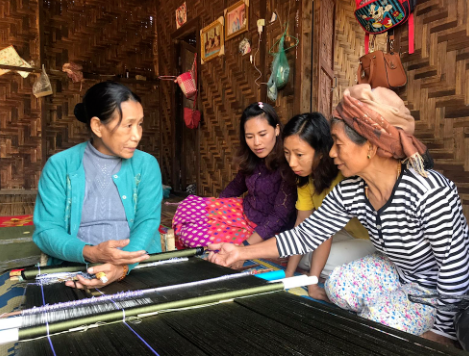
The International Centre for the Study of the Preservation and Restoration of Cultural Property (ICCROM), in partnership with the British Council, has launched a call for case studies for the project "Cultural Heritage for Inclusive Growth in Southeast Asia." The case studies cover various forms of cultural heritage, including built heritage and cultural traditions. The project aims to highlight the key role of heritage in enhancing social inclusion, fostering cross-cultural dialogue, and shaping territorial identity, while promoting new pathways for communities to actively protect heritage while creating inclusive and sustainable growth.
Source: www.iccrom.org
02
WHITRAP Launches Second World Heritage Innovative Education Case Award

On the occasion of the 50th anniversary of the World Heritage Convention, the Secretariat of UNESCO's Regional Bureau for Education in Asia and the Pacific (WHITRAP) launched the second World Heritage Innovative Education Case Award. The award aims to build an international exchange platform focusing on innovative world heritage education case studies, providing action guidelines and references for world heritage education practitioners to better guide and promote the future development of world heritage education. The application deadline is October 15, 2022. For more information, visit: https://whc.unesco.org/en/news/2467
Source: www.unesco.org
03
International Concern: The World Heritage Site of Bamiyan, Afghanistan

On August 11, a three-day seminar on the preservation of heritage collections at the World Heritage site of Bamiyan in Afghanistan, initiated by ICCROM, concluded successfully. The training aimed to enhance the capacity of Afghan heritage professionals to protect their heritage during challenging times. Through interactive discussions and online exercises, participants learned how to manage heritage projects in crisis situations, as well as how to stabilize, document, and relocate collections.
Recently, the Taliban held a groundbreaking ceremony for the construction of tourist facilities near the Bamiyan archaeological site, raising concerns from outside observers. Experts believe that the project, located just a few meters from the Bamiyan Buddhas, could cause permanent damage to the World Heritage site. ICCROM has taken proactive action by providing training to protect high-risk heritage sites that may be damaged or targeted due to violence.
Source: www.iccrom.org
04
New York State Enacts Law Requiring Museums to Disclose Nazi-Looted Artworks in Collections

New York State has recently enacted a new law requiring museums to label Jewish cultural artifacts looted by the Nazis in their collections and mandating schools to carry out Holocaust education. Governor Anna Kaplan emphasized that with the rise of antisemitism, misinformation about the Holocaust is spreading globally. The importance of passing on the lessons of history to the next generation—no matter how dark or heavy—has reached an unprecedented height. The passage of this law aims to ensure that New York students remember history.
However, these laws do not address artifacts looted from non-European countries, especially during the colonial period. The Governor's office has not responded to this issue. It is estimated that thousands of African artifacts are held in museums worldwide.
Source: zh.dfs.ny.gov; International Heritage Watch
05
Hadrian's Wall Gets Artistic Creative Reconstruction of a Gatehouse

Commissioned by English Heritage, artist Morag Myerscough has created an installation using colorful panels to interpret and reconstruct the Roman gatehouse at the Housesteads Roman Fort site on the northern English section of Hadrian's Wall, dating to 122 AD. The installation, 8.5m high and 12.5m wide, is roughly the size of the original structure. The patterns on the panels are derived from historical artifacts and history unearthed locally from the Wall. The local community also participated in the painting. Visitors can climb the installation to overlook the surrounding Wall landscape. The artist stated: "The process of co-creating with local people is crucial; it's a way to connect heritage with people."
Source: International Heritage Watch
Domestic Heritage News
01
National Key Cultural Relics Protection Site: Pingnan Wan'an Bridge Destroyed by Fire

On the evening of August 6, a fire broke out at Wan'an Bridge in Pingnan County, Ningde City, Fujian Province, a National Key Cultural Relics Protection Site and a tentative site for the "Fujian-Zhejiang Wooden Arch Covered Bridges" World Heritage nomination. Wan'an Bridge, originally named "Longjiang Gongji Bridge," is located in Changqiao Village, Changqiao Town, Pingnan County. It was first built in the Song Dynasty. In May 2006, Wan'an Bridge was listed as a sixth batch National Key Cultural Relics Protection Site as part of the "Northeast Fujian Covered Bridges." The fire destroyed five of the six wooden spans, leaving only one. Pingnan County has established a task force to investigate the cause of the fire.
Source: Xinhua News Agency
02
Zhangye Colorful Hills Initiates World Natural Heritage Nomination Process

Recently, the Office of the Zhangye Municipal Committee of the CPC and the Zhangye Municipal People's Government issued the "Implementation Plan for the World Natural Heritage Nomination Process," formally initiating the application of the Zhangye Colorful Hills for inclusion in the World Natural Heritage list. The nomination scope centers on the Colorful Danxia Scenic Area of Zhangye UNESCO Global Geopark, under the name "Gansu Zhangye Colorful Hills." The plan is to submit the nomination dossier to the World Heritage Centre by September 30, 2023, for registration and integrity review, and to request IUCN to send experts for on-site evaluation, aiming for inscription on the World Natural Heritage list in 2025.
Source: http://news.cri.cn
03
The World's Only Known Xiongnu Capital City: Tongwancheng Archaeological Site Park in Jingbian, Shaanxi, Soon to Open

After more than five years of construction, the Tongwancheng Archaeological Site Park, jointly developed by Jingbian County and Yulin Cultural Tourism Company of Shaanxi Cultural Investment Group, has been completed. Preparations for opening are being accelerated, with an expected opening to visitors in mid-August 2022. The Tongwancheng site is located in Baichengze Village, Hongdunjie Town, Jingbian County, Yulin City, Shaanxi Province. It is the capital city site of the Daxia Kingdom, established by Helian Bobo, a descendant of the Xiongnu during the Sixteen Kingdoms period of the Five Barbarians in Chinese history. It is also the only verified capital city of the Xiongnu people left in the world, with a history of over 1,600 years. The site park's construction takes the historical layout of the site as the main axis, covering heritage conservation, cultural exhibition, tourism, and other functions.
Source: China News Network
04
Three Gorges Project Museum Opens
On August 5, the Three Gorges Project Museum opened in the Three Gorges Dam area of Yichang City, Hubei Province. This marks the first time the museum has been fully opened to the public. The museum's main building is shaped like the four-sided triangular concrete blocks that played a crucial role in the river closure for the dam. The building is a space steel structure with two floors; the second floor and roof feature viewing platforms overlooking the dam. The Three Gorges Project Museum houses three basic exhibition halls: the Three Gorges Hall, the Project Hall, and the Hydropower Hall.
Source: http://www.ncha.gov.cn/
05
Chinese Team's Project Shortlisted for IIC 2022 Keck Award Biennial Prize Finals

The International Institute for Conservation of Historic and Artistic Works (IIC) recently announced the shortlist (top ten) for the 2022 Keck Heritage Conservation Biennial Award. A project submitted by a Chinese team titled "Community Practice of Routine Heritage Inspection and Conservation in the Pandemic Environment" was shortlisted for the 2022 Keck Award finals. This award recognizes individuals or groups who have raised public awareness and engagement in heritage conservation through outstanding achievements. This year's focus is on enhancing public awareness of heritage conservation during the COVID-19 pandemic and in digital spaces.
The award-winning project was jointly initiated by the Changping District Cultural Heritage Administration and the Wei Ming Cultural Heritage Team, in partnership with WHITRAP Beijing to conduct heritage education and training. Since 2018, they have attempted to deploy community commissioners at heritage sites to conduct regular inspections of each cultural relic site, introducing a cloud-based working model. Supported by digital technology, the project encourages communities and heritage conservation personnel to participate in routine heritage inspections and preventive conservation via mobile applets. As part of a plan to "re-link emotions" between heritage and community, it has become one of the earliest practice cases of regional daily heritage health management and preventive conservation in the Beijing area.
Source: China International Council on Monuments and Sites (ICOMOS China)
06
Peking University 2022 Summer Joint Workshop on Cultural Heritage Conservation Successfully Concludes

On August 10, 2022, the 2022 Joint Workshop on Cultural Heritage Conservation, a summer course offered by Peking University's School of Archaeology and Museology and the World Heritage Institute of Training and Research for the Asia and the Pacific Region under the auspices of UNESCO (WHITRAP-Beijing), concluded successfully in Fuzhou. During the ten-day field research period, students worked diligently in the heat of Fuzhou's summer, conducting detailed and in-depth field surveys of Sanfang Qixiang (Three Lanes and Seven Alleys), Yantaishan, Shangxia Hang, Fujian Shipbuilding, and the Guling architectural complex in groups. Under the guidance of workshop instructors, they produced illustrated research reports of over ten thousand characters. On August 10, the workshop's final presentations were held at the Lin Zexu Memorial Hall in Fuzhou. The presentations were moderated by Zhang Jianwei, Associate Dean of the School of Archaeology and Museology at Peking University and Executive Deputy Director of the WHITRAP-Beijing Centre. The concluding ceremony consisted of four parts: research group presentations of findings, expert panel review, an overall historical narrative presentation, and expert comments and summary. (For details, click: Review | 2022 Joint Workshop on Cultural Heritage Conservation Successfully Concludes)
Source: WHITRAP-Beijing Centre
I