On August 10, 2025, the Asia‑Pacific Regional Thematic Workshop Series on World Heritage opened in Quanzhou, Fujian Province. This workshop is co‑organized by the UNESCO Asia‑Pacific World Heritage Training and Research Center Beijing Branch (WHITR-AP Beijing), the International Council on Monuments and Sites China (ICOMOS China), the Fujian Provincial Bureau of Cultural Heritage, and the School of Archaeology and Museology at Peking University. It is hosted by the Quanzhou Municipal Bureau of Culture, Radio, Television, Tourism, and coordinated by the Quanzhou Cultural Heritage Protection Center and the Anxi Teaching and Research Base of the School of Archaeology and Museology, Peking University. From August 10 to August 14, the participants completed the first half of the workshop program, including expert lectures, three group discussion sessions, and a field visit to the Quanzhou World Heritage site.
Expert Lectures
The first half of the workshop program was primarily based on the World Heritage system, starting with the basic definitions and the nomination process of World Heritage, gradually delving into Outstanding Universal Value (OUV), the evolution of concepts in World Heritage site protection and management, a thematic introduction to serial heritage, an analysis of authenticity and integrity, and then moving into the practical context of serial heritage combined with typical case studies.
World Heritage System
Luisa De Marco began by focusing on Outstanding Universal Value (OUV), analyzing and explaining its definition, criteria, and attributes. OUV is the core concept of the World Heritage Convention, referring to value of such exceptional cultural or natural significance that it transcends national boundaries and is recognized and shared by all humanity. Its articulation and interpretation are an inherent responsibility of heritage experts and managers. Surrounding OUV is a set of scientific selection criteria and management principles. De Marco further elaborated on the significance of the criteria, their application scenarios, and content.

Carolina Castellanos focused on the evolution and practice of concepts in World Heritage site protection and management. She first reviewed how the Operational Guidelines for the Implementation of the World Heritage Convention have, throughout their development, continuously added new people‑centered elements in response to the demands of the times, thereby emphasizing that heritage values are co‑shaped by the attributes that convey them and the associated communities. She argued that heritage management should ensure inclusivity and sustainability, critiquing “reactive management.” Through case analyses, she also illustrated living heritage and proposed achieving integration of resources, legal frameworks, and information through cross‑sectoral collaboration in cultural and natural heritage, promoting sustainable protection and community empowerment.
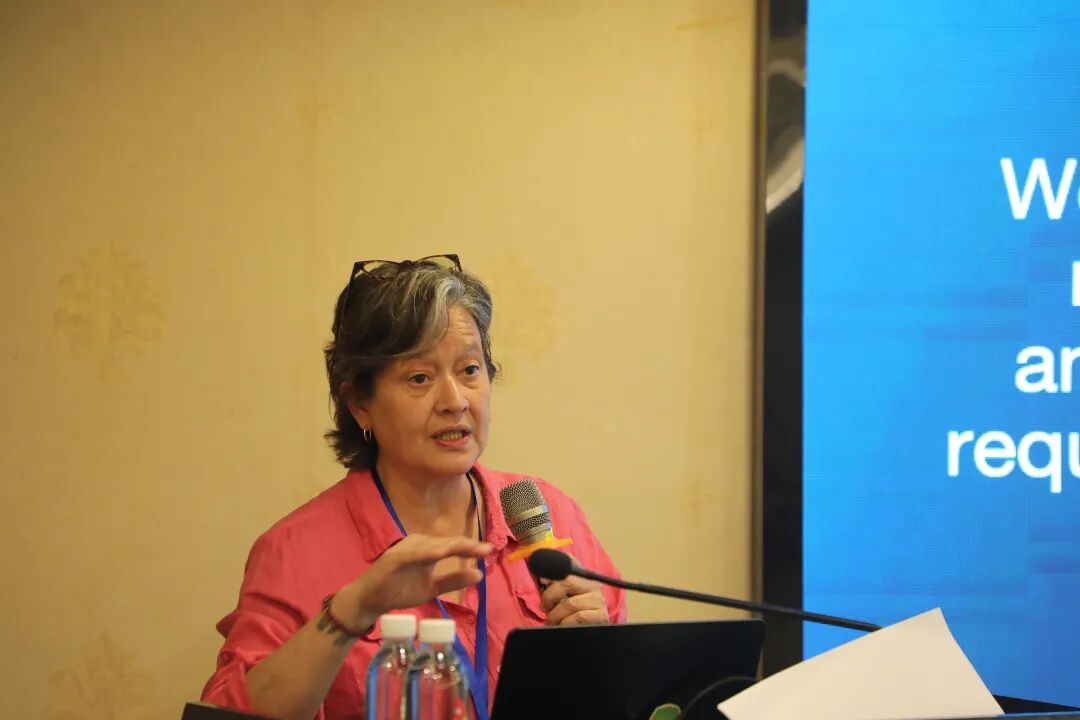
Nobuko Inaba, Director of the Mount Fuji World Heritage Management Center in Japan and Special Advisor to the Director General of the International Centre for the Study of the Preservation and Restoration of Cultural Property (ICCROM), delivered a lecture on Integrity and Authenticity in World Heritage. She traced the historical evolution, scope of application, and practical challenges of these two concepts within the Operational Guidelines. Using Japanese heritage as case studies, she primarily reviewed the process from the 1970s to the Nara Document on Authenticity, and the integration of authenticity and integrity into cultural heritage assessment in 2005.

Serial Heritage Thematic Session
In the lectures on serial World Heritage sites, Luisa De Marco provided further explanation on the nomination of serial heritage. She emphasized that the component parts of a serial heritage must together constitute an organic whole to reflect Outstanding Universal Value, rather than being a simple assemblage of similar elements. Nomination should be based on intrinsic connections in terms of culture, society, function, or landscape, avoiding simplistic mechanical classification. She highlighted the importance of clearly distinguishing between component parts, elements, and attributes during the nomination process, ensuring that each part supports the selected criteria, thereby forming a clear and sustainable serial heritage nomination proposal.
Carolina Castellanos continued focusing on protection and management, further introducing the concepts, practices, and challenges in the management of serial heritage from various specific perspectives such as regular monitoring, stakeholder participation, and heritage value interpretation. She pointed out that heritage management and protection should follow the operational logic of Monitor‑Evaluate‑Review. Using the Rapa Nui Islands as a case study, she illustrated the “Joint Fact” method, which involves inviting local communities to participate in documentation, thereby strengthening collaborative management and empowerment practices. Additionally, she noted that the classification of heritage is not always clearly delineated in practice; cultural and natural, tangible and intangible heritage can be managed synergistically.
Tiong Kian Boon, Professional Architect at the Malaysian Institute of Architects and Architects Professional Management Board, began with an overview of Malaysia’s heritage resources and institutional structure, introducing the experiences and challenges of heritage management and protection in Malaysia. Tiong Kian Boon emphasized the importance of multi‑stakeholder cooperation in heritage management, including national departments, local governments, professional bodies, and international organizations, to drive policy innovation and enhance management practices in heritage protection, thereby achieving sustainable development.

Yan Haiming, Director of the Secretariat Office of ICOMOS China and Deputy Director of the China World Heritage Center at the China Academy of Cultural Heritage, introduced and explained the general overview of China’s serial World Heritage sites. China currently has 60 World Heritage properties, among which serial heritage accounts for a significant proportion, with internal distinctions between “collective” and “collected” serial heritage. He emphasized the need to establish a clear narrative logic and unified management mechanism during the nomination phase, and to explore efficient collaborative protection models to enhance the long‑term sustainable management level of serial heritage.
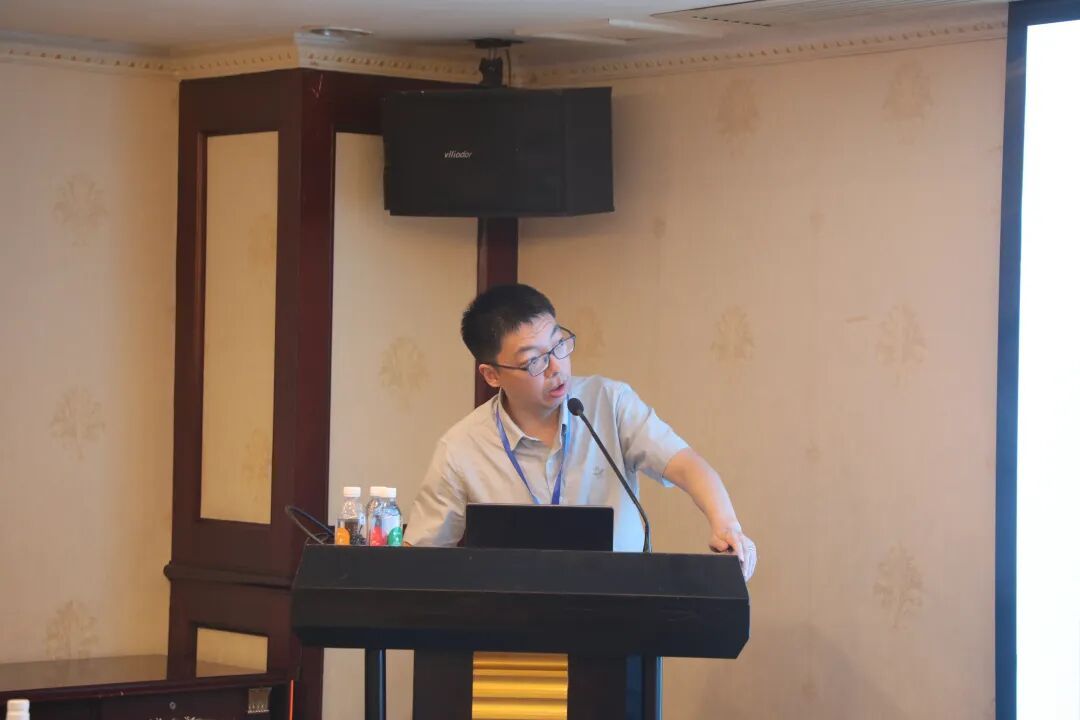
Sun Hua, Professor at the School of Archaeology and Museology, Peking University, gave a thematic introduction to linear heritage in China. Professor Sun Hua focused on explaining the meanings and concepts of linear heritage and linear‑type heritage within China’s heritage classification system. Linear heritage refers to cultural heritage that itself forms a continuous linear shape, such as the Great Wall and the Grand Canal, whose functions can be either transportation connectivity or defensive separation. Linear‑type heritage, however, is a broader concept, referring to a systemic network formed by one or more linear heritage lines as the main axis, connecting point‑like heritage such as villages and cities along the route. He emphasized that after the removal of the content on cultural routes from the Operational Guidelines for the Implementation of the World Heritage Convention (2021), the protection of linear heritage—especially long‑distance linear heritage spanning regions, countries, and civilizations—still requires further discussion.

Group Discussions
Interspersed among the module courses were three progressively deepening modular group discussions. The first discussion module focused on basic issues in serial heritage nomination: What are the criteria for adopting the serial heritage approach? How to define the common criteria for all elements in a serial heritage? How to identify the attributes of Outstanding Universal Value? The second discussion module focused on the holistic concept of serial heritage: How to define and assess the integrity and authenticity of serial heritage? How to demonstrate the overall interconnectedness of serial heritage? The final module returned to the practical context: What challenges are typically encountered when managing serial World Heritage sites? What strategies can be adopted to address these issues?
After the modular discussions, groups of participants actively spoke, reporting the results of their discussions and presenting their own insights and reflections. The participants recognized that the serial heritage management approach is a practical and manageable strategy, but it also requires careful selection of elements and narratives to ensure that all heritage components contribute to the Outstanding Universal Value (OUV) and the overall narrative. Stakeholder participation, especially that of local communities, is crucial for identifying these unique attributes, helping to balance human and material resources in heritage site management. Some participants, using examples from their own countries, noted that in some colonial contexts, it is difficult to find similar elements for serial heritage nomination. They elaborated on a strategic management framework that, through strict government negotiation and approval, ensures uniformity in the protection and interpretation of serial heritage. However, they also pointed out that differing narratives hinder spatial and ethnic cohesion, making it difficult to define the actual attributes of these heritage sites. To address this issue, they suggested adopting an inclusive narrative approach in the nomination and management process of serial heritage.


In response to the participants’ reports and questions, Carolina Castellanos noted that regardless of individual understanding, one should recognize and follow the relevant standards based on the definitions of authenticity and integrity in the Operational Guidelines, being mindful of the limits stipulated by the Convention, and pointed out that intangible cultural heritage is managed by another organization with different nomination and management approaches. Luisa De Marco subsequently added explanations on how to clarify the serial approach and ensure it meets the overall standards prescribed by the Convention, namely that it must encompass all elements and maintain overall consistency. Tiong Kian Boon emphasized the importance of “practically manageable” in heritage nomination and protection, noting the necessity of focusing on the significance of each component part of a serial heritage. Li Guanghan also added that maintaining the continuity of local communities is not necessarily a necessary component of authenticity; the definition of authenticity depends on its value carriers and attributes, but community participation is an important element and method of heritage site management.
Site Visit
During the field visit, experts and participants successively visited representative component parts of the serial property, including the Deji Gate Site, Tianhou Temple, Kaiyuan Temple, Laozi Rock, Jiuri Mountain, and Luoyang Bridge. At the sites, participants and experts also discussed issues related to sustainable management, such as the uniformity of the Quanzhou serial heritage signage system, improvements to street appearance, and the degree of commercialization. Combined with the previous course content, the field visit proved to be very enriching. Beyond the profound cultural connotations and magnificent landscapes, participants also observed the meticulous efforts made in the protection and management of the Quanzhou serial heritage, representing highly advanced experience globally.


In the afternoon, all workshop participants visited the Quanzhou Maritime Museum and attended lectures. Chu Baoyang, Second‑level Researcher of the Quanzhou Municipal Bureau of Culture, Radio, Television, Tourism, gave an overview of the cultural relic resources within Quanzhou, and explained the composition and core values of the Quanzhou serial World Heritage site, as well as the status of heritage protection and utilization.

Fu Jing, Deputy Director of the Institute of Architectural History at the China Architecture Design & Research Group, as a member of the team deeply involved in the nomination process, gave a thematic presentation on the overall understanding and management of the Quanzhou World Heritage site. She first situated Quanzhou within the vertical and horizontal dimensions of world history, introducing the overall narrative and OUV framework of the Quanzhou serial heritage. Using Deji Gate and Tianhou Temple as examples, she depicted a specific picture of protection and management. She mentioned that this community had once been disconnected due to transportation improvements and community isolation, but has now been reconnected through prioritizing pedestrians, integrating open spaces and public facilities, and has become an important place for cultural activities and community life, reflecting the resilience value of heritage and community co‑adaptation, recovery, and development.

In the subsequent courses, the workshop will also arrange expert lectures and discussions on community participation, and will use the heritage sites visited later as examples for group assignments, including tasks such as articulating OUV, component elements, communities and stakeholders, and heritage site management mechanisms. Please continue to follow the public account for further information.