On August 17, 2025, the Asia‑Pacific Regional Thematic Workshop Series on World Heritage came to a close in Quanzhou. Guests attending the closing ceremony included: Song Xinchao, President of the International Council on Monuments and Sites China (ICOMOS China); Chu Baoyang, Second‑level Researcher of the Quanzhou Municipal Bureau of Culture, Radio, Television, Tourism; Luisa De Marco, World Heritage Advisor at ICOMOS; Carolina Castellanos, Special Advisor at the UNESCO Asia‑Pacific World Heritage Training and Research Center Shanghai Branch; Tiong Kian Boon, Professional Architect at the Malaysian Institute of Architects and Architects Professional Management Board; Yan Haiming, Director of the Secretariat Office of ICOMOS China; Li Guanghan, Executive Director of the UNESCO Asia‑Pacific World Heritage Training and Research Center Beijing Branch; and Xie Li, Associate Researcher at ICOMOS China.

President Song Xinchao delivered a lecture titled “60 Years of ICOMOS and Heritage Protection in China.” He began by noting that the nomination process of Quanzhou, the host city of this workshop, reflects our deepening understanding of the value articulation and protection management of serial heritage, aligning well with the workshop’s theme of “serial heritage.” He reviewed the birth and development of ICOMOS, highlighting its role in building a global cultural heritage network and disseminating knowledge through the implementation of the Venice Charter, integration into the World Heritage system, establishment of specialized committees, and promotion of new concepts. Observing the changing themes of the International Day for Monuments and Sites over the years, he noted that ICOMOS has evolved from initially discussing professional issues of monument and site protection to emphasizing the importance of human and spiritual elements for heritage value, and now focuses on contemporary challenges and crises, with the sustainable development of cultural heritage as its mission and responsibility. President Song concluded by introducing the impact of ICOMOS on cultural heritage in China. He stated that since joining the World Heritage Convention and ICOMOS, China has been advancing alongside the international heritage community, collaborating with institutions such as ICOMOS Australia and the Getty Conservation Institute, developing the Principles for the Conservation of Cultural Heritage Sites in China, responding to ICOMOS’s annual April 18 theme activities, participating in thematic research, recommending exemplary projects, continuously expanding the horizon of cultural heritage protection in China, and actively engaging in relevant international issues to jointly safeguard the precious civilization of all humanity.

Luisa De Marco, World Heritage Advisor at ICOMOS, delivered a summary speech on behalf of all the experts at the workshop. She first expressed her sincere gratitude to the organizers. The week‑long training, through a combination of lectures, case studies, field visits, and practical exercises, under the efficient organization of the host institutions, provided an in‑depth examination of successful practices in cultural heritage protection and revitalization in Fujian Province. She especially thanked the Quanzhou Municipal Bureau of Culture, Radio, Television, Tourism and the Quanzhou Cultural Heritage Protection Center for their support. This workshop focused on the core principles and Operational Guidelines of the World Heritage Convention, with particular emphasis on the unique value and challenges of serial heritage nomination. De Marco emphasized that serial heritage needs to present the integrity of cultural phenomena rather than being a simple combination; management needs to integrate macro‑planning with community participation; and attention should be paid to the integration of global value and local narratives. Over the course of a week, the workshop organized a rich array of lectures to address various issues, while the field visits vividly presented the multi‑layered value of heritage and cross‑cultural交融. De Marco expressed her great anticipation for continuing to advance the cause of heritage protection together with colleagues from various countries in the future.

Following De Marco’s speech, President Song Xinchao of ICOMOS China, Chu Baoyang, Second‑level Researcher of the Quanzhou Municipal Bureau of Culture, Radio, Television, Tourism, and Li Guanghan, Executive Director of the UNESCO Asia‑Pacific World Heritage Training and Research Center Beijing Branch, presented certificates to the participants. In the afternoon, all participants, experts, and representatives of the organizing institutions held a final round of discussion on the workshop’s evaluation and feedback. The participants expressed their gratitude to the organizing institutions and offered suggestions and expectations. Among the eight international participants in this workshop, several were visiting China for the first time. Quanzhou’s unique local customs and profound historical heritage left a deep impression on them. Moreover, the workshop’s course content was highly beneficial. Many familiar concepts and technical terms that had not been fully understood became clearer through the experts’ in‑depth explanations. Through the case presentations shared by fellow participants, they also broadened their understanding of World Heritage and gained experience with more international heritage cases. Carolina Castellanos noted that the case studies shared by all participants during the workshop were particularly valuable to her, as they brought together perspectives and experiences from different cultural backgrounds and age groups. The experts not only disseminated knowledge but also drew rich insights from the participants’ presentations.
Workshop Review
This workshop lasted a total of eight days, with five days of lectures, two days of field visits, four group discussion sessions, and two sharing and reporting sessions as its main components. The course content included the World Heritage system, serial heritage thematic sessions, case studies from various countries, and community participation methods (for details on the first half of the course and the Quanzhou field visit, please see the mid‑term news post: News|Asia‑Pacific Regional Thematic Workshop Series on World Heritage Mid‑Term Review). The following focuses on the workshop schedule after the mid‑term report.
Expert Lectures
Shao Yong, Secretary General of the UNESCO Asia‑Pacific World Heritage Training and Research Center (WHITRAP), Director of its Shanghai Branch, and Professor at the College of Architecture and Urban Planning, Tongji University, delivered a lecture on the integrated protection of living heritage and community participation. In her lecture, she pointed out that the heritage city, as an important type of living heritage, possesses the unique characteristics of continuing historical context and supporting community life, while also facing the dual challenges of conservation and development. Drawing on UNESCO’s definition of Historic Urban Landscape and its main management tools, the case analysis focused on the urban planning, protection, and revitalization of the Ancient City of Pingyao in Shanxi Province since the reform and opening‑up. It revealed the conflicts between protecting heritage and improving the environment, and between the historical center and the needs of modern life, as well as the difficulty of balancing the preservation of Outstanding Universal Value with meeting the interests of local communities.

Fu Shulan, Associate Professor in the Department of Regional and Urban Planning, College of Civil Engineering and Architecture, Zhejiang University, delivered a lecture centered on concepts of cultural memory, place making, and landscape narratives. Based on the idea of connecting cultural memory with place making within communities, she proposed a community‑based approach to heritage interpretation. Using West Lake as a case study, she introduced the historical cities south of the Yangtze River connected by the Grand Canal. Unlike northern capitals, these cities naturally conform to mountains and rivers, forming an important part of ancient Chinese landscape culture. As a significant embodiment of this culture, West Lake has gradually become a fundamental element of Hangzhou’s cultural landscape amidst the processes of urbanization and modernization. She pointed out that heritage is not history itself, but a cultural process in which the present selects or weaves memories.

Li Yunli, President of the Xiamen Municipal Association of Cultural Heritage and Museums and former Deputy Director of the Xiamen Municipal Bureau of Cultural Heritage, presented a report on the Gulangyu World Heritage site and the Tan Kah Kee Educational Heritage Tentative List project. The status of Gulangyu as a historic international settlement stems from the OUV definition established during its World Cultural Heritage nomination. Gulangyu’s architectural features and styles reflect the interaction between China, Southeast Asia, and Europe, and as the origin and typical representative of Amoy Deco style, it holds an important position in the architectural history of China and Southeast Asia. She briefly explained the administrative history and foreign exchanges of Gulangyu from the late Song and early Yuan dynasties to modern times. She also guided participants in understanding the core constituent elements of Gulangyu’s heritage from perspectives such as various facilities, institutions, residences, compounds, and apartment buildings. Using the Gulangyu Municipal Council and the Mixed Court as examples, she illustrated their development, historical role, and heritage value as modern urban management and judicial institutions.

Field Visit
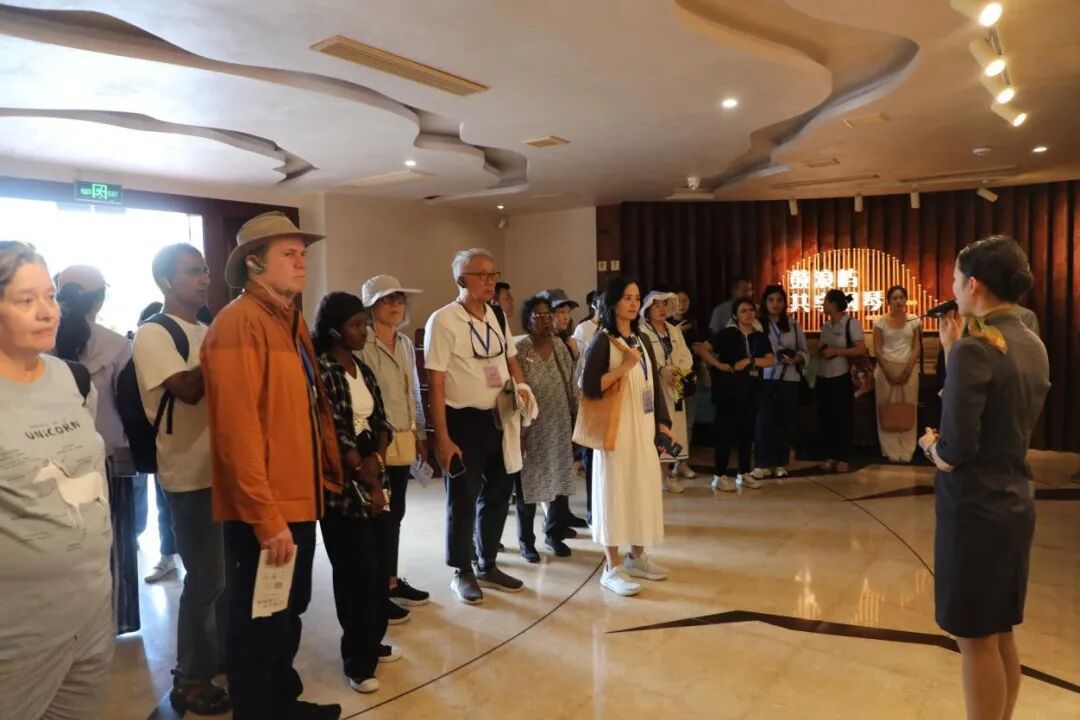
On August 15, the workshop experts and participants conducted a field visit to heritage sites in Xiamen, experiencing their rich history and cultural depth firsthand. The group observed the South Overseas Chinese Building Complex at the Chinese Language and Culture College of Huaqiao University, as well as the Yungong Building and Chengyi Building within the Navigation College of Jimei University, all part of the Tan Kah Kee Educational Heritage architectural complex. As primary representatives of the “Tan Kah Kee style,” these buildings, with their Chinese‑Western architectural fusion and profound historical atmosphere, bear witness to the outstanding contributions of patriotic overseas Chinese represented by Tan Kah Kee in China’s modern and contemporary development. Subsequently, the workshop participants visited the Tan Kah Kee Memorial Hall to review the remarkable achievements of this renowned patriotic overseas Chinese in business, education, and public welfare. The participants expressed being deeply moved by Tan Kah Kee’s selfless patriotic enthusiasm and admired his people‑centered, forward‑thinking integrated planning. At the final stop, the World Heritage site of Gulangyu, the participants visited the Gulangyu Historical and Cultural Exhibition Hall, Bagua Building, and the Organ Art Center. As an important window for international cultural exchange, Gulangyu showcases the charm of cross‑cultural fusion through its diverse architectural styles and musical traditions.



Group Assignment Presentations
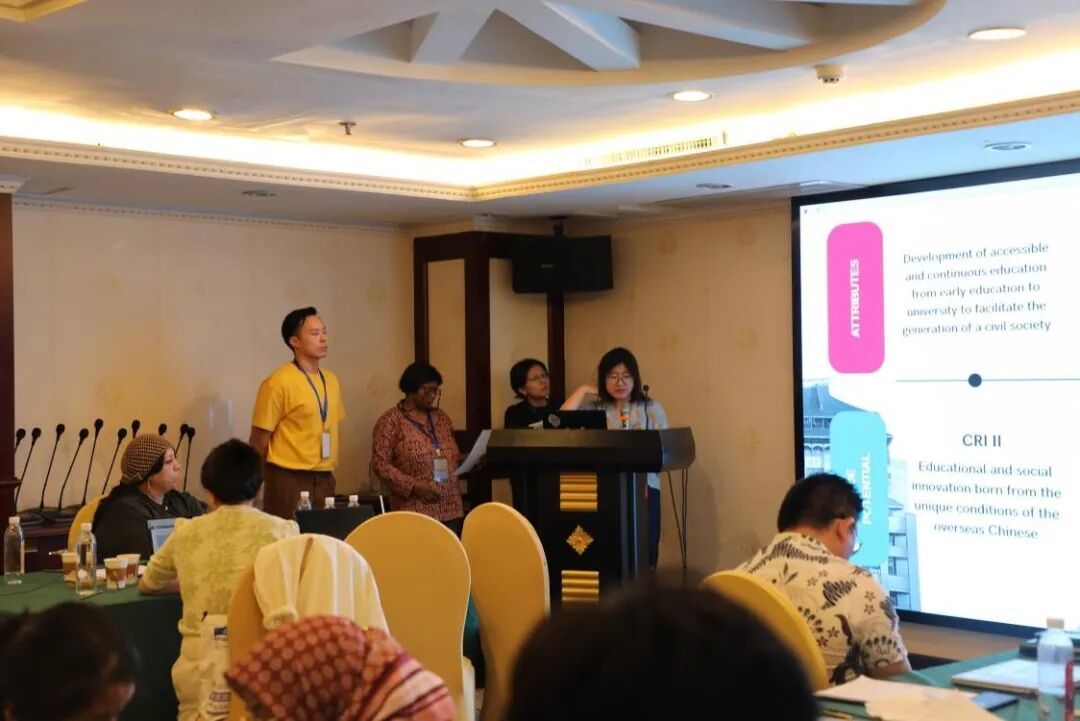
Following the field visits, participants used the Tan Kah Kee Educational Heritage as an example to complete assignments applying serial heritage methodologies. Starting from modules such as OUV justification, constituent elements, comparative studies, stakeholders, management requirements, and value interpretation and communication policies, each group proposed diverse perspectives and strategies. Participants focused on the inclusive educational philosophy of the “Tan Kah Kee spirit,” emphasizing the importance of lifelong learning, arguing for the heritage’s relevance to China’s educational modernization, combining domestic cases (Tongji University, Tsinghua University, etc.) and international cases to highlight its Confucian foundations, constructing a “decision – implementation – support – monitoring and feedback” management system, and proposing communication strategies such as videos, museums, and unified signage. They used professional models to categorize stakeholders and drew on Gulangyu’s experience to plan the nomination timeline and subsequent communication strategies.

The expert team provided professional commentary on each group’s presentation. They acknowledged the participants’ clear understanding of the nomination process, their accurate grasp of global educational heritage trends and domestic policies, and their solid work in stakeholder identification, heritage value exploration, and international case comparisons. They also offered specific suggestions for further research: clarifying the overall constituent elements of the heritage, supplementing content on the heritage’s connections with overseas contexts; suggesting careful consideration of the scale of heritage research and the appropriateness of certain attributes for meeting the nomination criteria; noting gaps in some studies between the content and the heritage attributes; and recommending improvements to management systems and cautious application of stakeholder models. These suggestions provided clear directions for participants’ subsequent research.


Thus, the eight‑day Asia‑Pacific Regional Thematic Workshop Series on World Heritage successfully concluded. A total of 18 participants from countries and regions including Australia, Pakistan, Malaysia, Singapore, Thailand, Tajikistan, India, Indonesia, and Mainland China, Hong Kong SAR, and Macau SAR, along with 9 experts from four countries—Mexico, Italy, Malaysia, and China—gathered in Quanzhou. They forged deep friendships through daily interaction and engaged in vibrant intellectual exchange and debate in the sweltering summer heat of this historic city of Zaitun. The sparks of intellectual collision and the warmth of like‑minded camaraderie will become the most precious gains of this journey. We extend our sincere gratitude to our colleagues at the Fujian Provincial Bureau of Cultural Heritage, the Quanzhou Municipal Bureau of Culture, Radio, Television, Tourism, the Quanzhou Cultural Heritage Protection Center, the Xiamen Municipal Bureau of Cultural Heritage, and the Quanzhou Maritime Museum for their tremendous support.