On December 4, 2024, the annual editorial board meeting of Nature and Cultural Heritage Research was successfully held at Peking University. The journal is jointly planned and published by the School of Archaeology and Museology at Peking University, the UNESCO Asia‑Pacific World Heritage Training and Research Center (Beijing) (WHITRAP, hereinafter referred to as WHITRAP Beijing), and Beijing Zhuozhong Publishing Co., Ltd. (hereinafter referred to as Zhuozhong Publishing). Nearly 50 guests from key domestic universities, academic research institutions, and organizations gathered together, both in person and online, with the joint editorial office to share their views and discuss the future development of the journal.
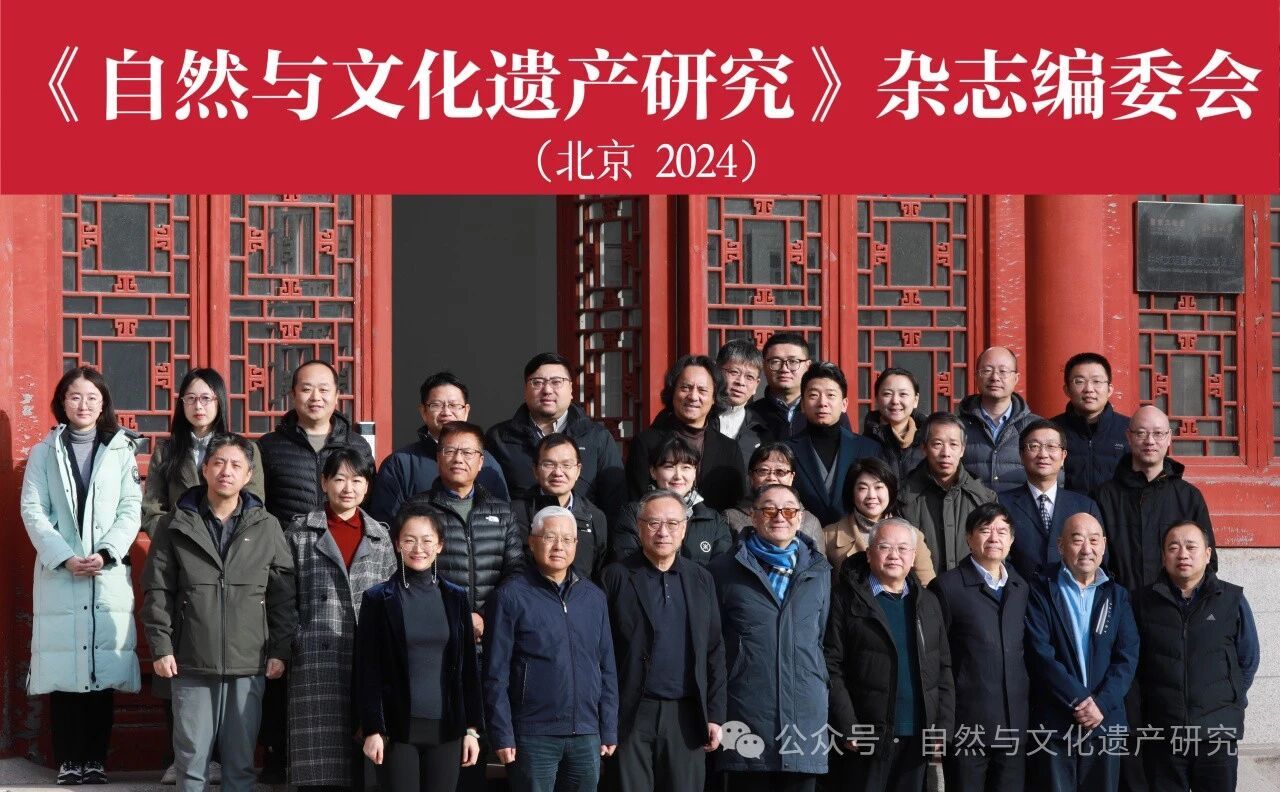
Group photo of the attendees


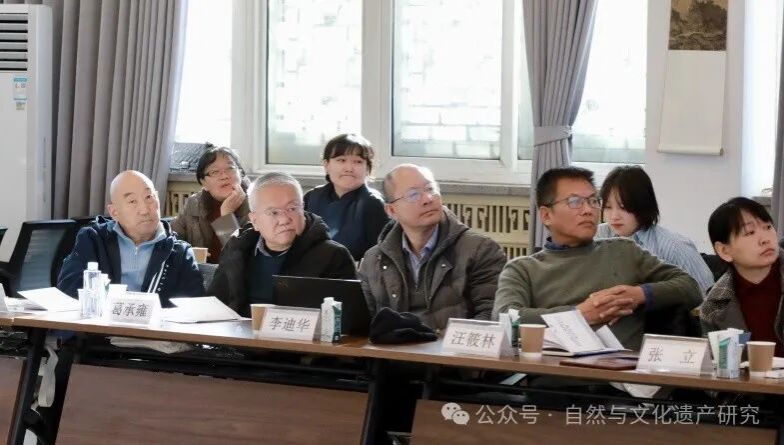
Scene of the meeting
Shen Ruiwen, Dean of the School of Archaeology and Museology at Peking University, attended and delivered a speech, proposing the development goal of establishing the journal as a highland for heritage research and protection. To further enhance the academic quality and influence of the journal, he pointed out the following specific aspects in his speech: continuously adjust and optimize the journal’s content according to the requirements of readers and disciplinary development, improving content appeal and relevance; strengthen academic exchanges, regularly organize academic seminars, invite domestic and international experts and scholars to conduct in‑depth discussions on hot topics in the heritage field, and strengthen cooperation with relevant international organizations; promote the journal through various channels to expand its readership. He hopes to discover and cultivate a group of young talents in the field of natural and cultural heritage protection through the journal platform, injecting fresh vitality into the discipline.

Dean Shen Ruiwen delivering a speech
Liu Zelin, President of Zhuozhong Publishing, expressed gratitude in his speech for the long‑term support from the School of Archaeology and Museology at Peking University and WHITRAP Beijing. He pointed out that, against the backdrop of the integrated protection and development of natural and cultural heritage, the cooperation between the two sides is a successful exploration and practice of interdisciplinary exchange and mutual promotion. In recent years, the academic level of the journal has seen qualitative improvement, and there is still enormous space for future development.

President Liu Zelin delivering a speech
A brief but solemn editorial board transition ceremony followed. Editor‑in‑Chief Sun Hua and President Liu Zelin presented editorial board appointment letters to the attending board members. The current editorial board consists of 52 experts and scholars from the fields of cultural heritage, natural heritage, intangible cultural heritage, and journal publishing, with a term of five years. The meeting discussed and revised the editorial board’s bylaws, which are planned to be released soon.

Subsequently, Li Guanghan, Senior Editor of the journal and Executive Director of WHITRAP Beijing, chaired the meeting. Deputy Editor‑in‑Chief Yang Li reported on the publishing work since 2020. By analyzing manuscript submissions, key topics, and journal data performance, she summarized the phased achievements and main challenges of the journal.
During the discussion session, editorial board members spoke enthusiastically. They pointed out that while focusing on current publishing work and striving to enhance academic standards, academic journals should also pay attention to the integrated research and protection of different types of heritage, bravely shoulder greater social responsibilities, embrace the responsibilities of the era, pay attention to research articles on national macro‑policies, value disciplinary development in heritage studies, and share excellent cases with reference value. They emphasized focusing on current key topics and projects, particularly addressing the needs of young scholars and frontline managers by formulating corresponding review standards and acceptance requirements, expanding the scope of manuscript solicitation, enhancing the practical reference value of articles, truly implementing the development approach of combining theory with practice, and thereby further expanding influence. Additionally, they suggested actively paying attention to international heritage research achievements and China’s “going out” cooperative projects, and striving to engage with them. Subsequently, the editorial board members continued in‑depth discussions on the journal’s key topic directions, which will be compiled and released soon for public submissions.
In his concluding remarks, Editor‑in‑Chief Sun Hua fully affirmed the views of the editorial board members, pointing out that enhancing creativity means breaking through so‑called norms to lead disciplinary development. He emphasized strengthening frontier manuscripts with innovation in theories and methods, enriching the team of young scholars, and cultivating a creative author team; strengthening manuscripts on protection and management, especially those with interdisciplinary characteristics that integrate nature and culture, tangible and intangible heritage, and immovable and movable cultural relics; effectively implementing the increase of manuscripts on protection cases, as typical excellent cases themselves constitute an important part of disciplinary research.

Editor‑in‑Chief Sun Hua delivering concluding remarks
The path of academic journal development is long and arduous. We believe that “when forces combine, even ten thousand pounds is not too heavy to lift.” Nature and Cultural Heritage Research will take the establishment of the new editorial board as an opportunity to unite as one, cooperate fully, strengthen the integration of theory and practice, continuously enhance the academic quality and influence of the journal, strive to build a highland for natural and cultural heritage protection research, and contribute to China’s heritage protection cause.




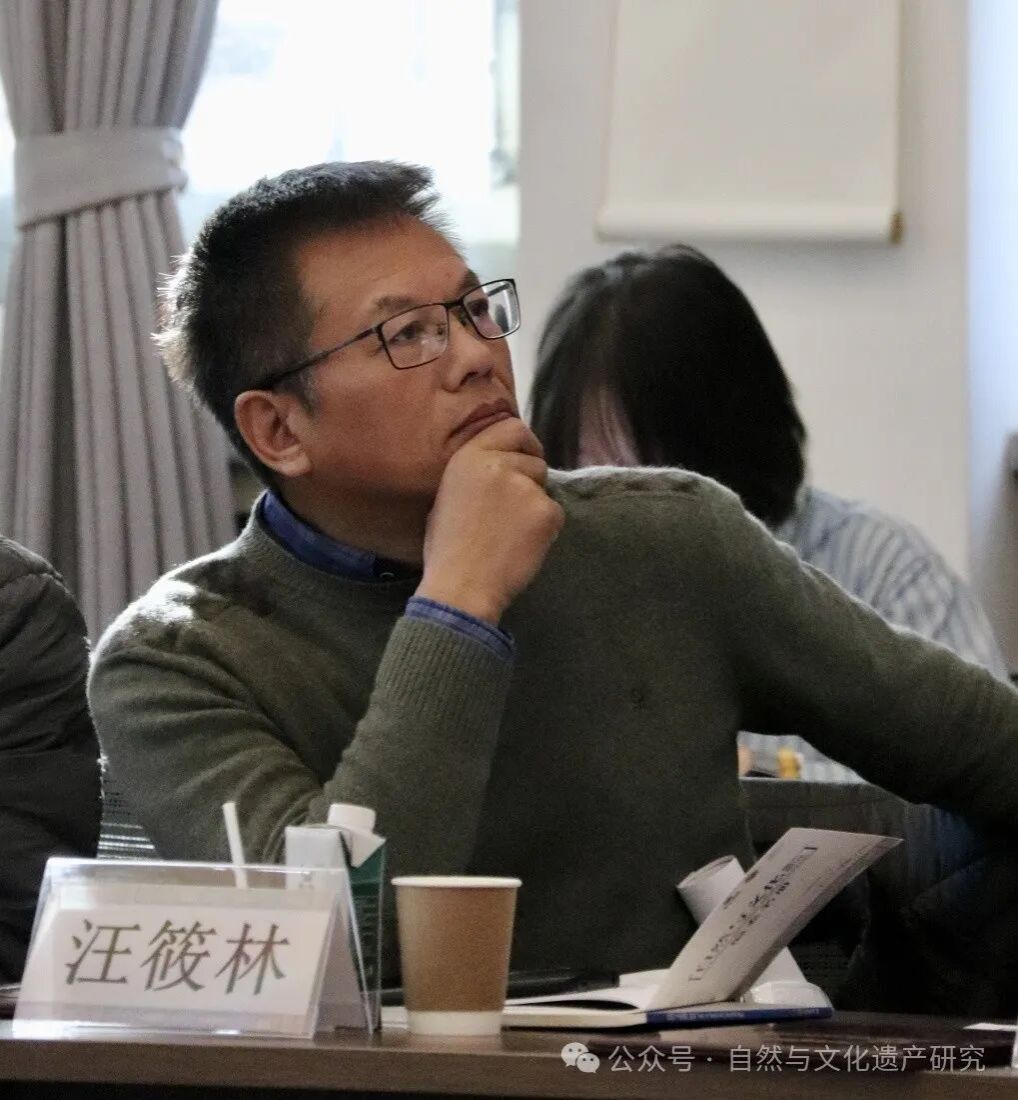














Memorable moments

When Heritage and Protection Research (later renamed Nature and Cultural Heritage Research) was first launched in 2016, it received support and assistance from many experts and scholars, and an editorial board was established. After the renaming in 2020, the editorial board was reorganized and has continued to this day. Under the guidance and support of the first two editorial boards, we have grown step by step, achieved modest results, and gradually gained a place in academia. We hereby express our sincerest gratitude and respect to the following teachers!
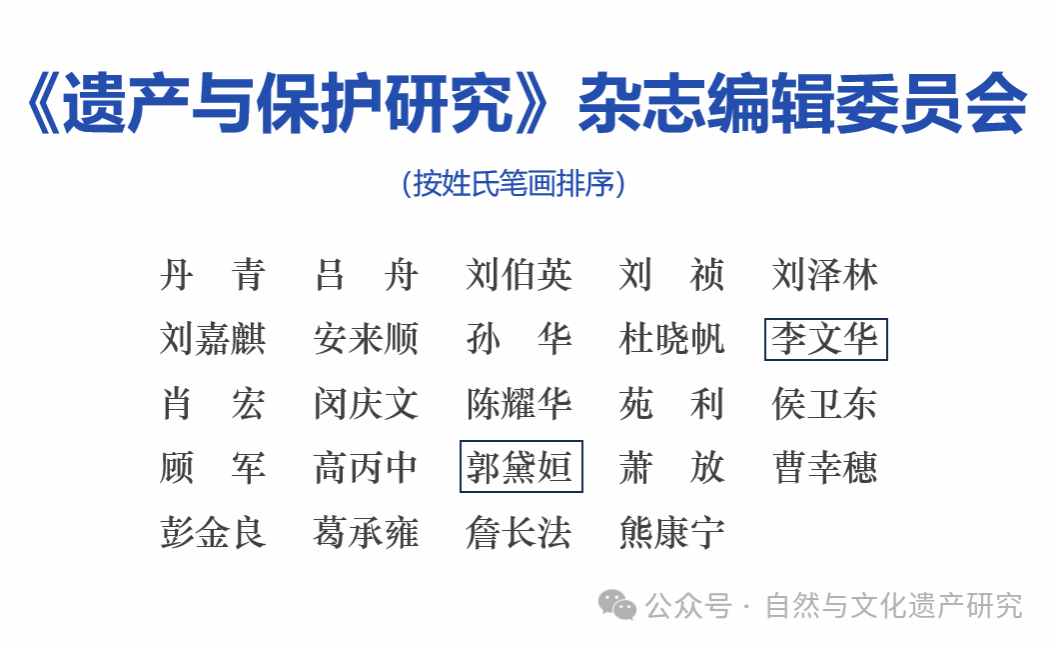
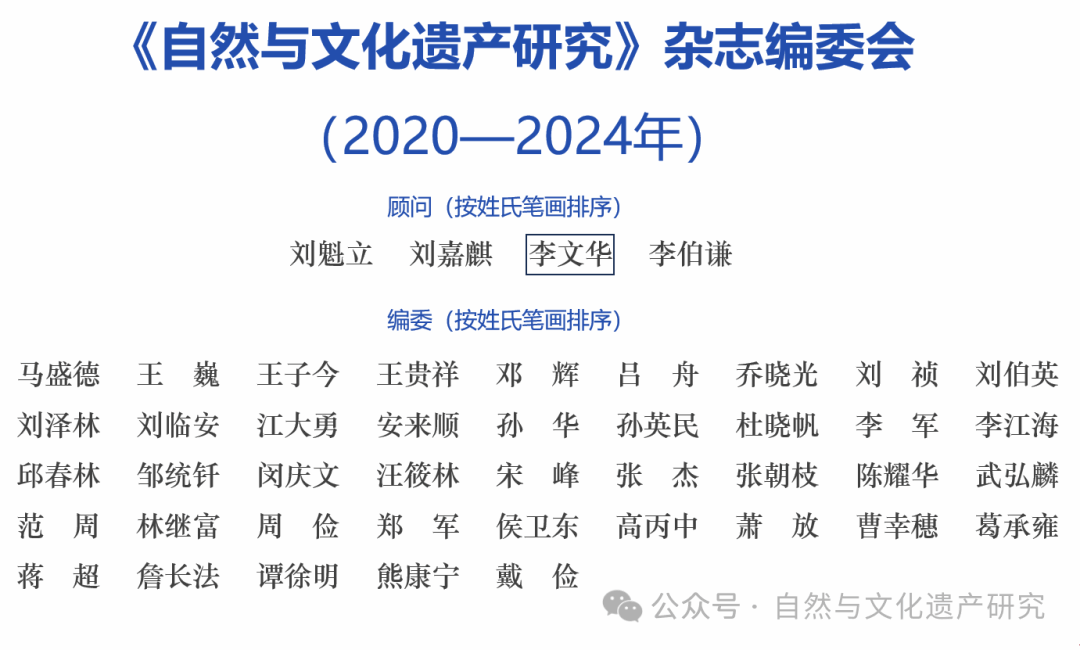
Once again, thank you to all the experts and scholars for your hard work and invaluable support. Your pure scholarly dedication and spirit of selflessnesswill continue to inspire us. May the journal, under your care, undergo new transformation and new growth!
Text: Nature and Cultural Heritage Research Editorial Office
Photos: Tan Shirui, He Jian, Yu Mengying
Editor: Zhao Yahe
Review: Yang Li, Sun Luqing, Zhang Jianwei, Li Guanghan
Approval: Shen Ruiwen