Lecture Background and Overview
On October 25, 2024, the UNESCO World Heritage Training and Research Center (Beijing) and the School of Archaeology and Museology at Peking University jointly organized a lecture titled “Expanding China’s World Heritage Inventory: The Role of Emerging Trends.” The lecture was delivered by Dr. Gamini Wijesuriya, Special Advisor to the UNESCO Asia‑Pacific World Heritage Training and Research Center (Shanghai). Li Guanghan, Executive Director of the Center, served as the moderator and translator.

Dr. Gamini Wijesuriya is an architect and archaeologist with over 40 years of experience in the field of world heritage. In 2021, he was awarded the ICCROM Award for his significant contributions to global cultural heritage conservation and management. He is renowned for his pioneering work in living heritage and for introducing people‑centered approaches to the heritage field. He has held several important positions, including Director of the Department of Conservation in Sri Lanka and Special Advisor to the Director General of ICCROM. Currently, he serves as Special Advisor to the UNESCO Asia‑Pacific World Heritage Training and Research Center (Shanghai), a member of the Scientific Committee of the Asia‑Pacific Alliance for the Conservation of Cultural Heritage established in China, and Coordinator for the UNESCO Intangible Cultural Heritage Convention.

Building on the recently co‑organized “East Asia Heritage Management Comprehensive Capacity Building Workshop – Synergies of Tangible and Intangible Heritage,” the Center invited Dr. Wijesuriya to discuss new trends in China’s heritage field. Dr. Wijesuriya explored in depth China’s position, achievements, and future directions in the field of cultural heritage, shared his insights on some emerging trends in heritage management, and specifically analyzed China’s contributions in addressing these trends.

Summary of Lecture Content
Expanding the Definition of Heritage
In recent decades, the definition of “heritage” has undergone a fundamental transformation. The traditional concept was confined to Eurocentric monumental architecture, such as temples, castles, and other tangible heritage associated with “priests, princes, and politicians,” overemphasizing the protection of physical structures while neglecting the lived experiences and cultural traditions of local residents. The modern concept, in contrast, emphasizes “heritage of the people,” focusing on everyday cultural expressions and community practices. For China, this has resulted in landscapes reflecting human‑environment relationships, such as the Honghe Hani Rice Terraces, and villages carrying intangible culture being included within the scope of heritage. At the Amsterdam Conference, “Outstanding Universal Value” was also redefined as “an outstanding response to universal issues common to all human cultures,” reflecting the new concept that heritage should reflect the diversity of human experience.
Historical Span and Comprehensiveness of Heritage Types
The historical span and typological diversity of heritage in China are unparalleled in the world. From the prehistoric period represented by the Peking Man heritage site to modern cities demonstrating historical continuity, “you won’t find such a chronological span in any other country.”
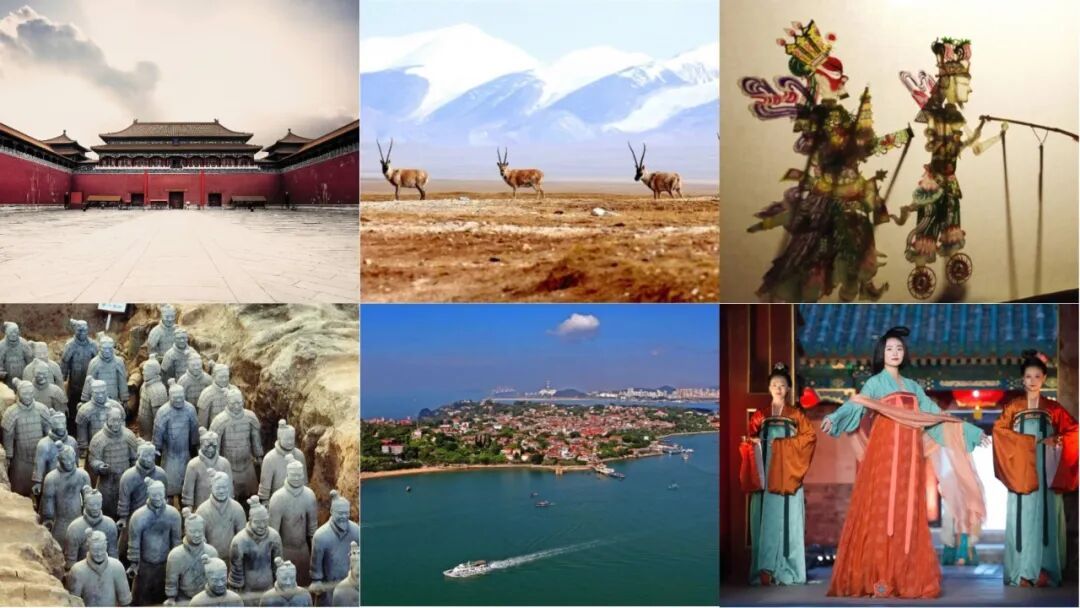
Numerous heritage types—monuments, cities, landscapes, rural heritage sites, and religious buildings—demonstrate the depth and breadth of China’s cultural heritage. From traditional settlements like Lijiang to the 2,000‑year‑old Grand Canal, all reflect China’s historical achievements. In terms of religious architecture, China’s diversity is particularly striking. “If you go to Italy, you will only see one or two types of religious architecture. But in this country, you can find Buddhist, Islamic, Hindu, and Christian architecture alike.” This diversity not only tells “China’s own story” but also demonstrates China’s contributions to the world through sites such as the Silk Road heritage sites and the Temple of Heaven.
Telling China’s Own Story and Its Contribution to the World
The core of heritage protection in China is “telling China’s own story and its contribution to the world.” This goes beyond simply protecting heritage sites, emphasizing the use of cultural and natural heritage to demonstrate China’s historical influence and cultural depth. Each heritage site is a unique chapter. The Great Wall demonstrates China’s defensive unification, while the Silk Road bears witness to international trade and cultural exchange. The Silk Road, in particular, symbolizes China’s role as a connector of civilizations, facilitating the spread of ideas, philosophies, and art across the Eurasian continent. The Temple of Heaven reflects philosophies that have “transcended [China’s] borders,” demonstrating the influence of Chinese thought on other societies. China actively participates in the global heritage dialogue, shaping new conservation standards with “people‑centered approaches.” China’s heritage sites serve as cultural ambassadors, not only showcasing historical achievements but also promoting global understanding of Chinese culture.

Addressing Emerging Trends
• Community Participation
Consistent with the “People‑Centered Approach” (PCA), heritage conservation is gradually shifting towards placing people at the core of protection. PCA “is about placing people at the heart of heritage discourse,” ensuring that heritage management focuses not only on the protection of heritage sites but also on the dual well‑being of heritage and society. This approach emphasizes that heritage sites exist within communities and should reflect and serve the needs and values of local residents. In China, this means involving local communities in conservation efforts, particularly at sites like the Honghe Hani Rice Terraces, where the landscape and local inhabitants are deeply interconnected.

• Intangible Heritage
Traditionally, heritage conservation focused on tangible aspects such as architecture, monuments, and landscapes. However, the concept of intangible heritage—including practices, representations, and knowledge passed down through generations—has gained increasing recognition. Intangible elements are now seen as crucial components for understanding the full significance of a heritage site. For example, West Lake in Hangzhou, designated as a World Cultural Heritage site, originally emphasized tangible heritage elements, but traditional tea processing techniques and associated social practices are gradually being recognized as important cultural heritage elements. The integration of tangible and intangible aspects allows for a richer and more comprehensive understanding of the significance of each heritage site.
• Local Values and the Nature‑Culture Nexus
The incorporation of local values and the recognition of the nature‑culture nexus are relatively new elements in heritage discourse, primarily because these aspects were often overshadowed by Eurocentric conservation approaches in the past. Heritage conservation previously focused too much on “aesthetic, historical, and material values,” often neglecting socio‑ecological contexts and local cultural significance. In recent decades, there has been a growing recognition that heritage cannot be managed separately from its natural environment, and that culturally specific values should be integrated. For example, in China, heritage sites like the Honghe Hani Rice Terraces and West Lake are praised not only for their physical structures but also for their relationships with local communities and the natural environment.

• Use of Technological Innovations
Digital technology has become a powerful tool in modern heritage conservation, enabling better monitoring, documentation, and interpretation of heritage sites. Although Dr. Gamini Wijesuriya acknowledged his limited familiarity with these technologies, he emphasized their significant impact on heritage management in China. For instance, monitoring systems at sites like the Suzhou Gardens use digital tools to track environmental conditions, manage visitor flow, and provide interactive experiences for visitors. This innovative use of technology not only enhances the protection of heritage sites but also improves the visitor experience.
• Enhanced Interpretation and Presentation
Modern heritage conservation places great importance on interpretation and presentation to ensure that heritage sites can convey their full historical, cultural, and social significance to audiences. Interpretation should be comprehensive and serve all audiences, providing insights into both the tangible and intangible aspects of a heritage site. In China, an increasing number of heritage sites have adopted accessible, informative, and engaging interpretation programs to help visitors understand the deeper meanings behind the historical and cultural contexts of each site.

Conclusion: Setting New Benchmarks for Global Heritage
China’s heritage conservation is setting new benchmarks for global heritage. This is reflected not only in quantity but also in a commitment to diversity, inclusivity, and innovation. China’s heritage conservation demonstrates a holistic approach that values tangible and intangible heritage, community participation, and the nature‑culture nexus. Heritage sites such as the Great Wall, the Silk Road, and the Honghe Hani Rice Terraces showcase a unique fusion of history, culture, and nature. By integrating people‑centered approaches, emerging technologies, and intangible heritage, China has become a global model. This approach makes heritage sites more dynamic and capable of resonating with both local and international audiences. China’s exemplary role encourages other countries to move beyond Eurocentric perspectives and adopt more inclusive frameworks, positioning China “at the forefront of the global heritage movement.” This concept of heritage provides a blueprint for the future, promoting a more inclusive understanding of heritage and paving the way for a world heritage system that truly represents all humanity.
Q&A
After the lecture, inspired by the presentation, the audience engaged in a lively exchange with Dr. Wijesuriya on topics such as heritage updating, the integration of cultural and natural heritage, and the impact of tourism on heritage sites.

• Community Participation
Dr. Wijesuriya explained that in places like Lijiang, management teams are updating various cultural attributes of the heritage site, which is the right direction for future development. Over time, heritage sites find it necessary to incorporate various values and characteristics, including intangible community values, to better support management and interpretation efforts. Additionally, as heritage site management shifts from a material‑value‑only model to a more value‑driven model, many heritage sites are updating their heritage content, management plans, etc., to reflect the latest conservation concepts.
• Integration of Cultural and Natural Heritage
Dr. Wijesuriya observed that since 2013, the World Heritage Leadership Program has aimed to combine the management of natural and cultural heritage. For instance, training programmes bring together experts in nature and cultural conservation to participate in training sessions and discussions on management strategies. This interaction has fostered closer collaboration between the two fields. Additionally, Dr. Wijesuriya noted that, in practice, the management of both is gradually beginning to merge, although in some regions, the boundaries between cultural and nature conservation still remain distinct, requiring further shifts in concepts and methods to encourage integrated development.
• Impact of Tourism on Heritage Sites
Digital technology has become a powerful tool in modern heritage conservation, enabling better monitoring, documentation, and interpretation of heritage sites. Although Dr. Gamini Wijesuriya acknowledged his limited familiarity with these technologies, he emphasized their significant impact on heritage management in China. For instance, monitoring systems at sites like the Suzhou Gardens use digital tools to track environmental conditions, manage visitor flow, and provide interactive experiences for visitors. This innovative use of technology not only enhances the protection of heritage sites but also improves the visitor experience.