From October 16‑17, 2024, the “East Asia Consultation Meeting on the Implementation of the Asia‑Pacific Regional Framework Action Plan” was successfully held in Beijing, China. The meeting was organized by the UNESCO Regional Office for East Asia and supported by the Beijing Municipal Cultural Heritage Bureau and the Beijing Central Axis Protection Public Welfare Foundation. Forty‑four experts from seven countries, including advisory bodies to the World Heritage Committee, national authorities responsible for world heritage in China, Japan, Mongolia, and the Republic of Korea, UNESCO Category 2 centers involved in the protection of cultural and natural heritage, UNESCO Chairs, and world heritage site management authorities, gathered together to engage in productive dialogue and discussion on the priorities for world heritage protection and management in East Asia in the coming years.

East Asia Consultation Meeting on the Implementation of the Asia‑Pacific Regional Framework Action Plan
Group photo of experts and speakers Photo: Gao Chenxiang
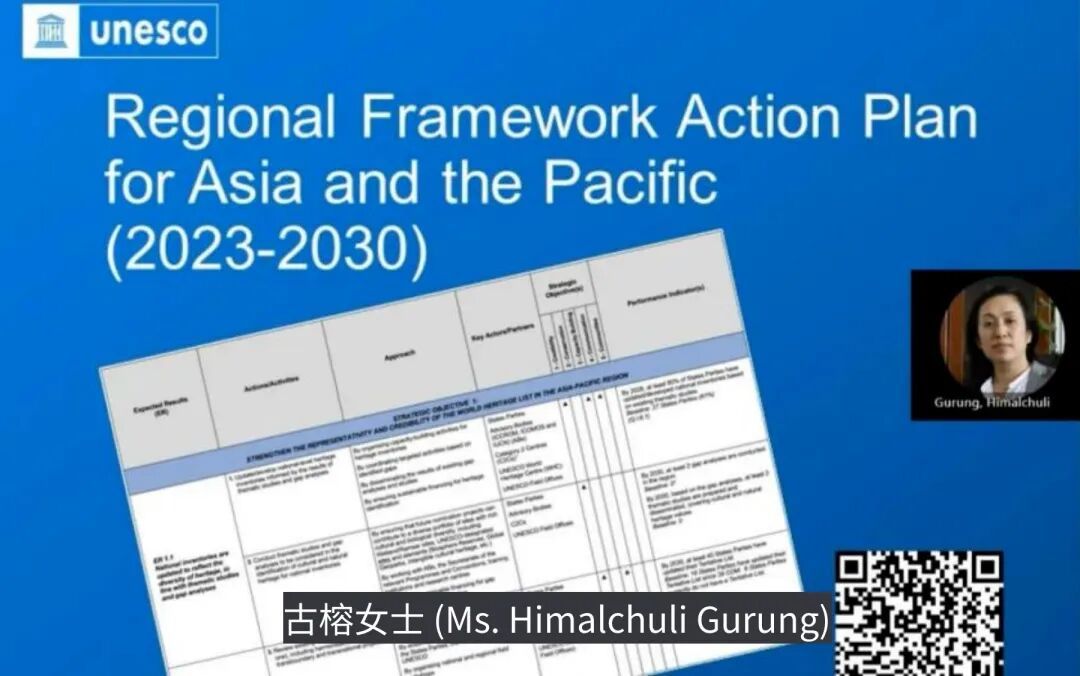
In accordance with the monitoring requirements of the 1972 Convention Concerning the Protection of the World Cultural and Natural Heritage, the Asia‑Pacific region was the first in the world to adopt the periodic reporting mechanism for world heritage protection and management. In the three periodic reports completed in 2003, 2012, and 2023, States Parties provided self‑assessment feedback on the implementation of the Convention and the status of world heritage protection in their respective countries. Based on the past successful experiences, current challenges, and areas for improvement identified in the third periodic report, the States Parties developed an Asia‑Pacific Regional Framework Action Plan (2023‑2030). This plan defines action objectives based on the 5Cs strategy (Credibility, Conservation, Capacity‑building, Communication, Communities), identifies priority work areas, and proposes concrete action plans for the implementation of the Convention. Against this backdrop, this regional consultation meeting provided an opportunity for relevant institutions and experts from East Asian countries to negotiate the contents of the regional framework action plan for national and transnational world heritage work.

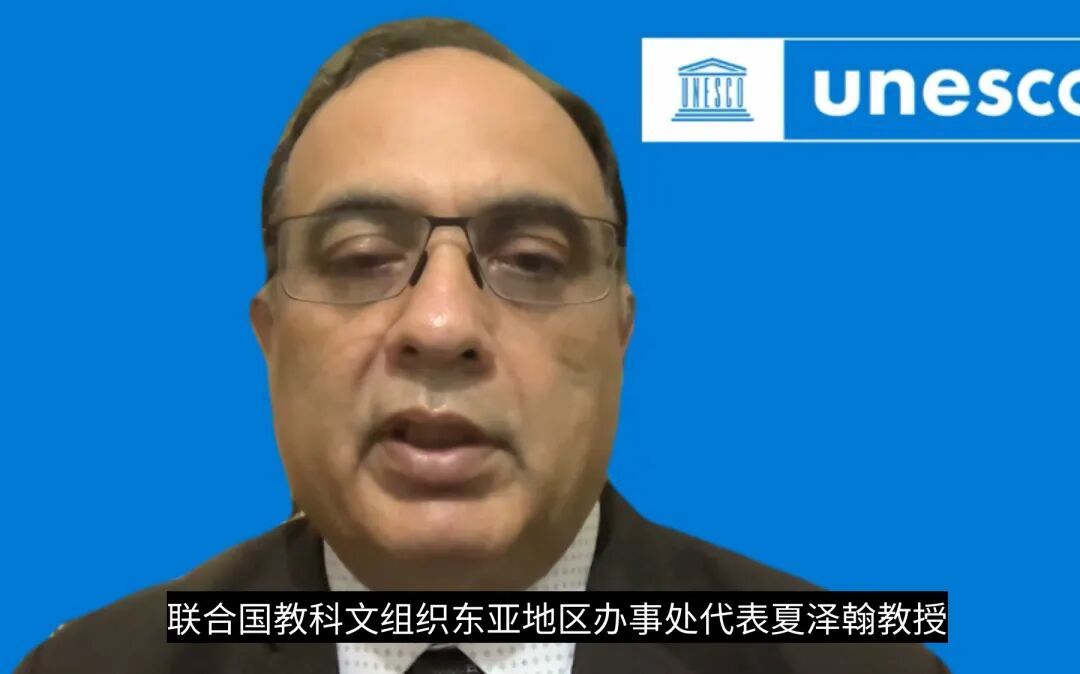

Ms. Gurung, Head of the Asia‑Pacific Unit of the UNESCO World Heritage Centre, introduced to the participants the contents of the third periodic report and the regional framework action plan. Representatives of world heritage management authorities from China, Japan, Mongolia, and the Republic of Korea respectively presented their national priorities. Dr. Jyoti Hosagrahar, Deputy Director of the World Heritage Centre, introduced to the participants the policies related to climate change in world heritage work.


Representatives sharing
The three advisory bodies to the World Heritage Committee respectively introduced their recent work and the technical expertise and resource support they can provide to States Parties and world heritage site managers. Ms. Eugene Jo, Head of the World Heritage Leadership Programme at the International Centre for the Study of the Preservation and Restoration of Cultural Property (ICCROM), presented two documents: Our Heritage, Our Future Toolkit 2.0 and the Heritage Impact Assessment Guidelines and Toolkit. Ms. Hatthaya Siriphatthanakun, speaking on behalf of the International Council on Monuments and Sites (ICOMOS), introduced the organization’s involvement in the Tentative List, Upstream Process, and Pre‑assessment. Mr. Clemens Küpper from the International Union for Conservation of Nature (IUCN) presented the World Heritage Outlook report.

Ms. Eugene Jo presenting the toolkit © National Cultural Heritage Administration
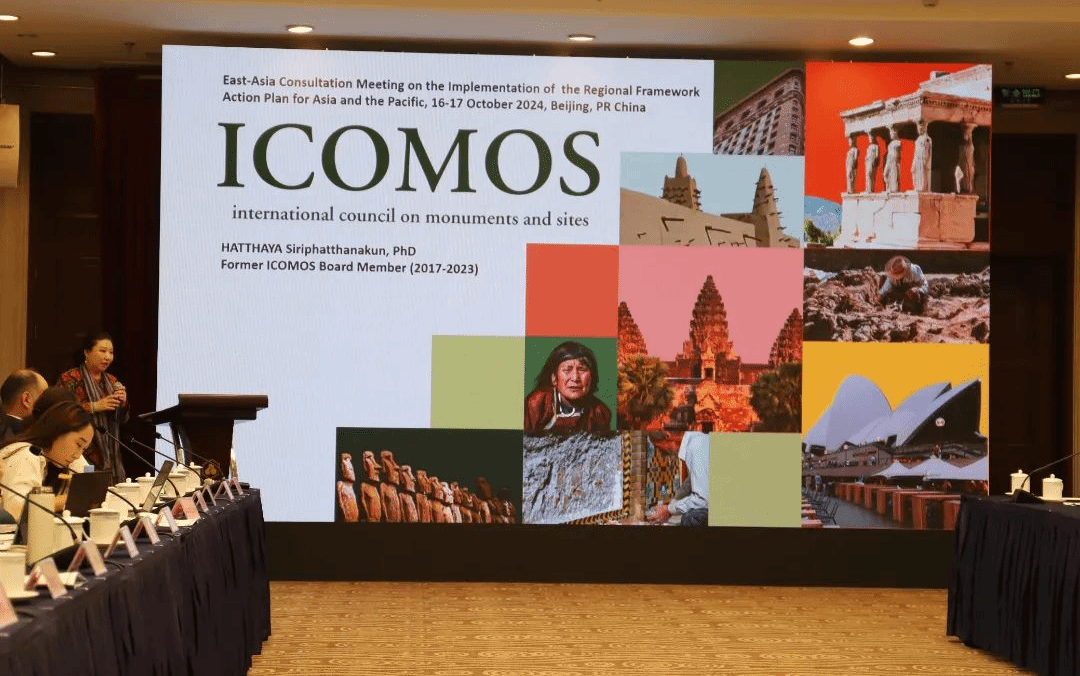


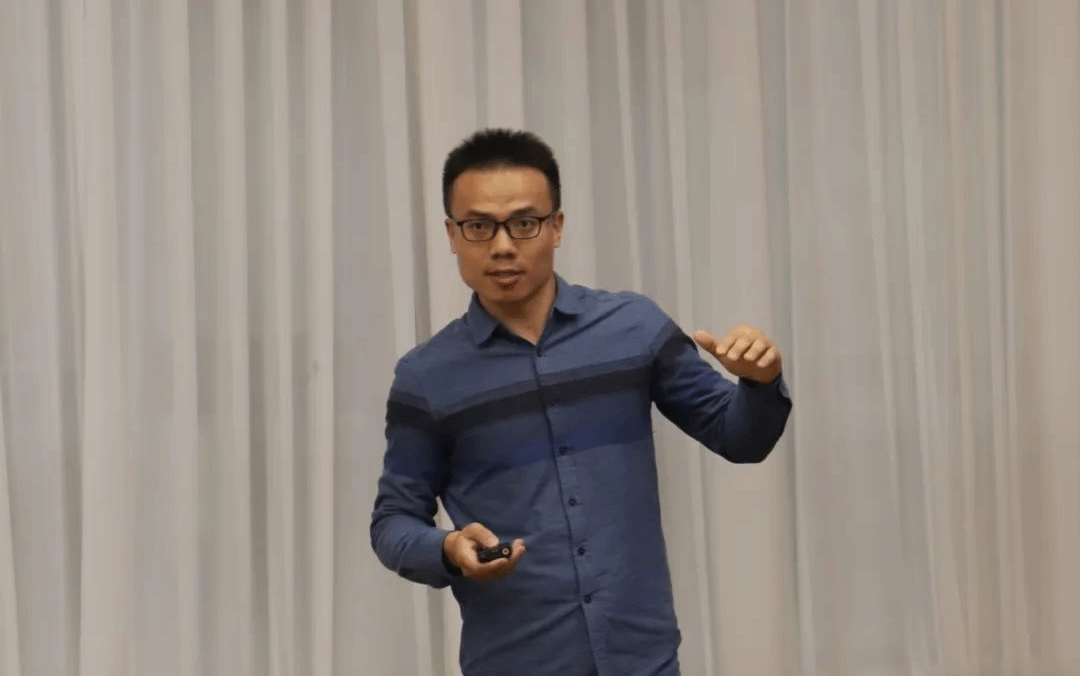

Representatives of World Heritage advisory bodies and UNESCO Category 2 centers sharing insights © National Cultural Heritage Administration
Subsequently, representatives of six UNESCO Category 2 centers in the Asia‑Pacific region also reported on their respective centers’ work, including past successfully implemented projects, experiences in regional cooperation, and work priorities for the coming years. Dr. Li Guanghan, Assistant to the Director of the UNESCO Asia‑Pacific World Heritage Training and Research Center Beijing Branch, introduced the management structure and comprehensive work achievements of the Beijing Center, and, focusing on the established priorities of the Asia‑Pacific Regional Framework Action Plan (2023‑2033), with training and research as its main tasks, outlined the Beijing Branch’s work plan for the coming year and its future strategic work directions.
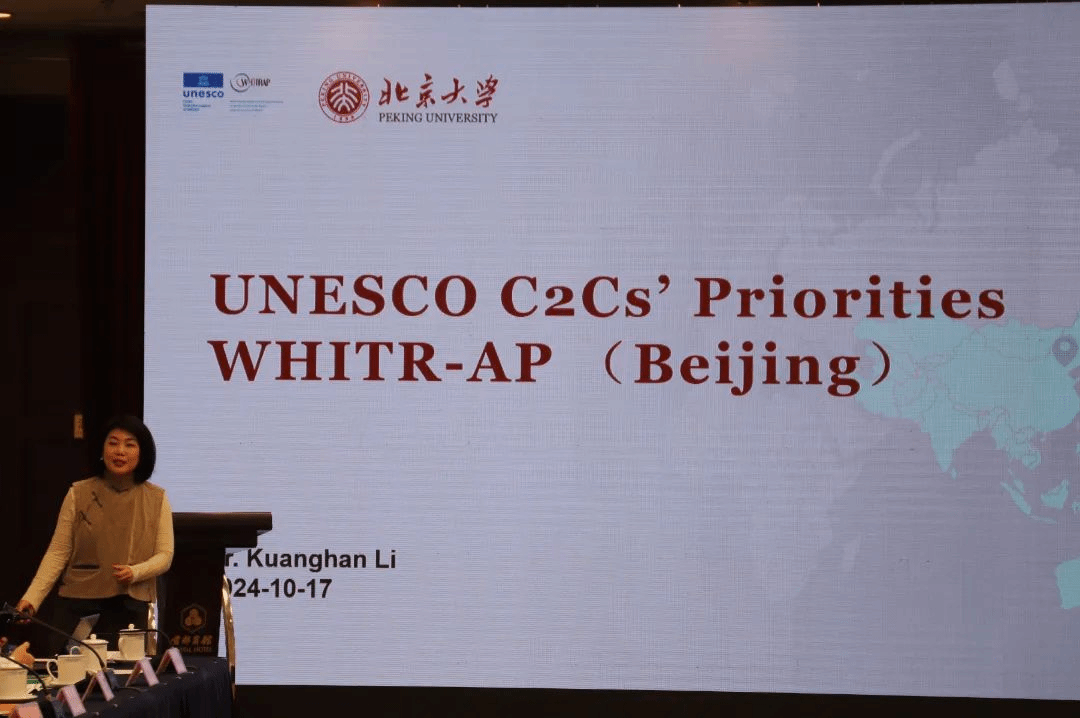
Dr. Li Guanghan presenting work achievements © National Cultural Heritage Administration
Ms. Li Hong, Programme Officer at the UNESCO Asia‑Pacific World Heritage Training and Research Center Shanghai Branch (WHITRAP Shanghai), presented, using examples, the practical work of “World Heritage and Sustainable Development” and “World Heritage Impact Assessment” at the international and Asia‑Pacific levels, as well as for States Parties and world heritage sites in the Asia‑Pacific region, focusing on eight priority programs. Finally, she outlined WHITRAP Shanghai’s work plan for the next two years based on the expected indicators and established priorities of the Asia‑Pacific Regional Framework Action Plan (2023‑2030).
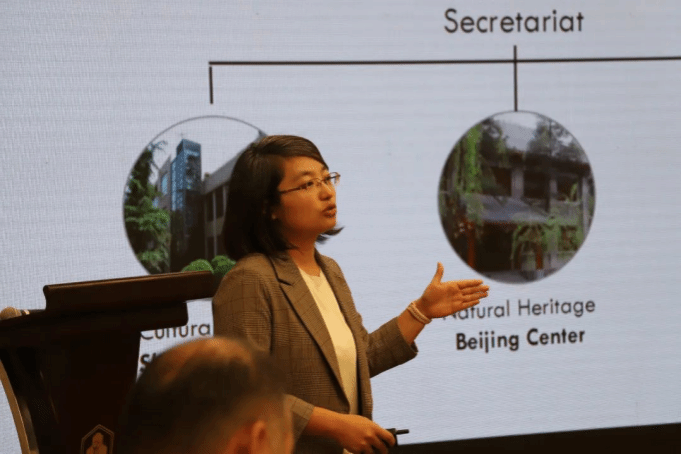
Ms. Li Hong sharing insights © National Cultural Heritage Administration
Mr. Gu Wenhua, Director of the UNESCO Asia‑Pacific World Heritage Training and Research Center Suzhou Branch, presented the work achievements of the Suzhou Center and its priority work plan for the next three years, emphasizing that the Suzhou Center, based in the Suzhou Gardens, focuses on protection, training, research, communication, and dissemination to promote the Suzhou Gardens conservation management experience to the world and to make Suzhou’s voice heard in world heritage protection.

Director Gu Wenhua sharing insights © National Cultural Heritage Administration
As the key content of this consultation meeting, chaired by Dr. Yang Bixing, Culture Programme Officer of the UNESCO Regional Office for East Asia, representatives of world heritage protection management institutions and experts from various countries engaged in highly productive multilateral dialogue. Topics discussed included: funding sources and legal frameworks to support world heritage work; how to share conservation benefits with communities; national heritage inventories and Tentative Lists; world heritage education and capacity building; conservation and development, heritage impact assessment, and climate change. Participating institutions and experts reached preliminary consensus on several work areas and jointly planned specific future cooperation plans: referencing best practice cases and strengthening capacity building to share the benefits of sustainable tourism with communities; cooperating between regional countries to nominate transnational Tentative List projects; producing multilingual, nationally specific world heritage education materials and best practice guides, localizing existing resources, and, on the basis of school education, reaching beyond the classroom to gain broader public support; strengthening capacity building for world heritage research, conservation awareness, and heritage impact assessment, and establishing a more robust legal and regulatory system for heritage impact assessment.

Group discussion © UNESCO Regional Office for East Asia
This East Asia consultation meeting provided a valuable platform for exchange and cooperation among institutions and experts involved in world heritage work in the region, offered more possibilities for intergovernmental coordination and cross‑sectoral collaboration, and effectively supported the implementation of the World Heritage Convention and related strategies at the regional and global levels. The participating national authorities and institutions reaffirmed their support for the implementation of the Convention and emphasized the core value of international and regional cooperation in world heritage protection and management. The meeting participants look forward to translating the priority action objectives into concrete cooperation projects on the basis of mutual understanding, trust, sharing, and communication, and to contributing to the protection of the common cultural and natural heritage of all humanity.