On August 10, 2022, the 2022 Joint Workshop on Cultural Heritage Conservation, a summer course organized by the School of Archaeology and Museology of Peking University and the World Heritage Institute of Institute of Training and Research for the Asia and the Pacific Region under the auspices of UNESCO (Beijing), hereafter WHITR-AP Beijing, successfully concluded in Fuzhou. During the ten-day field research, participants worked diligently in the sweltering summer heat of Fuzhou, conducting detailed and in-depth field research in groups on Sanfang Qixiang, Yantai Mountain, Shangxiahang, Fujian Shipyard, and the Guling Architectural Complex. Under the guidance of the workshop instructors, they wrote a research report of over 10,000 words, complete with illustrations. Under the scorching 40-degree Celsius sun, the participants toiled throughout the research area, meticulously documenting the past and present of cultural heritage through intensive fieldwork, interviews, discussions, and reflection. They crafted insightful observations on Fuzhou's historical narrative and heritage value, gaining rich knowledge and creating unforgettable learning memories in this historical and cultural city.

Image | Workshop Poster
· Review ·
Online Course Phase
In the introductory phase, the main instructor and invited teachers delivered lectures to the students. After a week of literature collection and research, the students presented their substantial preliminary findings on August 1st.

Image | Online Phase Course Schedule
Offline Lectures
During the on-site research phase, the organizers invited four more teachers to provide targeted lectures on the local situation in Fuzhou. These lectures deepened the students' understanding of Fuzhou's historical and cultural depth and provided valuable research leads.
1
Market/Home: Historic Districts in Diverse Narratives Professor Qi Xiaojin, Deputy Director of the Institute of Humanities and Creative Cities at Tsinghua Tongheng Design Institute, delivered a lecture entitled "Market/Home: Historic Districts in Diverse Narratives." Professor Qi had conducted specialized social surveys in the Shangxiahang area, supporting the development of conservation plans. The lecture approached the study of the Shangxiahang historic district from a sociological research perspective. Professor Qi pointed out that the different worldviews of researchers and those being researched can ultimately lead to misunderstandings among readers, and that writing is another process that requires caution. She thus reminded students about to conduct oral history interviews: oral history should begin with questions from the perspective of the researched and involve continuous reflection throughout the process.

Image | Professor Qi Xiaojin's lecture
2
A Magic Mirror Along the Minjiang River: From Cangqian to Guling
Professor Lin Yinan, Associate Professor and Deputy Head of the Department of Landscape Architecture at East China University of Science and Technology, and Director of the Fuzhou Old Buildings Encyclopedia website, delivered a lecture entitled "A Magic Mirror Along the Minjiang River: From Cangqian to Guling." The lecture mentioned that after Fuzhou opened as a treaty port, it attracted a large number of foreigners. They established the Cangqian Mountain Foreigner's Settlement on both sides of the Minjiang River and created a summer resort on Guling on the north bank of the Minjiang River, constructing a unique "Western mirror" in the historical narrative of Fuzhou, from Cangqian to Guling. Using the historical connection between Cangqian Mountain and Guling as background, Professor Lin presented stories of "foreigners' nostalgia" to showcase the history and value of Guling in Fuzhou. During the subsequent research, Professor Lin also continuously provided clues and answered questions remotely for the teachers and students in the Guling group.

Image | Professor Lin Yinan's lecture
3
The Urban Morphology Theory of Concern in Britain and its Spread in China
Associate Professor Song Feng from the School of Urban and Environmental Sciences, Peking University, delivered an online lecture entitled "The Urban Morphology Theory of Concern in Britain and its Spread in China" to workshop participants. The lecture began with a basic understanding of urban morphology, its fundamental principles, and research objectives. After briefly reviewing early research on urban landscapes by scholars from various countries, Professor Song Feng detailed M.R.G. Conzen's contributions to urban morphology theory, as well as the establishment, goals, and development of the Conzen school and the ISUF (Institute of Urban and Rural Studies). Professor Song then introduced the workshop participants to Chinese scholars' research on urban morphology, drawing upon diverse disciplines such as archaeology, geography, and architecture. He emphasized the work of Zhao Zhengzhi and his "Reconstruction Study of the Plane Planning of Yuan Dadu," as well as the research methods of Su Bai and Xu Pingfang on historical cities with overlapping ancient and modern elements. Finally, Professor Song used cases such as Pingyao and Lushan to illustrate the dissemination and application of urban morphology theory in China.

Image | Lecture by Professor Song Feng
4
An Overview of Historical Buildings in Fuzhou Professor Zhang Jizhou, an early builder of the Fuzhou Old Buildings Encyclopedia website, gave a lecture entitled "An Overview of Historical Buildings in Fuzhou." Professor Zhang began by discussing materials, analyzing the unique architectural conditions of Fuzhou's historical buildings using natural materials such as Wuyishan fir, Fuzhou granite, and bluestone. He also shared many precious images he took during his research visits to old buildings in Fuzhou, showcasing the roles of different types of old buildings as "spiritual homes," centers of ritual, and witnesses to history.

Image | Lecture by Professor Zhang Jizhou
· Closing Ceremony·
On August 10th, the closing report of the 2022 Joint Workshop on Cultural Heritage Protection was held at the Lin Zexu Memorial Hall in Fuzhou. The closing report was chaired by Zhang Jianwei, Vice Dean of the School of Archaeology and Museology at Peking University and Executive Deputy Director of the WHITRAP-Beijing Center. The closing ceremony consisted of four parts: presentations of research results by each research group, expert review, overall historical narrative report, and expert commentary and summary.
Experts attending the report meeting included He Jingping, Director of the Cultural Relics Protection and Archaeology Department of the Fujian Provincial Cultural Relics Bureau; Liu Jiangyuan, Director of the Fujian Shipbuilding Culture Management Committee; Chen Yubiao, Director of the Cultural Relics Protection and Archaeology Department of the Fuzhou Municipal Cultural Relics Bureau; Chen Jiyong, Curator of the Lin Zexu Memorial Hall in Fuzhou; Zuo Lala, Associate Professor of Art History at NYU Shanghai; Shen Huiqing, Professor of the School of History at Hebei University; Lin Zhisen, Vice Dean and Professor of the School of Architecture and Urban Planning at Fuzhou University; and Sun Jing, Associate Professor of the Quanzhou Cultural Heritage Research Institute at Quanzhou Normal University.

Image | Closing Report Meeting
Before the formal report, Zhang Jianwei first reviewed and summarized the overview of this joint workshop on cultural heritage protection. He introduced that the participants in this workshop came from 12 universities, including Peking University, Fudan University, Renmin University of China, the University of Hong Kong, and the University of Macau, covering majors such as cultural heritage, architecture, archaeology, museums, history, anthropology, sociology, international relations, and cultural industries. Using "The Dawn of Enlightenment" as a thread, they constructed a historical narrative of Fuzhou, attempted to interpret the value of heritage, and conducted interdisciplinary fieldwork with this goal in mind.

Image | Opening Introduction
· Research Report ·
Sanfang Qixiang Group
Reporting Participants: Jiao Jingran, Xue Yali
Team Leader: Wang Siyu
Academic Teaching Assistant: Huang Kang
Group Members: Liu Yuxin, Wulan Tuya, Jiao Jingran, Xue Yali, Wang Xiaoxi
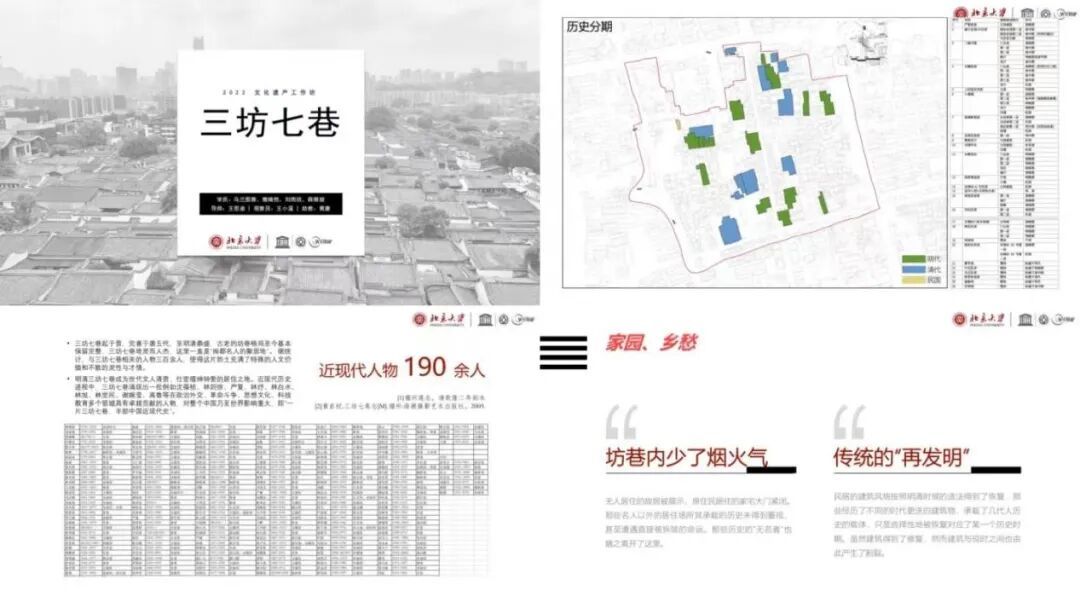
Image | Report on the findings of the Sanfang Qixiang (Three Lanes and Seven Alleys) group
The Sanfang Qixiang group analyzed and discussed two core issues: the current state of heritage protection and utilization, and the assessment of heritage value under the perspective of the dawn of modern enlightenment, through a comprehensive review of the historical and geographical evolution, site surveys/records of the current architectural status, oral history interviews with descendants of prominent families, and interviews with relevant stakeholders in protection and management. In particular, the comprehensive research and recording of important architectural structures and the in-depth interviews with relevant figures and family descendants provided a solid material foundation and documentary data for constructing the historical narrative.

Image | Group member Xue Yali presenting her report

Image | Group member Jiao Jingran presenting her report

Image | Teacher Wang Siyu reviewing the group's work
Yantaishan Group
Presenting Students: Wang Hantao, Xie Zhiang
Team Leader: Zhang Jianwei
Academic Teaching Assistant: Zhou Qiutong
Group Members: Wang Hantao, Jiang Qian, Liu Shuyao, Zeng Weian, Xie Zhiang

Image | Yantaishan Group's report
The Yantaishan Group presented its research findings in five parts: an overview of the current situation, important figures and families, heritage classification, current status and protection/utilization, and recommended heritage sites. The report first briefly introduced the distribution, functional classification, and development stages of the Yantaishan historical district, attempting to build a network of connections between buildings using personal relationships as a medium. The latter part, based on interview data collected during field visits and research from stakeholders of historical buildings, summarized the existing 5 types of property rights, 7 types of business operations, and 3 types of protection/utilization methods. It attempted to analyze the poorly protected unexploited residential buildings and proposed possible directions for protection and utilization. Finally, 39 recommended heritage sites were selected from 87 survey sites, and these sites were linked together based on value clues to form a heritage tourism route.

Image | Group member Wang Hantao's presentation

Image | Group member Xie Zhiang's presentation

Image | Teacher Zhang Jianwei's review of the group's work
Shangxiahang Group
Presenting Student: Yang Qianhui
Lead Teacher: Li Kuanghan
Academic Teaching Assistant: Wei Xi
Group Members: Yang Qianhui, Ding Zhongmin, Liu Zhaolong, Liu Wanhua

Image | Shangxiahang Group's report
The Shangxiahang group divided the historical and geographical evolution into four periods and three regions. Combining the relationships between local social figures, represented by the Ouyang family, they conducted a systematic survey and evaluation of all value carriers within the region, ultimately selecting 11 of the most representative cases under four architectural categories for in-depth research. They investigated the current state of the district's protection and utilization through interviews and questionnaires, and summarized existing problems from four aspects. Finally, a historical narrative was used to summarize, highlighting Shangxiahang's important position as a "hub" in Fuzhou's modern development, and the relevant drawings and reports were completed.

Image | Group member Yang Qianhui presenting at the event

Image | Teacher Li Kuanghan commenting on the group's work
Mawei-Guling Group
Presenting Student: Lu He
Team Leader: Guo Zijian
Academic Teaching Assistants: Shang Chenwen, Cao Jiyang
Group Members: Lu He, Li Qiang, Lu Tianyu, Sarah Brooker
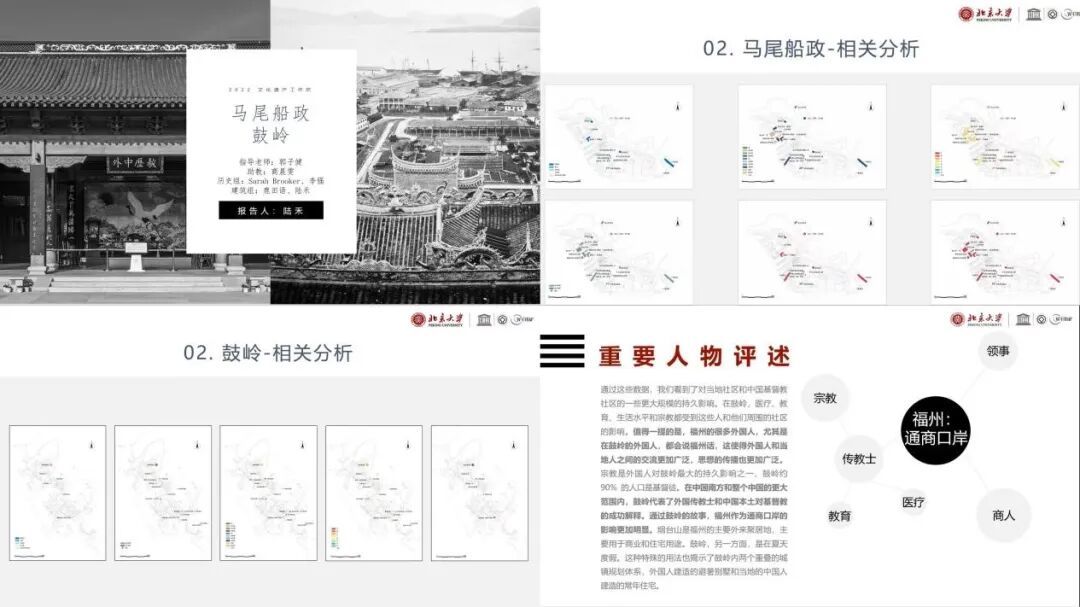
Image | Mawei-Guling Group's Results Presentation
The Mawei-Guling group presented their research methods, process, and results from five aspects: work summary, historical evolution, current characteristics, important figures, and preservation and utilization. Initially, they established a basic understanding of historical evolution and representative buildings through literature review. During a 10-day trip to Fuzhou, they conducted on-site research on the Fujian Shipbuilding Complex, Maxianshan Complex, and Guling Complex, identifying and selecting relevant recommended heritage sites through on-site visits and interviews. These sites were then connected through historical narratives and personal stories. Finally, the group collaboratively completed a research report, presenting the current status and value assessment of the investigated sites with clear and accurate analytical diagrams.

Image | Group member Lu He presenting at the event
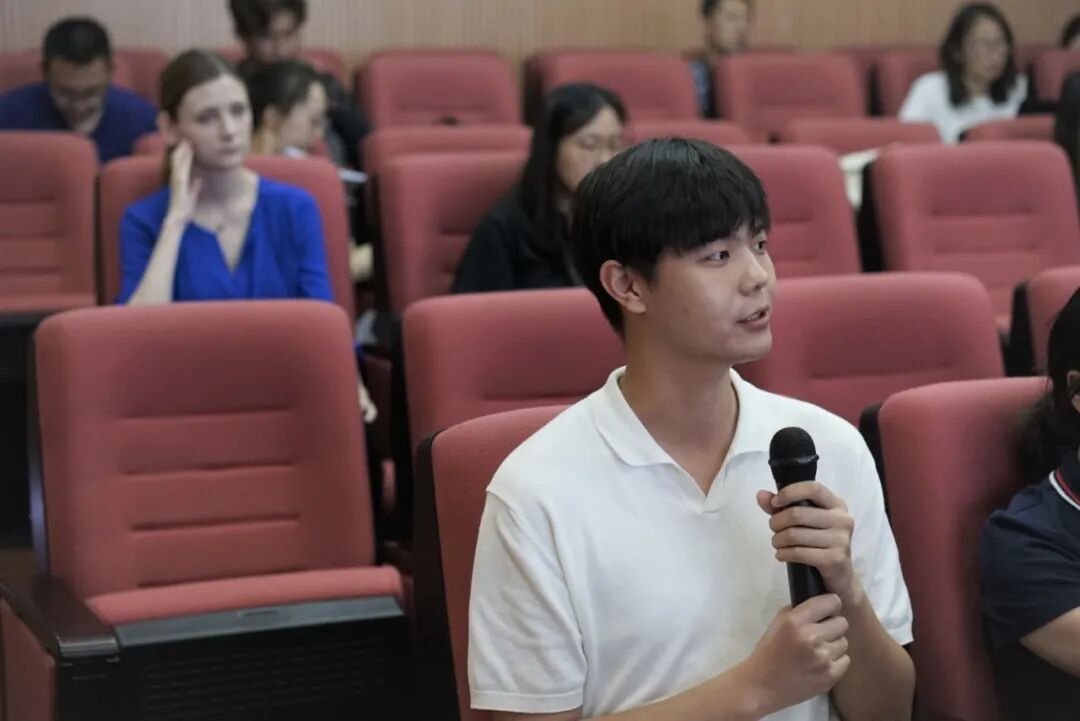
Image | Teacher Guo Zijian commenting on the group's work

Image | Teacher Shang Chenwen commenting on the group's work
· Centralized Review ·
Sun Jing, Associate Professor at the Quanzhou Cultural Heritage Research Institute of Quanzhou Normal University, first praised the workshop's working methods. She believed that the workshop members had done a great deal of work in researching the current state of the buildings and their preservation, demonstrating a solid foundation and providing detailed reports. She suggested that the Shangxiahang group further explore the central role of Shangxiahang in the historical narrative of Fuzhou.

Image | Teacher Sun Jing's comments
Zuo Lala, Associate Professor of Art History at NYU Shanghai, first gave an overall evaluation of each group's reports from three aspects: past, present, and future. Regarding the Yantaishan group, she suggested further exploration of the relationship between architectural style development, community, and churches, and also comparative studies with Tianjin, Shanghai, Xiamen, and other treaty ports.

Image | Comments by Professor Zuo Lala
Lin Zhisen, Vice Dean of the School of Architecture and Urban Planning at Fuzhou University, believes that the historical span of Sanfang Qixiang (Three Lanes and Seven Alleys) is wider than the other three groups, and the narrative of its value should not be limited to the modern era. At the same time, an important thread in Sanfang Qixiang—folk beliefs and community development—can also be discussed in depth.

Image | Comments by Professor Lin Zhisen
Shen Huiqing, Professor of the School of History at Hebei University, points out that narrative is both a right and a limitation of historical research. When conducting overall narrative research, some details may be overlooked. While the workshop's narrative logic was rich, further enrichment could be made from multiple perspectives, including folk beliefs in Guling and Yantaishan, settlement development, and the arrival of foreigners in China.
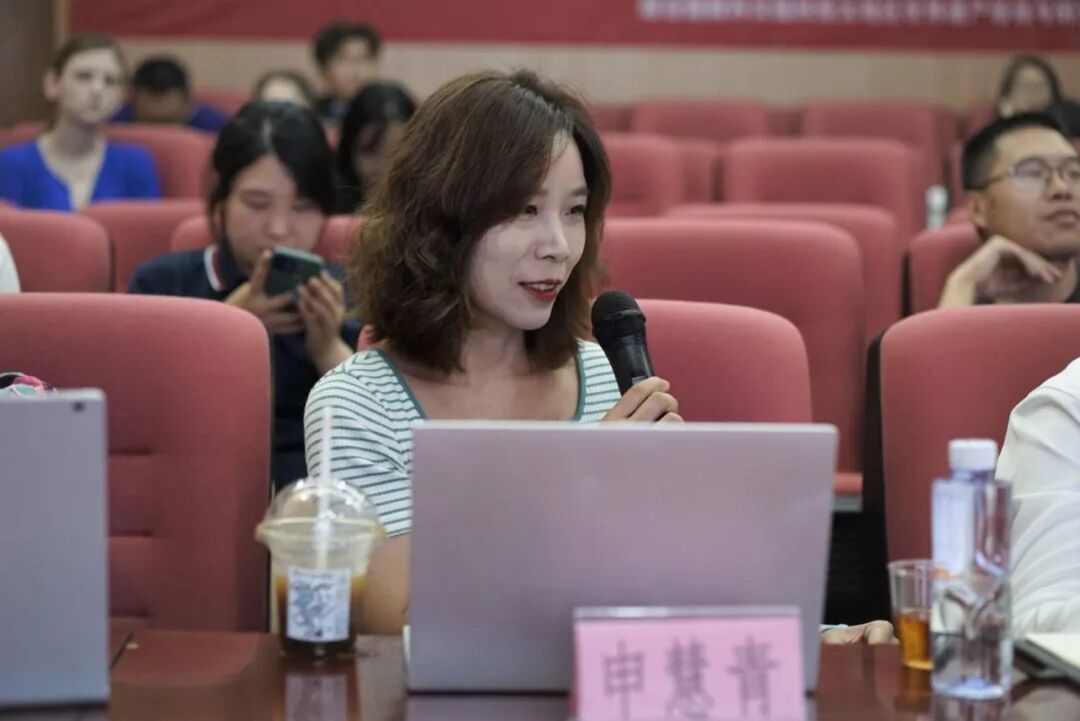
Image | Comments by Professor Shen Huiqing
Liu Jiangyuan, Director of the Fujian Shipbuilding Culture Management Committee, commented on the report from the Mawei-Guling group. He believes that sorting out the genealogy of shipbuilding figures is an important part of telling the story of the shipbuilding, and this is the core cohesive force of shipbuilding culture. The kinship relationships among the naval families scattered throughout the Three Lanes and Seven Alleys deserve attention and are an important part of the World Heritage application research.
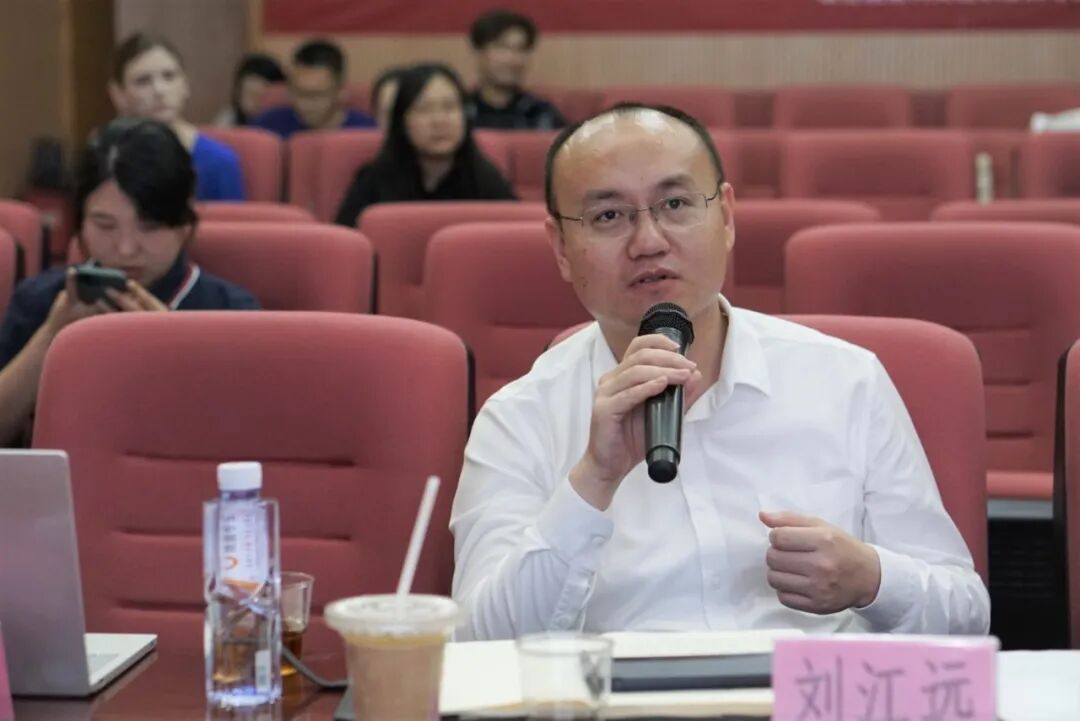
Image | Commentary by Director Liu Jiangyuan
· Overall Narrative Report ·
During the research, in addition to completing their own thematic research, the four workshop groups, under the guidance of the faculty, also conducted integrated research on the historical narrative of Fuzhou city. Representatives from the four groups reported on their research progress, analyzing the value carriers and narrative perspectives of each architectural complex from three aspects: ideology, social structure, and urban function.
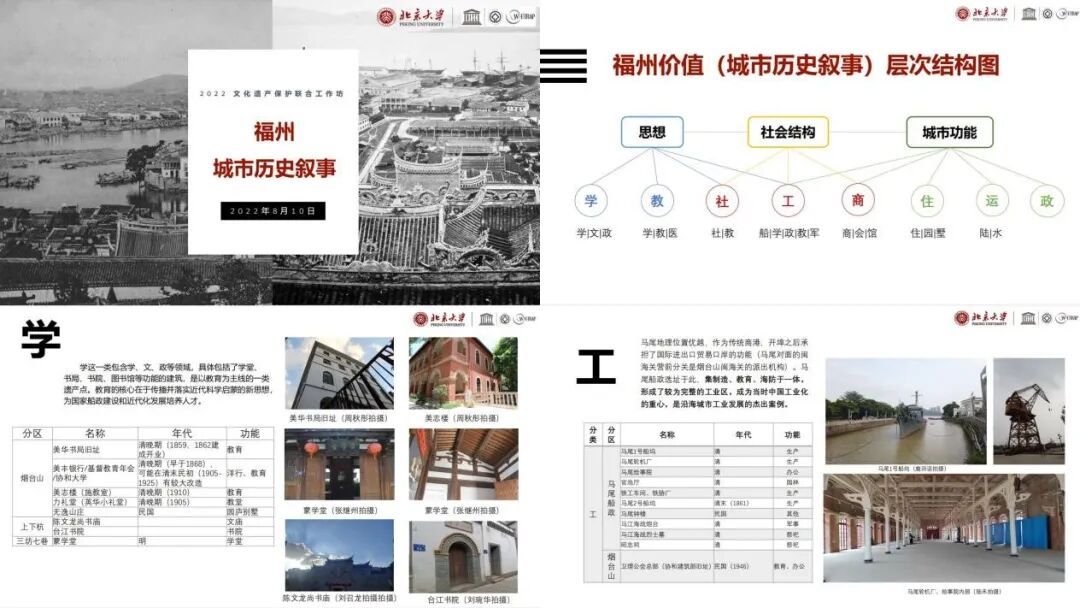
Image | Overall Narrative Report


Image | Collaborative Narrative Reports from Each Group
· Summary and Evaluation ·
Chen Yubiao, Director of the Museum and Cultural Relics Security Department of the Fuzhou Municipal Bureau of Cultural Relics, pointed out that the research conducted by each workshop group was very thorough, the reporting was clear, and each group did a great deal of work on the main research subjects. Director Chen expressed his anticipation for further work from the Peking University team.

Image | Director Chen Yubiao's Comments
He Jingping, Director of the Cultural Relics Protection and Archaeology Department of the Fujian Provincial Cultural Relics Bureau, gave the final comments, stating that the four workshop groups had prepared very thoroughly. In just ten days, they had clearly outlined the heritage carriers, heritage value, and heritage management, and their working ideas and methods were commendable. Regarding the Sanfang Qixiang group, Director He believed that their analysis of the figures and existing problems was accurate and worthy of attention. He pointed out that further improvements should be made based on these findings. Regarding the Shangxiahang group, Director He suggested that the commercial culture of Shangxiahang, as reflected in its architecture and the unique characteristics of its streets, could be further explored. Furthermore, the relationship between Fujian merchant culture and the connotations of Shangxiahang should not be overlooked in the study of Shangxiahang. Regarding the Yantaishan group, Director He believed that Yantaishan could continue to explore the relationship between building ownership, the international community, and architectural features. Regarding the Mawei-Guling group, Director He pointed out the significant value of the Fujian Shipbuilding Bureau and suggested further in-depth analysis of the lineage of figures and the value of its industrial heritage. Finally, Director He Jingping pointed out that Fuzhou's glorious moments in modern history have profoundly impacted China's development. If preliminary research is to be conducted for World Heritage application, attention should be paid to comparing with the standards of World Heritage to further refine the heritage's outstanding universal value.

Image | Director He Jingping's comments
·Successful Conclusion·
Finally, Li Qiang, a postgraduate student from the School of International Relations at Peking University, shared her research reflections on behalf of all participants. Drawing on her own academic experience, she shared the impact of this fieldwork, from initial doubts about whether students from different disciplines could truly collaborate to experiencing the energy of interdisciplinary collaborative research during the fieldwork. She felt that the workshop's lectures and the exchanges with teachers and classmates during the fieldwork helped her break through her limitations, and that the workshop trip was very rewarding.
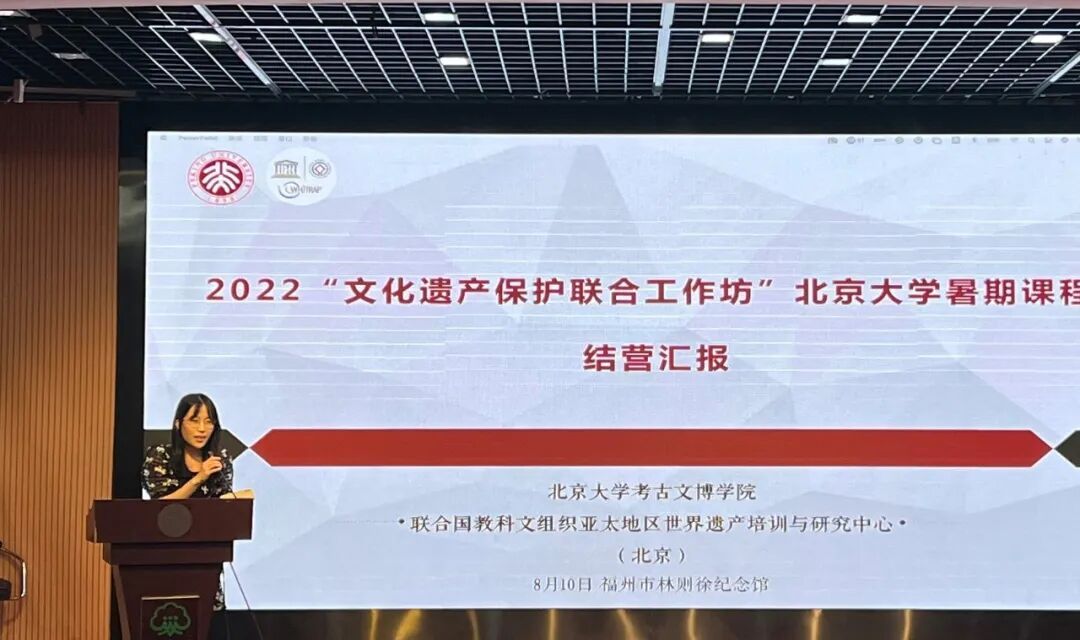
Image | Participant Representative Sharing Reflections
The ten-day Fuzhou workshop fieldwork has come to a close. During these ten days, students from all over the country and with different professional backgrounds gathered in Fuzhou, working together to dedicate their efforts to the blessed city, completing the workshop tasks while forging deep friendships. The significance of this joint workshop on cultural heritage preservation lies in understanding our cultural heritage from a multidisciplinary collaborative perspective, and in cultivating students' interdisciplinary thinking and teamwork skills. The organizers would like to express their sincere gratitude to all the supervising teachers, invited guests, teaching assistants, and leaders, staff, interviewees, and enthusiastic netizens from relevant departments in Fuzhou who provided assistance and support for the workshop!

Image | Group photo of workshop participants, organizing team, and judges
Special Thanks ·
Peking University Graduate School
Fuzhou Municipal Bureau of Cultural Relics
Fuzhou Lin Zexu Memorial Hall
(The following units and individuals are listed in no particular order)
Fuzhou Guling Tourist Resort Management Committee
(Fuzhou Gushan Scenic Area Management Committee)
Fujian Shipyard Culture Management Committee
Fuzhou Cangshan District Yantaishan Management Committee
Fuzhou Taijiang District Shangxiahang Historical and Cultural Block Management Committee
Fuzhou Historical and Cultural City Management Committee
Fuzhou Sanfang Qixiang Community, Nanjie Street, Gulou District, Fuzhou, Fujian Province
Fuzhou Ancient Houses Group
Fuzhou Sanfang Qixiang Protection, Development and Operation Co., Ltd.
Chengyin Guoxue Hall
Ms. Zheng Fang
Ms. Ouyang Fen, inheritor of Fuzhou Shengshun Tea Industry
Mr. Guo Qing, resident of Guling
Mr. Chen Yue, president of Mawei Shipyard Culture Research Association
Dr. Lin Yinan
Section Chief Jiang Yanglin of Yantaishan Management Committee, Cangshan District, Fuzhou
Pastor Chen Andi of Fuzhou Christian Tianan Church
Friends of Fuzhou Old Building Encyclopedia
Text and Photos: Park Lina, Cai Shiyu, Li Qiang, various workshop groups
Layout: Li Qiang, Park Lina
Reviewers: Li Kuanghan, Wang Siyu
Final Reviewers: Shen Ruiwen, Zhang Jianwei