On July 24, 2023, the 2023 Joint Workshop on Cultural Heritage Conservation Summer Course at Peking University kicked off at Diaocheng in Hechuan District, Chongqing. From July 25 to 27, the workshop was divided into four groups—Spatial Context, Archaeology, Community, and Tourism Management—which traveled to the research site to conduct field surveys, mapping, and interviews. This article documents the field survey process of each group.
· Spatial Context Group ·
Hechuan’s Diaocheng boasts distinctive natural geographical features and landscape characteristics. The primary task of the Spatial Context Group was to analyze Diaocheng’s natural environment and landscape features from various perspectives, clarify the topography and formation of Diaocheng Mountain, and identify key scenic spots within Diaocheng. Through this process, the group sought to identify commonalities in the site selection of facilities across different eras and functions within the Diaocheng area, ultimately outlining the characteristic of Diaocheng’s landscape that combines both “scenic beauty” and “strategic advantage.”
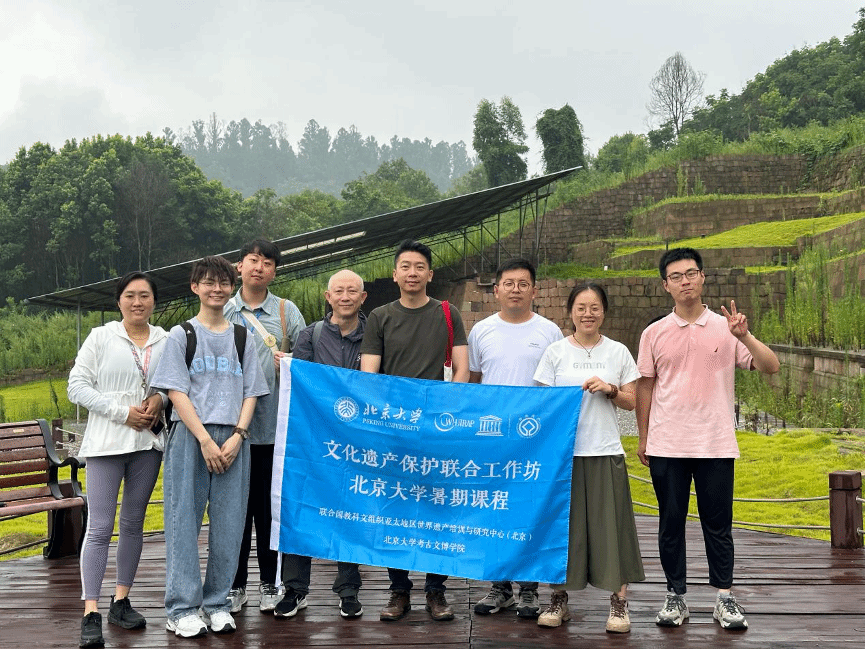
Photo | The Spatial Foundation Group posing at the Fanjiayan Site
On July 25, our group conducted a joint field survey with the “Archaeology Group.” In the morning, led by Professors Zhang Jianwei, Wu Honglin, and Wang Yifei, we first took a bus to Qisheng Gate, then walked past the Fishing City Government Office Site before arriving at the “Fishing City Major Site Archaeology and Conservation Workstation,” where we met Professor Hu Limin, head of the Fishing City Archaeological Team. Professor Hu led us on a three-hour in-depth and meticulous field survey at the Fanjiayan Site, providing a detailed explanation of the work details and potential issues encountered during the conservation and excavation of Fanjiayan. This included the overall structure of the Song Dynasty tombs at Fanjiayan, hypotheses regarding their excavation, the layering of later-period strata, as well as unresolved questions and uncertainties. During the tour, Professor Zhang Jianwei guided the group in summarizing the narrative threads of Professor Hu’s explanation through an exploratory approach, focusing on five key aspects:
1. Macro-historical context;
2. Mountain administrative offices and drainage systems;
3. Functions, institutional frameworks, axial alignment, and inferred research findings;
4. How archaeologists discovered and interpreted these sites;
5. Contemporary residents’ perspectives on the Fanjiayan Site.
In the afternoon, our group members conducted a field survey of the Wang Jian Commemorative Stele and its inscriptions, as well as the San Sheng Rock, Jindai Pavilion, Qianfo Cliff, cliff-face inscriptions, and the Suspended Reclining Buddha, providing insights and firsthand data for future mapping efforts.

Photo | Professor Hu Limin explaining the archaeological findings at the Fanjiayan Site

Photo | Professor Wu Honglin introducing the geology, topography, and rock distribution within the Fishing City

Photo | Group members discussing the Wang Jian Commemorative Stele and the Thousand-Handed Guanyin cliff carving with Professor Zhang Jianwei

Photo | Cross-disciplinary discussion between the Spatial Context Group and the Archaeology Group
On the afternoon of July 26, led by Professor Li Dihua, our group revisited the Jiukouguo Site, Huguo Temple, and the Temple of Loyalty and Righteousness. Drawing on his expertise in ecological landscapes and cultural heritage, Professor Li Dihua offered us fresh perspectives and insights.

Photo | Professor Li Dihua leading the group on a field survey

Photo | Professor Li Dihua discussing with group members in front of the Jiukouguo Site
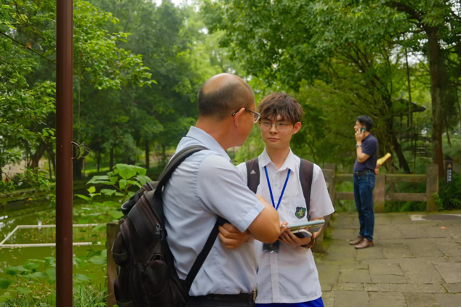
Photo | Group members consulting Professor Li Dihua on challenges in the next phase of work
Through two days of fieldwork, we gained a preliminary understanding of the natural environment and topography of Diaocheng. By integrating the current distribution of archaeological remains with historical development, we conducted a spatiotemporal analysis of the site. In the next phase, we will create maps based on the mid-term research findings to conduct a more in-depth analysis of Diaocheng’s landscape, which uniquely combines both “scenic beauty” and “strategic advantage.”
·Archaeology Group ·
During the Song-Yuan War, Yuyang City, relying on its integrated defensive system of “mountains, water, and fortifications,” not only halted the southward advance of Mongke Khan’s cavalry but also indirectly influenced the course of the Mongol Empire’s military campaigns across the globe. Since the 21st century, the Chongqing Institute of Cultural Relics and Archaeology has conducted continuous archaeological work at the Fishing City site, achieving significant results and gradually unveiling the mysteries of Fishing City. Based on this, members of the Archaeology Group will comprehensively organize existing archaeological data, identify the various types of value inherent in Fishing City, and thereby construct a value assessment system for the site.

Photo | Group photo of the Archaeology Group
On the morning of July 25, led by Professors Zhang Jianwei and Wang Yifei, the Archaeology Group conducted a field survey of the Fanjiayan archaeological site in Diaocheng. The previous evening, group members had already formed a preliminary understanding of Fanjiayan by carefully reviewing the archaeological excavation report. Following the on-site visit and a briefing by excavation director Hu Limin, we gained a deeper understanding of the site’s location, architectural layout, drainage system, and road network. In the afternoon, the Archaeology Group and the Spatial Base Group jointly conducted surveys of sites within Diaocheng, including the Bodaoling site.

Photo | The Archaeology Team conducts a field survey at the Fanjiayan Site

Photo | Taking in the magnificent natural scenery of Diaocheng from Bodaoling
On the afternoon of the 26th, the Archaeology Team and the Spatial Baseline Team conducted a joint field survey of Huguo Temple, the Temple of Loyalty and Righteousness, and the Jiukouguo Site in Diaocheng. Team members carefully studied photographs and textual descriptions related to the Song-Mongol War, tracing the historical trajectory of Diaocheng through the rise and fall of the fortress and the intermingling of ethnic groups. Amid the shade of massive banyan trees and the solemn atmosphere, they learned about significant historical figures and their deeds. These efforts have laid a crucial foundation for the team’s subsequent research on the site’s historical value.

Photo | Exhibits inside the Temple of Loyalty and Righteousness

Photo | Surveying the Jiukouguo Site
After several days of fieldwork, the Archaeology Team has become thoroughly familiar with the archaeological data and conditions at Diaoyucheng. Moving forward, we will continue to deepen our understanding of the site’s value and clarify the value elements embodied by each archaeological site, thereby providing a solid foundation for subsequent conservation, interpretation, and exhibition efforts. We will also actively collaborate with other teams to provide mutual support through the exchange of necessary materials.
·Community Group·
This group’s research focuses on the people closely connected to Diaocheng, conducting field investigations into villagers’ experiences—including transportation, livelihoods, and religious practices—as well as changes within the community. By situating our research within the temporal and spatial context of local life, we aim to paint a vivid picture of the lives of people connected to Diaoyucheng. Building on this foundation, we will explore ways to incorporate villagers’ memories into the heritage presentation system of Diaoyucheng. Additionally, through interviews, we will gather villagers’ perspectives on the current state of Diaoyucheng and seek pathways for community participation in the conservation, utilization, and management of its heritage.

Photo | The Community Group poses for a group photo at the entrance to the Diaocheng Scenic Area
July 25 and 26 marked the intensive fieldwork phase for the Community Group. The work was divided into two main parts: first, establishing the spatiotemporal coordinates of Diaocheng and the surrounding villages; second, conducting interviews with villagers from Yucheng Village and Fo’er Village.
On the morning of July 25, Professors Wang Siyu and Sun Jing led the Community Group students to the Fanjiayan Archaeological Site workstation. With the assistance of Hu Limin, the on-site supervisor at the Yucheng Archaeological Site, the group conducted interviews with six villagers from Yucheng Village who were working at the archaeological site. In the afternoon, the teachers and students went to the Yucheng Village Committee to interview Secretary Xie, Grandfather Shuai Zhaoquan, and Grandfather Yang Changming. After the interviews, with the assistance of staff from the Yucheng Village Committee, the group visited sites frequently mentioned by the villagers, such as Shizishan and Naodingping.

Photo | The Community Group poses for a photo with interviewed villagers at the Yucheng Village Committee

Photo | Exploring Yucheng Village
On the morning of July 26, the group went to the Diyucheng Community Residents’ Committee to interview former residents who had been relocated from within the Diyucheng city walls. In the afternoon, the team visited Foei Village, adjacent to Yucheng Village, to interview its residents. After the interviews, with the assistance of Secretary Yang of Foei Village, the team conducted on-site visits to cultural heritage sites such as the alleys of Dongdu Old Street and the Octagonal Pavilion. Walking along the bluestone path of Dongdu Old Street, Grandfathers Guo Zhi’an and Wu Cunhai described to the students the once-bustling scenes of this street leading to Dongdu Port. At the Ganquan Cave within the Ganquan Daoyuan, teachers and students could faintly glimpse the ethereal beauty of the “Ganquan Lingru” (Divine Milk of Ganquan), once one of the Eight Scenic Views of Hechuan. After two days of intensive fieldwork, the team members gained a clearer understanding of the daily life in the villages surrounding Yucheng.

Photo | Visiting the Yucheng Community

Photo | Interview with Foe Village residents
On July 28, the community group split into two teams in the rain. Led by Professor Wang Siyu, two students accompanied Grandfather Liu Daoyou (former captain of the Second Squad, Seventh Brigade of the Dongdu Commune) to visit various heritage sites within the Fishing City scenic area. Starting from the Fanjiayan Archaeological Site, they conducted a survey along the route: West Town Gate – Huguo Temple – Zhongyi Shrine – Jiukouguo – Wang Jian Commemorative Stele – Inscriptions – Reclining Buddha - the Fishing Platform - Huguo Gate - and Shiguan Gate. Another small team, led by Teacher Sun Jing, visited other cultural heritage sites on the Dongdu Peninsula, including the Small White Pagoda, the Ancient Bridge at Xiahegou, the Ancient Well at Longdongwan, and the stone millstone at the Ai Family Compound in Qukou Village. They then proceeded to the sugar factory and wharf at Ganjiaba, where they gained a firsthand understanding of the geographical relationship between the Dongdu Peninsula and Dongjintu from the banks of the Jialing River. The students gained a more comprehensive understanding of the transportation links, economic and social interactions, and village relationships between the other villages on the Dongdu Peninsula and Diaoyucheng.

Photo | The Thousand-Armed Guanyin at the Diaocheng Scenic Area

Photo | Exploring the ancient well at Longdongwan
·Tourism Management Group ·
Hechuan Diaocheng is a National 4A-level tourist attraction and one of the second batch of National Archaeological Site Parks. The site boasts rich natural and cultural resources and demonstrates significant potential for tourism development. From the perspective of heritage conservation and sustainable utilization, the Tourism Management Group aims to identify existing issues in the tourism development of the Diaocheng Site, re-examine and refine its interpretive approaches and exhibition systems, clarify the functions of management agencies, and provide effective recommendations for Diaocheng’s bid to become a 5A-level scenic area and its application for World Heritage status.


Photo | Group photo of the Tourism Management Team
On the morning of July 25, the entire team, led by Professors Li Kuanghan and Park Lina, traveled to the Fishing City site to conduct a field survey. The team members disembarked at the visitor service center at the foot of the mountain. They first conducted brief interviews with staff at the information center, souvenir shops, and ticket office to gain a general understanding of the scenic area and its visitors. They then followed the recommended route outlined in the brochure, hiking up the mountain to experience the Diaoyucheng Scenic Area from a visitor’s perspective. During the tour, team members meticulously recorded information such as where other visitors stopped and how long they lingered, and marked the locations of infrastructure such as restrooms and rest areas on a map. The morning’s survey covered virtually all exhibition points within the Fishing City scenic area; for each point, the instructors and students conducted on-site evaluations and documented both the display effectiveness and any existing issues.


Photo | Group members conducting interviews at the visitor center
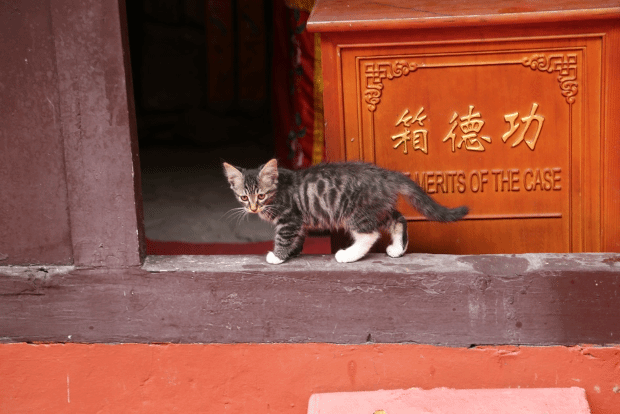
Photo | Visiting Feilai Temple

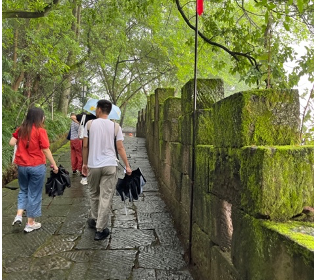
Photo | The Tourism Management Group conducting a collective survey
In the afternoon, the group members hiked to the Fanjiayan Site for field research. Fanjiayan is located far from the main exhibition area of the Fishing City Ruins and is not directly connected by sightseeing buses, making transportation quite inconvenient. Following the completion of archaeological work, the site underwent protective backfilling. The surface was re-paved with gravel, and necessary signage was installed for display purposes. The instructor engaged in an in-depth discussion with the students regarding the site’s conservation measures, display effectiveness, visitor experience, and appeal to tourists. While acknowledging the solid foundational work completed at Fanjiayan in terms of site conservation and tourism presentation, the instructor also pointed out that there remains a significant gap between it and more established tourist destinations.

Photo | Zhou Zijie discussing the Fanjiayan Site with Professor Li Kuanghan
On the morning of July 26, Zhou Zijie, Jin Qiu, and Li Chaoying conducted literature reviews and assessed the current status of other tourism resources in the region, the tourism routes of Diaocheng, and its exhibition systems. Under the guidance of Professors Li Kuanghan and Park Lina, Zhang Wending and Fu Yuxin conducted interviews with Fu Zhaonan, Director of the Chongqing Hechuan District Diaocheng Site World Cultural Heritage Nomination Affairs Center, and Zhou Fuxue, Deputy Director of the Chongqing Hechuan District Culture and Tourism Development Committee. The students asked questions regarding the functional objectives, specific tasks, and challenges faced by these institutions, gaining a comprehensive understanding of the organizational structure related to the tourism development of Diaocheng.
In the afternoon, Zhou Zijie, Jin Qiu, and Li Chaoying conducted supplementary surveys along the inner section of the East City Wall, focusing on defensive relics from the Song-Mongol War period, such as Huangdong, the artillery battery, and Dongxin Gate. The area along the city wall possesses significant military-historical and natural landscape value, but remains largely unvisited due to its distance from the central tourist zone. The students suggested that new tourism routes could be developed in this area in the future. Meanwhile, Li Kuanghan, Professor Park Lina, Zhang Wending, and Fu Yuxin conducted an interview with Director Yang Jianchun of the Diaocheng Scenic Area Management Center in Hechuan District, Chongqing. Director Yang addressed issues such as exhibition displays that the students had raised during their research and provided a detailed introduction to the basic operations and daily affairs of the scenic area.

Photo | Overview of Dongxin Gate

Photo | Exploring the City Wall

Photo | Interview with Professor Yuan Dongshan
On July 27, Zhang Wending and Fu Yuxin, accompanied by Professors Li Kuanghan and Park Lina, conducted an interview with Zhang Manxue, Deputy General Manager of Chongqing Shengdi Diaocheng Cultural Tourism Development Co., Ltd. Following the interview, this group’s research work has temporarily concluded. In the next phase, we will explore the protection, development, and sustainable utilization of the Diaocheng Ruins through aspects such as current status analysis, policy recommendations, thematic interpretation, and tour product development.
On the afternoon of July 27, members of each group delivered mid-term reports. Professor Li Kuanghan, serving as the moderator, summarized and acknowledged the research achievements of the students over the past few days. After members of each group spoke in turn, Professors Li Dihua, Yuan Dongshan, Wu Honglin, Wang Siyu, Hu Limin, Sun Jing, Wang Yifei, Cao Jiyang, Park Lina, Zhang Jianwei, and Li Kuanghan provided supplementary comments and evaluations on the reports from the four groups.
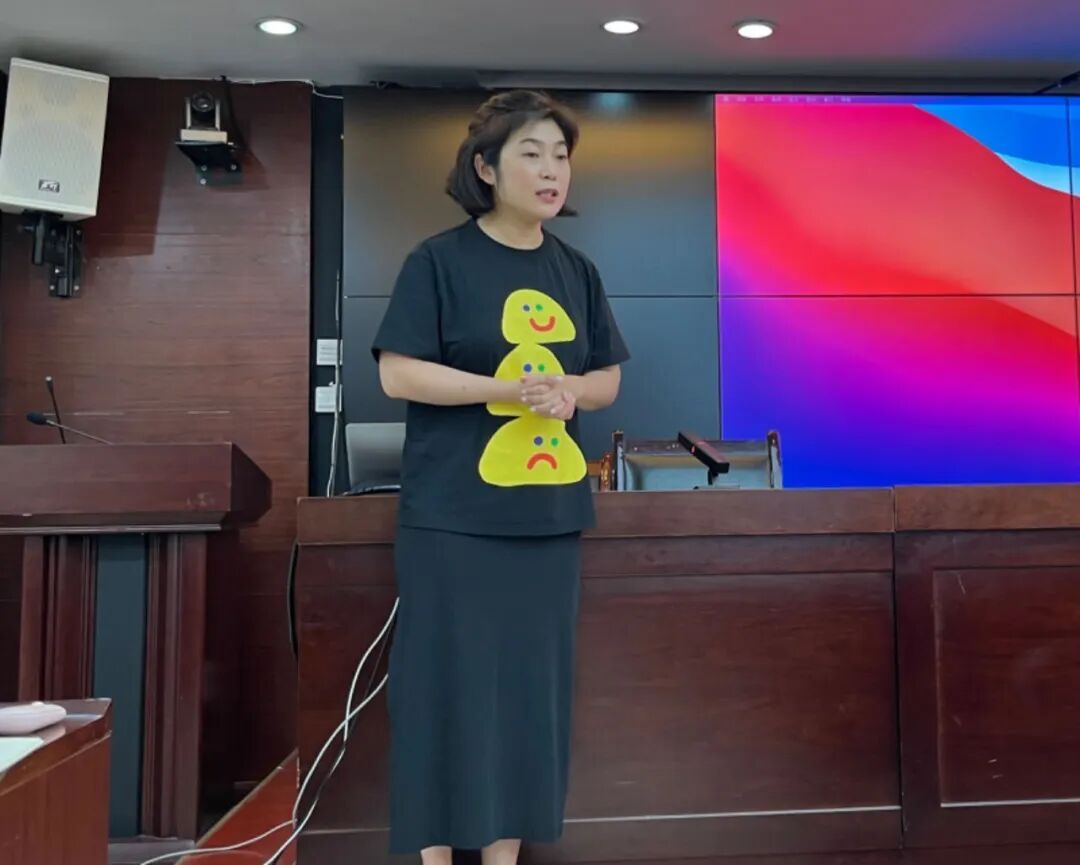
Photo | Professor Li Kuanghan presiding over the mid-term progress report meeting
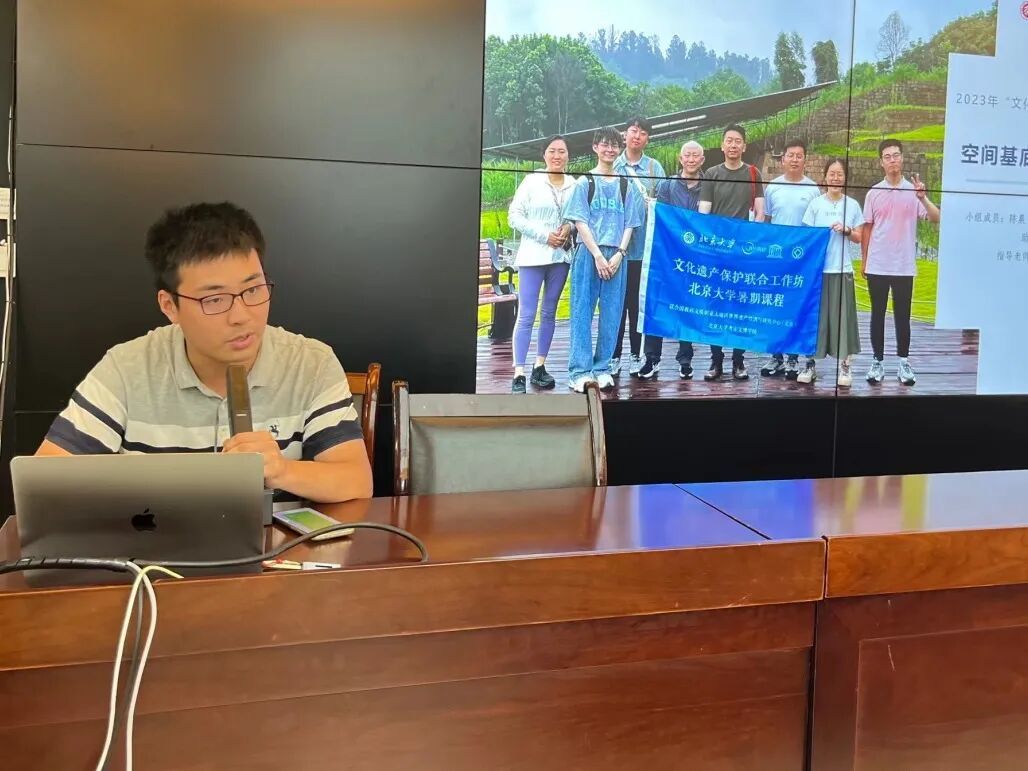


Photo | Representatives from each group delivering mid-term progress reports
Regarding the Spatial Context Group, Professor Li Dihua suggested considering the relationship between heritage and its surrounding environment within a broader context, such as the Southwest Ancient Road System, and analyzing this relationship from historical, spatial, and visual perspectives; Professor Wu Honglin further emphasized the importance of understanding the concepts of “scenic beauty” and “geographical advantage.” For the Archaeology Group, Professor Li Dihua pointed out that they should adhere to the principle of upholding tradition while innovating, first clarifying the connotations of the existing value evaluation system and then attempting to develop new concepts based on it; Professor Wang Siyu noted the need for a more detailed elaboration of the evaluation system, clearly explaining why specific indicators were selected. For the Community Group, Professor Li Dihua suggested further exploring the meaning of “community,” identifying and defining its boundaries, thereby ensuring that heritage conservation benefits the community; Professor Hu Limin noted that the group’s focus on local place names was highly valuable and suggested they could conduct micro-level spatial research on the Yuyang City site. For the Tourism Management Group, Professor Wu Honglin emphasized the need to pay attention to the hierarchical positioning of Yuyang City as an “archaeological site—national scenic area—tourism development zone”; Professor Sun Jing suggested drawing on “lessons from others” by comparing the experiences of other provinces in tourism management and top-level design.


Photo | Faculty Advisors Providing Feedback
Professor Yuan Dongshan offered highly specific recommendations regarding the students’ reports, such as conducting new folklore surveys and clarifying information across the two dimensions of the memory system and the documentary record system. Professor Yuan hopes the students can assist local governments in streamlining administrative structures and provide recommendations and plans that are truly implementable. Professor Zhang Jianwei summarized the feedback, noting that conservation and sustainable use should serve as the central themes running through the entire survey. Finally, Professor Li Kuanghan elaborated on the requirements for “cross-group collaboration,” further facilitating communication and cooperation among the students.
Text: Contributed by various working groups
Editors: Li Chaoying, Zheng Zhaoki
Reviewers: Li Kuanghan, Wang Siyu
Final Reviewers: Shen Ruiwen, Zhang Jianwei