On July 24, 2023, the 2023 Joint Workshop on Cultural Heritage Conservation: Peking University Summer Course commenced in Diaoyucheng, Hechuan District, Chongqing. The workshop was jointly organized by the UNESCO Asia-Pacific World Heritage Training and Research Centre (Beijing), the School of Archaeology and Museology at Peking University, and the Center for Public Archaeology and Art at Peking University. This workshop received strong support from the Chongqing Association for the Protection of Historic Sites and the Chongqing Hechuan District Diaocheng Scenic Area Management Center.

2023 Joint Workshop on Cultural Heritage Conservation Poster
The opening ceremony was held at 9:00 a.m. at the Diaoyucheng Scenic Area in Hechuan District, Chongqing. Attendees included Yuan Xiaoqin, Deputy District Head of Hechuan District, Chongqing; Yuan Dongshan, Vice President of the Chongqing Institute of Cultural Relics and Archaeology and President of the Chongqing Association for the Protection of Historic Sites and Monuments; Yang Jianchun, Director of the Chongqing Hechuan District Diaocheng Scenic Area Management Center; Fu Zhaonan, Director of the Chongqing Hechuan District Diaoyucheng Site World Cultural Heritage Nomination Center; and Hu Limin, Curator at the Chongqing Institute of Cultural Relics and Archaeology.

Group Photo from the Opening Ceremony
The opening ceremony was presided over by Dr. Li Kuanghan, Assistant Director of the UNESCO World Heritage Training and Research Centre for the Asia-Pacific Region (WHITRAP-Beijing).

Li Guanghan presiding
Zhang Jianwei, Vice Dean of the School of Archaeology and Museology at Peking University and Executive Deputy Director of WHITRAP-Beijing, first extended a warm welcome to all participants and expressed gratitude for the strong support provided by the Chongqing Association for the Protection of Historic Sites and the Hechuan District Diaoyucheng Scenic Area Management Center. The Joint Workshop on Cultural Heritage Conservation is a flagship program of the WHITRAP-Beijing Center. This marks the sixth iteration of the workshop, with 28 faculty members and students from 17 universities worldwide participating in person. Zhang Jianwei outlined the workshop’s background, objectives, participant composition, and teaching model, as well as the achievements and impact of previous workshops. He expressed hope that this workshop would contribute to the conservation and development of the Diaoyucheng Site.

Zhang Jianwei’s Remarks
Yang Jianchun, Director of the Diaoyucheng Scenic Area Affairs Center in Hechuan District, Chongqing, expressed his support for and anticipation of the workshop, hoping that the participants would offer valuable insights for clarifying the historical context of Diaoyucheng and advancing its World Heritage nomination efforts. Fu Zhaonan, Director of the Chongqing Hechuan District Diaoyucheng Site World Cultural Heritage Nomination Affairs Center, outlined the progress made in the protection and World Heritage nomination efforts for Diaoyucheng. He looked forward to collaborating with faculty and students to explore feasible strategies for the site’s conservation, presentation, and research.
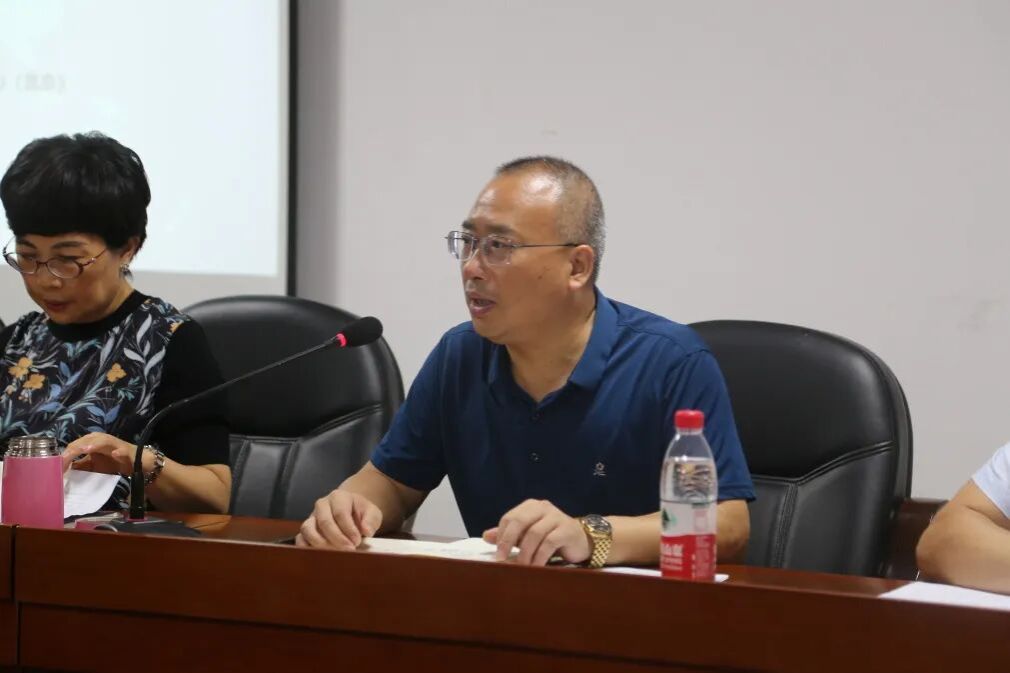
Remarks by Yang Jianchun

Remarks by Fu Zhaonan
Yuan Dongshan, Vice President of the Chongqing Institute of Cultural Relics and Archaeology and President of the Chongqing Association for the Protection of Historic Sites and Monuments, based his remarks on the current state of research on Diaoyucheng and the “Mountain City.” He urged participants to approach their work from two perspectives: a holistic analysis of spatial patterns and the integrated understanding of historical data. He expressed hope that the findings from this survey would serve as a crucial foundation for future work, enabling Diaoyucheng to contribute to the study of cultural heritage in China and around the world.

Remarks by Yuan Dongshan
Yuan Xiaoqin, Deputy District Head of Hechuan District, Chongqing, first expressed gratitude to the faculty and students for their participation and strongly affirmed the significance and value of the workshop for local development. Yuan Xiaoqin noted that Hechuan District is situated at the confluence of three rivers in northwestern Chongqing, boasting convenient transportation infrastructure and abundant cultural and educational resources. It serves not only as a major industrial hub and densely populated district within Chongqing but also as a pivotal area in the development of the Chengdu-Chongqing metropolitan region. As a key cultural and tourism resource in the district, the Diaoyucheng Site currently faces numerous challenges in its World Heritage nomination process. Yuan Xiaoqin believes that this workshop will provide new opportunities for refining the heritage value of Diaoyucheng, as well as for the protection and presentation of the site. Finally, Deputy District Head Yuan Xiaoqin expressed his best wishes for the workshop’s complete success.

Remarks by Yuan Xiaoqin
Following the opening ceremony, Yuan Dongshan, Deputy Director of the Chongqing Institute of Cultural Relics and Archaeology and President of the Chongqing Association for the Protection of Historic Sites, led the workshop participants to the Diaoyucheng site for a field survey. The participants visited two key sites—the Imperial Palace and the Military Administration Office—as well as the Nine Cauldrons site, gaining firsthand insight into the ingenious design of the mountain city and the comprehensiveness of its internal facilities. Yuan Dongshan noted that the archaeology of Diaoyucheng is still in its early stages, and only by adopting a holistic spatial perspective can one achieve a more accurate understanding of the existing site.

Yuan Dongshan leads workshop participants in a field survey
This workshop was divided into four groups: the Archaeology Group, the Spatial Context Group, the Community Group, and the Tourism Management Group. Following the completion of the first phase of online courses, the teaching assistants assigned a literature review task. After a week of preparation, on the afternoon of July 24, the students presented their findings in group reports.
On behalf of the Spatial Base Group, student Sun Yangyang introduced the geographical context of the Dujiang City site from three perspectives: the Southern Song Dynasty’s Sichuan-Chongqing defense system, an analysis of Dujiang City’s spatial base, and research intentions regarding Dujiang City’s spatial characteristics. Students Ran Longhao and Yuan Qidake, representing the Archaeology Group and the Community Group respectively, summarized the archaeological work and community research on the Dujiang City site from angles including historical background, archaeological overview, heritage value, and exhibition planning. Zhou Zijie, representing the Tourism Management Group, reported on the development policies, comparative value, conservation and display, and visitor needs of the Dujiang City site from both supply and demand perspectives.


Presentations by Sun Yangyang, Ran Longhao, Yuan Qidake, and Zhou Zijie
Following the presentations, the faculty members fully affirmed the students’ achievements in their literature review. Wu Honglin reminded students to emphasize the practicality of their proposals, to consider feasible strategies for heritage revitalization, and to convey core messages in a manner that adheres to local regulations and aligns with visitors’ perspectives. Sun Jing highlighted key issues such as the conflict between nomadic and agrarian civilizations, folk customs and intangible landscapes, and the interplay between history and modernity. She encouraged students to approach their research scope from a holistic perspective and to design their investigation plans with practical implementation as the standard. Wang Siyu encouraged students to reflect on the perspectives through which heritage value is perceived, emphasizing the tension between internal and external viewpoints. Hu Limin drew on her personal experience to discuss the differences between archaeological work and World Heritage nomination efforts, reminding students to verify the authenticity of early documents when using them. Li Guanghan commended each group’s grasp of their key tasks, while noting that during value analysis, they should prioritize authentic on-site experiences rather than rigidly applying existing standards. Zhang Jianwei encouraged students to maintain a clear sense of inquiry throughout the survey process, drawing on their existing knowledge to attentively discover and perceive information.

Faculty Comments
Written by: Li Chaoying
Edited by: Li Chaoying, Park Lina
Reviewed by: Li Kuanghan, Wang Siyu
Final Review: Shen Ruiwen, Zhang Jianwei