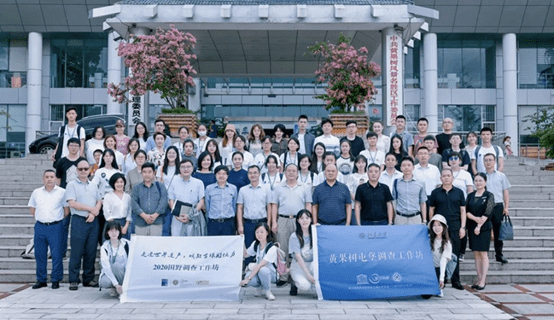
Jointly organized by WHITR-AP Beijing, the School of Archaeology and Museology, and the School of Architecture and Landscape Architecture at Peking University, with support from the Anshun City World Heritage Nomination Office, Anshun University, and the Institute of History of Science and Cultural Heritage at the University of Science and Technology Beijing, and generously funded by the Tianhe Public Welfare Foundation, the “2020 Huangguoshu Tunpu Survey and Joint Workshop on Cultural Heritage Conservation” was held from July 31 to August 20, 2020.
Employing interdisciplinary and integrated methodologies, the workshop investigated and researched the basic conditions of cultural heritage in the Huangguoshu region, providing solid and reliable foundational data to advance the conservation, utilization, and World Heritage nomination efforts for the Huangguoshu Tunpu landscape. Spanning three weeks, the workshop brought together over ten experts and scholars from diverse professional backgrounds, 26 students from Peking University and Harvard University, and teenagers from an ecological education team organized by the Tianhe Public Welfare Foundation. The workshop was divided into five groups—Tunpu, Buyi Villages, Miao Cave Burials, Ancient Trails, and Cultural Relics and Historic Sites—to conduct field surveys and architectural inspections.
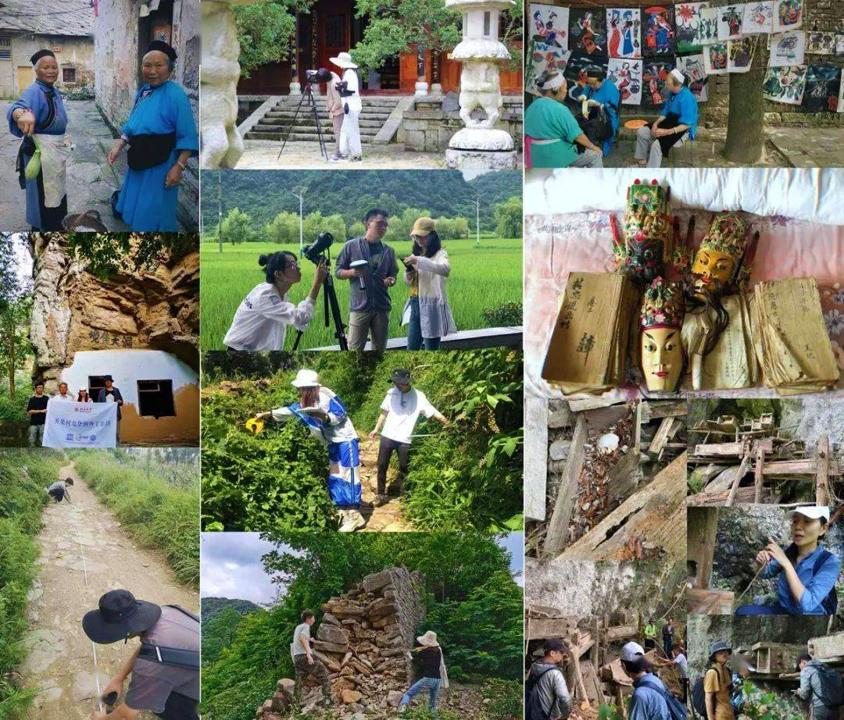
The Tunpu group conducted on-site research at 13 Tunpu settlements, carrying out a general survey of the Tunpu through methods such as recording waypoints, interviews, and 3D laser scanning, and performed a preliminary assessment of the current status of the surveyed Tunpu.
The Miao Cave Burial group selected the most representative Miao villages and cave burial sites along the Gedu River as field survey sites, exploring the cultural heritage value of these Miao villages and cave burial sites within Anshun City.
The Ancient Roads Group employed a combined approach of field surveys, on-site interviews, and documentary research to investigate ancient transportation routes in the Huangguoshu area, achieving a comprehensive understanding and preliminary assessment of the Yunnan-Guizhou Ancient Road within Anshun.
The Cultural Relics and Historic Sites Group surveyed and documented a total of 19 immovable cultural heritage sites. Through technical methods such as photogrammetry and panoramic photography, they created digital scale models of the heritage sites, enabling the survey results to be understood more intuitively and the value of the heritage sites to be communicated more effectively.
【Opening】(←Click to view details)
【Closing】(←Click to view details)