On July 24, 2024, the 2024 Joint Workshop on Cultural Heritage Conservation: Peking University Summer Course commenced in Lanzhou, Gansu Province. The workshop was jointly organized by the UNESCO Asia-Pacific World Heritage Training and Research Centre (Beijing), the School of Archaeology and Museology at Peking University, and the Center for Public Archaeology and Art at Peking University. This workshop will examine the basic conditions of cultural resources and the cultural and creative industries across seven regions in Gansu Province. Based on the “Cities, Culture, and Creativity” (CCC) framework jointly developed by UNESCO and the World Bank, it aims to provide foundational research for formulating policy guidelines for Gansu’s cultural and creative industries, while also proposing new ideas and action plans. The workshop received strong support from the Gansu Provincial Department of Culture and Tourism and Peking University’s Graduate School “Graduate Innovation Program.”

2024 Joint Workshop on Cultural Heritage Conservation Poster
Past Joint Workshops on Cultural Heritage Conservation: Peking University Summer Courses
The opening ceremony was held at the Gansu Provincial Department of Culture and Tourism. Attendees included Yan Yongqiang, Member of the Party Leadership Group and Deputy Director-General of the Gansu Provincial Department of Culture and Tourism; Zhang Shuyong, Director of the Finance Division and Director of the World Bank Project Office; Liu Donghui, Deputy Director of the Finance Division and Deputy Director of the World Bank Project Office; and other relevant members of the World Bank Project Office. Dr. Yang Bixing, Cultural Program Officer at the UNESCO East Asia Multisectoral Regional Office; Li Hangying and Guo Juan, Cultural Program Assistants; Shen Ruiwen, Dean of the School of Archaeology and Museology at Peking University and Director of the World Heritage Institute of Training and Research for the Asia and the Pacific Region Under the Auspices of UNESCO (Beijing), hereinafter referred to as WHITR-AP Beijing; and Zhang Jianwei, Tenured Associate Professor at the School of Archaeology and Museology, Peking University, and Executive Deputy Director of WHITR-AP Beijing, attended the ceremony online.
The opening ceremony was co-chaired by Yan Yongqiang, Member of the Party Leadership Group and Deputy Director-General of the Gansu Provincial Department of Culture and Tourism, and Dr. Li Kuanghan, Assistant Director of the UNESCO World Heritage Training and Research Centre for the Asia-Pacific Region (WHITR-AP Beijing).

Opening Ceremony
Deputy Director-General Yan Yongqiang first extended a warm welcome to the workshop’s faculty and all participants. He noted that General Secretary Xi Jinping had mentioned twice in his speeches that Gansu is a major cradle of Chinese civilization, ranking fifth nationwide in terms of cultural resource abundance. The province boasts a rich diversity of cultural types—including ancestral, agricultural, Silk Road, and Yellow River cultures—with cultural sites scattered throughout the region. Renowned as the “source of rivers and mountains” and the “hometown of Fu Xi and Xuanyuan,” Gansu is truly a treasure trove of cultural resources for the Chinese nation. Deputy Director-General Yan Yongqiang noted that this workshop serves not only to promote and publicize Gansu’s unique cultural resources but also as a concrete initiative under UNESCO’s technical assistance activities for the World Bank project. He emphasized that it will undoubtedly contribute to the high-quality development of Gansu’s cultural tourism industry. In closing, he expressed his strong support for and high expectations regarding the workshop.
Dr. Yang Bixing, Cultural Projects Specialist at the UNESCO East Asia Multisectoral Regional Office, noted in her remarks that the workshop’s primary objective is to implement the CCC framework based on Gansu’s actual conditions, and to explore the current status, opportunities, and challenges facing Gansu’s cultural and creative industries in light of the six enabling factors outlined by the framework. Gansu Province is the first region in the world to implement the CCC framework on a province-wide scale. It is hoped that this workshop will provide policy guidance for the development of Gansu’s cultural and creative industries based on theoretical research and field investigations, thereby promoting the province’s sustainable development, and that these experiences will be applied throughout China and even worldwide. Finally, Dr. Yang expressed her anticipation for the outcomes of this workshop and wished everyone a smooth and successful field visit.
Shen Ruiwen, Dean of the School of Archaeology and Museology at Peking University and Director of WHITR-AP Beijing, began by welcoming all participants and expressing gratitude to the Gansu Provincial Department of Culture and Tourism, as well as the relevant cities, districts, and counties, and the UNESCO East Asia Multisectoral Regional Office for their strong support of this workshop. Shen Ruiwen noted that Gansu is hailed as the “golden section” of the Silk Road and boasts a long history and cultural traditions. He emphasized that this workshop represents a rare and valuable internship opportunity for students in related fields. He encouraged the participants to apply their professional knowledge, utilize their ingenuity, and dedicate themselves to contributing to the preservation and innovative development of Gansu’s culture, while wishing them success in gaining knowledge and personal growth.
Zhang Jianwei, Tenured Associate Professor at the School of Archaeology and Museology, Peking University, and Executive Deputy Director of WHITR-AP Beijing, noted that the Joint Workshop on Cultural Heritage Protection is a flagship program of WHITR-AP Beijing, and this marks the seventh iteration of the event. Gansu boasts a profound historical and cultural heritage and abundant cultural resources. This year, a total of 25 faculty members and students from 13 universities worldwide have come to Gansu to participate in the workshop. She expressed her hope that everyone would carefully study the CCC framework and use it as a guide to understand and appreciate how cultural heritage resources can be transformed into drivers of development, thereby not only delivering results for Gansu Province but also contributing to the utilization of cultural heritage nationwide and even globally.
Wang Siyu, Assistant Professor at Peking University’s School of Archaeology and Museology, spoke on behalf of the workshop faculty. As a participant in all seven sessions, Wang Siyu emphasized the workshop’s research-oriented and practical nature, noting that it consistently employs an interdisciplinary approach to address heritage issues and adheres to the principle of using field research to serve local development. She encouraged workshop members to listen to diverse perspectives, engage in intellectual exchange, and collaboratively explore heritage conservation challenges.
Zhang Shuyong, Director of the Finance Department of the Gansu Provincial Department of Culture and Tourism and Director of the World Bank Project Office, first thanked the faculty and students for their attendance and strongly affirmed the significance and value of the workshop for the development of Gansu’s culture and tourism. Under the theme “Symphony of the Silk Road, Auspicious Gansu,” Zhang systematically introduced Gansu’s cultural and tourism resources from five perspectives: “Gansu is a museum of natural wonders,” “Gansu: Cradle of Chinese Civilization,” “Gansu: The Golden Section of the Silk Road,” “Gansu: A Grand Garden of Ethnic Culture,” and “Gansu: A Destination for Quality Tourism.” He expressed the hope that the workshop would transform Gansu’s cultural and tourism resources into a driving force for development, thereby accelerating the province’s goal of becoming a cultural powerhouse.
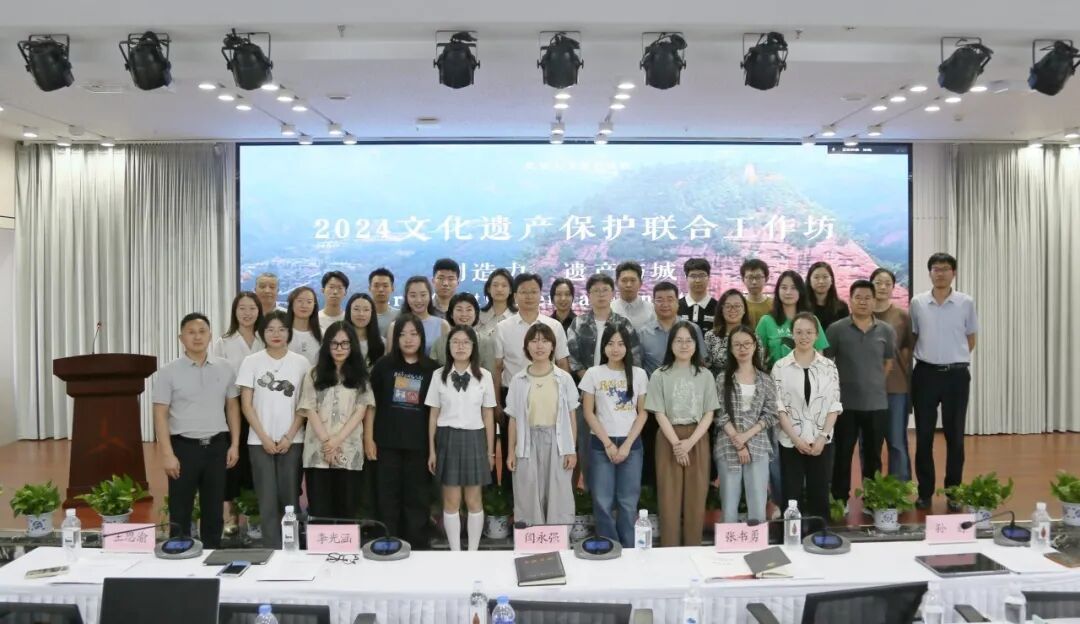
Group Photo from the Opening Ceremony
The workshop was divided into four groups based on the cities under investigation: Zhangye, Dingxi, Tianshui, and Longnan. Following the completion of the first phase of online courses, the lead instructors assigned each group to conduct preliminary work on literature reviews and research materials under the guidance of teaching assistants. After a week of preparation, on the afternoon of July 24, the students presented their preliminary findings in group reports.
The opening presentations proceeded in the order of the Zhangye, Tianshui, Dingxi, and Longnan groups. Drawing on the CCC framework, students from each group reported on six key aspects: “Literature Review,” “Summary of Current Cultural Resource Surveys,” “Preliminary Analysis of Enabling Factors,” “Design of Benefit Assessment Indicators,” “Evaluation of Regional Tourism and Cultural Competitiveness,” and “Key Issues for the Fieldwork Phase.” Based on an inventory of relevant cultural resources, the students conducted analyses according to the six major driving factors, preliminarily drafted evaluation indicators for the three major benefits, proposed detailed field survey plans, and identified key priorities for the fieldwork.
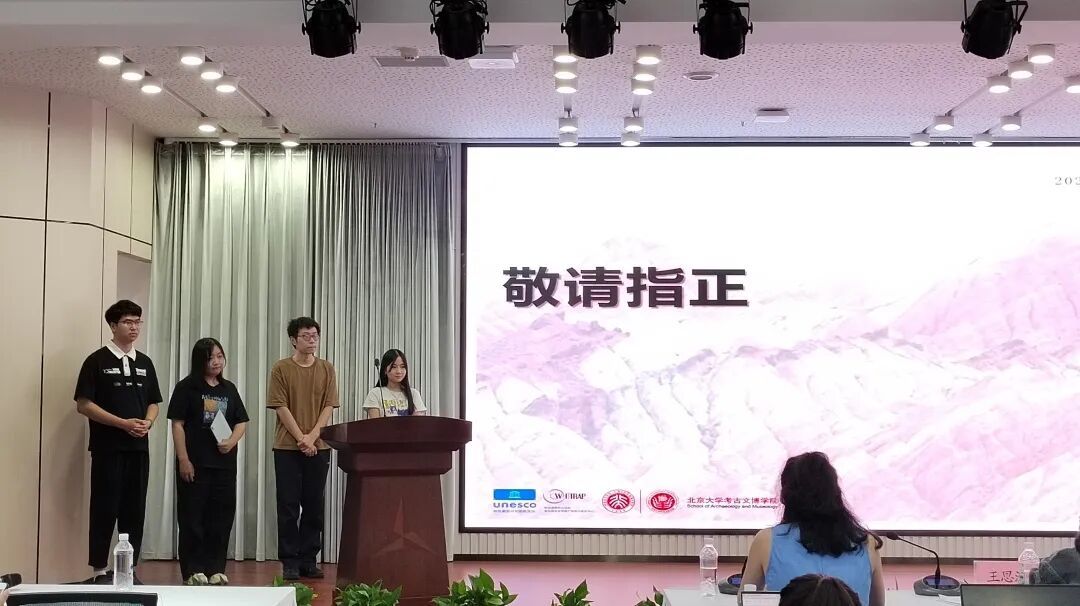


Group Presentations
Following the presentations, the instructors expressed their full recognition of the students’ achievements in their literature review. Director Zhang Shuyong commended the preliminary work of each group and offered suggestions tailored to the specific conditions of different regions. He encouraged the students to conduct further research on the distinctive characteristics of each area, with the goal of developing practical policy recommendations that would better drive urban development. Professor Li Luanghan encouraged the students to adjust their research focus, emphasizing that each group should pay attention to the uniqueness of their research areas and embrace the differences arising from these characteristics to spark more inspiration. Professor Sun Jing reminded the students to clarify the logical relationship between cultural resources and driving factors, to consider driving factors from the perspective of the entire region rather than focusing solely on individual cases, and to prioritize the formulation of policy recommendations in their subsequent work. Professor Wang Shaohan stressed that each group should think more broadly, explore more possibilities, and embark on the upcoming fieldwork with a spirit of inquiry and a problem-solving mindset. Professor Wang Siyu reminded students to strengthen communication among groups to deepen their understanding of driving factors, reach consensus, and further grasp the concept of the cultural and creative industries. She emphasized that the focus must remain on “culture,” and that students should continuously self-correct and adapt during the fieldwork.
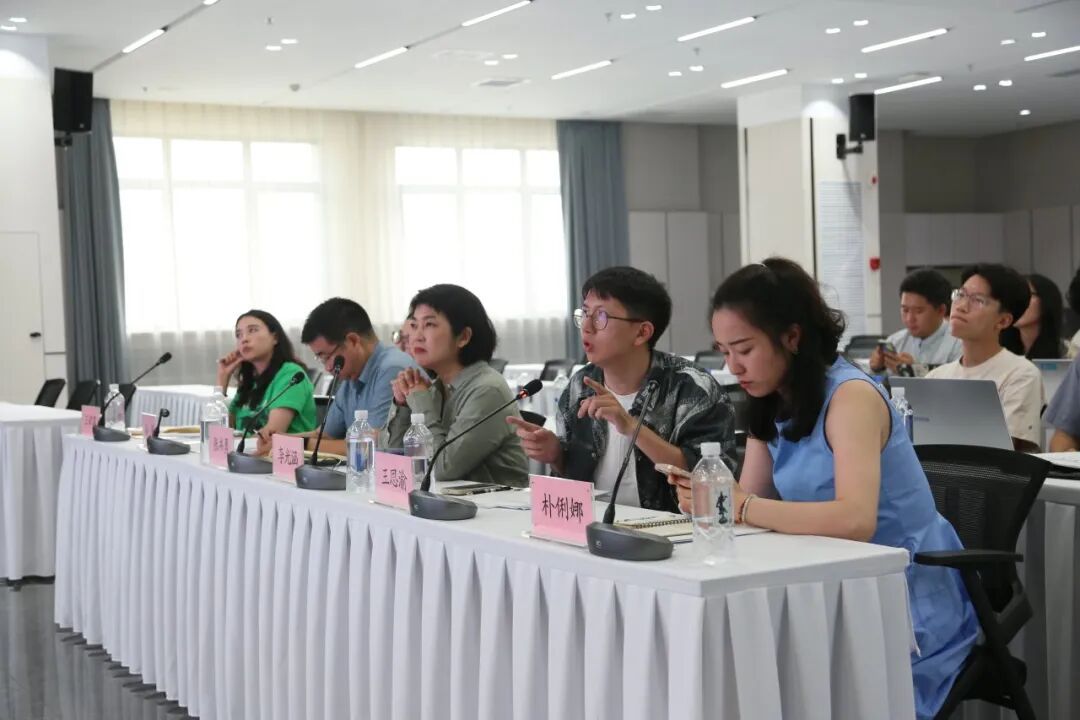


Faculty Comments
This workshop brings together 25 faculty members and students from 13 universities in China and abroad. Over the next ten days, they will investigate cultural resources and the cultural and creative industries in seven regions: Ganzhou District of Zhangye City; Qin’an County and Maji District of Tianshui City; Tongwei County and Lintao County of Dingxi City; and Wudu District and Cheng County of Longnan City. This year, we have begun exploring the contribution of heritage to the development of local cultural tourism and cultural competitiveness within the framework of the cultural and creative industries, and we are honored to have the opportunity to participate in the Gansu Cultural Heritage Transmission and Innovative Development Project. Please stay tuned for updates on the workshop via our official WeChat account.
Written by: Lu He, Ma Lerong
Edited by: Ma Lerong, Park Lina
Reviewed by: Li Kuanghan, Wang Siyu
Final Review: Shen Ruiwen, Zhang Jianwei